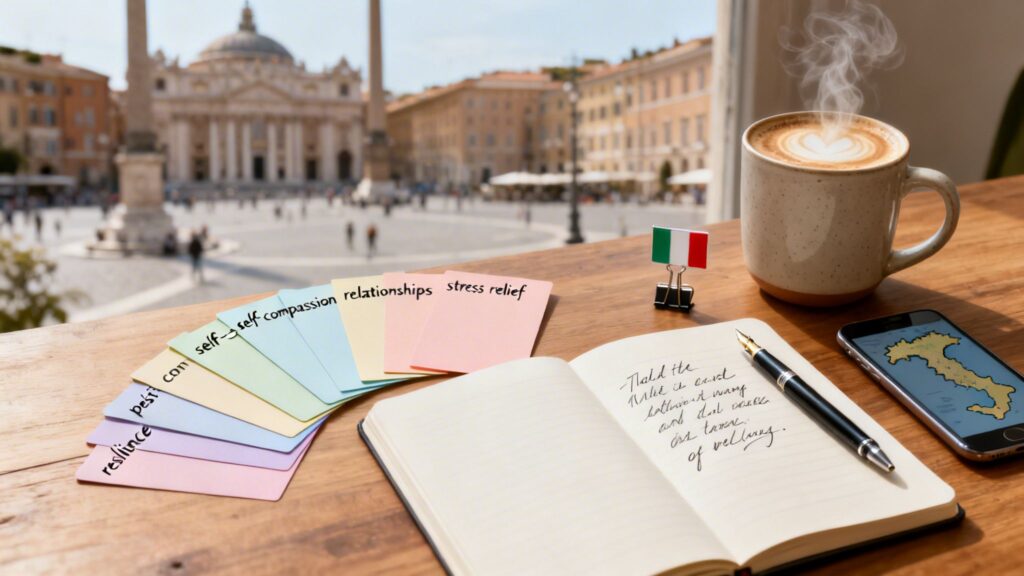
Family life is a complex journey of joy, challenge, and profound connection, especially for expats, international students, and intercultural couples navigating new dynamics in Italy. The right words at the right time can act as a compass, offering comfort, clarity, and a shared sense of understanding. This curated collection of family life quotes is more than just a list of inspiring phrases; it’s a therapeutic resource designed to illuminate the psychological dynamics shaping our most important relationships. For the international community, these timeless words can bridge cultural gaps, soothe the ache of homesickness, and validate the unique pressures of building a home far from what was once familiar.
Often, a simple quote can unlock a deep insight into why we feel anxious, disconnected, or stressed within our family units. It can normalise our struggles and serve as a powerful reminder that we are not alone in our experiences. Therapsy, as a leading psychotherapy service for English speakers in Italy, understands that exploring the meaning behind these family life quotes can be a significant first step toward building stronger, more resilient connections. This comprehensive guide provides not only inspiration but also actionable psychological insights and practical prompts to help you reflect, connect, and thrive. Let’s explore the wisdom that can help anchor your family, offering perspective and strength wherever your journey has taken you.
1. In family life, love is the oil that eases friction and the cement that binds closer together.
This powerful quote, often attributed to philosopher Friedrich Nietzsche, beautifully captures the dual function of love within a family system. It suggests that love is not merely a passive feeling but an active, functional force. It acts as the “oil” that lubricates interactions and soothes the inevitable friction of daily life, and as the “cement” that strengthens bonds, creating a resilient and unified whole.
For the international community in Italy, this is one of the most vital family life quotes to remember. The stress of relocation, navigating a new culture, and being far from familiar support systems can create significant friction. Love, in this context, becomes a conscious practice to ease tensions and reinforce connections that might otherwise fray under pressure.
How to Apply This Quote
This concept encourages a proactive approach to family harmony, turning an abstract emotion into tangible actions.
As “Oil” for Friction: When a disagreement arises, consciously choosing a loving response over a defensive one can de-escalate the situation. It’s about prioritising the relationship over the need to be right. An expat couple in Milan, for example, might feel strained by career pressures and the challenges of a new city. Instead of letting small annoyances build, they can use “oil” by actively listening to each other’s frustrations and offering support, easing the friction before it causes a larger conflict. For more strategies, exploring effective conflict resolution in relationships can provide valuable tools.
As “Cement” for Bonding: Love as cement involves intentionally creating shared experiences and rituals that strengthen family ties. An international family with members across different time zones could schedule weekly video calls where they don’t just “check in” but share a meaningful story or memory. This consistent, intentional connection binds them closer together, despite the physical distance.
Actionable Tips
- Practice Small Acts of Kindness: Make a cup of tea for your partner without being asked, or send a thoughtful message to a family member abroad.
- Reframe Conflict: When tensions rise, pause and ask yourself, “What would a loving response look like right now?”
- Schedule Connection: For long-distance families, book regular, meaningful video calls into your calendars just as you would any other important appointment.
2. The memories we make with our family are everything.
This contemporary quote, popularised by family wellness advocates, shifts the focus from grand achievements to the intrinsic value of shared experiences. It proposes that the true wealth of family life is not measured in material possessions but in the collection of moments, both big and small, that create a shared history. The sentiment is that these memories form the very fabric of our family identity and our personal sense of belonging.

For expats and international students in Italy, this is one of the most poignant family life quotes because it directly addresses the anxiety of “missing out” on family life back home. Geographical distance can make one feel disconnected from ongoing family narratives. This quote serves as a powerful reminder that the quality and intention behind creating memories can often transcend physical proximity.
How to Apply This Quote
This idea encourages a proactive and intentional approach to creating and preserving family connections, reframing distance not as a barrier but as a reason to be more creative.
Reframing Connection: Instead of focusing on the absence, focus on the possibilities for connection. An international student in Rome can’t attend a Sunday family dinner in person, but they can establish a weekly video call during the meal. This call becomes a new, cherished ritual and a memory in its own right, a testament to their commitment to family bonds despite the distance.
Maximising Quality Time: Expat parents in Turin, conscious of limited leave, can make weekend adventures with their children a priority. These intentional excursions, free from the daily routine, create concentrated, high-quality memories that strengthen their family unit. The focus shifts from the quantity of time to the richness of the experience, building a strong family identity within their new Italian life.
Actionable Tips
- Schedule Rituals: Establish regular, recurring family interactions like weekly video calls or monthly virtual game nights. These become predictable and anticipated moments of connection.
- Be Fully Present: When you are together, whether virtually or in person, minimise distractions. Put away digital devices to show that the time is dedicated solely to them.
- Document Everything: Create a shared digital album or a family group chat where everyone can post photos, videos, and voice messages. This collaborative journal extends the lifespan of your shared memories.
3. Family is not an important thing, it’s everything.
This powerful statement, popularised by actor Michael J. Fox, shifts family from a simple priority to the absolute centre of one’s life. It suggests that our connections to family are not just a significant part of our identity and well-being; they are the fundamental core. The quote reframes family relationships as the foundation upon which everything else, from career to personal growth, is built.

For the international community in Italy, this is one of the most resonant family life quotes. The experience of living abroad often magnifies the importance of these primary bonds. Feelings of homesickness are not a sign of weakness but a signal of how deeply these connections matter. This quote validates the emotional energy dedicated to maintaining, repairing, or understanding family dynamics, especially when navigating a new cultural landscape.
How to Apply This Quote
This idea encourages a re-evaluation of where family fits into your life, treating it as the central axis rather than just another competing priority.
As a Guiding Principle: When making major life decisions, from career moves to personal commitments, this quote prompts you to ask, “How will this affect my family?” An expat in Rome offered a promotion that requires more travel might use this principle to weigh the career benefits against the impact on their partner and children, recognising that the family unit is the “everything” that must be nurtured.
As Motivation for Healing: Acknowledging family as “everything” can provide the motivation to address long-standing wounds. An adult child living far from their parents might finally seek therapy to work through past conflicts, understanding that repairing this foundational relationship is essential for their own mental health and overall life satisfaction, no matter the physical distance.
Actionable Tips
- Prioritise Family Time: Treat family commitments with the same importance as work meetings. Schedule regular, dedicated time for connection, whether in person or online.
- Invest in Relationship Health: If relationships are strained, consider family or couples counselling as a proactive investment in your most important asset. It’s not a sign of failure but a commitment to what truly matters.
- Re-evaluate Your Definition: Take time to reflect on what “family” truly means to you. It might include biological relatives, chosen family, or a close-knit community of friends who provide that essential sense of belonging.
4. Parenting is not about perfection; it’s about presence.
This modern parenting wisdom, popularised by researchers like Brené Brown and mindfulness movements, offers a profound sense of relief to parents everywhere. It shifts the goal from an unattainable standard of flawlessness to the authentic, moment-to-moment engagement that truly nurtures a child’s development. This quote liberates parents from the pressure of getting everything “right” and re-centres the focus on emotional availability and connection.

For expat parents in Italy, this is one of the most freeing family life quotes to internalise. Juggling career demands, cultural adaptation, and the lack of a traditional support network can make perfection feel impossible and lead to burnout. This idea validates that “good enough” parenting, focused on genuine presence, is not only acceptable but is actually more beneficial for a child’s well-being than a stressed, perfectionist approach.
How to Apply This Quote
Applying this quote means consciously choosing connection over correction and engagement over idealised expectations.
Prioritising Quality Time: An expat parent in Rome, after a long day of work and navigating bureaucracy, might feel guilty about not preparing a perfectly balanced, home-cooked Italian meal. Embracing “presence over perfection” means they can order a pizza and use that saved time and energy to be fully engaged with their children, listening to their day and connecting without stress.
Modelling Healthy Imperfection: When parents from different cultural backgrounds are trying to blend their parenting styles, conflicts can arise over what is “perfect.” This quote provides common ground. Instead of arguing over the “right” way, they can focus on their shared goal of being present and emotionally available, creating a unified and loving front for their children.
Actionable Tips
- Establish Presence-Focused Rituals: Dedicate 15 minutes of one-on-one, screen-free time with each child daily. This could be a bedtime story, a walk, or just talking.
- Acknowledge and Repair: When you make a mistake, apologise to your child. This teaches them that relationships can be repaired and that no one is perfect.
- Practice Mindful Check-ins: When you feel overwhelmed by parenting anxiety, pause and ask yourself, “Am I present and engaged right now?” instead of, “Am I doing this perfectly?”
- Balance Presence with Self-Care: You cannot be present for others if your own cup is empty. Schedule time for rest and personal activities to recharge.
5. Home is where your family is, not a place.
This quote reframes the concept of ‘home’ from a geographical location to a relational experience, a sentiment that resonates deeply with displaced families. It suggests that the true essence of home lies in the connections we share with loved ones, not in the physical walls that surround us. This perspective offers profound comfort and validation, especially for those navigating the emotional landscape of relocation.
For the expat community in Italy, this is one of the most powerful family life quotes to internalise. The experience of leaving a country of origin can trigger feelings of homesickness, identity confusion, and belonging anxiety. This quote serves as a philosophical anchor, reminding individuals that ‘home’ is a state of being that can be cultivated and carried with them through the strength of their family bonds, wherever they may be.
How to Apply This Quote
This idea encourages a shift in focus from what was left behind to what is present and can be intentionally built. It transforms the grief of physical separation into an opportunity for creating a new sense of belonging.
As a Relational Anchor: For an international student in Rome, ‘home’ might be the weekly video calls with their parents and the new ‘family’ they form with fellow expats over shared dinners. It acknowledges that multiple homes can coexist: the one you miss and the one you are actively creating. This mindset helps reduce the feeling of being untethered.
As an Intentional Creation: A couple that has relocated to Turin for work can consciously create ‘home’ by establishing new rituals. This could involve finding a favourite local park for Sunday walks or starting a tradition of cooking a special meal every Friday night. These actions build a new layer of familiarity and security, grounding them in their new environment. For families navigating separation across countries, understanding how to manage co-parenting issues therapy can be crucial in maintaining that sense of a unified family home.
Actionable Tips
- Establish New Rituals: Create consistent, meaningful routines in your new location, like a family game night or a weekly visit to a local market.
- Bridge the Distance: Use technology to maintain strong connections with family abroad. Schedule regular, interactive calls that go beyond simple check-ins.
- Build Your “Italian Family”: Actively seek out community and friendships. Join clubs, attend local events, and invest in relationships that make your new city feel like home.
6. The greatest gift you can give your family is your time.
This quote serves as a powerful reminder in our modern, fast-paced world. While providing material comfort is often a priority, this sentiment argues that emotional presence and undivided attention are far more valuable. It champions the idea that the quality of our connections is built not on what we buy, but on the moments we consciously choose to share.
For the international community in Italy, where professionals often face demanding careers and the pressure to succeed in a new environment, this is one of the most resonant family life quotes. It speaks directly to the guilt many feel about work-life balance, validating the therapeutic focus on presence over presents and reinforcing that your attention is the most meaningful contribution you can make to your family’s well-being.
How to Apply This Quote
Applying this quote means shifting your mindset from material provision to relational investment. It’s about recognising that your focused presence is a finite and precious resource that deeply nourishes family bonds.
For Professionals and Busy Parents: A professional in Rome experiencing burnout might believe working longer hours is necessary to provide for their family. This quote encourages them to re-evaluate, recognising that their children may need their evening presence more than the income from overtime. It’s about consciously trading a material gain for a relational one.
For Long-Distance Families: An expat with ageing parents back home might feel guilty about not being physically present. This quote reframes the gift of time. Instead of sporadic, expensive gifts, scheduling consistent, long video calls where you are fully engaged and listening becomes a more profound and cherished gift that strengthens connection across continents.
Actionable Tips
- Conduct a Time Audit: Honestly assess your week. How much of your time with family is truly “quality time,” free from digital distractions and work thoughts?
- Schedule “Protected” Family Time: Block out non-negotiable family time in your calendar, just as you would a crucial work meeting. This signals its importance to both yourself and your family.
- Practice Full Presence: When you are with your family, put your phone away and minimise distractions. Engage fully in the conversation or activity. This is the essence of giving the “gift” of your time.
7. We accept the love we think we deserve.
This poignant quote from Stephen Chbosky’s novel, The Perks of Being a Wallflower, transcends teen literature to offer a profound psychological insight into our relational patterns. It suggests that our capacity to receive love and the quality of the relationships we engage in are directly linked to our own self-worth. In essence, our internal beliefs about what we are worthy of set the standard for the treatment we accept from others, including our family members.
For international families and couples in Italy, this quote can be particularly resonant. The stress of acculturation, combined with pre-existing personal insecurities, can lead individuals to accept less-than-ideal dynamics, believing they don’t deserve better. This is one of those crucial family life quotes that encourages a deep look inward, connecting our personal self-esteem to the health of our family relationships.
How to Apply This Quote
Applying this quote involves introspective work to uncover and challenge the core beliefs that dictate your relational boundaries and expectations. It’s about consciously raising your standards for love by first raising your own sense of deservingness.
For Individuals: An expat in Rome might repeatedly find themselves in friendships or relationships where their needs are overlooked. By reflecting on this quote, they may realise a core belief from childhood, perhaps that they are a burden, is causing them to accept neglect. Recognising this is the first step toward seeking relationships where they feel valued and seen.
For Couples: A couple might find themselves locked in a pattern of mutual criticism. This quote prompts them to ask: do we treat each other this way because, deep down, we don’t feel we deserve gentle, unconditional love? Addressing individual self-worth issues can dismantle the foundation of this negative cycle and build a more supportive partnership.
Actionable Tips
- Examine Core Beliefs: In therapy or through journaling, ask yourself: Where did my beliefs about my own worth come from? Do they serve me now?
- Audit Your Relationships: Notice the level of respect, kindness, and reliability you receive. Does it align with the love you know every person inherently deserves?
- Set Worth-Based Boundaries: Ground your boundaries in the firm belief that you are worthy of respectful and kind treatment, not just as a preference but as a non-negotiable standard.
- Challenge Negative Self-Talk: Actively counter internal messages that say you are not “enough.” Building self-esteem is foundational to improving the love you accept. For more support, exploring self-esteem and confidence therapy can provide targeted strategies for this work.
8. A happy family is but an earlier heaven.
Attributed to George Bernard Shaw, this profound quote positions a harmonious family life not just as a source of comfort, but as an experience of transcendent peace and belonging. It suggests that the joy, safety, and contentment found within a thriving family unit offer a preview of the sublime, an “earlier heaven” on Earth. This idea frames the hard work of building strong family bonds as a spiritually and emotionally meaningful pursuit.
For international families in Italy, this is one of the more aspirational family life quotes. The daily challenges of expat life can sometimes make ‘heaven’ feel very far away. However, this quote serves as a powerful reminder of the ultimate goal: creating a sanctuary of peace and connection that makes any place in the world feel like home. It validates the effort invested in family relationships as a path to profound well-being.
How to Apply This Quote
This concept encourages us to view our family life through a lens of potential and purpose, shifting the focus from simply ‘fixing problems’ to actively creating something beautiful and deeply fulfilling.
As an Aspirational Goal: A couple in therapy for recurring conflicts might feel bogged down by the details of their disagreements. This quote can reframe their work. They are not just learning communication techniques; they are co-creating their “earlier heaven”. This elevates their motivation, turning a struggle into a noble project. For an adult child wanting to reconcile with a parent, this vision can provide the strength needed for difficult conversations, driven by the desire for meaningful closeness rather than obligation.
As a Guiding Principle: Parents can use this idea to guide their daily decisions. Recognising that the quality of home life directly impacts a child’s sense of safety and spiritual well-being can influence how they manage stress and conflict. It becomes less about enforcing rules and more about cultivating an atmosphere of peace and unconditional love, which forms the foundation of that “heaven”.
Actionable Tips
- Define Your “Heaven”: Discuss with your family what a ‘happy family’ specifically looks and feels like for each of you. What creates that sense of peace and belonging?
- Bridge the Gap: In therapy or quiet reflection, identify what currently stands between your family’s reality and that aspirational state. What practical steps can you take to close that gap?
- Embrace Imperfection: Balance this beautiful vision with the reality of human limitations. An ‘earlier heaven’ isn’t about perfection; it’s about consistent effort, repair, and grace.
9. In family, we find our first and lasting identity.
This insightful quote speaks to the profound and enduring influence of family on our sense of self. It suggests that our family of origin is the primary environment where our identity, values, and perception of the world are first shaped. These foundational experiences create a blueprint that often continues to influence us throughout our lives, whether we consciously realise it or not.
For expats, international students, and multicultural individuals in Italy, this quote is particularly resonant. Navigating a new culture often brings family-of-origin patterns into sharp focus, prompting a re-evaluation of which parts of our inherited identity we wish to carry forward. This process is a crucial aspect of personal growth and psychological development, making this one of the most transformative family life quotes to reflect upon.
How to Apply This Quote
Applying this quote means engaging in a conscious exploration of your personal history to understand your present self. It is about recognising the invisible scripts handed down by your family and deciding which ones still serve you.
For Identity Formation: A young adult in therapy might explore the explicit and implicit messages they received growing up about success, relationships, and emotional expression. For instance, an international student in Rome might recognise their perfectionism and anxiety as inherited family traits, which are now being challenged by a more relaxed local culture. This awareness is the first step toward consciously choosing their own values.
For Integrating Cultures: An expat in Milan may find their identity evolving as they embrace Italian customs while still honouring their family roots. They are not replacing one identity with another but expanding it. Similarly, a person with parents from different cultural backgrounds works to integrate both influences into a coherent, unique sense of self, moving beyond inherited expectations to forge their own path.
Actionable Tips
- Examine Family Messages: In a journal or with a therapist, reflect on your family’s spoken and unspoken rules. What was valued? What was discouraged? How do these messages appear in your life today?
- Differentiate and Choose: Identify which family values feel authentic to you and which feel limiting or imposed. You can honour your heritage while consciously choosing to live differently.
- Visualise Your Roots: Understanding our heritage helps define who we are. Exploring creative projects like cross stitch family tree patterns can be a beautiful, tangible way to visualise and connect with your lineage.
- Recognise Patterns: Acknowledge cyclical relationship or behavioural patterns that originated in your family. This understanding empowers you to interrupt them and create healthier dynamics in your own life.
10. Love is patient, love is kind—it always protects, always trusts, always hopes.
This famous passage, originating from 1 Corinthians 13, provides a profound and actionable blueprint for love within family life. It moves beyond abstract sentiment, offering a concrete checklist of qualities that define a healthy, mature, and supportive relationship. For families, especially those navigating the complexities of expat life in Italy, these words serve as a powerful touchstone for interaction.
This quote helps distinguish genuine, secure love from unhealthy dynamics like codependency or conditional affection. It frames love not as a fleeting emotion but as a series of conscious choices and behaviours: to be patient in moments of frustration, to act with kindness during disagreements, and to consistently offer protection, trust, and hope, even when facing uncertainty.
How to Apply This Quote
This quote can be used as a practical guide for self-assessment and relational improvement, transforming a poetic ideal into a daily practice.
As a Relational Touchstone: A couple in therapy can use these qualities to evaluate their interactions. For example, after a conflict, they might ask, “Was I patient? Was my response kind? Did my actions protect our bond?” This shifts the focus from winning an argument to nurturing the relationship. An international couple in Rome, blending different cultural expectations, can use this universal description of love to find common ground and build a shared relational culture.
As a Parenting Framework: A parent can reflect on whether their love for their child is expressed through these qualities. It encourages moving beyond simple caretaking to fostering an environment of trust and hope. For an expat family raising third-culture kids, demonstrating this kind of patient and protective love helps create a secure base in a life full of change and transition.
Actionable Tips
- Self-Assess Your Actions: Regularly check in with yourself. In your family interactions today, are you embodying patience and kindness? Are your words and deeds building trust?
- Discuss as a Couple: Set aside time to discuss which of these qualities feel strongest in your relationship and which ones could use more attention. This proactive conversation can prevent small issues from growing.
- Reframe Conflict Responses: When a disagreement starts, pause. Instead of reacting defensively, consciously ask, “What would a patient and kind response look like right now?”
- Balance Protection with Boundaries: Recognise that protection doesn’t mean enabling or controlling. Sometimes, the most loving action is to establish healthy boundaries for yourself and others. For more inspiration, you can explore other powerful quotes about love that reinforce these principles.
Top 10 Family Life Quotes Comparison
| Quote | 🔄 Implementation complexity | ⚡ Resource requirements | 📊 Expected outcomes | Ideal use cases | ⭐ Key advantages / 💡 Tips |
|---|---|---|---|---|---|
| “In family life, love is the oil that eases friction and the cement that binds closer together.” | Low — easy to introduce as a therapeutic framing | Moderate — short-term couple/family sessions and practice | Improved conflict resolution and strengthened bonds | Couples therapy; families strained by relocation | High relevance for repair-focused work; tip: use small consistent acts of kindness |
| “The memories we make with our family are everything.” | Low — straightforward habit/routine focus | Low–Moderate — time, simple tech (calls, photos) | Increased cohesion, reduced homesickness | Expats, international students, separation anxiety | Encourages ritualizing connection; tip: create predictable shared rituals and document moments |
| “Family is not an important thing, it’s everything.” | Moderate — invites deep values and priority shifts | Moderate–High — family therapy, longer-term work | Stronger prioritization of family; possible guilt or pressure | Life transitions, identity crises, severe separation distress | Validates family-centered therapy; tip: balance prioritization with healthy boundaries |
| “Parenting is not about perfection; it’s about presence.” | Low–Moderate — behavioral and mindset shift | Moderate — parent coaching, mindfulness practice | Reduced parental guilt, better emotional attunement | Working parents, expat parents, burnout | Pragmatic, normalizing message; tip: practice mindfulness and presence-focused rituals |
| “Home is where your family is, not a place.” | Moderate — reframes belonging and adaptation | Moderate — community-building, routines, ongoing contact | Improved sense of belonging and adaptation in new locales | Expats, students abroad, relocation grief | Supports relational definition of home; tip: build routines and maintain regular contact |
| “The greatest gift you can give your family is your time.” | Low — scheduling and boundary work | High (time investment) — requires protected time | Better relationship quality; may require trade-offs at work | Busy professionals, parents, work-life balance issues | Clarifies priorities for change; tip: audit time and create non‑negotiable family slots |
| “We accept the love we think we deserve.” | High — deep self-worth and schema work | High — individual therapy, long-term interventions | Improved boundaries and healthier relationship choices | Clients with low self-esteem, trauma, cyclical relationship patterns | Diagnostic for relational patterns; tip: explore core beliefs while avoiding victim-blaming |
| “A happy family is but an earlier heaven.” | Moderate — aspirational visioning plus repair work | Moderate — therapy for reconciliation and meaning-making | Increased motivation for repair; enhanced meaning and cohesion | Couples seeking meaning, families pursuing reconciliation | Inspires long-term commitment to change; tip: make the vision realistic and balance with limits |
| “In family, we find our first and lasting identity.” | High — involves identity exploration and narrative work | High — in-depth therapy, possible cross-cultural integration | Greater self-understanding and integrated identity | Young adults, expats, multicultural identity work | Useful for intergenerational pattern work; tip: differentiate inherited messages from chosen values |
| “Love is patient, love is kind—it always protects, always trusts, always hopes.” | Low–Moderate — model for behaviors and values | Moderate — skills training, communication practice | Clear criteria for healthy love; improved attachment safety | Couples therapy, attachment repair, values alignment | Concrete language for relationship standards; tip: use as checklist while maintaining healthy boundaries |
Turning Words into Action: Your Next Step Toward a Healthier Family Life
Throughout this collection, we’ve explored a rich tapestry of family life quotes that capture the joy, complexity, and profound love that define our closest relationships. From the simple truth that “family is not an important thing, it’s everything,” to the gentle reminder that “love is the oil that eases friction,” these words serve as powerful signposts. They illuminate what we cherish most and can reveal areas where our family dynamics might need more care and attention.
These phrases are more than just comforting sentiments for a greeting card or a social media post; they are mirrors reflecting our own experiences. They invite us to pause and consider the health of our connections. Do our actions align with the belief that time is the greatest gift we can give? Are we practising the patience and kindness that love requires, especially when faced with conflict? The real value of these family life quotes is not just in reading them, but in using them as catalysts for meaningful reflection and, ultimately, positive change.
From Insight to Impact: Bridging the Gap
Recognising a disconnect between the family life you have and the one you aspire to is a crucial first step. The journey from this insight to tangible improvement, however, requires more than just good intentions. It demands new skills, new perspectives, and often, new ways of communicating. This is particularly true for expats, international students, and intercultural couples in Italy, where the added layers of cultural adaptation and distance from established support networks can amplify family stress.
The path to a healthier family life involves practical, actionable steps. It’s about creating a home environment where everyone feels seen, heard, and valued.
- Foster Open Dialogue: Create dedicated, distraction-free time to talk. Use some of the quotes from this article as conversation starters. For instance, you could ask, “When have you felt that our family was ‘an earlier heaven,’ and what can we do to create more of those moments?”
- Practise Active Presence: The quote about parenting being about “presence, not perfection” applies to all family relationships. This means putting down your phone during meals, actively listening without formulating a response, and showing up emotionally for one another, even when it’s difficult.
- Build a Legacy of Memories: Consciously plan activities that build your family’s unique story. It doesn’t have to be a grand vacation. It can be a weekly pizza night, a walk in a local park, or a shared hobby. These are the moments that become the “everything” we look back on.
Developing these skills takes effort and practice. As you work towards a healthier family life, developing skills on how to handle difficult conversations with empathy and clarity is invaluable. Learning to navigate disagreements constructively is the cement that can bind a family closer together through challenges.
You Don’t Have to Navigate This Alone
If these family life quotes have resonated deeply, perhaps highlighting persistent challenges or unresolved pain points, it may be a sign that professional guidance could make all the difference. The journey toward healing and strengthening family bonds is a profound one, but you are not expected to walk it by yourself. A licensed, multilingual therapist can provide a safe, non-judgmental space to untangle complex dynamics, heal old wounds, and build stronger, more resilient relationships.
At Therapsy, we specialise in supporting the international community in Italy. Our team of carefully selected professionals understands the unique pressures faced by expats, couples, and young adults living abroad. Whether you are in Milan, Rome, Florence, or connecting online, we are here to help you translate the wisdom of these quotes into the reality of your life. We can equip you with the tools to improve communication, set healthy boundaries, and foster the deep, meaningful connections you deserve.
The journey to a more fulfilling family life begins with a single step. Book your first free assessment call.