Meta Title: How to Cope with Anxiety in Italy for Expats and Students
Meta Description: Learn how to cope with anxiety with practical tools for expats, international students, and young adults in Italy. Grounding, CBT, lifestyle strategies, and therapy support.
Slug: how-to-cope-with-anxiety-expats-italy
Tags: anxiety, expat mental health, therapy in Italy, international students, CBT, DBT, panic attacks, multilingual therapy, young adults, couples therapy
Anxiety often becomes loud at ordinary moments.
You might be standing in line at the post office in Milan, trying to follow rapid Italian, while your chest tightens and your thoughts race. You might be in a university lecture, hearing every word but absorbing none of them. You might be in a beautiful piazza with friends and still feel strangely outside your own life.
If you have been wondering how to cope with anxiety, especially while living abroad, that question is not a sign of weakness. It is a sign that your mind and body are asking for support. Anxiety is a human response to uncertainty, change, pressure, and disconnection. For expats and international students in Italy, those pressures often arrive all at once.
Some anxiety is fleeting. It rises before an exam, a visa appointment, a difficult phone call, or a conversation in a language that still does not feel like yours. Some anxiety stays longer. It starts shaping sleep, concentration, appetite, work, relationships, and the way you move through the day.
There is a difference between being stretched and being stuck. The good news is that both immediate relief and long-term change are possible.
This guide is written for people living through real intercultural stress. It focuses on practical, evidence-based ways to cope. That includes what to do in the moment when anxiety spikes, how to work with anxious thoughts more effectively, and when it makes sense to reach for professional support. If you need broader mental health support for expats in Italy, it helps to know that your experience is both understandable and treatable.
Introduction Navigating Anxiety in a New Chapter of Life
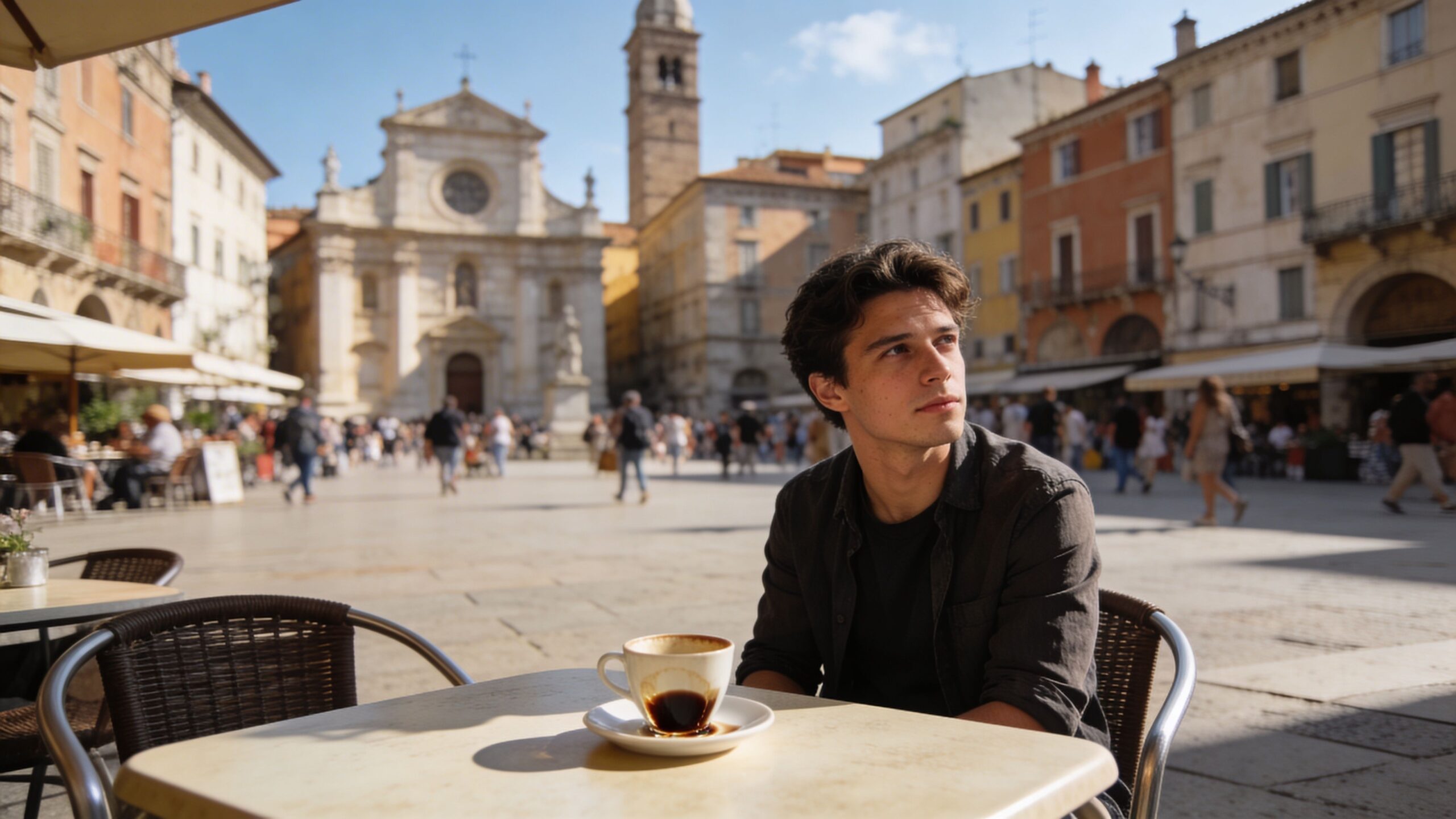
Starting over in a new country can look exciting from the outside and feel destabilising on the inside.
Many expats and students tell themselves they should be grateful, adaptable, and happy. That inner pressure can make anxiety worse. Instead of noticing distress early, they push through until the body forces the issue through insomnia, irritability, panic, stomach tension, or constant overthinking.
Anxiety is not always dramatic. Often it is repetitive. It shows up as checking messages compulsively, rehearsing conversations, avoiding errands, delaying paperwork, scanning for signs that something is going wrong, or assuming that one awkward interaction means you do not belong.
Learning how to cope with anxiety begins with a simple shift. Stop treating anxiety as proof that you are failing at life abroad. Start treating it as information.
What anxiety is really doing
Anxiety prepares you for threat. The problem is that in expat life, the brain may tag many ordinary situations as threatening.
That can include:
- Language strain: Ordering food, making appointments, or handling official documents can feel high-stakes.
- Identity pressure: You may feel competent in one country and lost in another.
- Isolation: Even surrounded by people, you can feel emotionally untranslated.
- Uncertainty: Housing, work, visas, dating, health care, and finances can all feel less predictable.
Anxiety often says, “Something is wrong with me.” In intercultural life, the more accurate message is often, “Too many demands are hitting at once.”
Relief starts with the right approach
Trying to “just relax” rarely works. Effective coping is more structured than that.
What helps tends to fall into three layers:
| Focus | What it helps with | Examples |
|---|---|---|
| Immediate regulation | Calming the body during an anxious spike | Grounding, breathing, sensory orientation |
| Cognitive work | Reducing the power of spiralling thoughts | CBT-style thought checking, balanced reframing |
| Long-term resilience | Lowering overall vulnerability to anxiety | Sleep, routine, movement, social support, therapy |
The sections ahead follow that same logic. First, steady the nervous system. Then reshape the anxiety cycle. Then build a life that gives anxiety less room to dominate.
Why Anxiety Feels Different When You Are an Expat
Anxiety abroad is not only about personal vulnerability. It is also about context.
According to the World Health Organization fact sheet on anxiety disorders, 359 million people worldwide were affected by anxiety disorders in 2021, and only 27.6% received treatment. The same source notes barriers such as stigma. In Italy, a 2022 Italian Ministry of Health report indicated that a significant portion of Italians suffer from anxiety disorders, with higher rates among young adults aged 18 to 34, a group that includes many international students and young professionals.
Those numbers matter because they place your experience in context. Anxiety is common. Expat life can sharpen it further.
For a fuller overview of symptoms and treatment options, this guide on https://therapsy.it/anxiety/ is a useful starting point.
The expat brain is doing extra work
When you live in your home culture, many tasks run automatically. You understand tone, timing, humour, rules, and social nuance without having to analyse them.
In a new country, that automatic system is interrupted.
You may need to think consciously about things that used to be effortless:
- How formal should I sound here
- Did that person mean to be rude, or is this cultural style
- What paperwork am I missing
- Why does everyone else seem to know what to do
- How do I explain myself properly if something goes wrong
That constant decoding consumes mental energy. Anxiety grows faster when the brain is already overloaded.
Common expat triggers that look small but feel big
Not every trigger is dramatic. In practice, anxiety often builds through repetition.
A few examples:
- You avoid booking a medical appointment because you fear misunderstanding something important.
- You replay a conversation all evening because you worry your Italian sounded foolish.
- You stop joining social plans because being “on” in another language feels exhausting.
- You compare your private struggle to other people’s curated version of expat life.
These are not minor issues. They affect belonging, safety, and self-trust.
Why shame often gets mixed in
Expats often think they should be coping better than they are.
That belief usually sounds like this:
- I chose this life, so I should handle it
- Other people seem fine
- I do not want to complain
- If I need help, maybe I am not resilient enough
That inner narrative turns anxiety into a personal verdict. It is more accurate to see it as an adaptation burden.
Anxiety in a new country is often a nervous system response to prolonged adjustment, not evidence that you are incapable.
The hidden pressure of “making it worth it”
There is another layer many people miss. When you move abroad for study, work, or love, the experience can feel loaded with meaning.
If things are hard, you may fear that the whole move is becoming a mistake. Then everyday stress starts carrying existential weight.
A delayed residence permit becomes “I am losing control.”
A lonely weekend becomes “I do not belong here.”
A difficult semester becomes “I am failing at this new life.”
That is how anxiety expands. It links one hard moment to a much larger story about identity and future.
Intercultural psychology takes this seriously. It does not reduce anxiety to overthinking alone. It recognises that relocation changes routines, support networks, language comfort, and the sense of self. When all of that shifts at once, anxiety can feel sharper, faster, and more confusing than it did before.
Practical Tools for Calming Acute Anxiety in the Moment
When anxiety spikes, insight is not enough. You need something you can do.
The first task is not to solve every problem in your life. The first task is to help your body register that, in this moment, you are safe enough to come down from alarm.
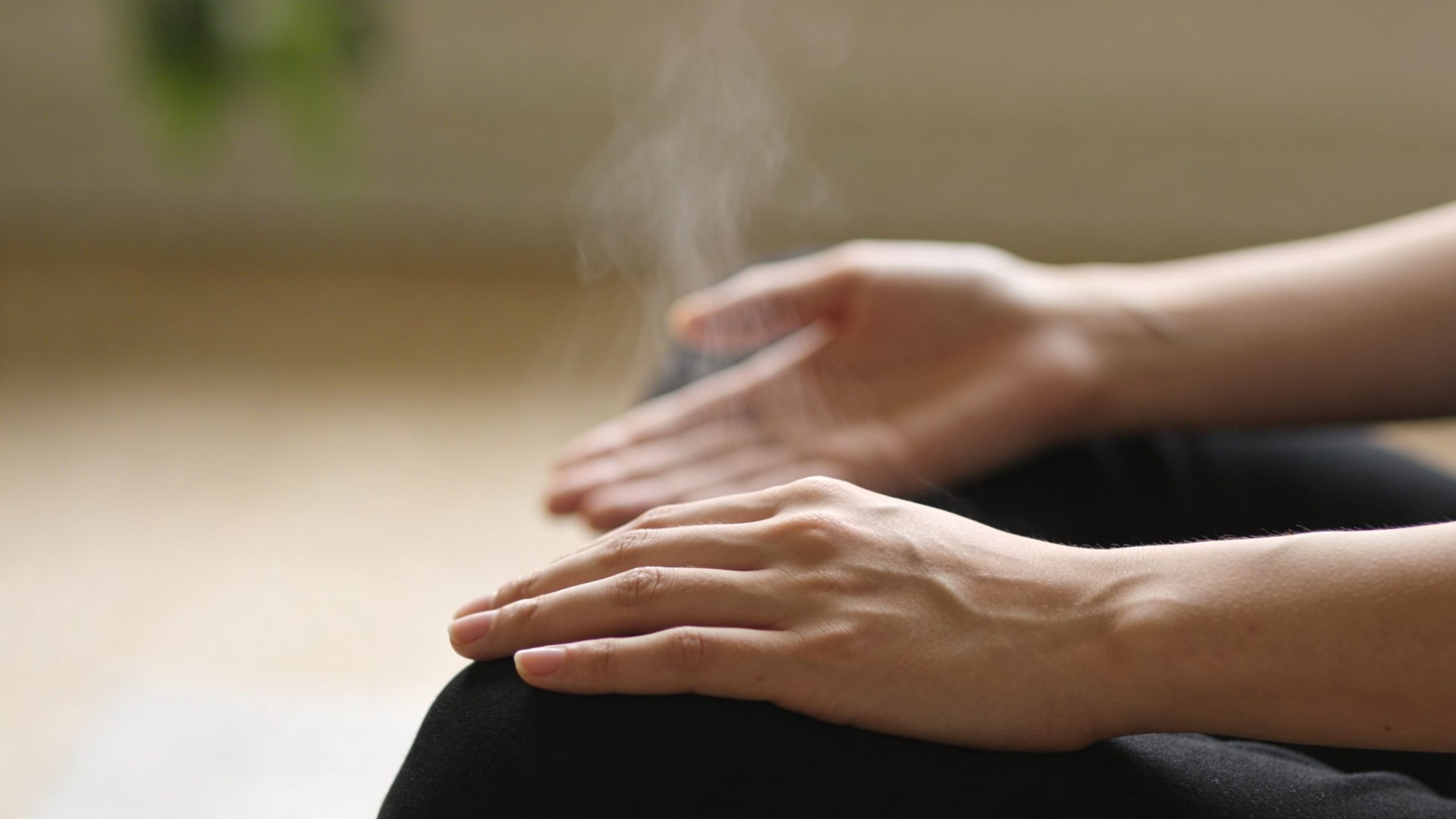
If your anxiety includes sudden surges, racing heart, dizziness, or a feeling that you are losing control, support for https://therapsy.it/panic-attacks/ can also help you understand the pattern.
Use the 5 4 3 2 1 grounding method
This technique works by shifting attention from internal alarm to external reality. It is simple, discreet, and practical in public.
Do it slowly.
Name 5 things you can see
Look for concrete details. A green shutter. A coffee cup. A backpack zip. A crack in the pavement.Name 4 things you can feel
Your feet in shoes. Your back against a chair. Air on your face. Your hands touching fabric.Name 3 things you can hear
Traffic. Cutlery. A door closing. Someone speaking nearby.Name 2 things you can smell
Coffee. Soap. Rain. Your scarf.Name 1 thing you can taste
Water. Gum. Toothpaste. Even the neutral taste in your mouth counts.
Why it helps: anxiety narrows attention around perceived danger. Grounding widens attention again. That interrupts the spiral.
Try box breathing when your chest feels tight
Anxiety often changes breathing before you consciously notice it. You may breathe high in the chest, more quickly, or irregularly.
Box breathing gives your body a predictable rhythm:
- Breathe in for 4 seconds
- Hold for 4 seconds
- Breathe out for 4 seconds
- Hold for 4 seconds
Repeat several rounds.
A few important notes:
- If holding your breath increases discomfort, shorten the hold or skip it.
- Keep the breath gentle, not forceful.
- Exhaling slowly matters. It signals the body to settle.
What to say to yourself during a spike
Acute anxiety gets worse when you argue with it aggressively.
These phrases are usually more effective:
- This is anxiety, not danger
- My body is activated, and it can settle
- I do not need to fix everything right now
- I only need to get through this minute
Calm is not something you force. It is something you allow by giving the nervous system clear, repetitive signals.
This short practice guide can help if you want a visual prompt:
A short reset you can use anywhere
When anxiety hits on a bus, in class, at work, or before a difficult conversation, use this sequence:
| Step | Action | Purpose |
|—|—|
| 1 | Put both feet on the ground | Gives the body a sense of stability |
| 2 | Drop your shoulders | Releases visible tension |
| 3 | Exhale longer than you inhale | Helps reduce physiological arousal |
| 4 | Name what is happening | Stops the mind from escalating the mystery |
| 5 | Choose one next action | Restores a sense of control |
Examples of one next action:
- send one message
- drink water
- step outside
- ask for clarification
- postpone a non-urgent task
- write down what you need to remember
What usually does not work in the moment
People often try these strategies first:
- Fighting the feeling: “I need this to stop now.”
- Reassurance loops: Repeatedly asking others if everything is okay.
- Escaping too fast: Leaving every situation immediately, every time.
- Overexplaining to yourself: Trying to think your way out of a body-level alarm.
Some relief may come from avoidance, but it often teaches the brain that the situation was dangerous. That can keep the cycle alive.
A better aim is this: reduce the alarm enough to stay present, then choose your next step with more steadiness.
Reshaping Your Thoughts A Cognitive Approach to Anxiety
A student in Bologna reads a brief email from a professor. “Please see me after class.” Within seconds, the mind fills in the blanks. Maybe I sounded foolish. Maybe my Italian was unclear. Maybe I am already falling behind. Anxiety often works this way, especially when you are living in a culture that still feels partly unfamiliar. The facts are limited, but the interpretation becomes urgent.
This is the level where cognitive work helps. Anxiety is not only a body alarm. It is also a pattern of meaning-making. The mind predicts threat, treats that prediction as likely, and pushes the whole system toward protection.
Cognitive Behavioural Therapy, or CBT, has strong research support for anxiety disorders. Reviews indexed on PubMed have shown that CBT can lead to meaningful symptom reduction for many people with anxiety, especially when it includes behavioural practice rather than insight alone. If you want a clear explanation of how this method works in therapy, this guide to cognitive behavioural therapy lays out the process in plain language.
For expats and international students in Italy, the content of anxious thoughts often reflects acculturation stress. A delayed message from a landlord can feel like rejection. A puzzled look in a shop can feel like humiliation. A bureaucratic problem can turn into “I cannot cope here.” These thoughts are understandable. They still need testing.
Thoughts feelings and behaviour are linked
Take a common example.
You send a message to a landlord and get no reply for several hours.
The anxious thought may be: I have done something wrong. I will lose the flat. I never manage these things properly in Italy.
From there, anxiety starts shaping behaviour. You check your phone every few minutes. You send repeated follow-ups. You cannot focus on work or study. You replay previous conversations, looking for proof that you failed.
The event matters. The interpretation matters too. In therapy, I often help clients separate three things that get fused together during anxiety: what happened, what the mind assumed, and what action would truly help.
A practical five step CBT method
Step 1 Identify the trigger
Start with the precise moment the anxiety rose.
Ask:
- What just happened
- Where was I
- Who was involved
- What did I notice in my body
Specific details make the pattern easier to catch. “I felt anxious” is too broad. “My professor asked me a question in class, I could not find the word in Italian, and my chest tightened” gives you something workable.
Step 2 Examine the anxious thought
Write the thought exactly as it appeared.
Examples:
- Everyone thinks my Italian is terrible
- If I make one mistake, I will be judged
- If I feel anxious at dinner, I should not go
- This paperwork issue means I cannot handle adult life
Then question the thought with discipline, not hostility:
- What evidence supports this
- What evidence does not support it
- Am I assuming I know what other people think
- Am I predicting the future
- Am I treating discomfort as proof of danger
This step can feel awkward at first. That is normal. Anxiety speaks with confidence, and confidence is often mistaken for truth.
Step 3 Create a balanced thought
The goal is accuracy, not cheerfulness.
| Anxious thought | Balanced thought |
|---|---|
| Everyone thinks my Italian is terrible | My Italian is still developing, and many people care more about communication than perfection |
| If I feel anxious, I should cancel | I may feel anxious and still get through the evening |
| This mistake proves I cannot cope | This is one stressful task, not a final judgement on my ability |
A balanced thought should feel believable enough that your mind does not reject it immediately.
The most useful reframe is the one that is honest, steady, and realistic enough for your nervous system to accept.
Step 4 Test the thought through action
CBT is effective partly because it does not stop at reflection. It asks you to gather new evidence.
If language anxiety is the issue, testing the fear might mean asking one question in Italian before switching languages. If social anxiety is the issue, it might mean staying at a gathering for twenty minutes rather than leaving at the first spike of discomfort. If sleep anxiety is part of the picture, some people also benefit from reading focused resources on restful nights and sleep anxiety alongside therapy.
This step involves trade-offs. Short-term avoidance brings relief. Repeated avoidance teaches the brain that the situation was dangerous and had to be escaped. Gradual exposure feels harder in the moment, but it gives the brain a more accurate lesson.
Step 5 Monitor the outcome
Keep a brief record:
- trigger
- anxious thought
- intensity
- balanced thought
- action taken
- outcome
Patterns become clearer when they are written down. Many clients notice two things quickly. The feared outcome happens less often than anxiety predicts, and their ability to cope is better than they assumed.
What CBT is not
CBT does not ask you to deny that life abroad can be hard. Some fears are grounded in real pressures: housing instability, visa deadlines, academic performance, money, loneliness, and the exhaustion of functioning in a second language.
CBT helps you tell the difference between a real problem and an anxiety-driven conclusion. Real problems need planning, support, and concrete action. Anxiety-driven conclusions need to be examined and tested. That distinction often gives people their footing back.
For expats and international students, that work is often easier with a therapist who understands both anxiety and intercultural strain. The thought itself may sound irrational on paper, but in context it often has a history: previous exclusion, language shame, family pressure, or months of trying to cope alone. Good therapy addresses the thought pattern without ignoring the cultural reality around it.
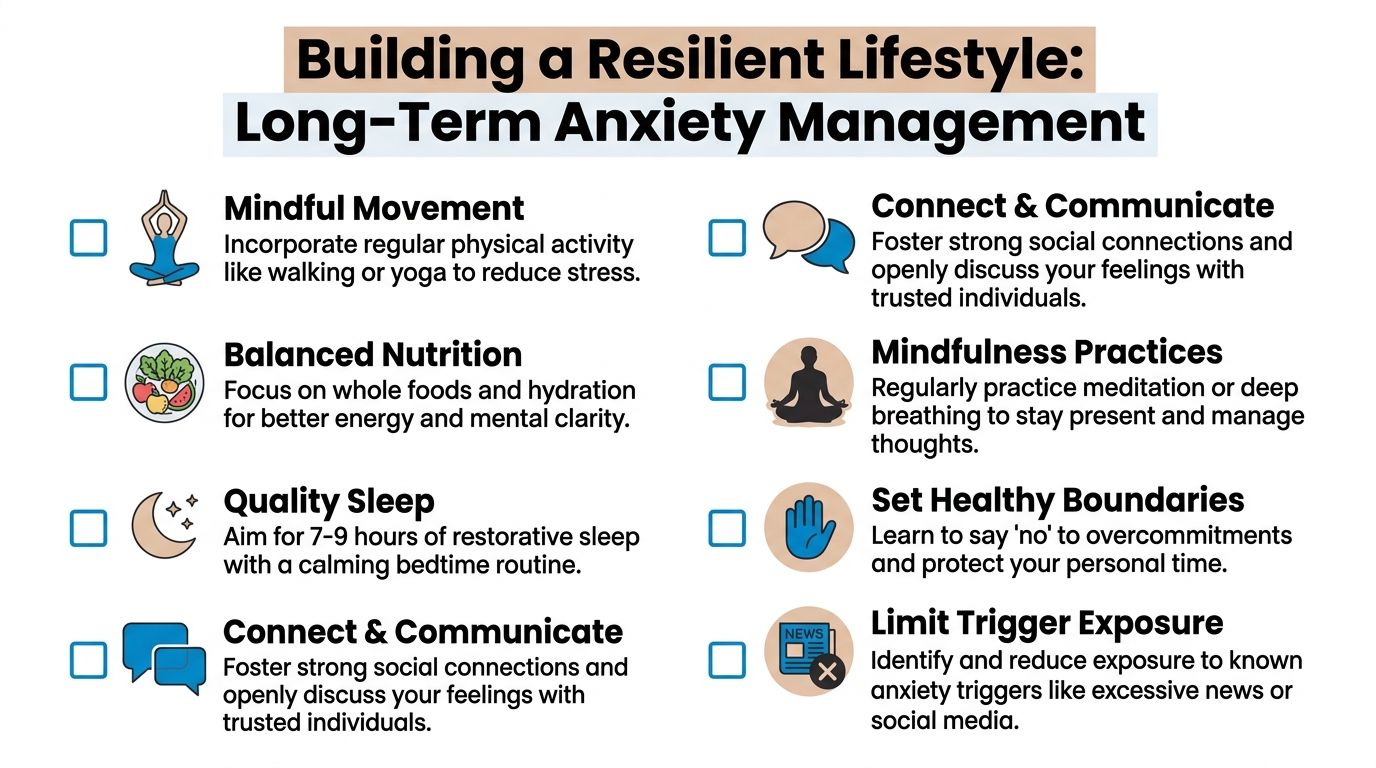
Building a Resilient Lifestyle Long-Term Anxiety Management
Long-term anxiety care usually looks ordinary from the outside. It often means eating before you get shaky, sleeping on a steadier schedule, reducing caffeine when your body is already keyed up, and building small routines that still work during exam periods, visa stress, or the first hard months in Italy.
For expats and international students, that routine has to fit real life here. A plan that ignores language fatigue, homesickness, bureaucracy, and the effort of building a social circle from scratch will not last. Good anxiety management is practical enough to survive a delayed permesso appointment, a difficult landlord call, or a week when everything feels harder in your second language.
Use ABC PLEASE as a practical maintenance plan
DBT skills are often helpful for long-term regulation because they give anxious people a structure to return to when life gets messy.
A means Accumulate positives.
Schedule small experiences that bring steadiness or pleasure, even during stressful periods. A coffee in a place where you feel comfortable, a Sunday call home, a walk through your neighbourhood, time by the sea, a familiar recipe, or an Italian class that feels encouraging rather than draining all count.
B means Build mastery.
Pick one task that increases competence and reduces helplessness. Learn how to book a medical appointment in Italian. Sort your residency paperwork into one folder. Complete one university task you have been avoiding. Practice the phrases you need for a pharmacy visit. Anxiety often eases when daily life feels more manageable.
C means Cope ahead.
Prepare for predictable stress. If you know a meeting, exam, or official appointment will raise your anxiety, write down the key information, plan your route, rehearse useful phrases, and decide what will help if your body starts to spike. Preparation lowers friction. It also reduces the sense of being ambushed by your own nervous system.
The PLEASE skills cover the basics that anxious people often neglect first.
- PhysicaL health: pain, illness, hormonal shifts, and exhaustion can all intensify anxiety.
- Eating: long gaps without food can mimic panic and make concentration worse.
- Avoid drugs: alcohol and other substances may soften feelings briefly, then leave the nervous system less stable.
- Sleep: irregular sleep makes worry louder and recovery slower.
- Exercise: regular movement helps discharge stress, even if it is only a brisk walk between classes or after work.
The trade-offs people underestimate
Anxiety management often fails for a simple reason. People choose strategies that work for tonight and create more strain next month.
That pattern shows up often in high-achieving expats and students.
| Strategy | Short-term effect | Long-term effect |
|—|—|
| Overworking | Creates a sense of control | Increases burnout and inner pressure |
| Social withdrawal | Lowers immediate stress | Increases isolation and sensitivity |
| Scrolling late at night | Distracts from worry | Disrupts sleep and recovery |
| Constant caffeine | Improves alertness briefly | Can amplify physical anxiety |
The question to ask is not, “Did this help me feel better for ten minutes?” Ask, “What does this habit train my mind and body to do over time?” That question is often where progress starts.
Build rituals that reduce friction
The most effective routines are boring in a good way. They reduce decision-making and give your nervous system predictable cues.
A workable day might include a morning anchor such as water, light, and ten minutes before checking messages. It might include a midday reset with food you can tolerate even when stressed, plus a short walk or a few minutes outdoors. In the evening, a downshift ritual helps many people more than trying to force sleep. Lower lights, fewer screens, less admin, and repeated cues that the day is ending give the body a better chance to settle.
Sleep often needs direct attention, especially if your mind gets louder at night or you are tracking time-zone differences with family back home. If evenings are the hardest part of the day, guidance on restful nights and sleep anxiety can support more deliberate bedtime habits.
Do not rely on willpower alone
Anxious people often assume they need more discipline. In practice, they usually need fewer points of friction.
Set out clothes before an early appointment. Keep one easy meal at home for high-stress days. Put documents in one visible place. Use reminders for deadlines that are easy to miss when you are overloaded. Mute news or social media accounts that reliably spike your anxiety. Tell one trusted friend exactly what helps, whether that is company, practical help, or a brief check-in.
I often encourage clients to ask a simpler question than “How do I become less anxious?” Ask, “What makes it easier to care for myself before anxiety takes over?” That shift leads to habits that hold up better under pressure.
What progress usually looks like
Progress is often quieter than people expect. It may mean noticing tension earlier, recovering more quickly after a stressful call, sleeping more consistently, attending the class you wanted to skip, or asking for help without waiting until you are overwhelmed.
For people living abroad, progress can also mean feeling less thrown by cultural mistakes, needing less reassurance after everyday interactions, or trusting that one awkward conversation in Italian does not define your worth or your future here.
If building that kind of structure feels hard to do alone, culturally attuned online psychotherapy for expats and international students in Italy can help you create a plan that fits your language, schedule, and lived context.
Finding Your Guide When to Seek Professional Support in Italy
Self-help tools matter. Sometimes they are enough. Sometimes they are not.
The key question is not whether you are “bad enough” to deserve therapy. The better question is whether anxiety is starting to organise your life around fear, avoidance, tension, or exhaustion.
If the answer is yes, professional support can help you move faster and with far less trial and error.

Reports on foreign residents in Italy indicate that a significant portion experience elevated anxiety due to integration challenges, but fewer access mental health services, primarily because of language mismatches. Some sources note that virtual therapy in a native language can help reduce dropout rates compared to monolingual options.
That gap is one reason many expats struggle longer than they need to.
Signs self-help may no longer be enough
Professional support is worth considering when:
- Anxiety interferes with daily functioning: work, study, sleep, eating, focus, or basic admin become difficult.
- Avoidance is spreading: you start shrinking your life to manage discomfort.
- Relationships are affected: anxiety is driving conflict, reassurance cycles, or emotional withdrawal.
- Physical symptoms are frequent: tight chest, nausea, restlessness, panic, or chronic muscle tension keep returning.
- You are using coping strategies that create new problems: overworking, isolation, substance use, compulsive checking.
You do not need to wait for a crisis.
The Italy-specific barriers are real
Seeking therapy in a foreign country can feel harder than it should.
Common obstacles include:
- not knowing how the system works
- uncertainty about whether a therapist speaks your language well enough
- fear of cultural misunderstanding
- concern that your anxiety will be minimised as “normal stress”
- practical issues around location, schedule, or privacy
These are not excuses. They are real access problems.
What good support should include
For expats and international students, effective therapy should feel both clinically sound and culturally informed.
Look for support that offers:
| What matters | Why it matters |
|---|---|
| Licensed therapists | Anxiety needs evidence-based care, not generic advice |
| Language comfort | People think and feel differently in different languages |
| Intercultural understanding | Relocation stress has its own patterns |
| Flexible format | Online therapy can remove practical barriers |
| Clear matching process | Fit matters for trust and continuity |
If remote care is the easiest place to begin, https://therapsy.it/online-psychotherapy/ makes it easier to understand how online sessions can work in practice.
Why multilingual therapy changes the experience
Many expats can function in Italian or English, but that does not mean they can process anxiety most effectively in those languages.
Therapy often reaches deeper when you can:
- describe subtle emotions without searching for words
- explain family and cultural context clearly
- move between languages when needed
- feel less self-conscious while speaking
That is especially important when anxiety is tied to identity, belonging, shame, or relationship strain.
The right therapist does more than understand symptoms. They understand the context in which those symptoms are happening.
Therapy is not only for severe cases
One of the most harmful myths is that therapy is only for breakdowns.
In reality, therapy is often most useful when someone is still functioning but paying a high internal cost. They are meeting deadlines, attending class, answering messages, and appearing “fine,” but living with constant apprehension and tension.
Early support can reduce the time anxiety remains entrenched. It can also help you avoid building your life around fear.
For many expats, the most helpful first step is not committing to a full treatment plan immediately. It is having one informed conversation and seeing whether the fit feels right.
Your Next Step Towards Regaining Balance
If you have been searching for how to cope with anxiety, the answer is rarely one single trick.
It is a combination of skills. Calm the body when anxiety spikes. Work more carefully with the thoughts that fuel it. Build daily habits that make your nervous system less vulnerable. Recognise when support from a professional would help you suffer less and recover more steadily.
Living abroad can stretch every part of a person. That does not mean anxiety gets the final word. With the right tools, anxiety becomes more understandable, more manageable, and far less defining.
You do not need to wait until things feel unbearable. Taking your distress seriously is already a form of self-respect.
Frequently Asked Questions About Anxiety and Therapy
Is anxiety the same as stress
Not quite.
Stress usually has a clearer external trigger, such as exams, work deadlines, or a move. Anxiety can remain active even when the immediate trigger is gone. It tends to involve anticipation, worry, physical tension, and a sense that something bad may happen.
In practice, stress can lead into anxiety when the nervous system stays activated for too long.
How can I support a partner with anxiety without becoming their therapist
Start with steadiness, not fixing.
Useful support often includes listening without rushing to reassure, asking what helps during anxious moments, and encouraging professional support when anxiety is affecting daily life or the relationship. For couples dealing with relocation stress, therapy can help both people understand the cycle instead of blaming each other.
Reports suggest that targeted couples therapy can help resolve many anxiety-linked relationship conflicts. Studies also note that in surveys, women often report anxiety at higher rates than men, which can shape relationship dynamics in ways worth discussing openly.
Is medication always necessary for anxiety
No.
Some people benefit from therapy alone. Others benefit from a combination of therapy and psychiatric support. The right choice depends on severity, duration, physical symptoms, daily functioning, and personal history.
Medication is not a failure. It is one possible tool. Therapy helps you decide more clearly what role, if any, it should play.
Can online therapy really work if I live in Italy
Yes, especially if language, travel time, or privacy make in-person support harder to access.
For expats, online therapy can also make it easier to work with someone who understands intercultural stress and can meet you in the language that feels most natural.
If anxiety is making life in Italy feel smaller, heavier, or harder to manage, support is available. THERAPSY offers multilingual psychotherapy for expats, international students, young adults, couples, and adults across Italy, with licensed therapists, online and in-person sessions, and a free first assessment call to help you find the right fit.