Therapy for long-distance relationships for expats is a specialised form of mental health support. It is designed to help couples navigate the unique emotional and logistical hurdles of loving someone from a different country. This therapy provides practical strategies and a safe, confidential space. Couples can work through issues like communication fatigue, time-zone conflicts, and the loneliness that often accompanies expat life. Ultimately, it’s an essential tool for keeping a partnership strong and resilient, no matter the distance. This guide explains why these challenges arise and how Therapsy offers an expert solution.
The Unique Pressures of Loving Across Borders
Living as an expat in Italy is an adventure. But when your partner is thousands of miles away, that adventure comes with a unique set of challenges. The initial thrill of a new life can be overshadowed by the ache of separation. This can turn a joyful experience into a source of stress and anxiety. This is precisely why therapy for long-distance relationships for expats is a vital lifeline.

The distance itself creates a pressure cooker for relationships. Without physical touch or shared daily experiences, small misunderstandings can escalate. It can start to feel like you’re leading two separate lives. One life is in your new Italian city, and the other exists only through a screen.
Common Stressors for Expat Couples
Navigating an international long-distance relationship involves more than just missing each other. It’s a complex mix of logistical puzzles and deep emotional strains. These stressors are a real and valid part of the expat LDR experience.
Here are some of the most common challenges expat couples face:
- Communication Burnout: Lagging video calls, missed messages due to time zones, and the pressure to make every call 'meaningful' lead to digital exhaustion.
- Emotional Strain: Feelings of loneliness, jealousy, or insecurity intensify without the reassurance of physical presence. You may feel left out of your partner’s life.
- Cultural Disconnect: You are adapting to a new culture while your partner is not. This can create a gap in understanding and shared experience.
- Time Zones & Logistics: Coordinating schedules for calls is a major task. Planning visits involves navigating visas, high costs, and limited vacation time.
- Future Uncertainty: The constant question of “When will we close the distance?” creates immense pressure and anxiety about the relationship's future.
These challenges are surprisingly common. Research reveals that over one in eight expats in a relationship—roughly 13% globally—are separated from their partner by international borders. The emotional toll is significant. 20% of expats in long-distance relationships report dissatisfaction with their partnership, compared to only 5% of those living together.
You are not just managing a relationship; you are managing two different worlds. Acknowledging the difficulty is the first step toward finding a sustainable way to connect.
Beyond logistics, expats in long-distance relationships grapple with unique emotional strains. The stress of adjusting to a new environment and understanding and addressing mental health challenges like Seasonal Affective Disorder can influence your relationship. Understanding these issues is a key part of the therapeutic process. You can explore our guide on the primary mental health challenges for expats to learn more.
Why Distance Amplifies Every Relationship Issue
When you're an expat in Italy and your partner is in another country, you learn that distance is a magnifying glass. It takes small, manageable issues and blows them up. The physical space doesn’t invent new problems—it strips away the little things that normally smooth them over. This is precisely where therapy for long-distance relationships for expats offers vital support.
Distance doesn't create problems; it reveals them. The space forces you to confront the core dynamics of your relationship without the convenience of physical presence.
The Psychology of Separation
The lack of physical closeness can trigger deep-seated psychological reactions. Attachment theory teaches us that we rely on our partners for security. When that person is far away, our attachment system can go into high alert. This cranks up feelings of anxiety, insecurity, or causes us to pull away.
A minor worry can morph into major anxiety. For instance, a delayed text message is no longer just a delayed text. Your mind might misinterpret it as a sign of fading interest. This is especially true in an intercultural relationship, where you might already be navigating different communication styles.
Communication Gaps Become Cultural Chasms
So much of a couple's shorthand is non-verbal. A knowing smile or a tired sigh can say more than a text conversation. When you're continents apart, you lose that entire layer of connection.
This creates specific challenges:
- Misinterpretation: Sarcasm gets mistaken for genuine criticism. A short message can come across as cold.
- Emotional Exhaustion: Every call can feel like a high-stakes event. You try to cram all your news and emotions into a limited time.
- Growing Disconnect: Trying to explain your new life in Italy to a partner who isn’t there is tough. It can lead to feeling isolated and misunderstood. That nagging sense of being on your own is a common struggle. You can learn more about how therapy can address emotional loneliness.
At Therapsy, our multilingual therapists are experts in untangling these exact dynamics. They understand that a communication breakdown in an expat relationship is a complex mix of personal histories, cultural differences, and the pressures of distance. We provide a space to build a new, more resilient way of connecting that can not only survive the distance but thrive.
Rebuilding Your Bond with Proven Therapeutic Strategies
Recognising that distance highlights deeper issues is a huge first step. The next is to actively build a stronger connection. Effective therapy for long-distance relationships for expats is about learning practical, evidence-based skills to bridge both the physical and emotional miles.
A trained therapist creates a structured, safe space to navigate your specific pressures. Whether you opt for individual therapy to manage your own feelings or couples therapy to rebuild your connection, the aim is to give you the right tools for a healthier partnership.
Individual and Couples Therapy Approaches
Therapy can be adapted to your exact situation. For expats in long-distance relationships, both individual and couples sessions have unique advantages:
- Individual Therapy: This is your space to process the personal toll of the distance. A therapist helps you develop coping strategies for loneliness and manage anxiety about the relationship's future.
- Couples Therapy: Here, the focus is the relationship itself. A multilingual Therapsy professional acts as a neutral guide. They help you communicate better, resolve conflicts, and find new ways to create intimacy.
This concept map shows how physical distance brings core issues to the surface that therapy is designed to address.
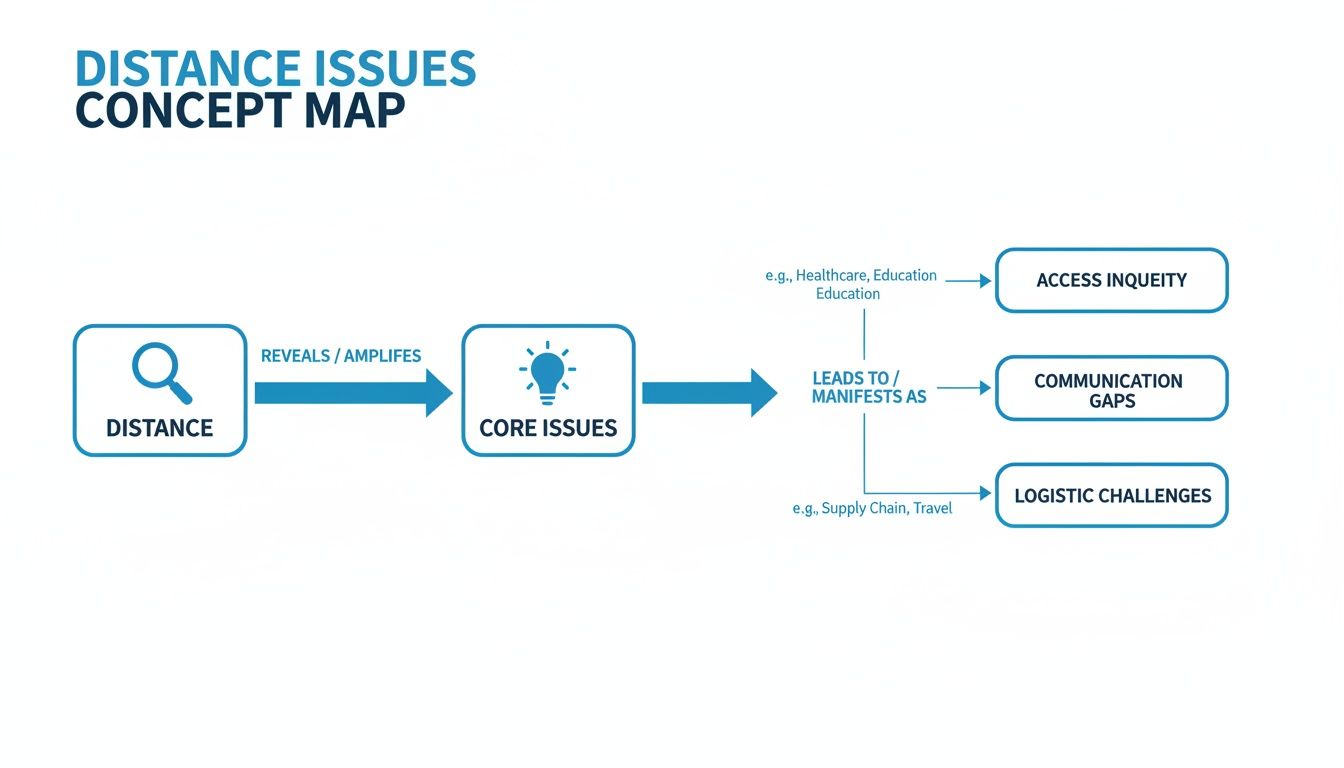
As you can see, separation exposes underlying communication gaps and logistical hurdles, which can be worked through in therapy.
Developing Practical Relationship Skills
Your therapist will guide you in developing tangible skills. These are practical techniques you can put into action to strengthen your connection.
Therapy empowers you to stop reacting to the distance and start actively managing it. It’s about building a shared toolbox of skills that strengthens your bond.
For instance, you and your partner might learn:
- Active Listening for Video Calls: You'll practise techniques to ensure you’re truly hearing your partner, not just waiting for your turn to speak.
- Conflict Resolution Frameworks: These are structured methods for handling disagreements, stopping small misunderstandings from spiralling.
- Emotional Intimacy Rituals: You’ll discover creative ways to build closeness, even when you can't be physically together. You can learn more about how to cultivate emotional intelligence in your relationship in our dedicated guide.
Many long-distance relationships succeed. Research shows the average long-distance relationship lasts 2.86 years, and 58% lead to a long-term commitment. However, about one-third of these couples break up within three months of reuniting. This highlights how critical the reunion period is. Therapeutic support can be crucial for navigating the transition back to a life lived together.
How Online Therapy Makes Consistent Support Possible
For expats in a long-distance relationship, consistency can feel impossible. Unpredictable schedules, conflicting time zones, and physical distance make traditional therapy difficult. A professional online therapy platform becomes an essential piece of the puzzle.
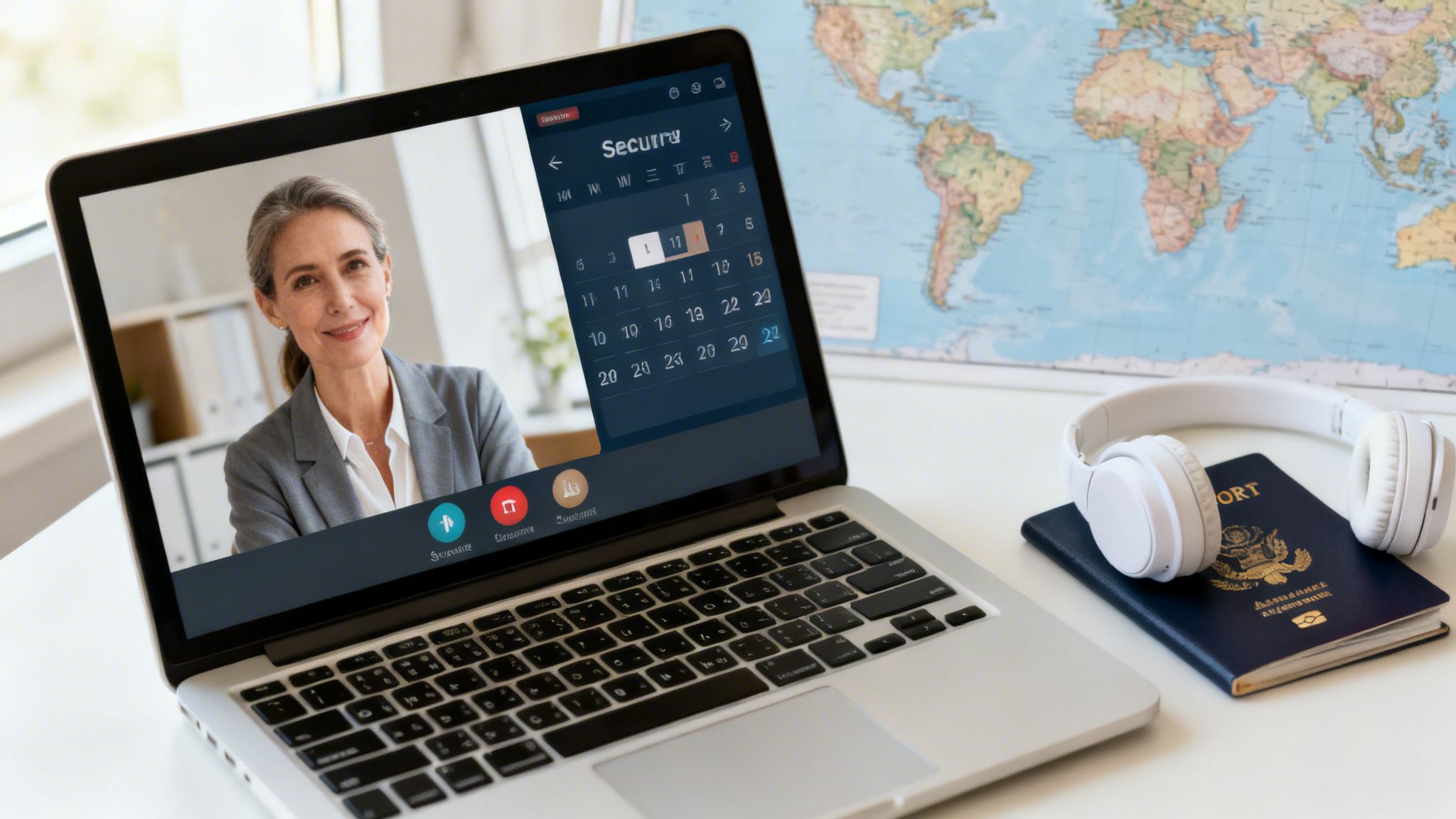
Online therapy for long-distance relationships for expats is specifically built to tear down these walls. It makes high-quality mental health care accessible and flexible. It’s about getting the support you both need, regardless of where you are.
The Benefits of a Modern Therapeutic Model
Virtual sessions have made professional support more practical than ever. For expats in Italy, this approach solves the pain points of living and loving across different countries. As remote work has become more common, so has the availability of quality mental health support. Many couples are finding a licensed telehealth therapist who understands their unique situation.
At Therapsy, we’ve built our service around what matters to expats:
- Finding a Therapist Who Speaks Your Language: Explaining complex feelings in your native tongue with a multilingual therapist is vital for feeling understood.
- Flexible Scheduling Across Time Zones: You can find session times that work for your schedule in Italy and your partner's schedule elsewhere.
- Guaranteed Confidentiality and Professionalism: Our secure platform ensures your private conversations stay private. You get the same high standard of clinical excellence as an in-person session.
Online therapy isn't a watered-down version of traditional therapy; it's a specialised adaptation for the realities of our globalised world. It’s what provides continuity of care when your life is constantly in motion.
This modern approach ensures that distance is no longer a barrier to making your relationship stronger. You can learn more about how our specialised online therapy for expats living in Italy works.
Clear Signs Your Relationship Needs Support
Knowing when to ask for help is often the hardest part. It’s easy to write off feelings of sadness or stress as just “part of the deal.” But some signs are more than temporary struggles. Recognising them is a proactive step towards building a healthier connection.
When Communication Feels Like a Chore
A telling sign is when talking to your partner starts to feel draining. Calls that once left you feeling energized now feel like another task. You might also find yourselves stuck in the same arguments. If you’re keeping things light just to sidestep conflict, it’s a red flag. This is where therapy for long-distance relationships for expats can provide profound relief.
“When you start dreading the ‘ping’ of a message from your partner, it’s your heart’s way of saying something is fundamentally misaligned. The goal isn’t to talk more; it’s to connect better.”
When the Future Feels Unclear or Frightening
Another big indicator is a growing sense of anxiety or dread when you think about the future. The question of, “When will we finally close the distance?” now fills you with unease.
Here are a few specific feelings that signal a need for support:
- Persistent Loneliness: You feel intensely lonely, even right after a long video call.
- Growing Resentment: You’ve started to resent the sacrifices you’re both making.
- Loss of Trust: Small doubts have spiralled into bigger insecurities.
At Therapsy, our multilingual therapists provide a safe, non-judgmental space to explore what’s really going on. They help you understand the root of these issues and guide you toward reconnecting in a healthier way.
Your First Step Toward a Stronger Connection
Taking the first step can feel like the biggest hurdle, but it doesn't have to be complicated. Deciding to get support is an act of courage and hope. Your journey with Therapsy starts with a simple conversation. We offer a free first assessment call with our Clinical Director. It is a confidential, no-obligation chat. It’s a space to share what’s on your mind and what you’re hoping to change.
A Human-First Approach to Finding Your Therapist
The connection you have with your therapist is the most important part of the process. That’s why we’ve moved away from algorithms and automated matching. During your assessment call, our focus is entirely on understanding you.
The most important part of therapy is the relationship you build with your therapist. We take the time to get that match right from the very beginning.
Based on that conversation, our Clinical Director will personally recommend a licensed Therapsy professional who is best suited to your needs. This isn’t just about clinical expertise; it’s about connecting you with someone who genuinely understands the nuances of intercultural dynamics. You can also read about our general approach to finding the right therapist for you in Italy.
Starting this journey is risk-free. It’s a simple action you can take right now to begin strengthening your connection.
FAQ: Your Questions on Therapy for Expat Relationships
Taking the first step towards getting support is a big deal, and it’s natural to have questions. Here are answers to common queries we hear from expats in long-distance relationships.
Can therapy really help if we’re in different countries?
Yes, absolutely. Online couples therapy is structured for this exact situation. Using a secure video platform, you and your partner can join sessions with a qualified therapist from your own locations. The goal is to create a shared, safe emotional space. A skilled therapist facilitates this, ensuring you both feel heard and learn practical skills to bridge the distance.
What if my partner is hesitant to try couples therapy?
This is a very common situation. Hesitation often stems from a fear of being blamed or uncertainty about what therapy involves. An open conversation is the best place to start.
- Frame it as a team effort: Emphasise that this is about working together to strengthen your bond.
- Suggest individual therapy first: A partner might feel more comfortable talking one-on-one initially.
- Use the free assessment: The no-obligation nature of Therapsy's free assessment call is a low-pressure way for you both to ask questions.
How do we find a therapist who gets our intercultural dynamic?
This is crucial. The best therapy for long-distance relationships for expats comes from professionals with experience working with intercultural couples. At Therapsy, our therapists are chosen for their deep understanding of how cultural nuances affect communication and relationships. During your free assessment, we’ll talk about your backgrounds to match you with a therapist who has the relevant expertise.
Is online therapy as effective as in-person therapy for relationship issues?
Yes. Research has shown that for many challenges, including relationship dynamics, online therapy is just as effective as face-to-face sessions. For expat couples, it’s often more effective because it removes logistical hurdles.
Online therapy delivers the same evidence-based techniques and professional standards, but with the flexibility that an international lifestyle demands. It makes consistent, high-quality care possible, no matter where you are.
The key to success is the quality of the therapist and the therapeutic connection you build—two factors we focus on in our matching process.
Ready to bridge the distance and strengthen your bond? At Therapsy, our multilingual team is here to help you and your partner navigate the unique challenges of an expat long-distance relationship. Book your first free assessment call.