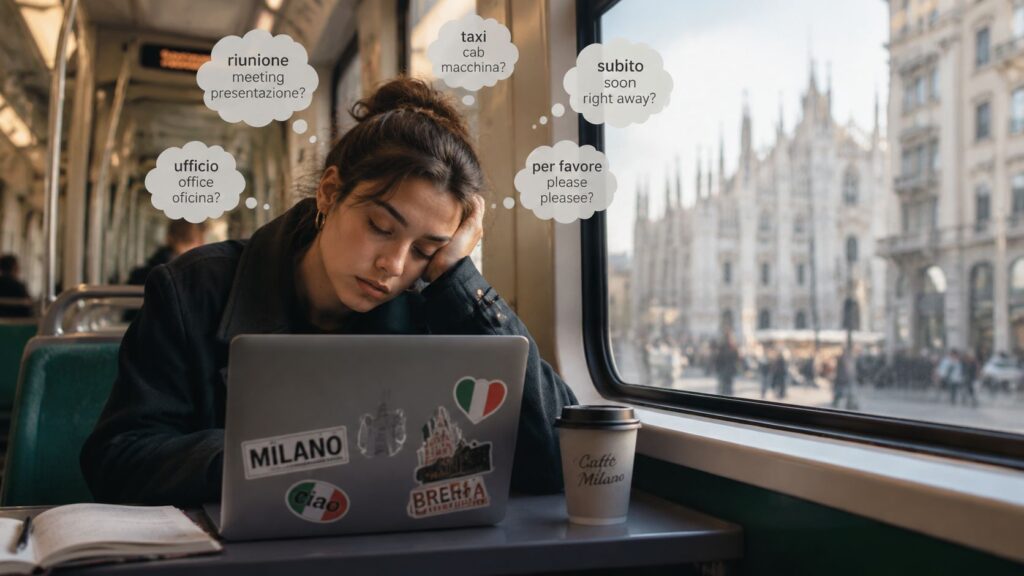
Moving to Italy often begins as a beautiful idea. Then the practical reality arrives. You’re leaving familiar routines, trusted people, a known language, and often a version of yourself that felt more settled. That gap between the fantasy and the lived transition is exactly why a moving to italy mental health checklist matters.
Relocation isn’t only administrative. It’s psychological. It can stir anxiety, homesickness, grief, burnout, identity confusion, relationship strain, sleep problems, and old vulnerabilities you thought were behind you. In Italy, that emotional load can be intensified by a mental healthcare system where fewer than 50% of people with depression receive appropriate diagnosis and treatment, alongside long waits and poor continuity of care, according to the WHO European Observatory profile on Italy’s mental health system.
As a clinical psychologist working with expats, international students, and young adults in Italy, I’ve seen a simple truth repeatedly. The people who cope best are rarely the ones with the least stress. They’re the ones who prepare emotionally, not just logistically.
This guide is designed as a practical roadmap. It combines what helps in therapy with what tends to go wrong during international moves. If you’re also planning children, pets, work permits, and shipping, keep your admin support just as organised. For pet relocation, a service such as USDA-licensed international pet travel can reduce one major source of stress before departure.
1. Find a multilingual therapist before moving
The best time to look for therapy in Italy is before you need it. Ideally, before the flight, before the first bureaucratic setback, and before the loneliness of the first weekends settles in.
If you start with a therapist in your own language, or in fluent English, you protect something important. Precision. You can describe fear, shame, resentment, grief, and ambivalence with less effort. That matters when you’re under pressure.
A common pattern is this: someone spends weeks organising visas, housing, and work, then arrives emotionally exhausted and tries to “wait it out”. Sometimes that works. Often it doesn’t. In therapy, early preparation gives you continuity and a place to process what you’re losing as well as what you’re building.
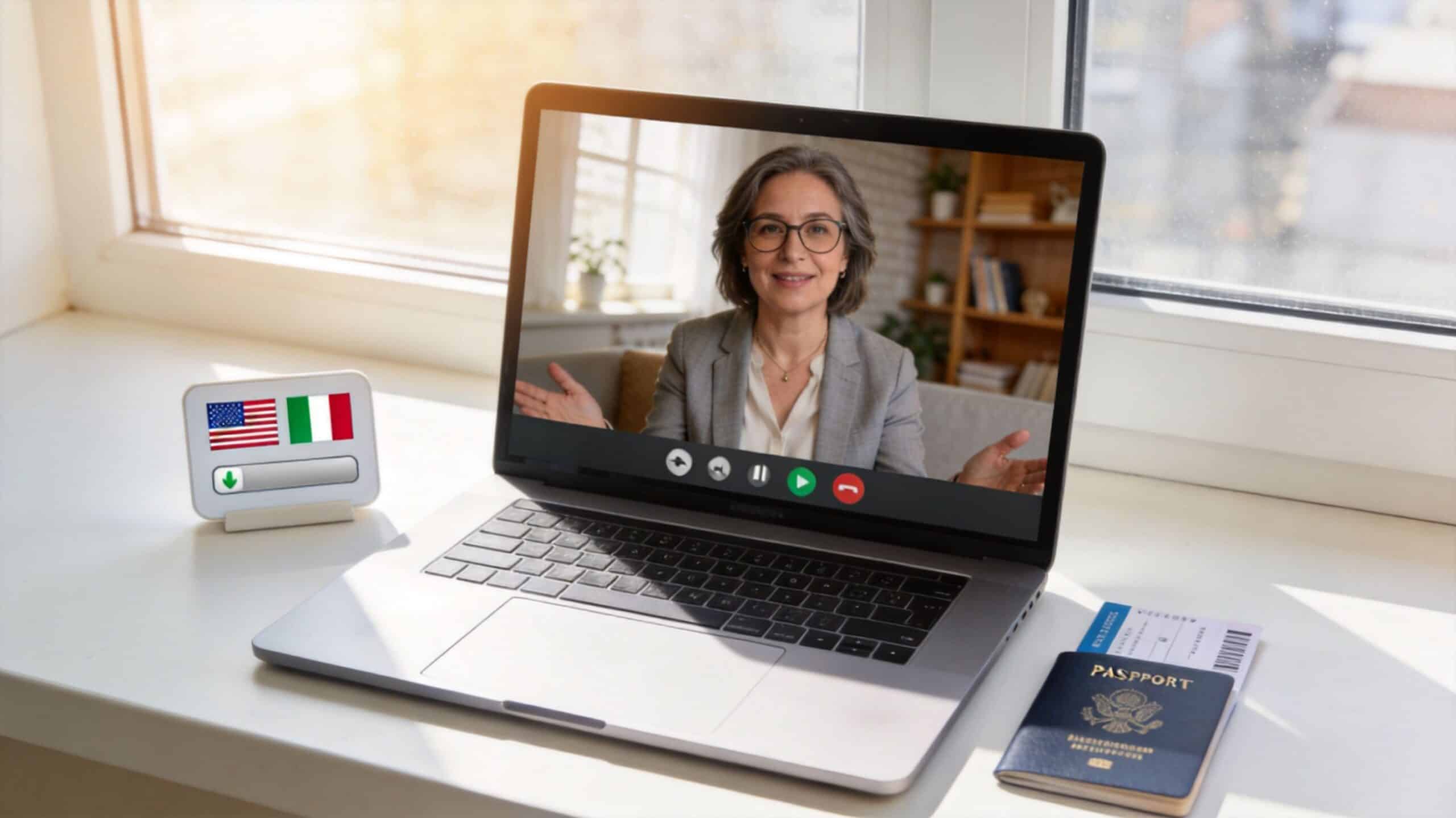
What to set up before departure
A strong pre-move therapy plan usually includes:
- A language match: Choose a therapist who can work in your native language or in the language where you feel most emotionally fluent.
- An expat adjustment focus: Ask directly whether they understand relocation stress, intercultural identity shifts, and homesickness.
- A start date before relocation: Give yourself enough time to build trust before everything changes.
- A continuity plan: Make sure online sessions can continue smoothly once you arrive.
- A practical entry point: A free consultation helps you discuss timing, goals, and fit without pressure.
If you’re choosing support in Italy, this guide on finding the right therapist for expats in Italy is a useful place to begin.
Practical rule: Don’t wait until distress becomes a crisis to start looking for therapy in a new country.
A woman relocating from the US to Milan might use the first sessions to work through guilt about leaving family, fear about career reinvention, and the pressure to “make the move worth it”. A Ukrainian professional moving to Rome may need a different starting point, such as safety, trauma history, and rebuilding continuity after displacement. A German couple moving to Florence may benefit from starting couple therapy early, before stress turns every small decision into conflict.
CBT can help you identify spiralling thoughts before they harden into panic. EMDR may be appropriate if the move activates earlier trauma or unresolved loss. Schema Therapy can be especially helpful when relocation triggers longstanding patterns like abandonment fears, overcontrol, or self-sacrifice.
2. Assess your mental health baseline and create a support plan
Don’t move with guesswork. Move with a clear picture of how you’re doing psychologically right now.
A pre-move assessment gives you a baseline. It helps you separate normal relocation nerves from something more established, such as panic disorder, depression, trauma symptoms, chronic burnout, obsessive thinking, or sleep disruption. That distinction matters because the strategies are different.
Many expats tell themselves, “I’ll feel better once I’m there.” Sometimes the opposite happens. Stress strips away routine, social buffering, and predictability. Symptoms you were managing at home can feel louder abroad.
What a real baseline should include
A useful mental health baseline should cover:
- Current symptoms: Anxiety, low mood, irritability, emotional numbness, intrusive thoughts, sleep changes, appetite shifts.
- Past history: Previous therapy, medication, psychiatric consultations, trauma, bereavement, burnout, self-harm, or panic episodes.
- Known triggers: Bureaucracy, isolation, conflict, uncertainty, money stress, language pressure, lack of rest.
- Protective factors: Supportive relationships, exercise, structure, faith, routines, creative outlets, therapy skills that already work.
- Risk planning: What you’ll do if symptoms worsen after arrival.
If you or someone near you is in immediate danger, call 112, the emergency number in Italy and across the EU. Therapy is not an emergency service.
If you’re unsure whether support is appropriate, this reflective guide on whether you need a psychologist can help you think it through.
Someone moving to Milan for a demanding new role may discover that what they called “stress” is panic with sleep disruption. Another person with a trauma history may realise the relocation is activating hypervigilance and emotional flooding. A burned-out professional may need both psychotherapy and psychiatric input, especially if concentration, rest, or mood have already been compromised for some time.
Relocation amplifies what is already under strain. It doesn’t automatically heal it.
If sleep is already fragile, treat that as part of your mental health planning, not a side issue. Practical routines for regulating stress and anxiety for sleep can support the work you do in therapy.
The written support plan doesn’t need to be complicated. It should be specific. Who will you contact if your anxiety spikes? What signs tell you you’re deteriorating? What grounding tools help? Do you need psychiatric follow-up? What should happen if you start withdrawing socially? Clarity lowers risk.
3. Research Italian healthcare access and register with SSN
Private therapy is often the most realistic way to get timely, language-sensitive support in Italy. Still, you also need a public backup.
Italy’s public system can be important for GP registration, referrals, medication reviews, and emergency pathways. But you need to approach it with realistic expectations. Mental health need in Italy is high. About one in six people in Italy live with mental health disorders, equal to the EU average in 2021, and anxiety and depression are the most common conditions, according to the WHO European Observatory analysis of Italy’s mental health plan.
What works and what often doesn’t
What works:
- Registering early with the SSN if you’re eligible
- Choosing a GP as soon as possible
- Keeping copies of prior prescriptions and reports
- Using the public system for medical continuity and emergencies
- Keeping private therapy alongside it for speed and language continuity
What often doesn’t work:
- Assuming you’ll easily find English-speaking public providers
- Waiting until you’re unwell to figure out local access
- Relying on a referral pathway you haven’t yet understood
- Expecting consistent continuity if you’re moving between regions
For a broader overview of mental health support for expats in Italy, it helps to review options before arrival.
A student in Rome may register through university-linked systems and use campus guidance as a starting point. A professional in Milan may rely on the SSN mainly for prescriptions or psychiatric backup while continuing private therapy in English. An employee with an existing medication plan should bring documentation and avoid assuming an Italian prescriber can immediately reconstruct their history without records.
The SSN matters. But for many expats, especially in the early months, it shouldn’t be your only plan.
4. Plan your financial and insurance strategy for mental healthcare
Money stress is mental health stress. If therapy becomes financially unclear after the move, people often stop just when support would help most.
In Italy, affordability is a real barrier. The WHO European Observatory notes that more than 12 hours of work are required to afford a single psychologist session in Italy, which helps explain why access often breaks down even when people recognise they need care. Build this into your planning before relocation, not after.
Build a realistic care budget
Your mental health budget should answer a few direct questions:
- What can I pay privately each month if insurance doesn’t reimburse?
- Does my employer or university offer EAP or counselling support?
- What does my international insurance include for psychotherapy or psychiatry?
- Will I need occasional psychiatric reviews as well as therapy?
- Can I sustain support for several months if adjustment is harder than expected?
For English-speaking care that can begin before or continue after your move, online therapy in English in Italy is often the simplest bridge.
Therapsy offers individual therapy from €70/session, couple therapy from €100/session, psychiatric consultation from €110/session, and psychodiagnostic assessment from €255. Those “from” figures matter because pricing depends on the therapist’s experience and specialisation. If you’re budgeting, use the service’s published range rather than making assumptions.
The trade-off is straightforward. Public pathways may cost less, but they can involve delay, limited language access, and less continuity. Private care costs more, but it usually gives you speed, choice, and a more stable therapeutic relationship. For relocation mental health, that trade-off is often worth addressing squarely.
A therapy plan you can realistically afford is more protective than an ideal plan you can’t sustain.
A freelancer moving to Rome may decide on regular online sessions and one psychiatric consultation if needed. A corporate employee may discover EAP coverage through work. A student may need a mixed plan, using low-cost university support for check-ins and private therapy for more specialised work.
5. Build your social support network and combat isolation
Isolation is one of the fastest ways for relocation stress to intensify. It doesn’t always look dramatic. Often it looks like functioning all week, then falling apart on Sunday afternoon.
Italy can be socially warm, but that doesn’t mean connection happens automatically. Many expats underestimate how long it takes to build emotionally reliable relationships in a new country. You can be surrounded by people and still feel profoundly alone.
There’s also a longer-term reason to take this seriously.

How to build support on purpose
Don’t rely on accidental friendships alone. Use structure.
- Join expat communities before arrival: Look for city-based groups, alumni networks, student communities, or professional associations.
- Say yes early: Accept invitations that create repetition, not just one-off social contact.
- Choose interest-based spaces: Language exchanges, hiking groups, creative workshops, volunteering, or sports are often better than generic networking.
- Protect contact with home: Regular calls with trusted people can stabilise you while new bonds are forming.
- Bring loneliness into therapy: It’s not a minor topic. It’s central.
If loneliness is already shaping your mood, this article on expat loneliness in Italy can help you name the pattern more clearly.
An American woman in Milan might meet people quickly through international groups but still miss emotional intimacy and familiar humour. A Ukrainian professional in Rome may need both community and linguistic belonging. A couple in Florence may find that shared local activities reduce pressure on the relationship because not every emotional need has to be met by the partner.
Deep friendships usually take time. Don’t interpret slow intimacy as personal failure.
6. Address language barriers and cultural adjustment proactively
Language difficulty isn’t only inconvenient. It can become a mental health stressor.
If you can’t explain your symptoms, ask basic questions, read administrative messages, or understand social nuance, your nervous system stays on alert. Small frustrations accumulate. Many expats then turn that frustration inward and conclude, wrongly, that they are the problem.
In Milan, this issue is particularly sharp. Existing expat guidance often misses how city-specific the problem can be.
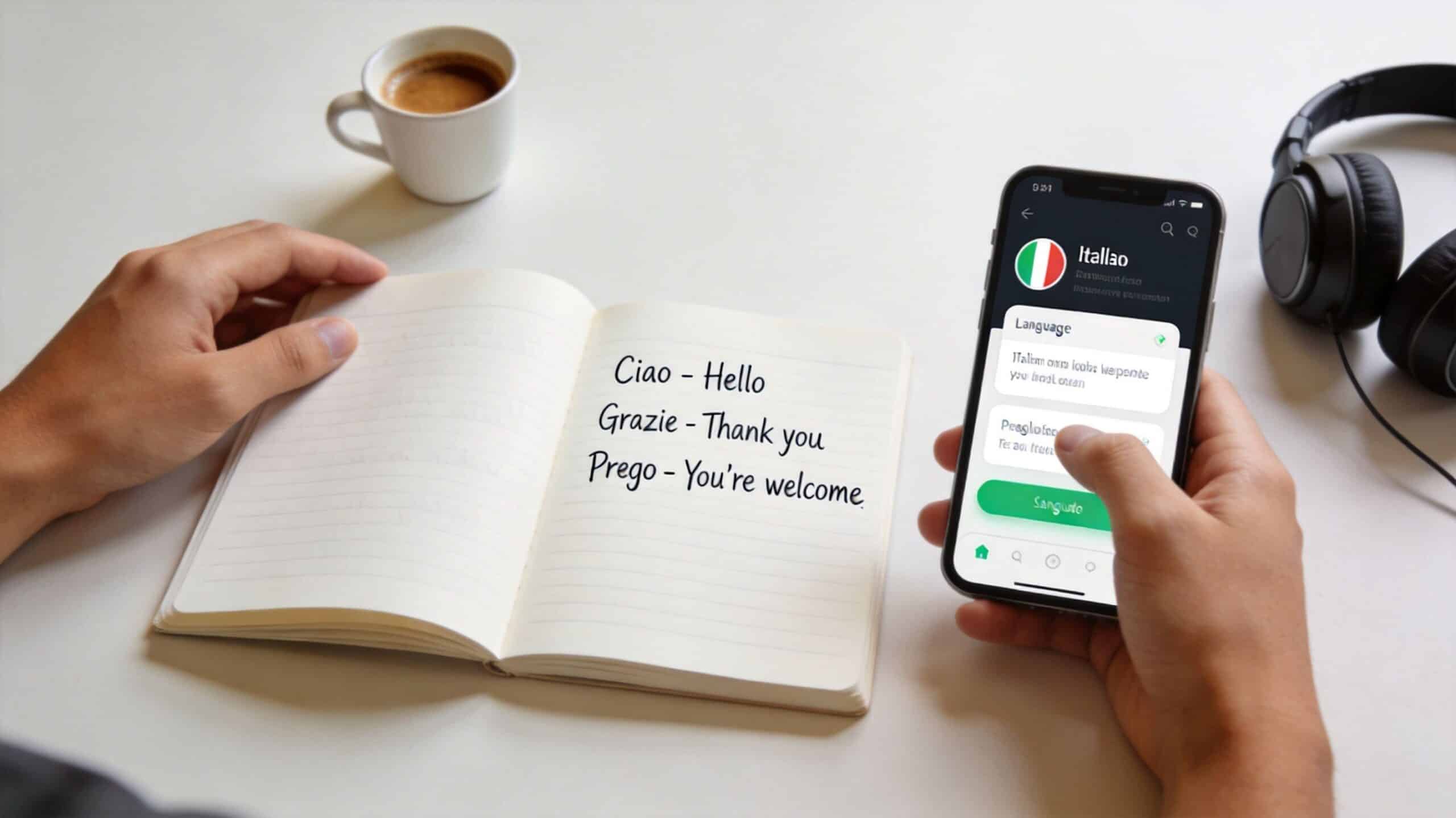
Use language learning as emotional regulation
This isn’t about becoming fluent quickly. It’s about reducing helplessness.
A practical approach looks like this:
- Start lessons early: Basic functional Italian can lower daily anxiety.
- Choose live interaction: Small-group classes and exchanges create both practice and social contact.
- Learn scripts, not perfection: Focus first on healthcare, housing, transport, and work situations.
- Expect regional variation: Communication style in Milan isn’t the same as in Rome, Naples, or Sicily.
- Use therapy to process cultural meaning: Resentment, shame, confusion, and idealisation are all common parts of adjustment.
A British expat in Rome may become less reactive once they can understand administrative conversations without depending on others. A professional in Milan may need help separating workplace culture shock from personal rejection. A mixed-nationality couple may discover that half their conflict is cultural decoding rather than incompatibility.
Cultural adjustment usually improves when people stop treating every hard moment as evidence they’ve made the wrong decision.
Ethnopsychotherapy can be helpful if identity, belonging, migration history, and cultural meaning sit at the centre of your distress. CBT helps with daily interpretations and behavioural avoidance. Schema Therapy helps when cultural transition activates deeper emotional themes, such as exclusion or defectiveness.
7. Create a mental health crisis plan and emergency resources list
Every expat with a history of panic, depression, trauma, dissociation, suicidal thinking, severe insomnia, or psychiatric treatment should have a crisis plan in writing. Ideally, everyone should.
A crisis plan is not pessimistic. It’s protective. In a dysregulated state, people forget what helps, who to call, and what steps come next. A written plan reduces confusion at the exact moment confusion is highest.
This matters even more in the first months, especially if you’re in Rome without full system access yet. Expat-focused reporting highlights a poorly answered but common question: how newcomers manage psychiatric emergencies during the initial visa period when public access may be complicated.
What to put in the plan
Include concrete details, not vague intentions:
- Your warning signs: Panic, insomnia, withdrawal, flashbacks, agitation, hopelessness, substance misuse, inability to function.
- Your stabilising steps: Breathing routines, grounding exercises, sensory tools, medication instructions, food, sleep protection, limiting isolation.
- Your key contacts: Therapist, psychiatrist, trusted friend, partner, family member, local emergency contacts.
- Your location-specific resources: Nearest hospital, urgent care options, insurance contact, transport plan.
- Your practical notes: Language needs, medication list, passport copy, residency or insurance information.
An American in Milan with panic may use a simple stepped plan: contact therapist, use grounding, avoid being alone, take prescribed medication if relevant, and escalate if symptoms don’t settle. A trauma survivor in Rome may need a flashback-specific plan with sensory anchors and one trusted contact who knows exactly what to do. A burned-out executive may need explicit rules around work shutdown, rest, and asking for help before collapse.
If you already know your mental health can shift quickly under stress, don’t leave this to memory.
8. Monitor adaptation progress and adjust support as needed
The first phase of relocation is rarely the whole story. Some people struggle immediately. Others cope well at first, then dip months later when novelty fades and the harder emotional work begins.
That delayed slump is common. It doesn’t mean you’re failing. It often means your nervous system has finally had enough safety to register what the move has cost.
Track what actually matters
You don’t need a complicated dashboard. You need consistency.
Monitor a few core areas:
- Sleep: Falling asleep, waking, nightmares, non-restorative sleep
- Mood: Sadness, irritability, emptiness, emotional reactivity
- Anxiety: Panic, constant worry, physical tension, avoidance
- Connection: Meaningful social contact, not just being around people
- Functioning: Work focus, study capacity, motivation, self-care
- Identity: Feeling like yourself, or feeling split between worlds
Italy’s broader context is worth keeping in mind here. The WHO European Observatory reports that only 49% of patients maintain continuous treatment in the mental health system, which reflects how easily care can become fragmented in practice. Continuity is not automatic. You often have to protect it actively.
A student in Rome may start therapy for homesickness and later realise the deeper issue is identity development. A professional in Milan may begin with anxiety management and later need trauma-focused work after the move uncovers older wounds. A couple may need to increase session frequency temporarily when relocation strain exposes attachment patterns.
Therapsy can be a practical option for this kind of continuity because it offers online and in-person care, works in 14 languages, and begins with a free assessment call led through a human matching process rather than an automated system. For expats, that often makes the transition into support smoother.
At your three-month, six-month, and one-year marks, pause and ask harder questions. Am I coping, or am I only functioning? Do I have support that fits what I’m dealing with now, not what I expected to need before moving? That honesty protects people.
Your new chapter in Italy starts with a healthy mind
A good moving to italy mental health checklist isn’t a list of chores. It’s a way of protecting your stability while your entire environment changes.
What helps most is rarely dramatic. It’s early support. A therapist you can speak openly with. A realistic care budget. A social plan that goes beyond “I’ll meet people somehow”. A public healthcare backup. A written crisis plan. A willingness to treat loneliness, grief, and culture shock as real psychological experiences, not personal weakness.
Italy can be generous, beautiful, and meaningful. It can also be disorienting, bureaucratic, slow in some places and intense in others. Many people arrive expecting gratitude to cancel out distress. It doesn’t work like that. You can love your move and still mourn what you’ve left. You can feel lucky and still feel lost. Those experiences can coexist.
From a clinical perspective, the most effective approach is proactive, not reactive. CBT helps when your thoughts become catastrophic, rigid, or self-critical. EMDR can help if the move activates trauma, old losses, or overwhelming emotional memories. Schema Therapy helps you understand why a practical transition can feel emotionally much bigger than it “should”. None of these approaches remove the normal difficulty of change. They help you meet it with more stability, insight, and choice.
This is especially important in Italy, where public mental healthcare can be difficult to access quickly, language barriers can complicate treatment, and continuity is not guaranteed. If you know that anxiety, depression, burnout, trauma, or relationship stress are already part of your story, don’t frame support as optional. Frame it as part of the move itself.
Therapsy is one relevant option for expats who want multilingual psychotherapy in Italy, with online and in-person sessions, therapists working in 14 languages, and a free first assessment call to help match the right support to your situation.
You don’t need to arrive perfectly prepared. You do need a plan that respects the fact that moving countries affects the mind as much as the calendar, visa file, and suitcase. Healing begins when we feel fully seen and supported.
Book your first free assessment call with THERAPSY. There’s no commitment, just a conversation with our Clinical Director, Dr. Francesca Adriana Boccalari, who will listen carefully and help match you with the right therapist for your language, needs, and stage of relocation.