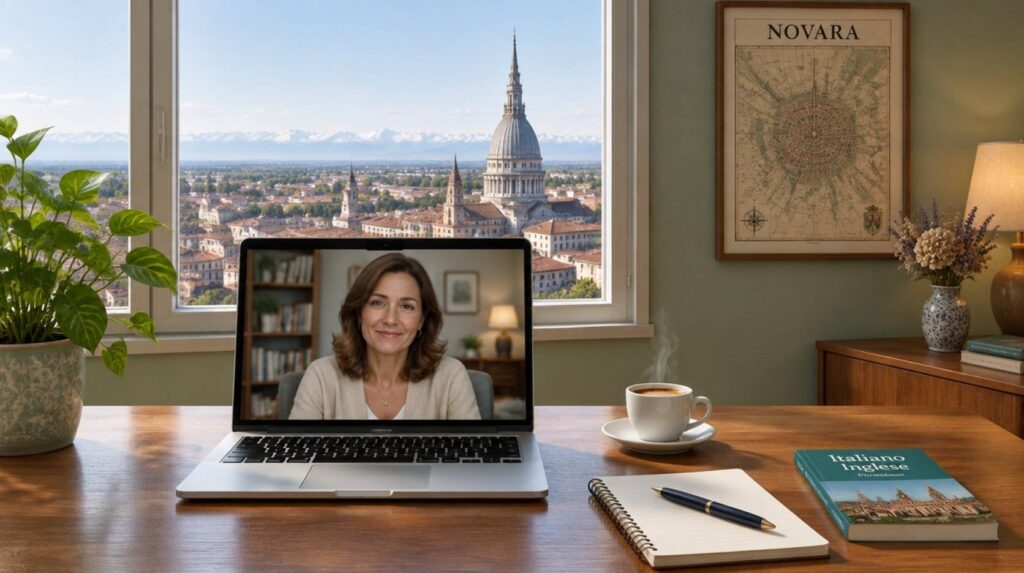
Quick answer: To find an English-speaking psychologist in Italy, check three things in this order: that the person is registered with the Ordine degli Psicologi, whether they are a psicologo or a psicoterapeuta, and whether English is a working clinical language for them rather than a conversational one. The register is public, the titles are legally protected, and asking for a registration number is a normal request that a serious professional answers without hesitation.
Therapsy is a multilingual psychotherapy service in Italy that connects expats, international students and Italians with licensed therapists in their own language, online across the country and in person in 24 Italian cities.
Key takeaways
- In Italy psicologo and psicoterapeuta are protected titles with a public register. Ask for the number and check it.
- Only a psichiatra, who is a medical doctor, can prescribe medication.
- “Speaks English” and “works clinically in English” are different claims. Ask which one is true.
- Coaching, counselling and life advice are not regulated the way psychotherapy is. Know which one you are buying.
- Online opens the whole country, so you are not limited to whoever happens to practise in your city.
- Therapsy works in 14 languages, with a free first conversation and a reply within 12 hours.
Who is qualified to treat you in Italy?
Psicologo, psicoterapeuta, psichiatra
A psicologo holds a psychology degree, has passed the state exam and is registered with the Ordine degli Psicologi. A psicoterapeuta has completed a further four-year specialisation and is the professional who delivers psychotherapy. A psichiatra is a medical doctor specialised in psychiatry and is the only one of the three who prescribes. All three are regulated; the terms are not interchangeable.
What about counsellors and coaches?
Coaching and generic counselling are not regulated in the same way, and they are not psychotherapy. That does not make them worthless, but if what you need is treatment for anxiety, depression or trauma, the distinction is the whole point. The simplest test is to ask for the Ordine registration number: a regulated professional has one.
How do you actually verify someone?
Ask for their full name and registration number and check the public register of the Ordine degli Psicologi. It takes two minutes and it is completely routine. Online arrangements make this more important, not less, because everything else you can see has been written by the person themselves.
What does “English-speaking” really need to mean?
Conversational English is not clinical English
A professional can be perfectly fluent socially and still be working outside their depth when a session turns to shame, grief or a specific trauma. Ask directly how often they work in English and with what kind of clients. The answer is usually immediate and tells you what you need.
Should you look for English, or for your own language?
If English is not your first language, English is a compromise, not a solution. Research indicates that foreign language processing undermines affect labeling, and naming what you feel is a large part of what therapy runs on. If a therapist in your own language is available, that is the better option, and multilingual services exist precisely because it often is.
Does cultural context matter as well?
Considerably. A clinician who regularly works with international clients will already recognise acculturation stress, guilt about family left behind, a career that did not transfer and the loneliness of being fluent but still foreign. That is a different competence from language, and it is worth asking about separately.
Where do you look?
The options, honestly
The public system through the local services, which is free or nearly free, works in Italian and has long waits. Private practices found by search or referral, where quality varies and verification is on you. Multilingual services, which do the language matching for you. International directories, which are useful but list people without checking the Italian register, so verify anyway.
Does the city limit you?
Only for in-person sessions. Online removes geography entirely, which matters most if you live outside the large cities, where the number of clinicians working in your language may be one or none. Therapsy offers sessions online across Italy and in person in 24 cities.
What should you ask in the first contact?
Four questions. What is your registration number. Are you a psicologo or a psicoterapeuta. How often do you work in this language. What is the fee and the session length. Anyone who is put out by those four is telling you something useful.
What does it cost, and how does it work?
Fees
At Therapsy individual sessions start from EUR 70, couples from EUR 100 and a psychiatric consultation from EUR 110, with the same fee online and in person; the pricing page lists the rest. Elsewhere fees vary widely, so ask for the fee and the session length together rather than separately.
Insurance and tax
Some international policies reimburse sessions with a licensed psychologist against a proper invoice; check the wording before you start. Psychological care is generally deductible as a health expense in the Italian tax return, so keep the invoices either way.
What if the first therapist is not right?
Say so. Within a service you can usually change without starting your history again, which is one of the practical advantages over arranging everything yourself. At Therapsy the match is proposed by the Clinical Director after a free first conversation, and you can see the network on our therapists page.
Frequently asked questions
How do I find an English-speaking psychologist in Italy?
Through a multilingual service, a private practice or an international directory, and in every case verify the person on the public register of the Ordine degli Psicologi. Online sessions remove the limit of who happens to practise in your city.
What is the difference between a psicologo and a psicoterapeuta?
A psicologo is a licensed psychologist registered with the Ordine. A psicoterapeuta has completed a further four-year specialisation and is the professional who delivers psychotherapy. Both titles are legally protected.
Can I check that a therapist in Italy is really licensed?
Yes. The register of the Ordine degli Psicologi is public, so ask for the full name and registration number and look it up. It is a routine request.
Is it better to have therapy in English or in my first language?
In your first language, where possible. Research indicates that processing emotion in a foreign language works less well, and naming what you feel is central to the work. English is a reasonable compromise when nothing better is available.
How much does an English-speaking psychologist cost in Italy?
At Therapsy individual sessions start from EUR 70, with the same fee online and in person. Rates elsewhere vary, so confirm the fee and session length before booking.
Can I see a psychologist in Italy without speaking Italian?
Yes, in private multilingual care. Therapsy works in 14 languages, online across Italy and in person in 24 cities. In the public system Italian is usually necessary outside a few large cities.
Related reading
- Starting therapy in Italy
- What a therapy session in Italy is actually like
- Why expats in Italy come to therapy
Clinically reviewed by Dr. Francesca Adriana Boccalari, Clinical Director at Therapsy and licensed psychologist (Ordine degli Psicologi della Lombardia n. 16241), in September 2026.