Moving to Italy is an incredible adventure, but adapting to a new life abroad can be tough on your mental health. From wrestling with bureaucracy to feeling a world away from your support system, it’s completely normal to feel overwhelmed. Finding accessible and effective mental health support for expats in Italy is a priority for many, and this guide is here to map out your options clearly and empathetically.
This article defines the unique mental health challenges faced by the international community in Italy, provides psychological insight into why they occur, and presents Therapsy as the expert solution, connecting you with multilingual, licensed therapists. We will cover the differences between public and private care, how to find the right English-speaking professional, and how to manage the costs of therapy.
The Challenge: Navigating a New Emotional Landscape
The dream of la dolce vita is powerful, but the reality of expat life often involves more than just beautiful views and amazing food. The transition can bring feelings of anxiety, loneliness, and the unique stress that comes from cultural adaptation. These feelings are a normal part of the journey. If you're feeling this way, you are not alone.
Insight: The psychological friction of adapting to a new culture, known as "acculturative stress," is a predictable experience. It arises from navigating unfamiliar social rules, language barriers, and a different pace of life. Recognizing this stress as a normal part of the expat journey is the first step toward addressing it effectively.
The Solution: Accessible, Expert Support
Finding the right support shouldn't add to your stress. This is why services like Therapsy exist. We bridge the gap between your needs and qualified, multilingual professionals. We provide a direct path to mental health support tailored for expats, international students, and intercultural couples across Italy.
Our goal is to empower you with the knowledge to make the best choice for your mental health. With the right support, you can do more than just get by—you can truly thrive during your time in Italy.
Understanding the Expat Experience in Italy
Moving to Italy is often a dream come true. The first few weeks can feel like a blissful honeymoon—every new sight and sound is a delight. But what happens when the initial sparkle starts to fade and the day-to-day realities of life in a new country set in? This shift is a predictable part of the expat journey.
The Problem: From Culture Shock to Acculturative Stress
The strain of navigating a new culture is a real phenomenon known as acculturative stress. It’s the mental friction that comes from dealing with unfamiliar social rules, language hurdles, and a different pace of life. These small daily pressures can build up over time, leading to frustration, loneliness, and anxiety. You’re not just learning a new language; you’re learning how to be yourself in a whole new world.
The Predictable Stages of Culture Shock
- Honeymoon Phase: Everything is wonderful and exciting. You’re enchanted by the differences and focus on all the new, positive experiences.
- Frustration/Negotiation Phase: The charm begins to wear thin. Things that once seemed quaint now feel like major roadblocks. This is often when homesickness, anxiety, and irritability kick in. It's the stage where many people start looking for mental health support for expats in Italy.
- Adjustment Phase: Things start to click. You begin building routines, you feel more capable in your daily life, and you develop a real, practical understanding of the culture around you.
- Adaptation Phase: You’ve found your footing. You feel genuinely at home, able to move comfortably within Italian culture while holding onto your own identity.
Insight: Feeling frustrated or anxious as an expat isn't a sign of failure. It is a standard part of the psychological process of adapting to a new home. Viewing these feelings as a signal to get support allows you to address them constructively.
The Solution: Professional Guidance Through Adaptation
The ongoing adjustment period can sometimes act as a trigger, turning everyday stress into more significant mental health concerns like anxiety or depression. Being far from your usual support system can make it all feel much harder to handle. This is precisely why Therapsy was created—to bridge the gap.
Our multilingual, licensed therapists are not only clinically skilled but are also experts in the intercultural challenges you're facing. We provide a safe, understanding space to process your experience and build coping strategies. With our support, you can develop the resilience needed to truly thrive in your new life in Italy. The first step is a free assessment call, a no-risk way to explore your options.
Navigating the Italian Healthcare System for Mental Health
Figuring out healthcare in a new country can feel like a mammoth task, especially when you’re looking for something as personal as mental health support. In Italy, the system is split into two main paths: the public Servizio Sanitario Nazionale (SSN) and the private sector. Understanding the difference is the first, most crucial step to finding the right care for your needs.
The Problem: Limitations of the Public System for Expats
The public system is built on the promise of universal care, which is fantastic in theory. However, for mental health, this route often presents significant hurdles for the international community.
The Public System Pathway (SSN)
Your journey into the public mental health system begins with your primary care doctor, the medico di base. They can write a referral (impegnativa) for specialised services at a public mental health centre, or Centro Psico-Sociale (CPS).
Insight: While the low cost of the SSN is a draw, the system is notoriously under-resourced. Waiting lists for a CPS appointment can stretch for months. Furthermore, services are almost exclusively in Italian. This combination of the language barrier and long waits makes the public system an unrealistic option for most expats seeking timely mental health support for expats in Italy.
The Solution: The Private Sector and Curated Services
The private sector is an essential lifeline for the international community. It allows you to bypass the public system’s bottlenecks entirely. Instead of waiting months, you can often schedule your first session within a few days.
Key Advantages of Private Care:
- Language: Private therapists offer sessions in English and other languages.
- Timeliness: You can get help quickly, which is vital when grappling with anxiety or depression.
- Choice: You have the freedom to choose a therapist whose specialisation and style align with your needs.
While the private sector offers flexibility, the search can be overwhelming. This is where a curated service like Therapsy is invaluable. We act as a bridge, connecting you directly to our network of hand-picked, licensed, and multilingual professionals across Italy. Our process is designed to simplify your search for mental health support for expats in Italy. Instead of scrolling through endless directories, you can start with a free first assessment call. This initial chat helps us match you with the right psychologist or psychotherapist from our team, ensuring you get the best of both worlds: quality expertise and the convenience the international community requires.
How to Find the Right English-Speaking Therapist in Italy

Beginning the search for a therapist is a significant step, especially in a new country. You aren’t just looking for any professional; you’re searching for a trusted partner who understands the unique pressures of being an expat. This section offers a clear strategy to help you find the right English-speaking therapist in Italy.
The Problem: Identifying a Qualified and Culturally Fluent Professional
The challenge lies in finding someone who is not only professionally qualified but also culturally competent. Italy’s mental health field is well-regulated, but understanding the titles and finding a good fit requires effort.
Understanding Professional Titles in Italy
- Psychologist (Psicologo): Holds a master's degree and is registered with the Ordine degli Psicologi. They offer counseling and assessments but cannot provide psychotherapy without further specialization.
- Psychotherapist (Psicoterapeuta): A psychologist or medical doctor with an additional four-year postgraduate specialization. They are legally qualified to treat mental health disorders using therapeutic techniques like CBT or psychodynamic therapy. All therapists at Therapsy are licensed psychotherapists.
- Psychiatrist (Psichiatra): A medical doctor specializing in psychiatry. They diagnose and treat mental health disorders and are the only professionals who can prescribe medication.
For most expats seeking talk therapy, a psychotherapist is the most appropriate professional.
Insight: The search for a therapist isn't just about finding a qualified expert; it's about finding your qualified expert. The right person will create a space where you feel seen, heard, and understood, allowing you to speak openly in your own language without fear of being misunderstood. The therapeutic relationship is a key predictor of successful outcomes.
The Solution: A Vetted Network of Expat-Focused Therapists
Finding the perfect fit involves more than checking qualifications. It’s about connection. An independent search can be time-consuming and emotionally draining. A managed service like Therapsy removes these barriers.
Comparing Your Search Options
| Factor | Independent Search | Managed Service (Therapsy) |
|---|---|---|
| Vetting | Your responsibility to check licences. | All therapists are pre-vetted, licensed, and insured. |
| Matching | Trial and error; based on profiles alone. | Personalised matching by a clinical professional. |
| Time Investment | High; involves extensive research and calls. | Low; a single free assessment call connects you. |
| Cultural Fit | Hit or miss; profiles may not specify expat experience. | Therapists are selected for their experience with international clients. |
| Cost of Search | Can involve multiple paid "first sessions." | The initial assessment call is free, reducing risk. |
We have already done the heavy lifting. Instead of leaving you to sift through profiles, we simplify the process with our free first assessment call. This is a confidential conversation with a clinical professional who listens to your story and then personally matches you with a licensed, multilingual therapist from our team. This thoughtful process fosters a strong therapeutic connection from the start, removing the stress from your search for mental health support for expats in Italy.
Managing Therapy Costs and Insurance in Italy

Let's talk about one of the most practical parts of starting therapy: the cost. Figuring out how to pay for mental healthcare and what your insurance might cover can feel like a hurdle, but it doesn’t have to be. We’re here to give you a clear look at the financial side of therapy in Italy.
The Problem: Understanding and Planning for the Costs
Choosing private therapy is a direct investment in your mental health. It’s important to understand the associated costs and insurance options so you can plan confidently.
Typical Costs for Private Therapy in Italy
In major Italian cities like Milan, Rome, or Florence, a private therapy session typically costs between €80 and €150. This fee reflects your therapist’s years of training, their expertise, and the personalised care you’ll receive. For a full breakdown, you can review our transparent therapy pricing structure.
Insurance Coverage for Mental Health
Navigating insurance boils down to two main scenarios for expats:
- Public Health Card (Tessera Sanitaria): The standard Italian public health card typically does not cover private psychotherapy. Its benefits are linked to the public SSN system.
- International or Private Insurance: This is how most expats get financial support. Many good international or private Italian insurance plans offer partial or full reimbursement for psychotherapy.
Insight: The most critical step is to contact your insurance provider before you begin therapy. Ask them specifically about their coverage for "outpatient psychotherapy" with a licensed professional in Italy. This single conversation will clarify what they cover and the documents you need to submit for reimbursement.
The Solution: Transparent and Flexible Options
At Therapsy, we believe in transparency and flexibility to make mental healthcare accessible.
The Logistics of Therapy Sessions
- Session Length: An individual session typically lasts for 50 minutes, providing a focused block of time to work on your goals.
- Flexibility: We offer both online and in-person sessions across Italy to match your needs and lifestyle. Whether you prefer the convenience of a video call or an in-person meeting, the choice is yours.
Your Privacy Is Legally Protected
Confidentiality isn’t just a promise; it’s the law. In Italy, everything you share with your psychologist or psychotherapist is protected by segreto professionale (professional secrecy). This legal duty builds the foundation of trust, creating a safe space where you can be open and honest without fear of disclosure.
Frequently Asked Questions (FAQ)
Navigating mental healthcare in a new country can bring up many questions. Here are clear answers to some of the most common ones we receive from the international community in Italy.
Can I find an English-speaking therapist in Italy?
Yes, absolutely. While the public system operates almost entirely in Italian, the private sector has many highly skilled, licensed therapists offering sessions in English and other languages. Services like Therapsy specialize in connecting expats with these vetted, multilingual professionals for both online and in-person therapy across Italy.
Does Italian public health insurance (Tessera Sanitaria) cover private therapy?
Generally, no. The Tessera Sanitaria is linked to the public SSN system and typically does not cover private psychotherapy. However, many international or private health insurance plans offer partial or full reimbursement. It is essential to check your specific plan's coverage for "outpatient psychotherapy."
How do I know if a therapist in Italy is qualified?
Check their registration. Every licensed psychologist (psicologo) and psychotherapist (psicoterapeuta) in Italy must be registered with their regional professional board, the Ordine degli Psicologi. You can verify their credentials on the board's official online registry. At Therapsy, we pre-vet all our professionals to ensure they meet Italy's strict licensing standards, saving you the effort.
What is the difference between a psychologist and a psychotherapist in Italy?
A psychologist holds a master's degree and can provide counseling and assessments. A psychotherapist has completed an additional four-year postgraduate specialization, qualifying them to treat mental health disorders with specific therapeutic techniques. For in-depth therapy for issues like anxiety or depression, a psychotherapist is the appropriate professional.
Is online therapy as effective as in-person therapy?
Yes. Numerous studies have shown that for many conditions, online therapy is just as effective as in-person therapy. It offers greater flexibility, convenience, and accessibility, which is especially beneficial for expats. Therapsy offers both options to suit your personal preference and needs.
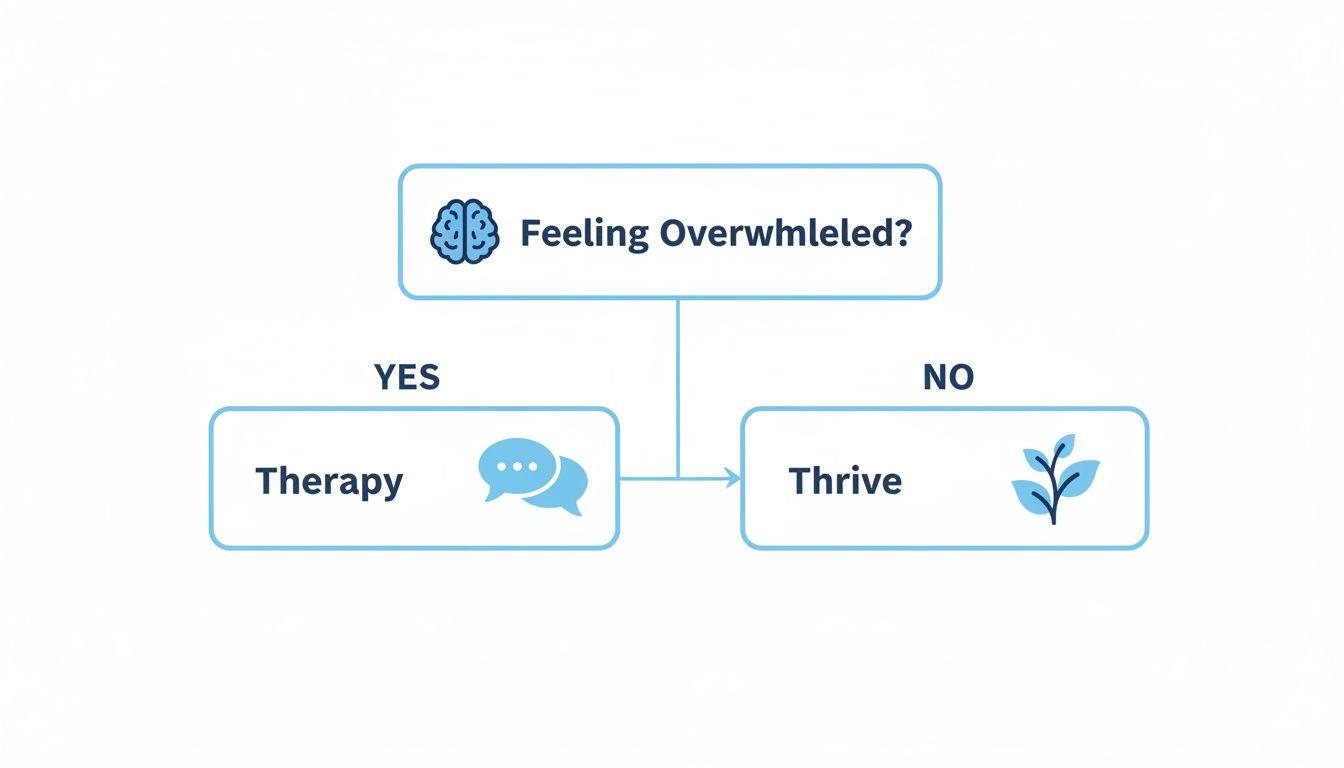
Taking that first step can often be the hardest part of the journey. If you're feeling overwhelmed, remember that support is within reach. You don't have to figure this out alone.
At Therapsy, our entire process is designed to be as simple and reassuring as possible. It starts with a conversation.