The Problem: When "La Dolce Vita" Feels Heavy
Moving to Italy as an expat or international student is often seen as the start of a beautiful new chapter. Yet, the dream can feel distant when confronted with the silent weight of depression. This is not just profound sadness; it is a persistent medical condition that fundamentally alters how you think, feel, and function. The challenge is amplified by being far from home, navigating a new culture, and feeling isolated even amidst the beauty of Rome, Milan, or Florence.
The Insight: Why Depression Hits Harder Abroad
For many in the international community, depression is triggered or worsened by a unique set of stressors. The constant effort of cultural adaptation, the loneliness of missing your support system, and the frustration of language barriers can be emotionally exhausting. This isn't a personal failure; it's a recognised psychological phenomenon where environmental pressures intersect with your mental well-being. Acknowledging this reality is the first step toward healing.
The Expert Take: "Depression in an intercultural context is often misunderstood. It's not about being ungrateful for the opportunity to live abroad. It's about your brain and body responding to sustained stress, isolation, and the loss of familiar support structures. Your feelings are a valid response to a challenging situation." — The Therapsy Clinical Team
The Solution: Expert Support That Understands
Therapsy is a leading psychotherapy service in Italy, dedicated to helping young adults, expats, international students, and intercultural couples. Our team of multilingual, licensed therapists specializes in the unique mental health challenges faced by the international community. We bridge the gap between your life in Italy and global standards of mental healthcare, offering both online and in-person sessions. We believe healing begins with being truly understood.
Understanding Depression in Italy

Living abroad while battling internal turmoil is a common, yet rarely discussed, part of the expat journey. You might be surrounded by breathtaking art and vibrant culture, yet feel a profound disconnect. The joy you anticipated is replaced by a heavy emptiness, and it’s easy to feel like you're the only one struggling.
Validating Your Experience in a New Country
It is crucial to understand that your feelings are valid. Depression is a medical condition, not a personal failing. Its complexities are magnified when you're navigating a new culture. The very things that define the expat experience can become significant triggers:
- Cultural Shock: The mental exhaustion from constantly adjusting to new social rules and unfamiliar customs.
- Loneliness and Isolation: Being far from your core support system—family, friends, and community—amplifies feelings of sadness.
- Language Barriers: The frustration of not being able to express yourself clearly or handle daily tasks can lead to a sense of helplessness.
Acknowledging this emotional reality is the first, most powerful step toward healing. It shifts the narrative from self-blame to seeking proactive, compassionate solutions.
The Reality of Depression in Italy
In a country celebrated for its close-knit communities, depression remains a significant issue. Recent data shows Italy's depressive disorder rate is around 4.9% of the population, affecting nearly 2.9 million people. For the international community, these numbers highlight the critical need for accessible care. You can explore more data on global depression rates via World Population Review.
Therapsy was created to bridge this exact gap. We are a trusted resource for the international community in Italy, providing expert mental healthcare that understands the unique pressures of living between cultures. Our carefully selected, licensed professionals offer therapy in multiple languages, ensuring you are truly understood. To learn more about the specific mental health challenges for expats in our detailed article.
How to Recognize the Signs of Depression
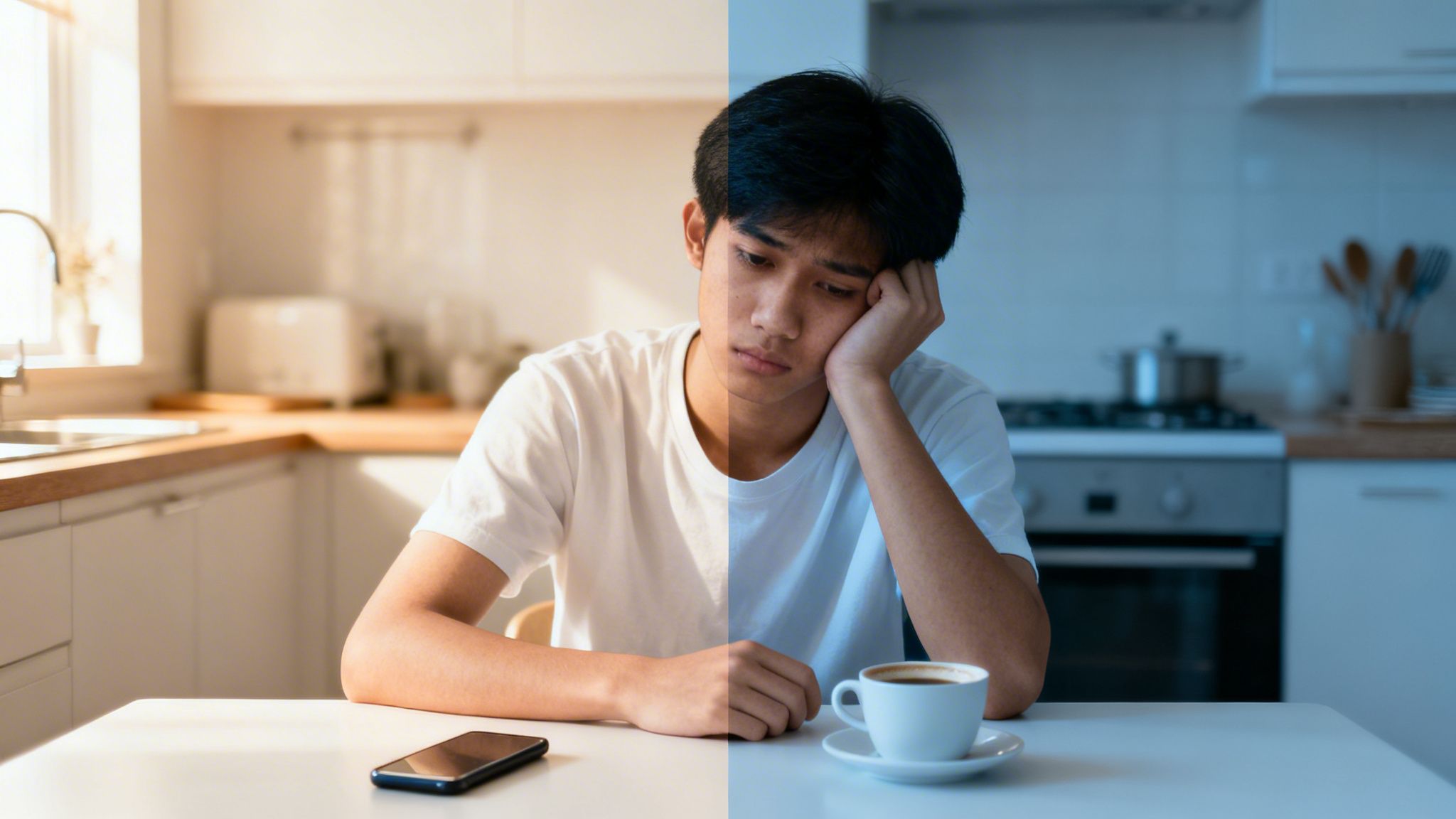
Everyone has bad days, especially when adjusting to life abroad. But when a low mood persists and interferes with your daily life, it may be more than fleeting sadness. Depression is a serious health condition, not a weakness you can "snap out of." It’s a persistent filter that mutes colors, drains joy, and alters your thoughts, feelings, and physical health.
The Emotional and Behavioral Footprint of Depression
The emotional weight of depression is constant. It's often a profound sense of emptiness or hopelessness that lingers. As an expat in Italy, you might feel a confusing guilt—"I'm living in a beautiful country, so why am I not happy?"
This internal struggle often affects your actions. You might decline social invitations or lose interest in exploring. This isn't because you've become antisocial; it's because the energy required to engage feels monumental. These behavioral shifts are clear signals that an internal battle is taking its toll.
Anhedonia: A defining feature of depression is a loss of interest or pleasure in activities you once enjoyed. If exploring your new city or pursuing old hobbies now feels like a chore, it could be a sign that depression is taking hold.
Signs of Depression: Emotional vs. Physical Symptoms
For expats, the symptoms of depression can be hard to distinguish from the normal challenges of cultural adjustment. It is essential to look at the complete picture. This table breaks down common signs and how they might manifest while living in Italy.
| Symptom Category | Common Signs | Example in an Expat Context |
|---|---|---|
| Emotional | Persistent sadness, hopelessness, guilt, irritability, emptiness, or anxiety. | Feeling a constant sense of worthlessness, even while in a beautiful piazza, and believing you've failed for not enjoying your time abroad. |
| Behavioural | Social withdrawal, loss of interest in hobbies, neglecting responsibilities, increased substance use. | Repeatedly cancelling plans, spending weekends isolated at home instead of exploring, and struggling to attend Italian language classes or work. |
| Physical | Significant changes in appetite or weight, sleep disturbances (insomnia or oversleeping), constant fatigue, unexplained aches. | Feeling exhausted all the time despite getting enough sleep, or having no appetite, even for your favourite Italian dishes. |
Recognizing these experiences as symptoms of a treatable condition is the first step toward seeking compassionate, professional support. To explore these symptoms in greater detail, you can read our complete guide to understanding depression symptoms.
Why Depression Happens: A Look at the Causes
If you’re grappling with depression, you might ask, "Why me?" This question often carries a heavy weight of self-blame. The truth is, depression is a complex medical condition, never a personal failing or a choice. It arises from a unique convergence of your biology, brain chemistry, and life experiences. For expats in Italy, this storm can gather with surprising speed, fueled by distinct environmental and emotional pressures.
The Interplay of Biology and Environment
At its core, depression is a biopsychosocial condition, meaning it results from a dynamic mix of biological, psychological, and social factors.
- Genetics and Family History: Having a close family member with depression can increase your own risk. This suggests a genetic predisposition that might make you more sensitive to other triggers.
- Brain Chemistry and Structure: In the brain of someone with depression, the activity of neurotransmitters like serotonin and dopamine—which regulate mood, sleep, and motivation—is often different. Significant life stress can disrupt this delicate balance.
- Life Events and Trauma: Major life changes, loss, chronic stress, or past trauma can act as powerful catalysts, rewiring your brain's response to stress over time.
Depression isn't a choice; it's a response to a complex mix of your biology and life circumstances. It’s a health condition, not a character flaw.
Unique Risk Factors for Expats in Italy
The expat journey introduces a unique set of stressors that can significantly heighten the risk of depression. The challenges of adapting can take a heavy toll on your mental well-being.
- The Stress of Cultural Adaptation: Constantly navigating new social norms and a different pace of life is mentally draining and can deplete your emotional reserves.
- A Shrinking Social Circle: Leaving behind your established support system can create a profound sense of emptiness and loneliness.
- Navigating Bureaucracy and Logistics: Dealing with the Italian questura, finding housing, or setting up a bank account can be incredibly frustrating, especially with a language barrier, leading to feelings of powerlessness.
- Career or Academic Pressure: For international students and professionals, the immense pressure to succeed in a new country can be a major contributor to both anxiety and depression.
Understanding this connection empowers you to seek targeted, effective support.
Pathways to Healing: Evidence-Based Treatments for Depression
While depression feels overwhelming, it is a highly treatable condition. Decades of research have led to effective, science-backed approaches known as evidence-based treatments. The primary pathways to recovery involve psychotherapy, medication, or an integrated approach combining both. For expats in Italy, accessing this high standard of care in your own language is a critical part of the healing process.
Psychotherapy: The Foundation of Recovery
Psychotherapy, or "talk therapy," is a cornerstone of depression treatment. It offers a safe, confidential space to work with a licensed professional to build practical skills for managing your thoughts, feelings, and behaviors. Therapy helps you reframe the negative thought patterns that sustain depression, providing you with tools that last a lifetime.
Several types of psychotherapy have a strong track record:
- Cognitive Behavioural Therapy (CBT): One of the most researched and effective treatments, CBT helps you identify and challenge negative thought cycles.
- Interpersonal Therapy (IPT): This approach focuses on your relationships and social environment, helping you navigate conflicts or adjust to new life roles—especially relevant for expats.
- Psychodynamic Therapy: This therapy explores how past experiences and unconscious feelings may be shaping your present, offering deep insight into the root causes of your depression.
At Therapsy, our licensed, multilingual professionals are trained in these evidence-based methods. We match you with a therapist whose approach aligns with your specific needs.
Psychotherapy is more than just talking; it is a collaborative process where you learn practical strategies to change your brain's response to stress and negative emotions, building lasting resilience.
Understanding Medication and Psychiatric Support
For moderate to severe depression, medication can be an essential part of the treatment plan. Antidepressants work by rebalancing neurochemicals in the brain, which can lift the most debilitating symptoms and allow you to fully engage in psychotherapy.
Medication should be seen as a supportive tool, not a quick fix. The decision to use it must be made in consultation with a qualified medical professional, like a psychiatrist.
A collaborative approach looks like this:
- Therapist Consultation: Your psychotherapist may suggest a psychiatric evaluation if they believe medication could support your therapy.
- Psychiatric Assessment: A psychiatrist will conduct a detailed review of your symptoms and history to make an informed recommendation.
- Integrated Plan: If medication is prescribed, your psychiatrist and therapist will work together to ensure your treatment is cohesive.
Therapsy facilitates this integrated care model, connecting you with trusted psychiatric consultants to provide a holistic recovery plan. Learning how to support someone with depression can also be helpful. For a deeper dive into therapeutic techniques, explore the benefits of Cognitive Behavioural Therapy.
How to Access Mental Healthcare in Italy as an Expat
Recognizing you need support is a monumental first step. Figuring out how to get that support in a foreign country can feel like another mountain to climb. In Italy, mental healthcare is available through the public national health service (Servizio Sanitario Nazionale or SSN) and private providers.
Public vs. Private Care: The Expat Dilemma
The Italian public system (SSN) offers mental health services through local health authorities (Azienda Sanitaria Locale or ASL). While available to legal residents, the reality for the international community can be challenging. Wait times can be months long, and finding a therapist who speaks fluent English within the public system is often difficult.
Private care is a crucial alternative. Services like Therapsy were created to bridge this gap, providing a direct path to care that bypasses long waits and language issues.
For many expats, the choice between public and private care is a trade-off between cost and accessibility. Therapsy prioritizes immediate, linguistically-matched, and expert support, because finding help should not be another struggle.
This infographic illustrates the core elements of a successful healing journey from depression.
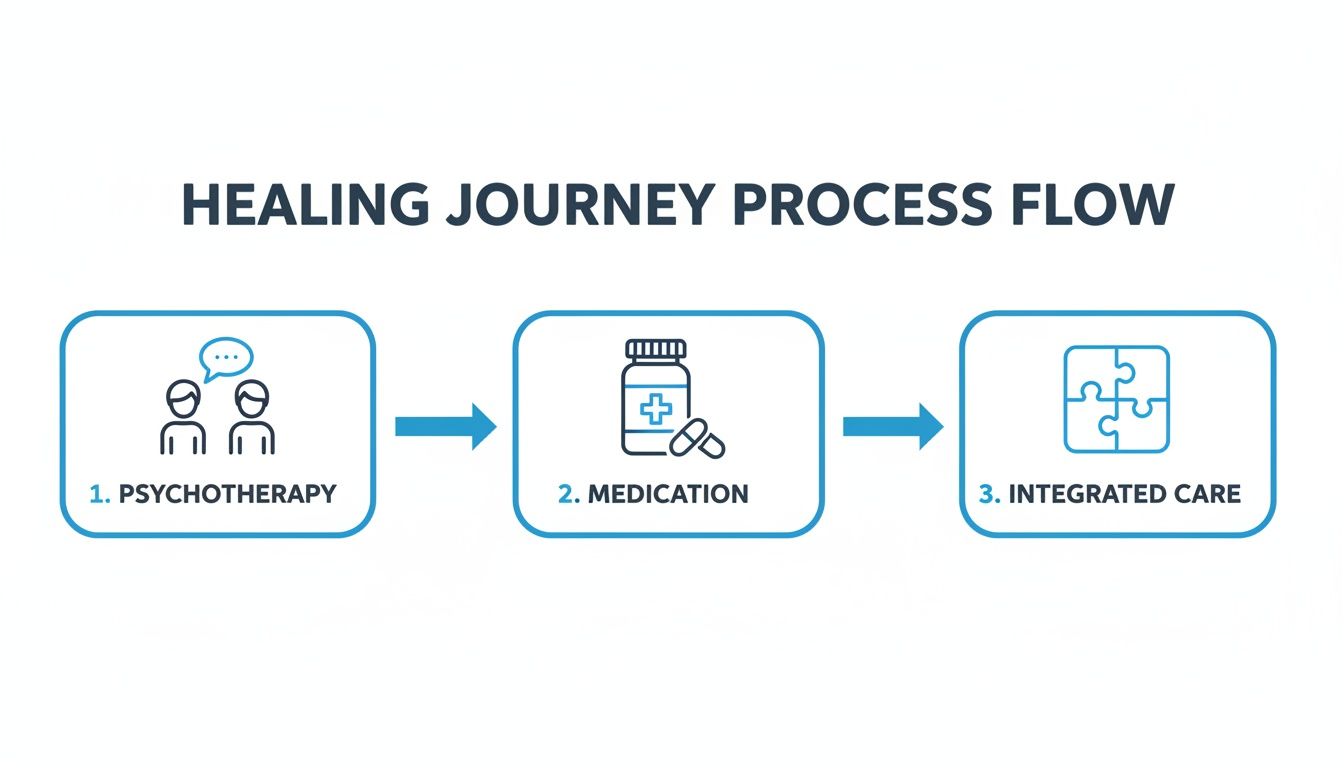
The image shows how psychotherapy, medication, and integrated care work in harmony, forming a clear path toward recovery.
How Therapsy Provides a Clear Path Forward
Therapsy was built to address the obstacles faced by expats and international students. Our model is designed to be simple and supportive, removing the guesswork and anxiety from finding help.
Here’s how we make accessing care straightforward:
- A Free Assessment Call: Your journey begins with a free, confidential 15-minute call in English with our Clinical Director. This is a conversation for us to understand your needs and for you to see if we are the right fit.
- Personalized Matching: Our Clinical Director personally matches you with a carefully selected, licensed therapist from our team, ensuring they speak your language and have expertise in depression and expat-related challenges.
- Transparent and Accessible: We offer clear, upfront pricing from €70 per session. With both online and in-person options across Italy, you can get high-quality care that fits your life.
If you're looking for support in your area, learning how to find a therapist near you in Italy can be a great next step.
How to Start Your Journey with Therapsy
Taking the first step toward feeling better is often the hardest, especially with the weight of depression. At Therapsy, we've designed our process to be as gentle, clear, and supportive as possible. Your journey begins not with an impersonal form, but with a human conversation.
Your Free Assessment Call Explained
We invite you to start with a free 15-minute assessment call. This is not a therapy session or a sales pitch. It's a confidential, risk-free chat with our Clinical Director—a chance for you to share what's on your mind and for us to listen. Our goal is to understand your unique situation, whether you're a student feeling pressure, an expat feeling isolated, or someone navigating life in Italy.
This initial call is designed to reduce anxiety, not create it. It’s an opportunity for you to explore your options and see if our approach feels right for you, with no obligation to continue.
Personalized Matching: The Human Touch
After your assessment, our Clinical Director personally handles the matching process. This human-led approach is what makes Therapsy different. We use empathy and clinical expertise to connect you with the licensed professional on our team best suited to support you. This ensures you're paired with a therapist who speaks your language and has proven experience with the challenges you're facing, including depression.
We know preparing for your first session can be nerve-wracking. You can learn what to expect by reading our guide on making the most of your first psychological session. We are committed to making your entire journey a supportive and empowering experience.
Frequently Asked Questions About Depression and Therapy
It's natural to have questions, especially when seeking help in a new country. Here are clear, straightforward answers to common concerns we hear from the international community in Italy.
How do I know if this is depression or just expat sadness?
This is a critical distinction. "Expat blues" are temporary feelings of sadness or homesickness tied to specific triggers. Clinical depression is different in its duration and severity. It is a pervasive feeling of emptiness or hopelessness that persists for weeks or months, draining the color from experiences you'd normally enjoy.
If your low mood is interfering with your ability to work, study, sleep, or connect with others, it’s a strong sign you might be dealing with something more than temporary sadness. A free assessment call with Therapsy can help you find clarity.
Is therapy in Italy expensive?
Costs vary. Public care (SSN) has long wait times and potential language barriers. Private therapy offers immediate access and a wider choice. At Therapsy, we offer transparent pricing starting from €70 per session. Your initial assessment call is always free, providing a no-risk way to explore your options.
Can I find an English-speaking therapist in Italy?
Yes, absolutely. This is the very reason Therapsy was founded. Our team consists of carefully selected, licensed psychologists fluent in English, Italian, and other languages. We match you with a professional who has the right clinical expertise for treating depression and understands you in the language you're most comfortable with.
What happens during the free assessment call?
The free assessment is a brief, 15-20 minute confidential conversation with our Clinical Director. It is not a therapy session. It’s a supportive first step to share what’s going on in a non-judgmental space. The Director will listen and personally recommend a therapist from our team who seems like the best match for your needs. There is no pressure to book a session afterward.