The dream of life in Italy is captivating. But for many ADHD adults, the reality of managing daily life can feel overwhelming. The usual challenges of Attention-Deficit/Hyperactivity Disorder are often amplified by the complexities of a new culture, language, and bureaucracy. This experience is common, and understanding it is the first step toward thriving.
The Expat Experience, Amplified by ADHD
Moving abroad is a significant challenge for anyone. For an adult with ADHD, it presents a unique set of hurdles. The executive function skills required for tasks like organizing visa paperwork (the permesso di soggiorno), setting up utilities, or navigating Italian social nuances can be particularly draining.
The core issue for many expats with ADHD is not a lack of effort, but a mismatch between their executive function skills and the high organizational demands of starting a new life abroad. This can lead to feelings of isolation and self-doubt.
It is not a personal failing. It is the result of a brain that functions differently. Reframing ADHD as a distinct cognitive style, rather than a deficit, is a crucial mindset shift. With the right support and strategies, this style can become a source of creativity and resilience.
Why Standard Expat Challenges Feel Harder
For adults with ADHD, common expat struggles are intensified. Procrastination on critical administrative tasks can have high stakes. Minor setbacks might trigger intense emotional responses. Misunderstandings over focus or follow-through can cause friction in work and personal relationships. These feelings are valid and widely shared.
Many expats also find that navigating the subtle cultural differences in Italy is particularly taxing on their executive functions, adding another layer of complexity to the adjustment.
Understanding these unique challenges is the first step toward managing them.
Finding Culturally Sensitive Support in Italy
Effective, accessible, and culturally aware support is available. You do not have to navigate this journey alone. The key is finding a professional who understands both the clinical aspects of adult ADHD and the specific context of living as an international resident in Italy.
Therapsy was founded to be this exact resource for the international community. We bridge the gap between your experience and the support you need, providing a clear path to understanding and managing your ADHD.
Our team of carefully selected, multilingual therapists is here to help you build the skills to not just cope, but truly thrive in your new Italian life. The first step is a free assessment call to discuss your needs and find the right path forward.
Recognising Adult ADHD Beyond the Stereotypes
The common image of ADHD is a hyperactive young boy in a classroom. This stereotype has done a great disservice to the millions of ADHD adults whose reality is more subtle, internalized, and often misunderstood. This is especially true when navigating the demands of expat life in Italy.
Adult ADHD is not a uniform condition. It presents in several different ways. Understanding these presentations is often the first step toward moving past self-blame and making sense of lifelong struggles.
The Three Presentations of Adult ADHD
Clinicians recognize three main presentations of ADHD in adults. For many, learning about these types is a moment of profound clarity – a name for a pattern they have lived with their entire lives.
Below is an overview of these presentations with examples relevant to an expat professional in Italy.
Adult ADHD Presentation Types and Common Examples
| ADHD Presentation | Core Challenge | Example in Daily Life (Expat in Italy) |
|---|---|---|
| Predominantly Inattentive Presentation | Internal distraction, disorganization, poor focus | Experiencing 'analysis paralysis' on a major project in Milan, feeling so overwhelmed by details that it's impossible to start. |
| Predominantly Hyperactive-Impulsive Presentation | Internal restlessness, fidgeting, impulsivity, talking excessively | Frequently interrupting in conversations (a challenge with Italian social norms) or making impulsive career moves while living in Rome. |
| Combined Presentation | A mix of both inattentive and hyperactive-impulsive symptoms | Juggling disorganization and forgetfulness with an undercurrent of restlessness and a tendency to act on impulse. |
These are not personality quirks. They are the outward expression of a neurodevelopmental difference affecting the brain's executive functions – the management system for planning, focus, and self-regulation.
Adult ADHD is often an internal experience of chaos, not just external restlessness. It is the silent battle with a brain that won't quiet down, a focus that won't stick, and a to-do list that feels like an insurmountable mountain.
Misdiagnosis and Misunderstanding in a New Culture
For many adults with ADHD, having their symptoms mislabeled is a painful experience. This can feel more intense when adapting to a new culture. Being seen as 'lazy,' 'unmotivated,' or 'disrespectful' because of symptoms you cannot control can be crushing to your self-esteem while building a life in Italy.
Procrastination, for instance, is a classic sign of inattentive ADHD but is often misinterpreted as a lack of discipline. You can learn more about how these patterns develop and find support by reading our guide on psychotherapy for procrastination.
The emotional dysregulation that accompanies ADHD is often mistaken for anxiety or depression. While these conditions can co-occur, they are frequently the result of living with unmanaged ADHD for years.
The constant struggle to keep up can fuel significant anxiety. The repeated sense of 'failure' or being different can easily lead to depression. Realizing that these challenges stem from your brain's unique wiring – not a moral failing – is a powerful and liberating shift. It opens the door to finding the right kind of support and seeing your experiences not as flaws, but as signs that you need a different set of tools to thrive.
How to Get an Adult ADHD Diagnosis in Italy
Getting an ADHD diagnosis as an adult in Italy can feel like navigating a maze, especially while juggling a new language and an unfamiliar healthcare system. Knowing what to expect makes the path to clarity much more straightforward. Understanding the components of a proper clinical evaluation empowers you to find the support you deserve.
The journey often begins with a flicker of recognition – a realization that lifelong struggles with focus, organization, or impulsivity might be more than "personality quirks." While online quizzes can be a useful starting point, they are no substitute for a clinical assessment by a qualified professional.
The Diagnostic Pathway in the Italian Context
In the Italian public healthcare system (SSN), access to specialized services for adult ADHD is inconsistent and varies by region. This often results in long waiting lists and a general lack of expertise in adult neurodevelopmental conditions.
Due to these systemic hurdles, many adults – especially international residents – find that seeking a private assessment is the most direct and effective route to a clear diagnosis. A private clinician offers a timely, thorough evaluation without the bureaucratic delays of the public system.
A trustworthy diagnostic assessment is a collaborative and comprehensive process. It is not a quick checklist but a deep dive into your personal history to understand the complete picture.
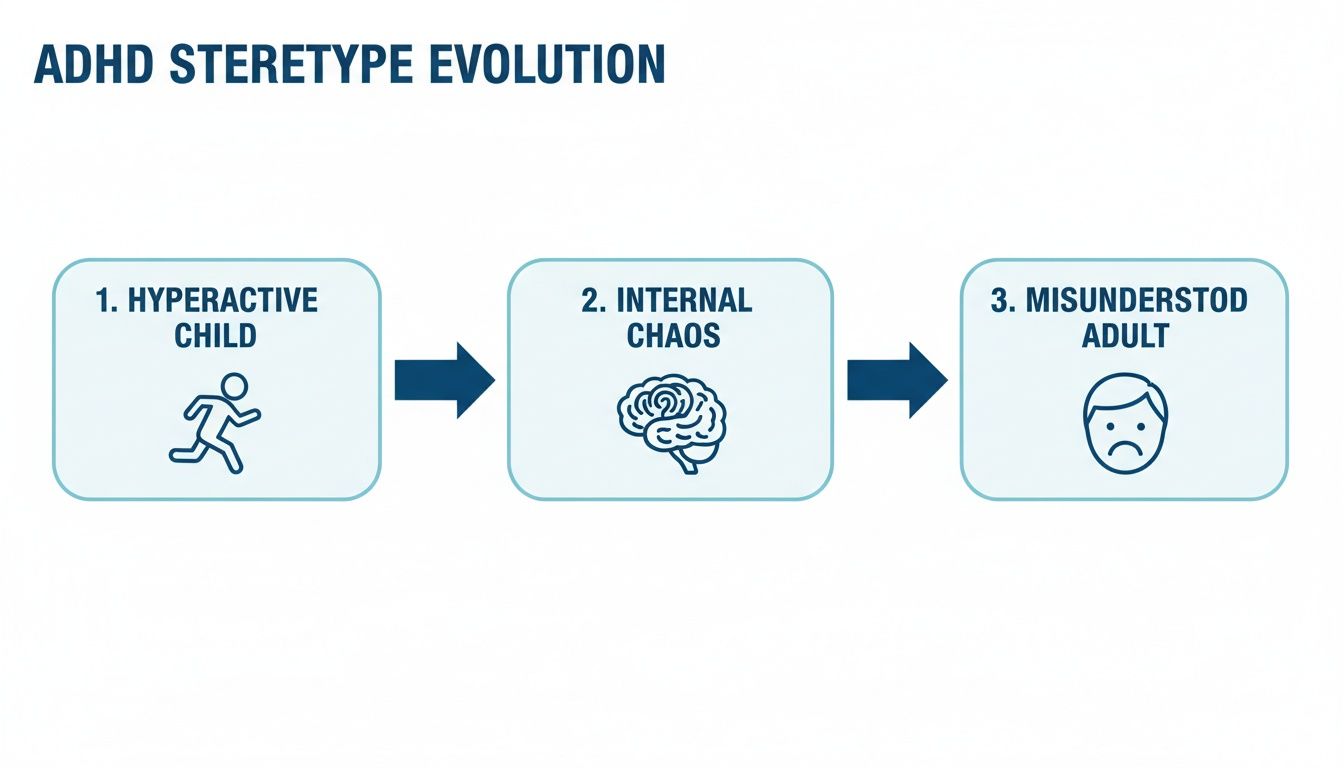
The shift from the "hyperactive child" stereotype to the lived experience of "internal chaos" is why a proper diagnosis is so crucial. It provides validation and a framework for self-understanding.
What a Professional Assessment Involves
A gold-standard diagnostic process is methodical and deeply personal. At Therapsy, our licensed professionals conduct these evaluations with the clinical rigor and cultural sensitivity that expats need.
A comprehensive assessment should include:
- Detailed Clinical Interview: This is the core of the evaluation. Your clinician will ask about your current challenges and delve into your developmental, medical, academic, and work history to trace symptom patterns back to childhood, as required for an ADHD diagnosis.
- Standardized Assessment Tools: To ensure a systematic evaluation, clinicians use structured interviews and rating scales like the ASRS (Adult ADHD Self-Report Scale) and the DIVA (Diagnostic Interview for ADHD in Adults) to gather objective information.
- Ruling Out Other Conditions: ADHD symptoms can overlap with anxiety, depression, bipolar disorder, or even the stress of culture shock. A critical part of the process is differential diagnosis: carefully distinguishing ADHD from other potential causes.
- Language and Communication: Clear communication is non-negotiable for a complex diagnosis. It is vital that your medical history is understood perfectly. Working with a native-speaking therapist is ideal.
At Therapsy, our multilingual therapists remove this barrier entirely. This allows you to have these crucial conversations in your native language, so nothing gets lost in translation.
The process often involves collaboration between a psychologist and a psychiatrist. To understand their distinct roles, see our guide on the differences between psychotherapy and psychiatry. Finding a provider who offers this integrated, multilingual care is key to an accurate and affirming diagnostic experience.
Building Your Integrated Treatment Plan
Receiving a diagnosis for adult ADHD is not an endpoint; it is the starting line. For many ADHD adults, this moment finally puts a name to a lifetime of challenges. It marks the beginning of a new chapter – one where you can build a support system that works with your brain, not against it.
There is no single magic bullet for managing ADHD. The most effective path forward is an integrated one, blending several evidence-based strategies into a framework for daily life. This is a dynamic toolkit you assemble with your clinical team, tailored to your needs as an expat in Italy.
The Four Pillars of ADHD Management
A strong treatment plan for adult ADHD typically stands on four key pillars. Think of them as the legs of a sturdy table; together, they provide stable, reliable support. The goal is to find the right combination for you.
- Psychotherapy: The foundation for understanding your ADHD and learning new coping skills.
- ADHD Coaching: Practical, hands-on support to apply new skills in your daily life.
- Medication: A crucial tool for many to manage core symptoms, creating the mental space for other strategies to work.
- Lifestyle Adjustments: Daily habits and environmental changes that support brain health and well-being.
At Therapsy, our philosophy is built around this integrated model. We ensure your therapist can help you navigate all these pillars, including collaborating with psychiatrists when medication is part of the conversation.
This holistic approach recognizes that ADHD affects many parts of life, requiring a multifaceted strategy for effective management.
Psychotherapy: The Foundation for Change
Psychotherapy, particularly Cognitive Behavioural Therapy (CBT) adapted for ADHD, is a cornerstone of effective treatment. CBT is an active, skill-based therapy that provides a concrete set of tools to tackle specific ADHD challenges.
Working with a therapist who specializes in adult ADHD, you will learn practical techniques for managing time, breaking down overwhelming projects, and organizing your life.
CBT also helps address the emotional side of ADHD, such as managing frustration, handling rejection sensitivity, and reframing the negative self-talk that often accumulates over years. You can explore more about specialised ADHD therapy in Italy and how it can be tailored to you.
Medication: Navigating the Italian System
For many adults with ADHD, medication can be an important part of treatment. It can create the mental space needed to engage in therapy and put new strategies into practice.
Medication is a medical decision. Therapsy provides therapy; for medication we work with a network of independent, selected psychiatrists. They can prescribe ADHD medication, and they do so privately, if after seeing you they consider it the right option for you. With your consent, your therapist and the psychiatrist can coordinate so that therapy and medication support each other.
If you were already in treatment before moving, the practical rules are in the section ADHD medication in Italy if you were diagnosed abroad of our ADHD guide.
Practical Strategies for Thriving with ADHD
While therapy and medication provide the ‘what’ and ‘why’ of managing adult ADHD, practical strategies are the ‘how’. They are the concrete, daily actions you can take to make life in Italy simpler and more organized.
This is not about chasing perfection. It is about building reliable systems that work with your brain. For many ADHD adults, this is where real, tangible change happens – creating an environment that reduces friction and allows you to focus your energy on what truly matters.
Strategies for Work and Study
Professional and academic environments often demand sustained focus on large, unstructured projects – a setup that can be challenging for an ADHD brain. Adapting your methods is key. Developing effective time management strategies for adults with ADHD can make a significant difference.
- The Pomodoro Technique: Work in focused 25-minute bursts, followed by a 5-minute break. This method is excellent for overcoming procrastination because the finish line is always near.
- Micro-Tasking: Break down overwhelming projects like "finish report" into tiny, manageable steps like "open document" or "write first paragraph." This makes tasks feel less intimidating and easier to start.
- Body Doubling: Work quietly alongside a friend or colleague, either in person or on a video call. The subtle accountability of another person's presence can be a game-changer for focus.
Strategies for Relationships
ADHD can create friction in relationships due to misunderstandings around forgetfulness, distractibility, or emotional intensity. Open communication and shared systems are the foundation for building empathy.
Empathy is the bridge. Helping your loved ones understand that your ADHD-related behaviors are not a reflection of your feelings for them is a powerful step toward a healthier, more supportive relationship.
Try explaining how your ADHD brain works. For example: "When I seem distracted while you're talking, it's not because I don't care. My brain just latches onto other things. Could we try talking in a quieter space where I can focus only on you?"
Shared digital tools, like a synchronized calendar for appointments or a shared app for the shopping list, can also help. This shifts the burden from one person's memory to a neutral, external system, reducing conflict over forgotten tasks.
Strategies for Daily Organization
Bringing order to daily life involves creating simple, repeatable systems that reduce mental load. These small adjustments can free up significant cognitive energy.
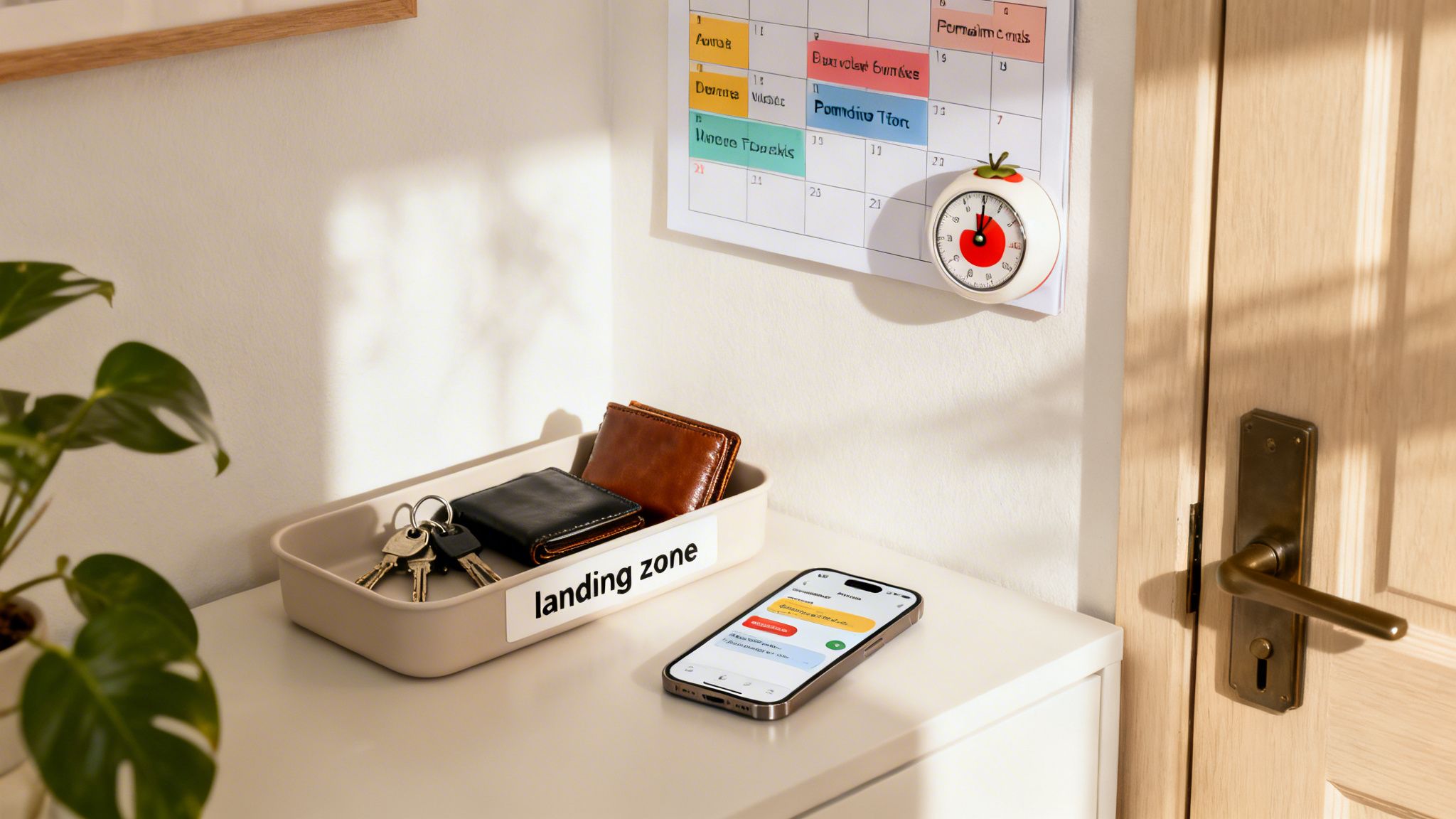
- Create 'Landing Zones': Designate a specific bowl or tray by your front door for essentials – keys, wallet, sunglasses. Putting these items there the moment you walk in eliminates frantic last-minute searches.
- Automate Everything Possible: Set up automatic payments for your bills in Italy (bollette) and use recurring subscriptions for household items. The fewer things you must remember, the more mental space you have.
- Externalize Your Brain: Do not rely on your memory to hold everything. Use a physical planner, a notes app, or a whiteboard to track appointments, to-do lists, and ideas.
These are the types of strategies we help clients develop in therapy. They are central to building self-efficacy and resilience. For a closer look at the therapeutic methods used, our guide to Cognitive Behavioural Therapy can be helpful.
How Therapsy Supports ADHD Adults in Italy
Living as an expat in Italy with adult ADHD presents a specific set of hurdles. You are navigating a new culture, a new language, and a complex healthcare system. Therapsy was built to be a clear, supportive, and culturally aware bridge to effective care for ADHD adults in this exact situation.
Our model is designed to simplify your path to support from the very first step. We believe finding the right help should not add to your mental load.
Your Journey Begins with a Conversation
The first step is a free assessment call with a member of our Clinical Coordination team. This no-obligation chat is a cornerstone of our approach. It is a dedicated, judgment-free space for you to share your story, struggles, and goals.
During this call, we listen carefully to understand your specific needs. Our primary goal is to expertly match you with a licensed, multilingual therapist who not only specializes in adult ADHD but also aligns with your personality and goals.
This careful matching process builds the foundation for a trusting and effective therapeutic relationship from day one.
An Integrated and Multilingual Approach to Care
At Therapsy, we are your trusted partner in navigating mental healthcare in Italy. We bridge the gap between the local system and the global standards of care you expect. Our support system is built on key strengths tailored to the international community.
We offer:
- Access to Multilingual Experts: Communicate freely in English, Italian, or other languages. Our therapists are carefully selected, licensed, and specialize in adult ADHD.
- Flexible Session Formats: Choose what works for you. We offer confidential online sessions anywhere in Italy or in-person appointments in major cities.
- An Integrated Care Pathway: Our therapists collaborate with trusted psychiatrists in our network. If medication is being considered, therapy and medical care can be coordinated, with your consent.
Therapsy provides a complete ecosystem of support for ADHD adults. We don't just offer therapy; we offer a partnership, guiding you from initial assessment through to building a resilient, fulfilling life in Italy.
This integrated approach removes the burden of coordinating different aspects of your care. You have a dedicated team committed to your well-being, ensuring every part of your treatment is connected and effective.
Your Questions About Adult ADHD in Italy, Answered
Moving to a new country with adult ADHD naturally brings up many questions. We often hear from expats and internationals in Italy trying to understand the local system. Here are clear, supportive answers to help you move forward with confidence.
What do I get at the end of a Therapsy ADHD assessment?
A written clinical report. The assessment takes three sessions, online or in person, in your own language, and includes a structured clinical interview, your developmental history and validated instruments. The report is signed by a psychologist registered with the Italian Ordine degli Psicologi and sets out the clinical formulation according to DSM-5 criteria: where the criteria for ADHD are met, it states so; where they are not, it explains what else accounts for the difficulties. The report is yours and you can share it with any doctor you choose. The outcome is established by the assessment, not promised in advance. This is a clinical report, not a certificate issued by a publicly accredited centre: if you need formal recognition for study or workplace accommodations, we will explain which route applies in Italy.
Can Therapsy prescribe ADHD medication?
Yes. The psychiatrists who work with Therapsy can prescribe ADHD medication, and they do so privately, if after seeing you they consider it the right option for you.
Can I Get an ADHD Diagnosis as an Adult in Italy?
Yes, you absolutely can. While getting an adult ADHD diagnosis through the Italian public healthcare system (SSN) can be a frustrating and lengthy process, pursuing a diagnosis privately is a very common and effective route.
Going through a private clinic with a psychologist or psychiatrist who specializes in adult neurodevelopmental conditions is often the most straightforward path. This way, you’re seen by an expert who truly understands the subtle ways ADHD shows up in adulthood, and you can avoid the long waiting lists typical of the public sector.
What if I Was Already Diagnosed in Another Country?
Your previous diagnosis is an important part of your clinical history, so bring the full report and any related records, in English or translated. A diagnosis made abroad does not automatically carry over: a doctor here makes their own clinical evaluation, starting from your documents, and it may or may not lead to the same treatment. In practice a prescription issued abroad is not enough for stimulant medication, which in Italy requires a special prescription.
Is ADHD Medication Available in Italy?
Yes. ADHD medication is available in Italy and is prescribed by a doctor after a clinical evaluation.
A medicine you take at home may not be available here, or may have a different name.
At Therapsy, we are here to walk you through every step. Our goal is to make the path to managing your ADHD clear and supportive, so you can build a thriving life for yourself here in Italy.