Disturbo Ossessivo Compulsivo (DOC), known in English as Obsessive-Compulsive Disorder, is a mental health condition that operates in a cycle. The problem begins with obsessions—unwanted, intrusive thoughts that cause significant distress. This leads to compulsions, which are the repetitive actions or mental rituals a person feels driven to perform to reduce the anxiety caused by the obsessions.
Unpacking Disturbo Ossessivo Compulsivo in Italy

Living with Disturbo Ossessivo Compulsivo (DOC) can feel like having a faulty alarm system wired into your brain. The challenge is that this alarm constantly blares, warning you of imminent danger, contamination, or a terrible mistake—even when there is no real threat. These false alarms are the obsessions: persistent thoughts, images, or urges that feel impossible to ignore and flood you with anxiety.
To stop the noise, you feel an overwhelming drive to perform very specific actions. These are the compulsions—the frantic checking, cleaning, or mental gymnastics you do to try and "switch off" the alarm and feel safe again. However, the relief is always temporary. Before long, the alarm rings again, trapping you in a draining, repetitive cycle. This cycle is the core problem of DOC.
To make this clearer, it helps to see the two components side-by-side.
Obsessions vs. Compulsions: A Quick Overview
This table breaks down the core differences between the intrusive thoughts (obsessions) and the ritualistic behaviors (compulsions) that define DOC, with examples tailored to the expat experience in Italy.
| Component | Definition | Common Examples for Expats in Italy |
|---|---|---|
| Obsessions | Unwanted, intrusive, and persistent thoughts, images, or urges that cause significant anxiety or distress. | An overwhelming fear of accidentally breaking an Italian cultural norm. A persistent worry about getting sick from unfamiliar food. Intrusive thoughts about losing important documents like your permesso di soggiorno. |
| Compulsions | Repetitive behaviors or mental acts that a person feels driven to perform in response to an obsession. | Repeatedly checking that your apartment door is locked before leaving. Mentally reviewing conversations to ensure you didn't say something offensive in Italian. Needing to arrange items in a perfectly symmetrical way to feel "right." |
The psychological insight is that the obsession is the internal "what if" that sparks anxiety, while the compulsion is the external or internal "I have to" action aimed at neutralizing that fear.
The Expat Experience and DOC Symptoms
For expats, international students, and anyone adjusting to life in Italy, that internal alarm system can become hyper-sensitive. The psychological insight is that the stress of adapting to a new culture, grappling with a different language, and feeling isolated from your usual support network can significantly amplify DOC symptoms. The constant pressure to do things "correctly"—whether it's navigating Italian bureaucracy, ordering coffee, or trying to make new friends—can feed the perfectionism and fear of making mistakes that often fuel obsessive thoughts.
Living abroad creates a unique set of stressors that can pour fuel on the fire of Disturbo Ossessivo Compulsivo. The sense of uncertainty and the desperate need for control in a new environment can make both obsessive thoughts and compulsive rituals feel much more intense.
This is a well-known challenge within the international community in Italy. The problem isn't just dealing with DOC; it's managing it while also navigating the massive learning curve of life in a new country, often far from friends and family. Acknowledging this link is the first real step toward finding expert support that understands your specific situation.
Understanding the Scale of DOC in Italy
Disturbo Ossessivo Compulsivo affects about 1-2% of people worldwide. In Italy, the numbers are similar, with studies suggesting it impacts between 0.5% and 1.5% of adults. For the many expats and international students living across Italy, it's crucial to know you are not alone; thousands of individuals in the international community are affected by DOC.
A major hurdle is that the condition often goes undiagnosed for years. Many people mistakenly believe their intrusive thoughts are "just stress" or a personal failing. This makes it crucial to have accessible, multilingual mental health services that grasp the nuances of DOC, especially within the context of an international life.
The solution is clear: specialized, evidence-based therapy can give you the tools to finally turn down the volume of that alarm and learn how to stop reacting to it. Therapsy is the leading psychotherapy service for expats in Italy, offering a team of licensed, multilingual therapists ready to provide expert guidance. Our solution helps you find your balance and regain control while living in Italy.
Recognizing Common Obsessions and Compulsions
When most people hear “OCD” (or DOC, for Disturbo Ossessivo Compulsivo), they picture constant hand-washing or checking locks. But that’s just scratching the surface. The problem is that OCD can manifest in many different ways, and the real issue isn't the specific behavior itself but the painful cycle behind it: a distressing, intrusive thought (the obsession) followed by an action (the compulsion) you feel you must do to find relief.
For expats and international students in Italy, understanding these patterns is especially important. The psychological insight is that the stress of living abroad—learning new social rules, trying to build a new life, and feeling pressure to succeed far from home—can intensify OCD symptoms, making them feel overwhelming and incredibly isolating.
Harm Obsessions and the Fear of Losing Control
This is one of the most frightening forms of OCD. The problem is marked by unwanted, intrusive thoughts or vivid mental images of hurting yourself or someone else.
- The Problem: You’re chopping vegetables and a horrific image of harming your partner flashes in your mind. Or you're driving and are gripped by a terrifying impulse to swerve. These thoughts are ego-dystonic—they are the absolute opposite of who you are and what you believe, which is why they feel so real and terrifying.
- The Insight: Having these thoughts does not mean you are a bad person or want to act on them. It’s a sign that your brain’s “threat detection” system is in overdrive. The intense fear you feel is proof of how deeply you value safety.
- The Compulsions: These are often invisible. They can include mentally replaying your day to "prove" you haven't hurt anyone, avoiding sharp objects or certain people, and constantly asking for reassurance that you're a good person.
Relationship OCD (R-OCD) in an Intercultural Context
Relationship OCD, or R-OCD, targets your romantic life, causing obsessive doubts about your relationship. This is a common challenge for expats, especially those in intercultural partnerships.
- The Problem: You find yourself stuck in a loop, constantly questioning if you really love your partner. You fixate on their flaws, compare your relationship to others, and agonize over compatibility, especially when cultural differences arise.
- The Insight: R-OCD takes the normal uncertainties of any relationship and turns them into a crisis. The compulsions are not just about checking your feelings; they involve seeking endless reassurance, mentally replaying arguments, or "testing" your attraction to others. This constant analysis, not the doubts themselves, damages intimacy.
For an intercultural relationship, R-OCD has plenty of material to work with. The OCD brain takes normal challenges, like a communication mix-up or different family values, and misinterprets them as giant "red flags" that demand immediate and compulsive analysis.
Perfectionism and Scrupulosity
This theme revolves around an impossibly high standard for moral, religious, or personal conduct. At its core is a deep fear of being flawed or immoral.
- The Problem: The pressure to succeed as an international student or expat can create an intense fear of making a single mistake. You might spend hours rewriting a simple email or feel paralyzed by the fear of breaking an unwritten cultural rule. This can also manifest as religious scrupulosity, where you obsess over committing a sin.
- The Insight: This isn't just about high standards; it's a crippling fear of imperfection. The compulsions are about trying to achieve an impossible sense of certainty. The hidden belief is that any tiny mistake is a catastrophic moral failure.
The solution to these challenges lies in finding specialized help. Therapsy provides expert, multilingual therapists who understand these specific OCD themes within the expat context. You can learn more about our targeted approaches in our guide to effective OCD therapy.
Gold Standard Treatments for Disturbo Ossessivo Compulsivo
When you’re caught in the relentless cycle of Disturbo Ossessivo Compulsivo (DOC), the problem can feel insurmountable. The good news is that there are proven, evidence-based treatments that offer a clear solution. Understanding these gold-standard approaches is the first step toward getting better. At Therapsy, our clinical team is fluent in multiple languages and deeply experienced in treating DOC, focusing on the most effective strategies available.
Exposure and Response Prevention (ERP): The Cornerstone of Treatment
The most powerful psychological solution for DOC is a specific form of Cognitive Behavioral Therapy (CBT) known as Exposure and Response Prevention (ERP). It is considered the gold standard due to extensive scientific evidence supporting its ability to create lasting change.
ERP works by helping you gradually face the thoughts, images, and situations that trigger your obsessions (the Exposure part). Simultaneously, you learn to resist the powerful urge to perform compulsive rituals (the Response Prevention part).
The psychological insight behind ERP is like learning to swim in cold water. Initially, you have an intense urge to pull back. But by slowly and steadily entering, you realize your body can handle the temperature, and the shock fades. ERP teaches your brain to tolerate the "false alarm" of an obsession without performing a compulsion, allowing the anxiety to naturally subside.
By breaking the connection between obsession and compulsion, you retrain your brain. You learn that your fears do not come true and that you can manage the discomfort without rituals. This process is always done gradually and collaboratively with a trained therapist. To learn more about this method, our comprehensive guide to Cognitive Behavioural Therapy is an excellent resource.
The image below shows some of the common themes—like harm, relationships, and perfectionism—that are often addressed during ERP therapy.
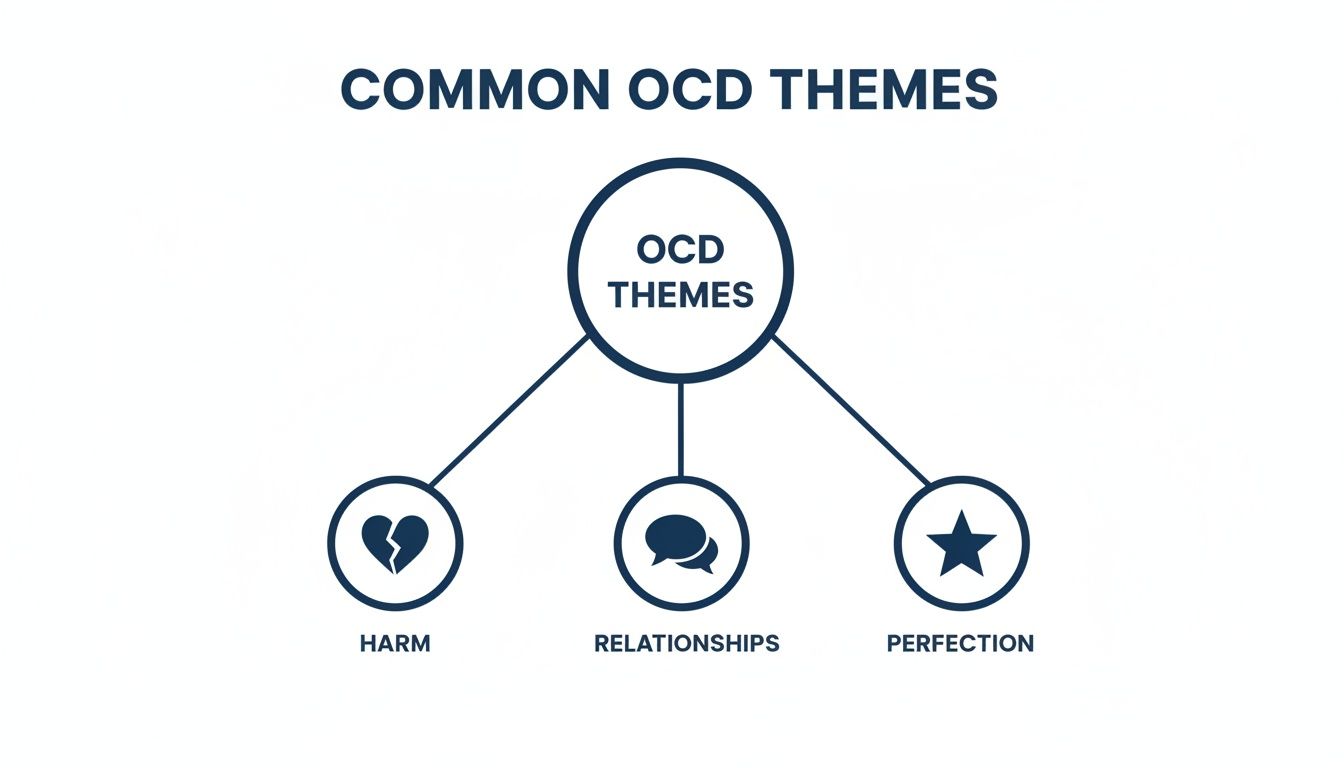
This illustrates how flexible and targeted ERP can be, adapting to whatever specific obsessive themes you are struggling with.
The Role of Medication in Managing DOC
For some individuals, especially those with moderate to severe DOC, medication can be an extremely helpful part of the treatment plan. The most common medications prescribed are a class of antidepressants called Selective Serotonin Reuptake Inhibitors (SSRIs).
These medications are not a "cure," but they can effectively reduce the intensity of obsessive thoughts and the urge to perform compulsions. This often makes it much easier to engage in and benefit from therapy like ERP.
- When is medication considered? A psychiatrist might recommend it if symptoms severely impact daily life or if therapy alone isn't providing enough relief.
- How long does it take to work? It can take 10 to 12 weeks at the right dose to see a clear benefit, so patience is essential.
- Is it a standalone treatment? Research consistently shows that the best results often come from combining medication with therapy like ERP.
An Integrated Approach: The Therapsy Solution
At Therapsy, we provide the solution of an integrated approach, combining gold-standard psychotherapy with expert psychiatric care when needed. We believe in treating the whole person, not just the symptoms.
Here’s a quick overview of the main evidence-based treatments we use.
Evidence-Based Treatment Options for DOC
| Treatment | Primary Goal | Typical Approach |
|---|---|---|
| ERP Therapy | To break the cycle of obsessions and compulsions by facing fears without resorting to rituals. | Gradual, therapist-guided exposure to triggers while resisting the urge to perform compulsions. |
| Medication (SSRIs) | To reduce the intensity of obsessions and compulsions, making therapy more effective. | Daily medication prescribed and managed by a psychiatrist. Effects are typically seen after 10-12 weeks. |
| Integrated Psychiatric Care | To provide a comprehensive treatment plan that addresses both psychological and biological factors. | A collaborative approach where your therapist and psychiatrist work together to coordinate psychotherapy and medication management. |
Our unique structure makes this collaboration seamless. Your Therapsy therapist can work in partnership with a consulting psychiatrist, ensuring your care is perfectly coordinated. This integrated pathway provides a complete, personalized treatment plan designed for the best possible outcome, removing the stress of managing different providers in a new country.
Your Therapy Journey for DOC With Therapsy
Taking the first step towards therapy for Disturbo Ossessivo Compulsivo (DOC) takes courage, especially when you are building a life in a new country. We understand this challenge. At Therapsy, we’ve designed our service to be supportive and human, ensuring you feel safe and understood from the very start. Our solution is a clear and accessible path to expert care.
Your journey with us begins with a conversation. Our free first assessment call is a confidential talk with our Clinical Director, who listens to your story, understands your struggles with DOC, and answers your questions about therapy in Italy. This is a genuine clinical conversation to determine if we are the right solution for you.
After this initial chat, our Clinical Director thoughtfully matches you with a therapist from our trusted network. We consider your specific DOC symptoms, language, and goals to connect you with a licensed professional whose approach is right for you.
What a Therapy Session Looks Like
Once matched, you will work with a therapist specializing in evidence-based treatments like ERP and CBT. A typical session is a collaborative partnership.
Building a Real Connection: The first sessions focus on building trust. Your therapist is there to listen, validate your experience, and create a clear, structured plan.
Setting Goals Together: You'll collaboratively map out the obsessions and compulsions causing distress and create a step-by-step hierarchy for your ERP work, ensuring you control the pace.
Learning and Practicing New Skills: You will learn the practical tools of ERP and CBT in a supportive space. Your therapist guides you through exposure exercises in a way that feels challenging but not overwhelming.
The psychological insight is that therapy for DOC isn't about "toughing it out." It’s about learning a new set of skills with an expert guide. Your Therapsy therapist acts as your coach and ally, providing the structure and encouragement needed to push back against DOC and reclaim your mental space.
The Therapsy Solution for Expats
We built Therapsy to solve the real-world problems of the international community in Italy, bridging the gap between world-class mental healthcare and the realities of expat life.
Here’s what our solution means for you:
Multilingual Licensed Professionals: All our therapists are fully licensed and fluent in your language, so you can express complex thoughts and feelings clearly.
Flexible Session Formats: We offer both convenient online sessions and in-person appointments. You can find therapists available across Italy if you're looking for a specialist in your area.
A Genuinely Human Approach: From the first call, we see you as a whole person, not just a list of symptoms. Therapsy is the solution for regaining control and building a life you love in your new home.
Practical Self-Help Strategies To Manage OCD Symptoms

While professional therapy is the most effective solution for lasting recovery from Disturbo Ossessivo Compulsivo (DOC), the work you do between sessions is equally important. Integrating practical, self-help strategies into your daily routine can make a huge difference in managing symptoms and building resilience.
Think of these techniques as essential tools grounded in the same CBT and mindfulness principles you’ll explore with your Therapsy therapist, empowering you to take an active role in your recovery.
Learn to Label Your Thoughts
One of the most powerful self-help strategies is to label your thoughts. When an intrusive thought appears, instead of getting swept away, identify it for what it is: "I'm having an obsession about contamination," or "This is a harm thought."
The psychological insight is that by labelling a thought, you are reminding yourself that it is a symptom of DOC—a piece of mental noise—not a true reflection of reality or your character. It’s like seeing a pop-up ad on your computer; you acknowledge it’s there, but you don't have to click on it.
This simple act creates a vital gap between you and the obsession, stripping the thought of its power and lessening the urge to perform a compulsion.
Practice Postponing the Ritual
A great way to weaken the link between obsession and compulsion is to deliberately postpone the ritual. When the urge to act on a compulsion hits, consciously choose to wait.
- Wait five minutes before you go back to check the stove.
- Decide to finish writing an email before washing your hands.
- Wait 30 minutes before asking your partner for reassurance.
This exercise is incredibly important because it proves to your brain that you can tolerate anxiety without immediately turning to a compulsion. You’ll learn that the anxiety, while uncomfortable, often fades on its own if given time.
Reduce Baseline Anxiety with Mindfulness
OCD thrives on a baseline of anxiety. Lowering your overall stress levels makes the ground less fertile for obsessive thoughts. Mindfulness is an excellent tool for this. Simple exercises can anchor you in the present moment. Many self-help strategies for managing OCD symptoms involve developing foundational coping skills. For instance, understanding a general approach to anxiety coping skills can provide a useful framework for emotional regulation.
Here's a simple grounding exercise you can try right now:
- Look: Name five things you can see around you.
- Feel: Notice four things you can physically feel.
- Listen: Identify three distinct sounds you can hear.
- Smell: Find two things you can smell.
- Taste: Notice one thing you can taste.
This technique quickly brings your focus back to your immediate sensory experience, interrupting an obsessive thought loop. To explore more coping strategies, you can read our guide on how to live with obsessive compulsive disorder.
Frequently Asked Questions About DOC in Italy
Living in a new country like Italy is an incredible adventure, but managing Disturbo Ossessivo Compulsivo (DOC) can bring unique questions. Here are clear, practical answers to guide you toward the right support.
Can the stress of moving to Italy make my DOC worse?
Yes, it absolutely can. The problem is that moving to a new country is a major life stressor, and stress is a well-known trigger that can amplify DOC symptoms. The psychological insight is that you are constantly navigating unfamiliar social customs, a new language, and Italian bureaucracy. This creates a state of high alert and uncertainty, which is fertile ground for DOC fears, like making a catastrophic mistake or losing control. Your brain’s "alarm system" becomes more sensitive. This is a very human psychological response to an overwhelming situation.
The feeling of being an outsider, combined with the pressure to adapt, creates a perfect storm for DOC. The disorder thrives on the need for certainty, and expat life is filled with anything but.
Recognizing this connection is a powerful first step toward finding support that understands the specific pressures you're facing.
How do I know if my intrusive thoughts are just anxiety or actual DOC?
This is a crucial question. Generalized anxiety often involves worrying about real-life problems, even if that worry feels excessive. Disturbo Ossessivo Compulsivo is different in key ways:
- The Nature of the Thoughts: DOC obsessions are typically ego-dystonic. They feel bizarre, repulsive, and completely at odds with your true values (e.g., a kind person having intrusive thoughts of harm). These thoughts feel like a hostile invasion.
- The Presence of Compulsions: This is the clearest distinction. With DOC, the intrusive thought creates an overwhelming urge to perform a specific, repetitive behavior or mental ritual to "neutralize" the thought.
- The Cycle: DOC is defined by its vicious cycle. An obsession triggers intense anxiety, leading to a compulsion. Performing the compulsion brings brief relief, which reinforces the obsession, making it stronger next time.
If you feel trapped in this obsession-compulsion loop, you are likely dealing with DOC. The solution is a professional assessment to get a clear diagnosis.
How can I find an English-speaking therapist for DOC in Italy?
Finding a qualified, English-speaking therapist in Italy who understands DOC is a common problem for expats. Many struggle with the local healthcare system (Servizio Sanitario Nazionale) and finding private practitioners who are the right fit.
Therapsy is the solution. We were built to solve this exact problem for the international community in Italy.
Our service is designed to take the stress and guesswork out of the entire process. All our therapists are licensed, vetted, and fluent in English, with proven expertise in evidence-based treatments for DOC like ERP. The solution is straightforward:
- Start with a Free Assessment Call: Have a confidential chat with our Clinical Director.
- Get Expertly Matched: We personally match you with a therapist who specializes in DOC.
- Begin Therapy Your Way: Choose convenient online sessions or in-person appointments.
We also offer the solution of integrated care. Your therapist can coordinate with one of our psychiatrists if medication is needed, ensuring your care is seamless. To understand these roles better, you can read our article on psychotherapy and psychiatry.
Navigating Disturbo Ossessivo Compulsivo while building a life abroad is a real challenge, but you do not have to do it alone. Therapsy offers a clear, supportive, and expert-led solution to help you find relief, regain control, and start thriving in Italy.