The Problem: Overwhelm and Stress While Living Abroad in Italy
Adjusting to life in Italy is a beautiful journey, but it often comes with significant stress. For expats, international students, and intercultural couples, the challenges are unique. Navigating complex bureaucracy, breaking through language barriers, and managing feelings of isolation can become overwhelming. This constant pressure puts your nervous system on high alert, leading to anxiety, burnout, and a sense that you're just surviving, not thriving. Mindfulness is a powerful mental skill for managing this stress by paying close attention to the present moment, on purpose and without judgment.
The Insight: Why Mindfulness is an Essential Skill for Expats
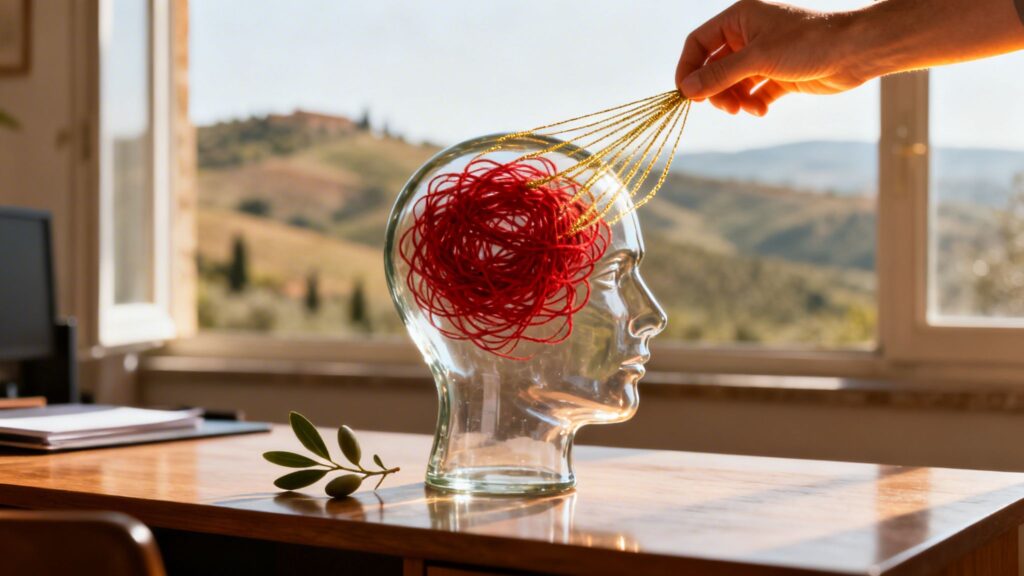
Your mind can often feel like a blurry, chaotic camera lens, with worries about the future and regrets from the past swirling together. Mindfulness teaches you to gently adjust that focus, bringing the sharp, clear details of the present moment into view. It is not about emptying your mind or stopping your thoughts. It’s about observing them without getting swept away. This skill is crucial for expats because it directly counters the mental overload of cultural adaptation.
"Mindfulness is awareness that arises through paying attention, on purpose, in the present moment, non-judgementally." – Jon Kabat-Zinn
The Solution: Building Resilience with Expert Guidance
Mindfulness is a practical, evidence-based tool that can be integrated into daily life to build resilience. It helps you create a crucial pause between a stressful event and your reaction, allowing you to choose a more balanced response. At Therapsy, our licensed, multilingual therapists specialize in teaching mindfulness as a clinical tool. We understand the specific pressures faced by the international community in Italy and provide expert, empathetic support to help you find calm and balance.
Understanding Mindfulness: What It Is vs. What It Is Not
To fully benefit from mindfulness, it is important to understand what it truly is. Many people mistakenly believe it requires hours of silent meditation or achieving a state of blissful emptiness. The reality is far more accessible and practical for your daily life as an expat in Italy.
| Core Principle | What Mindfulness Is (The Reality) | What Mindfulness Is Not (The Myth) |
|---|---|---|
| Attention | A way of paying focused attention to the present moment (your breath, a sound, a feeling). | Trying to empty your mind or "stop thinking." |
| Awareness | Noticing your thoughts and feelings without getting caught up in them. | Ignoring or suppressing difficult emotions. |
| Judgement | Observing your experience with curiosity and kindness, just as it is. | A religious or spiritual practice requiring certain beliefs. |
| Application | A practical skill you can use anywhere, anytime—in a queue, on a walk, or during a conversation. | A complicated technique reserved only for meditation experts. |
At its core, mindfulness is a way of relating to your own mind with more awareness and less reactivity. It is a trainable skill, not a state you must force.
A Practical Skill for Common Expat Challenges
Mindfulness is not a complex spiritual ritual, but a practical skill you can develop. It empowers you to handle the specific challenges of international life with greater ease. Instead of reacting automatically to frustration, you learn to pause and choose your response.
How You Can Apply Mindfulness in Italy:
- Managing Daily Stress: Use a few mindful breaths to ground yourself while waiting in a long queue at the questura (police headquarters) or feeling flustered in a busy market.
- Improving Communication: Practice mindful listening to better understand your Italian partner or friends, preventing misunderstandings that can arise from cultural nuances. You can explore more about navigating these differences in our guide on cultural differences in Italy for expats.
- Reducing Overwhelm: End a long day of speaking a new language with a simple body scan meditation to release built-up tension.
While cultivating inner peace through mindfulness, practical tools can also help manage external stressors. For instance, in a professional setting, learning how to reclaim your time with an AI meeting assistant can free up mental space, complementing your efforts to find calm.
The Neuroscience of Mindfulness: Rewiring Your Brain for Calm
When you are constantly adapting to a new culture, navigating Italy's famous bureaucracy, or just trying to build a new life from scratch, the stress can feel endless. This chronic pressure puts your brain’s internal “alarm system” on permanent high alert, which can lead to anxiety and emotional burnout. Neuroscientific research shows that mindfulness physically rewires your brain, paving the way for more calm and resilience.
Quieting the Brain's Alarm System
Whenever you feel stressed, a primitive part of your brain called the amygdala takes over. This is your alarm center, triggering the "fight-or-flight" response. While useful for real danger, it becomes a problem when set off by everyday frustrations.
A consistent mindfulness practice helps to quiet down this reactive part of the brain. Studies show that after just a few weeks of regular practice, the gray matter density in the amygdala can decrease, making you less likely to be hijacked by your emotions.
Strengthening Your Brain's CEO
While your brain's alarm system gets quieter, another crucial area gets a workout: the prefrontal cortex. This is the rational part of your brain in charge of concentration, impulse control, and thoughtful decisions.
Practicing mindfulness is like taking your prefrontal cortex to the gym. Every time you notice your mind has wandered and you gently bring your focus back to your breath, you are strengthening the neural pathways in this region. This gives you the ability to observe your thoughts and feelings from a distance.
This infographic helps clarify what mindfulness truly entails.
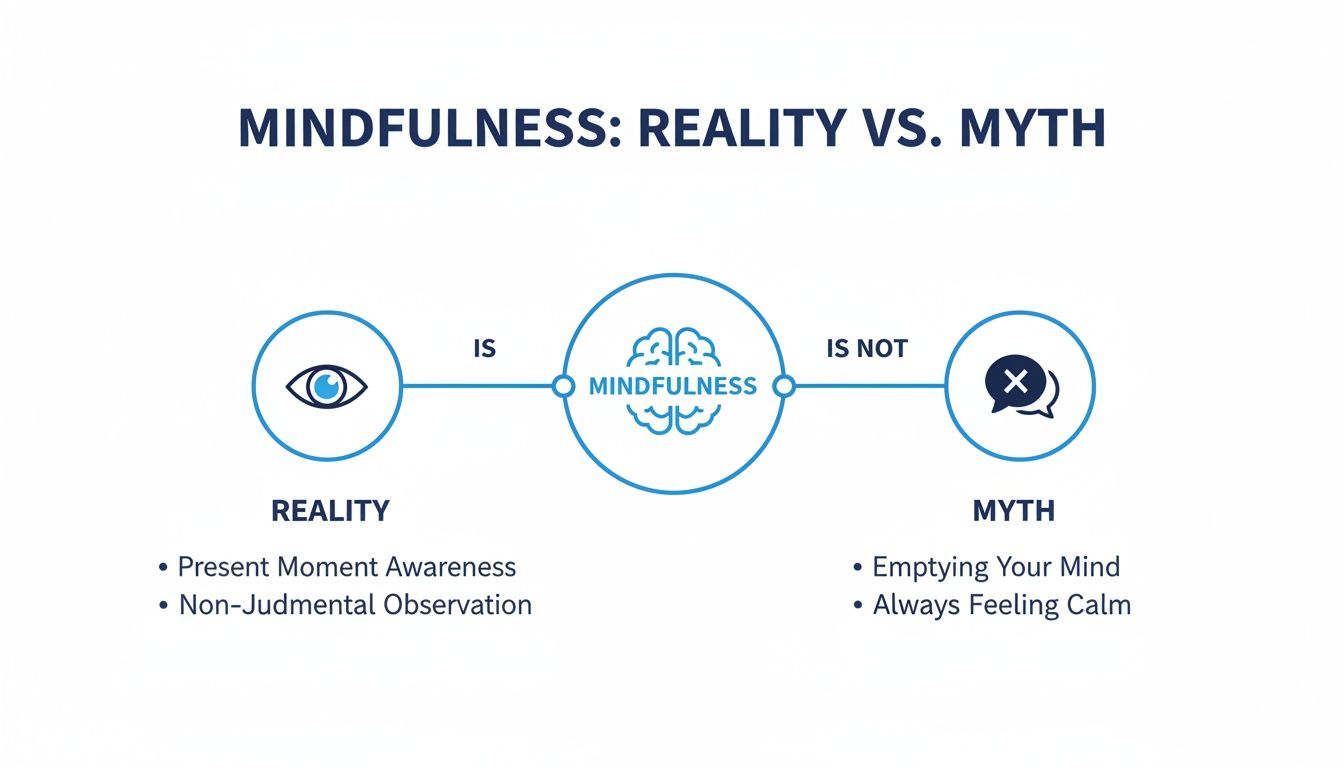
As you can see, mindfulness isn’t about emptying your mind. It’s about paying attention to the present moment on purpose, which makes it a practical tool for real life.
The Science of Creating Calm
This rewiring process is known as neuroplasticity—the brain's ability to reorganize itself by creating new neural connections. Every time you engage in a mindfulness exercise, you are actively shaping your brain’s structure for the better.
This rewiring leads to several key benefits that are especially helpful for expat life:
- Improved Emotional Regulation: Handle difficult emotions with more ease and less reactivity.
- Enhanced Focus and Attention: Strengthen your ability to concentrate and reduce mental clutter.
- Reduced Stress Perception: Your brain learns to interpret stressful situations as less threatening.
This evidence-based approach is at the heart of the care we provide at Therapsy. Our licensed, multilingual therapists help you understand the neuroscience behind mindfulness and integrate these powerful techniques into your therapy, empowering you to find a lasting sense of calm.
Mindfulness and the Expat Experience in Italy
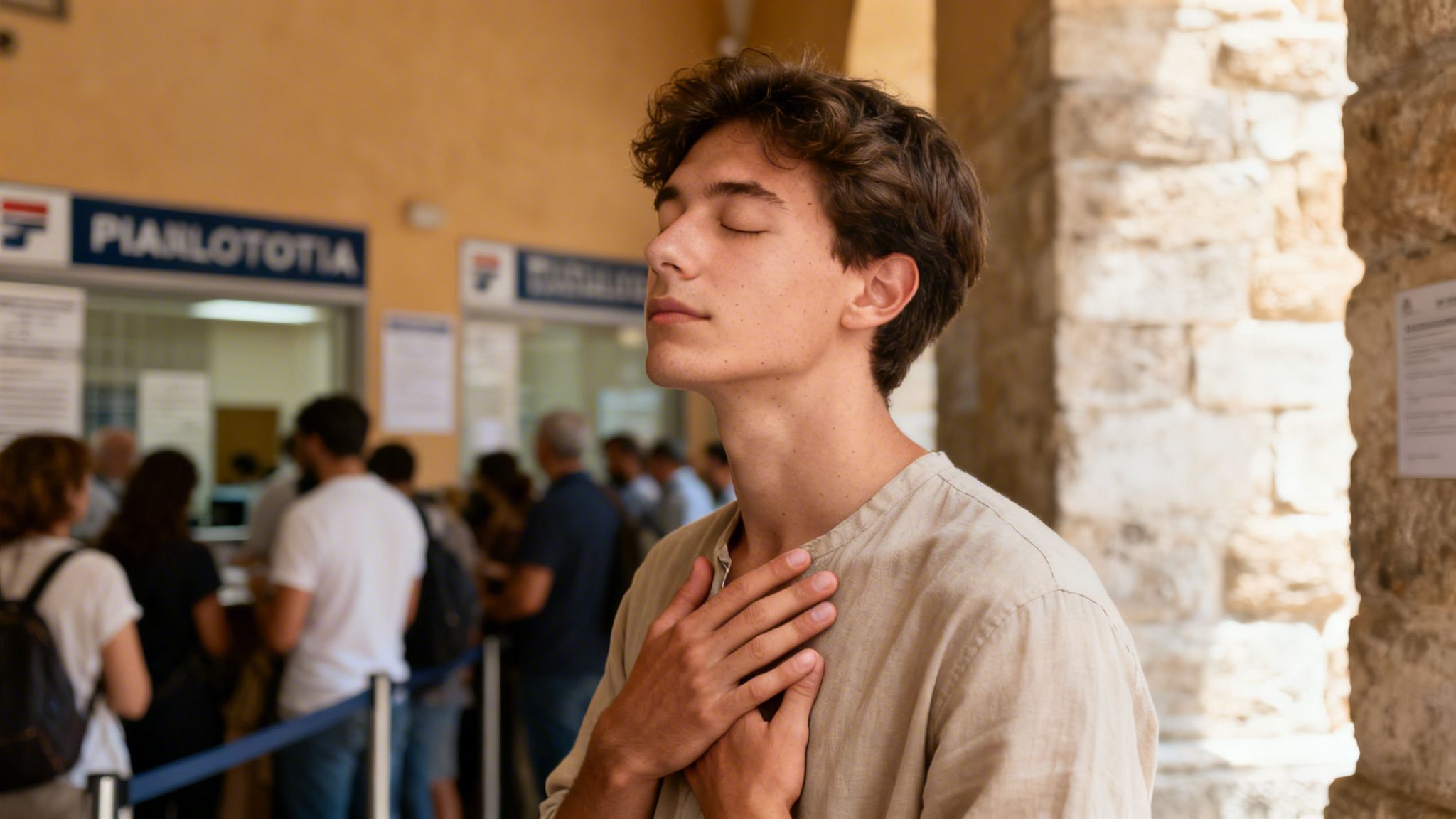
From Theory to Practice in Daily Italian Life
Mindfulness provides a way to pause automatic stress reactions during cultural adjustment. Instead of being swept away by frustration, you learn to create a pocket of space to choose a more balanced response.
Consider these common scenarios:
- At the Post Office: You’re in a packed Poste Italiane, and frustration is building. Use a three-breath pause. Breathe in, feel your feet on the floor. Breathe out, release the tension in your shoulders. This small act changes your experience of waiting.
- During a Language Barrier: You're trying to explain something in Italian, and it’s causing a misunderstanding. Mindfulness means noticing the feeling of embarrassment without judgment. It allows you to take a breath, smile, and try another way with patience instead of panic.
- In an Intercultural Relationship: You and your Italian partner have a disagreement rooted in cultural differences. Practice mindful listening. This means giving your partner your full attention to truly understand their perspective, turning a potential fight into a moment of connection.
Releasing the Weight of a New Language
One of the most underestimated stressors for expats is the constant mental load of operating in a second language. This tension often settles physically in your body.
A mindful body scan at the end of the day can be a powerful antidote. By bringing gentle, non-judgmental awareness to each part of your body, you can notice and consciously release the tension that has built up.
This practice isn’t about fixing anything. It is simply about checking in with yourself with kindness. In Italy, mindfulness has grown in popularity, especially within the international community. A 2019 survey showed that expats made up a significant portion of people using weekly mindfulness to manage cultural adjustment. A 2021 study on non-EU students in Italy found that 62% turned to mindfulness apps or therapy to cope with homesickness. You can learn more about the history and application of mindfulness on PositivePsychology.com.
At Therapsy, we see these challenges daily. Our multilingual therapists are experts in intercultural psychology and use mindfulness as a core tool to support expats. Learn more about our specialized mental health services in Italy for expats.
Simple Mindfulness Practices You Can Start Today

The best way to understand mindfulness is to experience it. These simple, powerful exercises can be woven into your life right now. The goal is not perfection, but approaching your experience with gentle curiosity.
The Mindful Minute: A Quick Reset
This practice takes just 60 seconds and can be done anywhere. Think of it as a pause button for your day.
- Settle In: Sit or stand comfortably. Feel your feet connecting with the floor.
- Find Your Breath: Close your eyes or soften your gaze. Bring all of your attention to the sensation of breathing.
- Just Notice: Feel the air as it comes in and as it leaves. Observe your chest or belly rising and falling.
- Gently Return: Your mind will wander. When you notice it has drifted, gently guide your focus back to the breath without judgment.
This small pause can interrupt a spiral of stressful thoughts and is a crucial skill for protecting your mental wellbeing at work.
Body Scan Meditation: Releasing Physical Tension
A body scan is a wonderful way to tune in to your physical self and let go of stored stress.
- Get Comfortable: Lie down or find a supportive chair. Close your eyes and take a few slow breaths.
- Start with Your Feet: Bring your full awareness to the toes on your left foot. Simply notice any sensations.
- Move Upwards: Slowly travel with your attention up your body, from your foot to your ankle, calf, knee, and so on.
- Cover Your Entire Body: Continue this gentle scan up through your legs, torso, arms, and hands, all the way to your head.
- Rest in Awareness: Finish by feeling your body as a whole, breathing into any spots that feel tense.
The body scan teaches you to listen to your body’s signals. It helps you build a kinder relationship with yourself, shifting focus from mental chatter to physical presence.
If you'd like a guided experience, searching for simple 5 minute guided meditation scripts can be a great way to get started.
Mindful Walking: Turning Movement Into Meditation
You can transform any walk into a practice. This exercise grounds you firmly in your body and your surroundings.
- Start Walking: Begin at a natural, comfortable pace.
- Feel Your Feet: Bring your attention to the soles of your feet. Notice the sensation of your heel connecting with the ground.
- Expand Your Awareness: Widen your focus to include the swing of your arms and your body moving through space.
- Engage Your Senses: What do you see, hear, and feel? Notice colors, sounds, and the breeze on your skin without needing to label them.
- Return When You Wander: Whenever your mind drifts, gently guide it back to the feeling of your feet on the ground.
Your First Week of Mindfulness Practice
Use this simple schedule to build a new habit. Just a few minutes a day can make a significant difference.
| Day | Morning Practice (3 Minutes) | Afternoon Practice (5 Minutes) |
|---|---|---|
| Day 1 | The Mindful Minute | Body Scan (Focus on legs & feet) |
| Day 2 | The Mindful Minute | Body Scan (Focus on torso & arms) |
| Day 3 | The Mindful Minute | Mindful Walk (Focus on feet) |
| Day 4 | Body Scan (Quick scan of whole body) | The Mindful Minute (x2) |
| Day 5 | Mindful Walk (Focus on sounds & sights) | Body Scan (Full body) |
| Day 6 | The Mindful Minute | Your choice of practice |
| Day 7 | Body Scan (Full body) | Mindful Walk (Engaging all senses) |
Remember, consistency matters more than duration. Regular practice will help you build a more mindful, present, and resilient life.
How Mindfulness Enhances Your Therapy Journey
The Problem: Being Trapped by Your Thoughts and Feelings
For expats, the challenge is not just feeling anxious; it’s being completely trapped by those feelings. They can hijack your day, strain your relationships, and make it feel impossible to enjoy your life abroad.
The Insight: You Can Change Your Relationship with Your Thoughts
The central insight of mindfulness-informed therapy is that you can change your relationship with your own thoughts. Instead of being swept away by a storm of worry, you learn to watch it from a stable, grounded place. Therapy provides the safe, structured environment you need to build this skill.
Mindfulness within a therapeutic setting teaches you to observe your thoughts and feelings without judgement. This simple act of observation breaks their power over you, creating space for conscious choice rather than automatic reaction.
With this newfound space, you are no longer at the mercy of your emotions. You can notice a difficult thought, acknowledge it, and then choose not to follow it down a negative spiral. This is the path to emotional freedom.
The Solution: Expert-Guided Mindfulness in Therapy
At Therapsy, our licensed therapists are trained in evidence-based approaches that formally incorporate mindfulness, such as Mindfulness-Based Cognitive Therapy (MBCT). This approach was developed to help people with recurrent depression and anxiety. It blends Cognitive Behavioural Therapy (CBT) with mindfulness practices to help you step away from negative thought loops.
How Mindfulness-Based Therapy Works:
- Recognize Triggers: You learn to identify the subtle shifts in your mood or thinking that might signal a relapse.
- Observe Without Reacting: Through guided mindfulness, you practice noticing these thoughts and feelings as temporary mental events, not absolute truths.
- Choose a Different Path: This awareness gives you the power to respond to triggers with helpful strategies instead of falling into old habits.
This approach is highly effective for anxiety, depression, and managing trauma. Explore our article on the connection between mindfulness and psychotherapy to learn more. The best results come from working with a professional who understands both the clinical application of mindfulness and your unique expat context. This is what we offer at Therapsy. Whether you prefer online or in-person sessions, we connect you with a professional who can speak your language and guide you with expertise and empathy.
The adoption of mindfulness among young people in Italy has seen remarkable growth. A 2021 report showed that introducing daily mindfulness breaks in high schools led to a 31% decrease in academic stress. By 2023, over 40% of Italian universities had integrated mindfulness modules for student wellness, benefiting more than 150,000 students and contributing to a 19% drop in dropout rates. You can find more information about these trends and the broader context of mindfulness on Wikipedia.
Frequently Asked Questions About Mindfulness
How long does it take to see the benefits of mindfulness?
You can feel short-term relief in minutes. A single mindful minute can interrupt a stress cycle. However, profound changes in your brain and emotional wellbeing typically emerge after several weeks of regular, daily practice. Consistency is more important than duration. A few minutes each day is more effective than one long session per week.
Can I practice mindfulness if my mind is always racing?
Yes. Mindfulness is designed specifically for a racing mind. The goal is not to stop your thoughts but to change how you relate to them. The practice is to notice when your mind has wandered and gently guide it back to an anchor, like your breath. Every time you do this, you are succeeding.
Do I have to meditate to be mindful?
No. While formal meditation is a great tool, mindfulness is about bringing full awareness to the present moment in any activity. You can practice mindful coffee drinking, mindful walking, or mindful listening. These informal practices embed awareness into the fabric of your day.
How do I find a therapist who uses mindfulness?
Finding a therapist who skilfully incorporates mindfulness is critical. Look for professionals trained in evidence-based approaches like Mindfulness-Based Cognitive Therapy (MBCT) or Acceptance and Commitment Therapy (ACT). At Therapsy, we make this easy. All our licensed, multilingual therapists are experienced in providing mindfulness-informed care. During your free first assessment call, our Clinical Director will match you with a therapist who speaks your language and has the right expertise for you. You can learn more on our FAQ page.
Data from Italy supports these methods. A 2020 study by the Italian National Health Service (SSN) showed a 10-week mindfulness program reduced burnout symptoms among professionals in Lombardy from 37% to 12%. A 2018 trial at Sapienza University of Rome found a 45% reduction in depression scores for couples who practiced mindfulness together. You can read more about the history of mindfulness and its growing clinical impact.
At Therapsy, our multilingual team of carefully selected, licensed professionals is dedicated to helping you build these skills in a supportive, expert environment. We understand the unique pressures of expat life and provide tailored care, available online or in-person across Italy, to help you bridge the gap between local Italian life and global mental health standards. Your journey to a calmer, more resilient life starts here.