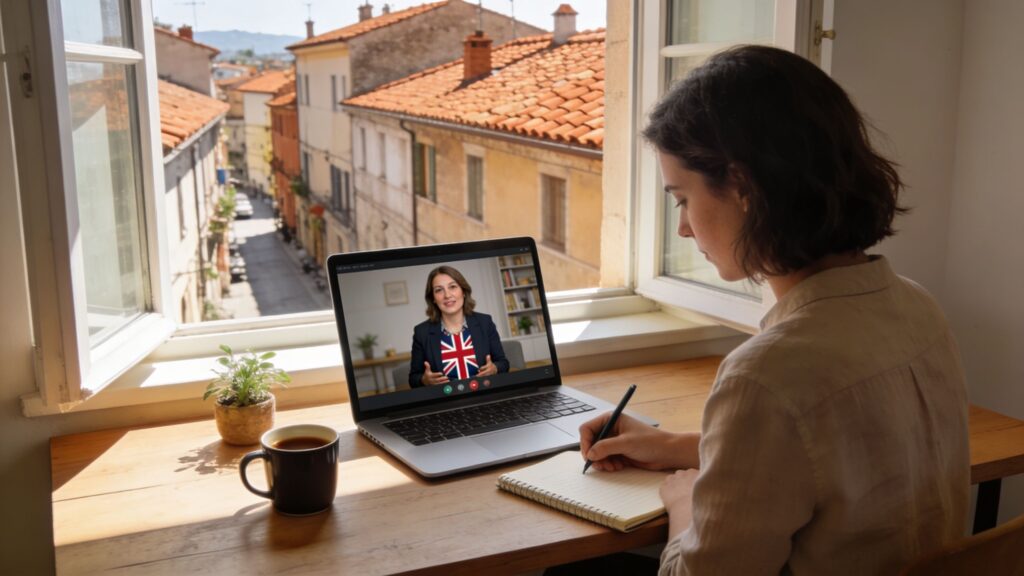
You arrive in Salerno with the usual mix of hope and overload. The seafront is beautiful. The food is comforting. Daily life still feels heavier than expected. You're sleeping badly, overthinking small interactions, or holding back tears because even simple tasks take more energy in a new country.
Then you search for an English speaking therapist in Salerno and hit the same wall many expats hit. Listings are vague. Some profiles say “English spoken,” but that doesn't tell you whether a therapist can handle grief, trauma, panic, relationship strain, or burnout in fluent clinical English. If you don't speak Italian comfortably, the search can feel discouraging before therapy even begins.
That confusion is common for young adults living in Italy, especially people balancing relocation stress, homesickness, work or study pressure, and the emotional fatigue of adapting all day long. In a smaller city, the gap feels sharper.
This guide is for young adult expats in Italy aged 20 to 34, especially those living in or near Salerno. It breaks the process down clearly. You'll see why language matters so much in therapy, where to search, what to ask on the first call, what sessions usually look like, and how to move forward even if local in-person options are limited.
Introduction
The real question behind the search
When people type English Speaking Therapist Salerno, they're usually asking more than a location question.
They're asking:
- Can I find someone who understands me without making me translate my feelings?
- Do I have to manage the Italian system alone?
- If there isn't a clear local option, what am I supposed to do next?
For many expats, the hardest part isn't admitting they need support. It's trying to find support in a setting that wasn't designed with their language and cultural reality in mind.
A good therapy search should reduce stress, not add another layer of it.
Why Salerno feels different from bigger cities
In large international hubs, there are often more visible options. In Salerno, the search can feel quieter and more fragmented. That doesn't mean your need is unusual. It means the local supply is limited, especially if you need therapy in English at a level that allows emotional nuance.
Some people respond by postponing help. Others try to “get by” in Italian, even when they can't fully express fear, shame, grief, or relationship pain. That usually creates more pressure, not less.
The practical goal is simple. Find a therapist who is clinically qualified, linguistically comfortable for you, and realistically accessible from where you live.
Why Language Matters In Therapy
Emotional truth is rarely spoken in your backup language
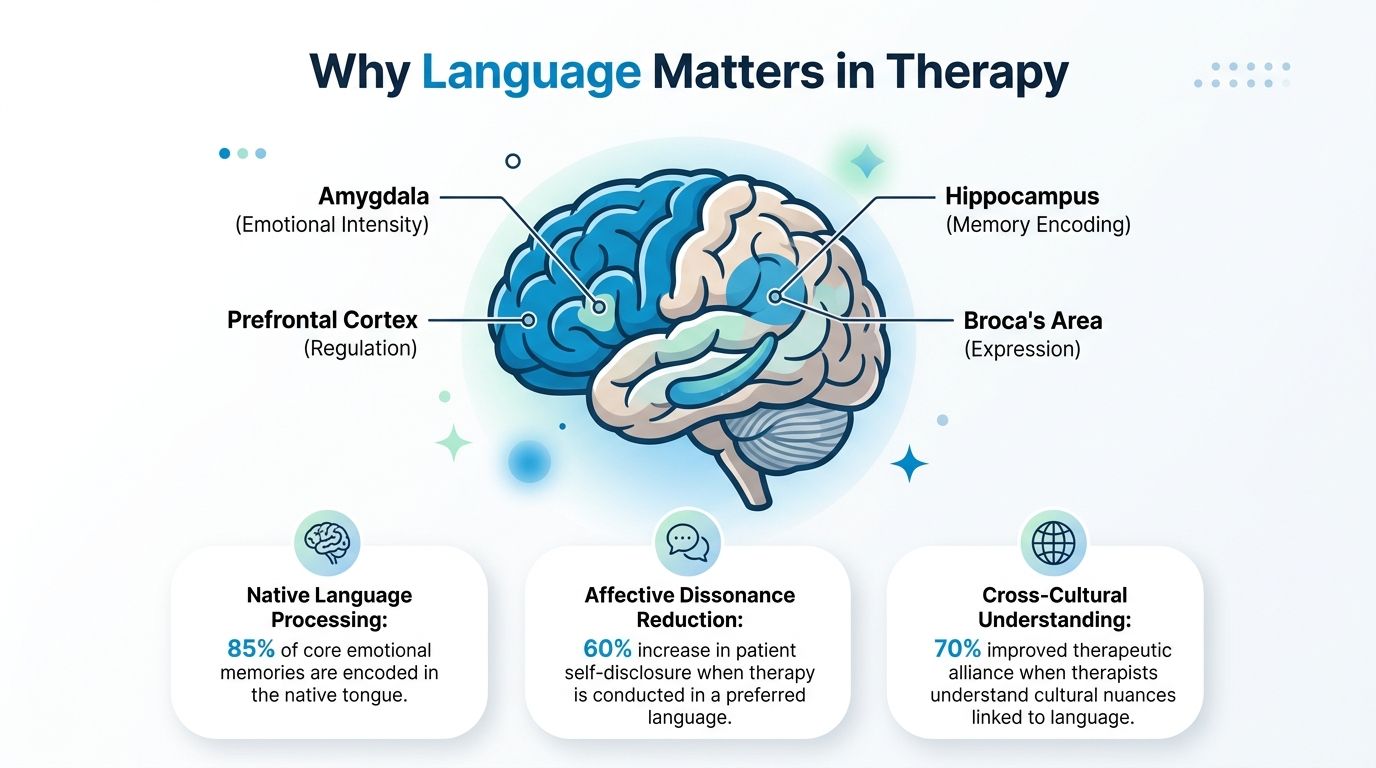
Therapy works through precision. You don't just report symptoms. You name patterns, memories, body sensations, fears, family dynamics, and the meanings you attach to them. That kind of work becomes harder when you're operating in a language you use for emails, errands, or polite conversation rather than emotional truth.
Cross-cultural psychology describes language burden as the cognitive and emotional fatigue of functioning in a non-native language. Research summarized in this guide on English-speaking therapy in Italy and language burden notes that this burden can intensify anxiety and depression for expats, which is why therapy in your native or preferred language is a therapeutic need, not just a convenience.
Why this matters in CBT, EMDR, and Schema Therapy
Different therapy models all rely on clear access to inner experience.
- CBT helps you notice the link between thoughts, emotions, and behaviors. If you can't find the right words, distorted thoughts are harder to identify.
- EMDR is often used for trauma. Trauma memories may carry emotion, body tension, and meaning that feel most accessible in the language in which life events were lived.
- Schema Therapy explores long-standing patterns like abandonment fear, harsh self-criticism, or people-pleasing. These patterns often come alive in highly personal language.
One verified clinical point matters here. A critical step in multilingual psychotherapy involves a 20-minute language-mood mapping session before the first full therapy hour, identifying which language triggers stronger emotional responses and improving treatment adherence and retention.
Some expats say, “I can function in Italian, but I can only feel honestly in English.” That distinction matters in therapy.
Fluency is not the same as therapeutic fluency
A therapist may speak English in daily life and still not work comfortably in it at a clinical level. That's where many readers get confused.
Language ability exists on a spectrum. In therapy, you need more than general fluency. You need a therapist who can understand metaphor, ambivalence, shame language, family complexity, and subtle emotional shifts without flattening them.
For expats in Italy, multilingual care is often less about translation and more about emotional access. One practical overview of this kind of support is multilingual psychotherapy for expats in Italy, which focuses on matching care to both language and cultural context.
Where To Search For English Speaking Therapist In Salerno
Start with the reality, not the wish
Many people begin by assuming they'll find a local office with several English-speaking therapists available. In Salerno, that expectation often leads to frustration.
There is no publicly documented English-speaking therapist specifically located in Salerno, Italy. A verified overview of English-speaking therapy access in Italy notes that residents in Salerno can still access English-speaking therapy through a nationwide online service that covers 20+ Italian cities, includes 50+ physical locations, has a team of 50+ licensed therapists, and has supported 1,000+ international clients since 2023.
That means the search changes shape. Instead of asking only, “Who is physically near me?” ask, “Who is licensed, fluent enough for therapy, and available in a format I can sustain?”
The most useful places to check
If you're trying to find an English speaking therapist in Salerno, work through the search in layers.
Local private practices
Some may speak some English, but listings often don't clarify whether they offer therapy in English with real clinical ease. Ask directly.University counseling services
If you're a student, ask whether sessions are available in English or whether they can refer you to an external professional.Expat and international community groups
These can help you find recommendations, but treat personal suggestions as a starting point, not proof of fit.Online services covering Italy
This is often the most realistic option if you need timely support without traveling.
How to judge whether an option is actually viable
A provider is more likely to be workable if they can clearly answer these questions:
- Language clarity – Do they offer therapy in English, not just basic communication?
- Licensing – Are they a licensed psychologist or psychotherapist?
- Format – Can they work online if in-person access is difficult?
- Availability – Can they offer an assessment soon, or are you facing a long delay?
One practical resource for this step is therapist matching in Italy, which explains how human matching works when language, therapeutic style, and cultural background all matter.
In smaller Italian cities, online therapy often isn't a compromise. It's the format that gives you access to the right clinician instead of the closest one.
Essential Questions To Ask On Your First Call
Ask for fit, not just availability
A first call doesn't need to be impressive. It needs to be useful. Your goal is to understand whether this therapist can meet you at the level of language, method, and context you need.
If you freeze on calls, keep a short list in front of you.
Questions worth asking
About experience
“Have you worked with expats or international students living in Italy?”
“What kinds of issues do you often see in people adjusting to life abroad?”About therapeutic approach
“Do you work with CBT, EMDR, or Schema Therapy?”
“How would you approach anxiety, burnout, or relationship stress in an intercultural context?”About language
“How many years have you offered therapy in English?”
“Do you assess whether I express myself better in English or another language?”About structure
“What happens in the first assessment session?”
“Do you use exercises between sessions, such as reflection prompts or worksheets?”About logistics
“Are sessions online, in person, or both?”
“What is your cancellation policy, and how is confidentiality handled online?”
One especially useful question is whether the therapist includes a language check early on. A clinically thoughtful process may include the kind of guidance on how to talk to a therapist that helps you describe symptoms, culture stress, and language preferences more clearly from the start.
A simple script if you're nervous
You can say:
“I'm looking for therapy in English because I live in Italy, but I don't want to process difficult things in a language that isn't emotionally natural for me.”
That sentence is enough to open the right conversation.
What To Expect During Assessment And Sessions
The first meeting is usually more structured than people expect
Most first sessions are not deep emotional dives from minute one. They tend to begin with orientation. The therapist asks what brought you in, what's been difficult recently, what support you've had before, and what you hope will change.
You may talk about:
- your move to Italy
- stress at work or university
- relationship or family pressure
- sleep, appetite, motivation, or panic symptoms
- whether English feels like the right therapy language
If you feel awkward at first, that's normal. Many expats are carrying distress and self-consciousness at the same time.
Ongoing sessions usually become more focused
After the assessment phase, sessions often settle into a rhythm.
A therapist may begin with a brief check-in, then explore one theme in more depth. In CBT, that might mean looking at thoughts and behaviors linked to anxiety. In EMDR, it may involve careful preparation before trauma processing. In Schema Therapy, it could involve patterns that repeat across work, love, and self-esteem.
Some therapists also suggest between-session work, such as journaling, noticing triggers, or tracking moods. That isn't homework for the sake of homework. It helps you bring real-life moments into the therapy room.
Progress rarely feels dramatic every week
Some sessions feel relieving. Others feel tiring, clarifying, or emotionally exposed. That doesn't mean therapy isn't working.
A useful expectation is this: therapy often helps by creating steadier understanding over time. You begin to notice what triggers you, how culture shock interacts with older patterns, and what helps you feel more grounded.
Pricing Formats And Therapsy Multilingual Matching
The main therapy formats
Those seeking an English speaking therapist in Salerno often need two answers at once. One is clinical. The other is practical. Cost, format, and the matching process matter because they affect whether support is sustainable.
Different formats serve different needs:
- Individual therapy is usually the starting point for anxiety, depression, identity stress, adjustment difficulties, and trauma-related concerns.
- Couple therapy can help intercultural couples address conflict style, communication, family expectations, and life planning.
- Psychiatric consultation may be relevant when medication evaluation or psychiatric assessment is needed.
- Psychodiagnostic assessment can help when a person needs a more structured evaluation over multiple meetings.
Pricing at a glance
Below is a simple comparison of common starting fees.
| Service | Starting Price |
|---|---|
| Individual therapy | from €70/session |
| Couple therapy | from €100/session |
| Psychiatric consultation | from €110/session |
| Psychodiagnostic assessment | from €255 |
For a broader overview of how private fees work, this guide on how much therapy costs in Italy is useful for understanding what affects price.
Online and in-person care are not equal for every situation
In-person therapy appeals to many people because it feels tangible and contained. For others, online sessions are easier to maintain because they remove travel time and make therapy possible from a smaller city.
The key question isn't which format sounds ideal in theory. It's which format lets you attend regularly, speak freely, and keep going when life gets busy.
For Salerno residents, online care often solves the access problem more cleanly than waiting for a local opening that may not match your language or schedule.
One multilingual option in Italy
One structured option is Therapsy, which offers therapy in 14 languages, works with 50+ therapists, has served 1,000+ clients since 2023, and has a 4.8/5 “Excellent” Trustpilot rating, as summarized in Expatica's overview of mental healthcare in Italy.
Its process is built around human matching rather than algorithms. The free first assessment call is handled by the Clinical Director, who matches people based on language, clinical needs, and personal context.
That detail matters for expats because symptoms rarely arrive in neat categories. Anxiety may be tied to migration stress, relationship strain, or old trauma. A human conversation often captures that complexity better than a checkbox form.
Emergency And Urgent Mental Health Resources And Conclusion
Know the difference between urgent and emergency
If you're distressed, it helps to sort the situation quickly.
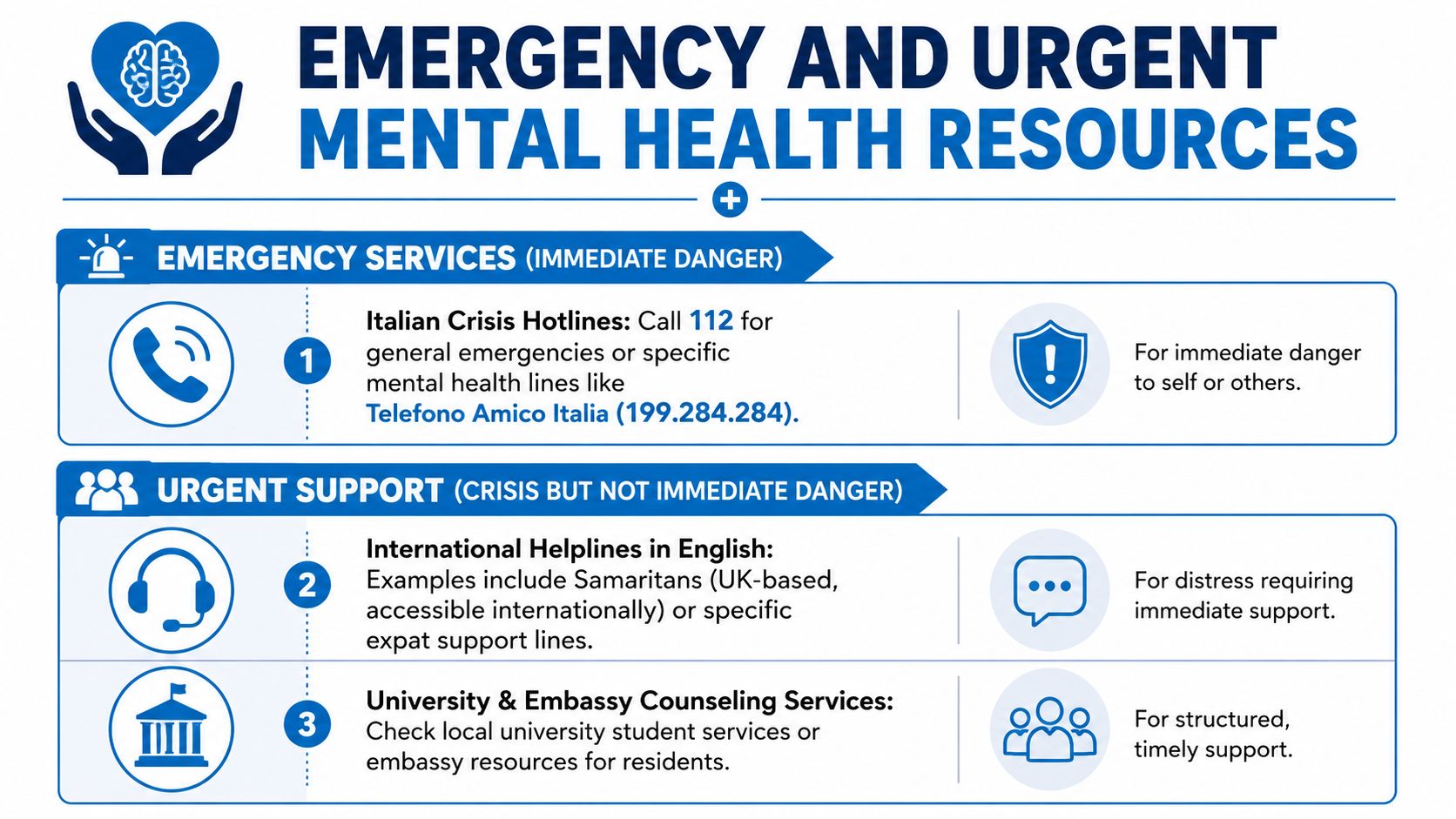
Emergency means immediate danger to yourself or someone else. In Italy, call 112 right away.
Urgent means you're in crisis, frightened, overwhelmed, or not coping well, but there is no immediate life-threatening danger in this moment. In that case, reach out for live support as soon as possible through local services, student support, embassy channels, or a trusted clinician.
Practical places to turn
- Immediate danger – Call 112.
- Telefono Amico Italia – The infographic above includes 199.284.284 as a mental health support contact.
- University counseling services – If you study in Italy, your institution may offer counseling or emergency referral guidance.
- Embassy or consular information – Some embassies provide mental health resource lists for residents abroad.
- Trusted personal support – If you're at risk of isolating, contact one person who can stay with you, call with you, or help you seek care.
Why private support often matters for expats
Public care exists, but access can be slow. A practical overview of mental health support for expats in Italy can help you understand the system more clearly. One common barrier is that the public SSN route often requires a GP referral and can involve wait times of several months, which can be especially hard if you don't speak Italian confidently.
That doesn't mean help is out of reach. It means you may need to choose the route that matches urgency, language, and access.
If you're struggling now, the right next step is the one that gets you speaking to a qualified human soonest.
A grounded conclusion
Searching for an English speaking therapist in Salerno can feel oddly lonely because the need is personal and the local path isn't obvious. Still, the lack of clear in-person listings doesn't mean support doesn't exist. It means your search needs to include online multilingual care, not just nearby offices.
If you're dealing with culture shock, anxiety, burnout, grief, trauma, or relationship strain, it's okay to stop trying to manage everything in a second language. Therapy should be a place where you don't have to simplify yourself.
The English-speaking therapists we work with in Salerno
Therapsy works with a therapist who receives in person in Salerno and also sees patients online.
Dr. Vincenzo Frauneder is a psychotherapist working in German, English and Italian. He was born in Vienna and holds Italian and German citizenship. His foundation is Ericksonian, specialised in clinical hypnosis, EMDR and imagery rescripting, and he works with phobias. He is also an aviation psychologist who spent 32 years working on board as a cabin chief, a sexologist, and works with LGBTQIA+ individuals and couples.
You tell Therapsy what you are looking for, a member of our clinical team reads your request, and they introduce you. The first call is free.
FAQ
Is online therapy confidential?
Yes, online therapy is designed to be confidential when it is provided by a licensed professional using appropriate clinical procedures. It's still wise to ask how privacy is handled, what platform is used, and how your personal data is protected. You should also choose a private space where you can speak freely.
Can I change therapists if the first match doesn't feel right?
Yes, rematching is a normal part of responsible care. Therapy depends heavily on feeling understood, so a mismatch in style, pace, or language comfort is important to address early. You don't need to force yourself to continue with a therapist who doesn't feel like the right fit.
Can international students in Salerno use English-language therapy?
Yes, international students can use English-language therapy even if they are studying outside a major city. If your university support is limited or not available in English, private online care may be the most practical option. Many students prefer this because it offers continuity during exams, travel, and semester breaks.
Does insurance cover therapy in Italy?
Sometimes, but it depends on your policy. Some international health plans, employer benefits, or educational coverage include partial reimbursement for psychotherapy or psychiatric care. Ask your insurer what documents they require before starting.
Is online therapy a second-best option compared with in-person therapy?
No, online therapy is often the most realistic and clinically workable option for expats in smaller Italian cities. What matters most is the therapist's qualification, your ability to express yourself naturally, and whether the format helps you stay consistent. For many people in Salerno, online care improves access rather than reducing quality.
What if I don't know whether I need CBT, EMDR, or another approach?
You don't need to know the method before asking for help. A good assessment conversation can clarify whether your difficulties look more like anxiety patterns, trauma responses, burnout, relationship stress, or something else. The right approach usually becomes clearer once a clinician understands your history and goals.
Book your first free assessment call – no commitment, just a conversation with our Clinical Director who will listen and match you with the right therapist for you. Visit THERAPSY.