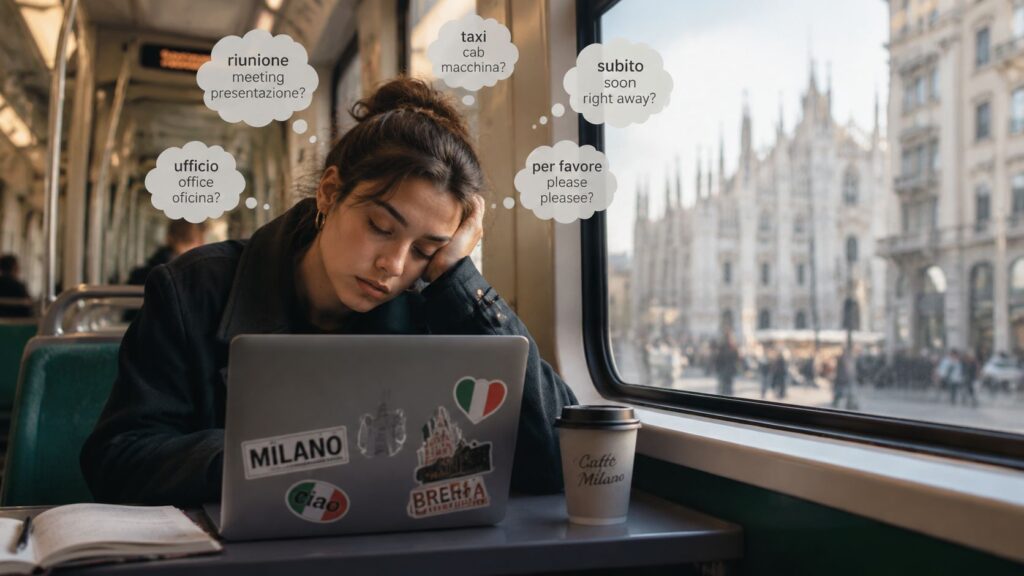
You've been in Italy long enough to stop feeling like a tourist, but not long enough to feel fully at ease. Some days the language lands, the routines make sense, and the city feels open. Other days, a small bureaucratic task, a social misunderstanding, or a call home can leave you drained, irritable, or suddenly homesick.
Irritability is a classic stage of culture shock: if anger has become the loudest symptom, see our guide to anger management therapy.
Culture shock and reverse culture shock are both normal responses to major cross-cultural change, and they're often more structured than people expect. A common framework describes culture shock as a four-phase process, honeymoon, frustration, adjustment, and adaptation, and a 2024 global expatriate survey found that 92% of respondents said adapting to a new culture was challenging, while 65% described it as extremely or very difficult (freightamigo.com). That doesn't mean you're failing. It means your mind is doing the hard work of learning a new social world.
The Four Stages of Culture Shock for Expats
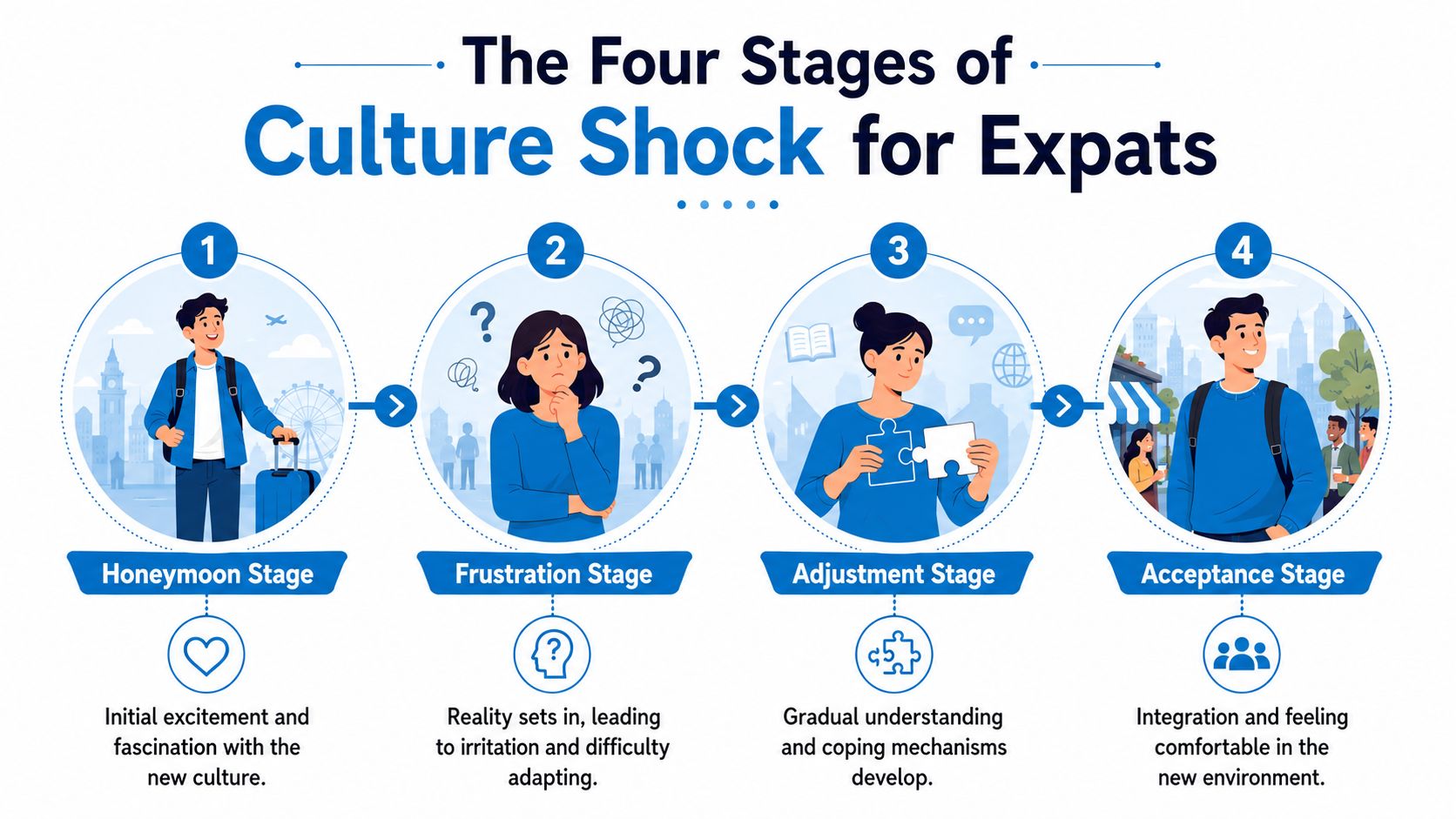
Culture shock is best understood as an adjustment process, not a personality flaw. In the classic U-curve model, the emotional arc moves from excitement to difficulty, then slowly into steadier adaptation. In practical terms, the early novelty of life abroad often gives way to emotional strain after a few months, and stability usually develops later, not immediately (culture shock overview).
Honeymoon and Frustration
The honeymoon stage is the part people post about. The streets feel charming, the espresso tastes better than expected, and even getting lost can feel romantic. In Italy, this phase can be especially vivid because daily life looks beautiful on the surface, even when the practical side is still confusing.
Then the frustration stage arrives. That's when the same city that once felt enchanting can start to feel tiring, because the language, pace, and social rules demand more energy than you expected. This shift is often delayed rather than immediate, and for many people the emotional strain becomes more obvious after roughly three months, once the novelty has worn off (culture shock overview).
Adjustment and Adaptation
The adjustment stage begins when life starts to feel more navigable. You know which café to trust, which phrases help in daily interactions, and how to predict the rhythm of the week. The stress doesn't vanish, but it stops dominating every day.
The final phase is adaptation, sometimes called acceptance. That doesn't mean you understand everything. It means you've built enough familiarity that you can live well without translating every experience into your old cultural frame.
Practical rule: If your reaction feels cyclical, that's often a sign of adaptation in progress, not regression.
The idea is simple, but powerful. Your nervous system is learning that a new country is not just a place, it's a different set of expectations, signals, and habits. If you want a deeper psychological lens on identity shifts in long-term adjustment, this guide to third-culture adult therapy is a useful companion.
Common Symptoms and Examples in Italy

Culture shock usually shows up in ordinary moments, not dramatic ones. You might feel fine in the morning, then find yourself unusually tense after trying to solve a simple errand, answer a message, or follow a conversation that moved too quickly. That mismatch between “I should be able to handle this” and “why does this feel so hard?” is often where shame starts, and shame is usually more exhausting than the challenge itself.
What It Can Feel Like Day to Day
Common signs include irritability, loneliness, fatigue, mental fog, and a shortened fuse. Some people notice sleep changes or appetite changes too. None of these mean you're weak, they mean your brain is working overtime to interpret unfamiliar cues.
In Italy, the triggers are often concrete. The permesso di soggiorno process can feel like a test of patience, especially when you're already using limited language and trying to decode documents, offices, and timing. Social etiquette can be another source of strain, because what reads as warm and informal in one culture can feel abrupt, indirect, or overly intense in another.
Why Italy Can Be Emotionally Demanding
Language immersion is emotionally taxing in a way people often underestimate. Even when your Italian is strong, the constant alertness required to follow conversations, jokes, tone shifts, and workplace nuance adds fatigue that doesn't always look dramatic from the outside. Work life can amplify this, especially when the pace, hierarchy, or communication style feels different from what you're used to.
A useful question: “Am I tired because life is hard right now, or because I'm spending all day translating people, systems, and myself?”
That question matters because it separates ordinary adjustment stress from deeper distress. If the answer is “both,” you're probably carrying more load than you realize.
For readers trying to make daily life in Italy feel more manageable, this coping guide for culture shock in Italy offers a practical, locally grounded starting point.
Understanding Reverse Culture Shock When Returning Home
Reverse culture shock can feel surprising because people expect relief, not disorientation. You come home assuming the hardest part is over, then discover that familiar streets, relationships, and routines don't fit the person you've become. That mismatch can be unsettling, even painful.
The key point is that reverse culture shock is not just nostalgia. It's a readjustment problem created by the gap between a changed person and an environment that feels unchanged, or changed in ways you didn't anticipate (reverse culture shock and identity mismatch). In other words, home can feel unfamiliar because you've outgrown the version of yourself that used to belong there.
Why Re-Entry Feels So Strange
The W-curve model helps explain why returning home can be emotionally complicated. It extends the U-curve by recognizing that departure, overseas adjustment, and re-entry each bring their own emotional work. One university-based framework describes re-entry as disengagement, euphoria, alienation, and gradual readjustment (Nottingham re-entry framework).
That sequence makes sense clinically. The first relief of being home can give way to discomfort once daily life starts again. Friends may expect the old version of you, while you're trying to live as the new version of yourself.
The Emotional Reality of Coming Back
Returnees can feel socially out of sync, even with people they love. The literature describes reverse culture shock as a real source of distress, not a minor mood swing. Reported outcomes include anxiety, depression, social withdrawal, alienation, confusion over values, anger, and interpersonal problems (reverse culture shock outcomes).
That's why re-entry deserves as much care as departure. If you've built habits, friendships, and identity around life abroad, coming home can feel like losing a context that helped you make sense of yourself. For an Italy-linked perspective on re-entry after time in the United States, this resource on reverse culture shock for Americans returning home is especially relevant.
Culture Shock vs Reverse Culture Shock Compared
Culture shock and reverse culture shock are related, but they're not the same experience. One happens when you enter a new world. The other happens when you return to a world that no longer matches your inner life.
| Aspect | Culture Shock | Reverse Culture Shock |
|---|---|---|
| Main trigger | Entering a new cultural system | Returning to a familiar one after change |
| Emotional tone | Curiosity mixed with strain | Relief mixed with disorientation |
| Social context | You often expect confusion | You often expect comfort |
| Common challenge | Learning unfamiliar rules | Feeling out of step at home |
| Hidden pain point | “I don't understand this yet” | “Why doesn't this fit anymore?” |
The most important difference is expectation. When you move to Italy, you know you're entering a new setting, so you're at least somewhat prepared for confusion. When you return home, you may assume comfort will come automatically, and that's why the disruption can sting more.
Some people describe culture shock as learning how to live elsewhere. Reverse culture shock is often learning how to live with the fact that you've changed.
That distinction matters in relationships too. At home, others may still treat you the way they always did, while you're trying to integrate new habits, values, or boundaries. That can create a painful sense of invisibility.
The practical takeaway is simple. If your stress is happening on arrival, you may be in culture shock. If it's happening on return, especially after feeling settled abroad, reverse culture shock may be the better fit.
Practical Strategies to Manage Cultural Adjustment
The most effective strategies are the ones that reduce isolation and restore rhythm. That usually means working on three areas at once, connection, routine, and self-talk. If one of those is missing, the others get harder to maintain.
Build Structure Without Becoming Rigid
Start by keeping a few anchors in your week. A regular breakfast spot, a language class, a gym session, or a walk at the same time each evening can help your nervous system predict what comes next. Predictability lowers the sense that everything is happening at once.
At the same time, leave room for flexibility. In Italy, daily plans often shift, and fighting every change can make you feel more powerless than you need to. The goal is not to control the whole environment, it's to create a few stable points inside it.
Stay Connected in More Than One Direction
Support works best when it's layered. Keep some contact with people who know your home culture, and also build relationships in Italy that don't require you to translate your whole identity. If you live in shared housing or a collective setting, creating strong connections in coliving can be a helpful example of how shared routines and small repeated interactions reduce loneliness.
You can also borrow practices from both cultures without feeling disloyal to either. For some people, that means keeping a family ritual from home. For others, it means integrating an Italian habit like aperitivo into a broader weekly rhythm. The point is continuity, not imitation.
Use Reflection and Self-Compassion
When you feel embarrassed, frustrated, or behind, try to name the situation instead of blaming yourself. “I'm overloaded” is more useful than “I'm bad at this.” That small shift reduces the shame spiral that often keeps adjustment stress going.
If you want a structured way to stay present, mindfulness practices in Italy can support steadier attention without pretending the transition is easy. Mindfulness isn't about forcing calm. It's about noticing what's happening before the emotion becomes the whole story.
How Multilingual Therapy Can Support Your Journey
Therapy becomes useful when the adjustment strain starts affecting mood, sleep, relationships, or work. If you notice persistent anxiety, low mood, withdrawal, or a growing sense of detachment from yourself, it may be time to speak with someone. That's especially true when the distress keeps repeating, even after you've tried practical coping strategies.
A multilingual therapist can help you separate normal transition stress from patterns that need more support. In CBT, for example, the focus is often on identifying thought loops like “I should be over this by now” or “I don't belong anywhere,” then testing them against reality. That matters because cross-cultural stress often gets worse when people turn their adjustment struggle into a personal verdict.
Why Language and Matching Matter
When you speak in the language that carries your emotions best, you don't have to spend as much energy translating pain. That can make the therapeutic work faster, clearer, and less lonely. It also matters that the therapist understands expat life, identity shifts, and the emotional rhythm of living between cultures.
Therapsy is one option for this kind of support in Italy, because it offers multilingual psychotherapy with human matching and both online and in-person sessions. For people dealing with adjustment stress, that kind of fit can reduce the friction that often keeps someone from starting at all. You can learn more through multilingual psychotherapy for expats in Italy.
When Support Becomes Especially Important
The psychological impact of reverse culture shock can be significant, especially when symptoms include anxiety, depression, social withdrawal, alienation, confusion over values, anger, or interpersonal strain (reverse culture shock outcomes). Those signs don't mean something is wrong with your character. They mean your adaptation load may have outgrown your current coping tools.
Bottom line: therapy isn't only for crisis. It can also be a proactive way to make transition less lonely and more coherent.
If you're living in Italy and want a therapist who can understand both the emotional and cultural sides of the experience, multilingual support can be a very practical next step. It gives you a place to make sense of the move, the return, or the uncertainty in between.
FAQ
How long does culture shock usually last?
It varies, but the process often unfolds over months rather than days. The exact timing depends on language comfort, support, work stress, and how different the new environment feels.
Can reverse culture shock happen even if I wanted to come home?
Yes, it absolutely can. Wanting to return doesn't prevent disorientation, because the issue is often identity mismatch rather than regret. You may be glad to be back and still feel unsettled because your habits, expectations, and relationships changed abroad.
How can I support a partner who seems to be struggling after a move or return?
Listen without trying to rush the process. Partners usually need recognition first, practical help second, and solutions third. If you keep hearing, “I feel out of place,” treat that as a real adjustment signal, not a complaint to solve immediately.
Is reverse culture shock the same as depression?
No, but they can overlap. Reverse culture shock can include low mood, withdrawal, irritability, and confusion, and those feelings may look similar to depression from the outside. If the distress is persistent, intense, or interfering with daily life, professional assessment is a good idea.
What helps most when I feel like a stranger in my own country?
Routine, honest contact with supportive people, and time to rebuild identity coherence usually help most. It also helps to stop expecting home to feel exactly the same as it did before you left. The goal is not to become your old self again, but to integrate the version of you that lived abroad.
Should I talk to a therapist even if I'm still functioning at work?
Yes, if the internal strain is becoming heavy. Many people keep working, studying, or parenting while enduring adjustment strain. Therapy can help you process the change before it turns into burnout, isolation, or a deeper mood problem.
A CTA for THERAPSY.