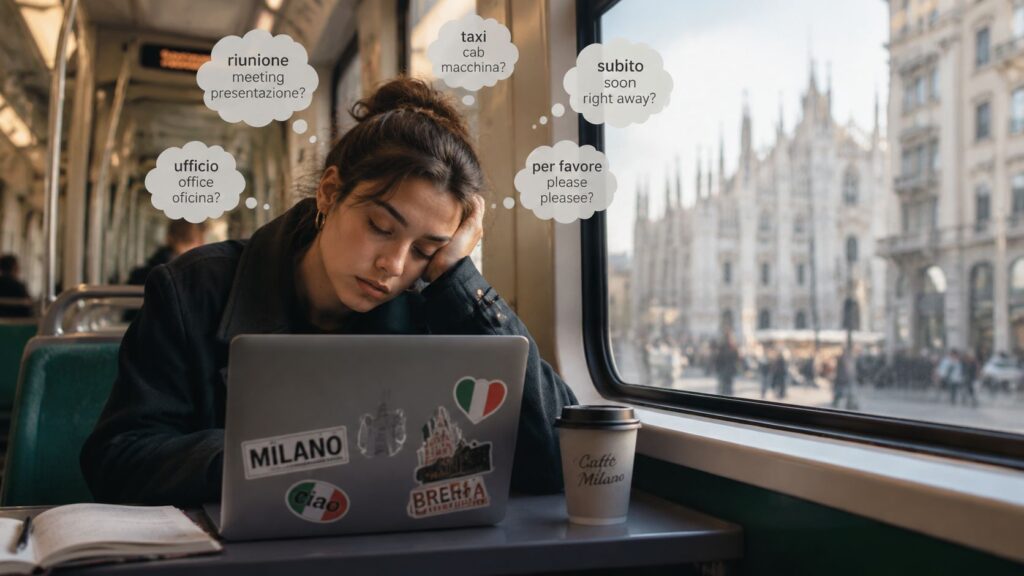
You've arrived in Italy for university, but the practical excitement has been replaced by missed deadlines, loneliness, anxiety, or the feeling that every service requires Italian paperwork. Mental health support for international students usually comes through three routes: a free university counseling desk, Italy's public health system, or private therapy. Campus services are often the least expensive, while culturally matched private therapy generally offers more language, scheduling, and format flexibility.
Therapsy is a multilingual psychotherapy service in Italy that connects expats with therapists who speak their native language.
Where to Find Immediate Help When You Feel Overwhelmed?
If an international student is struggling today, the quickest starting point is usually the university's counseling desk, a medical service connected with the national health system, or a private therapist who can respond in the student's preferred language.
A student might be sitting in a shared apartment in Bologna, unable to concentrate after a difficult call with family. Another might be in Milan, attending lectures in Italian while privately experiencing panic, homesickness, or exhaustion. These experiences can feel personal, but the first practical problem is often navigation: which door opens first, in which language, and with what level of flexibility?
What are the main support pathways in Italy?
University counseling desks can be free or institutionally funded, and they're a sensible first contact for students who want help understanding campus procedures. The national health system can provide medical and psychological support, although access, referral routes, regional organization, and language availability vary. Private therapy offers a more direct route, especially when a student needs a specific language, regular appointments, or a therapist familiar with migration and cultural adjustment.
For students dealing with panic symptoms, a practical explanation of what panic can feel like and how to seek help is available through guidance on panic attacks for expats. If there is immediate danger, severe physical distress, or concern about suicide, the student should contact local emergency services or go to the nearest emergency department rather than waiting for a routine appointment.
If you or someone near you is in immediate danger, call 112, the emergency number in Italy and across the EU. Therapy is not an emergency service.
Practical rule: Free support can be the right first step, but “free” doesn't always mean immediate, multilingual, or designed for long-term therapy.
Therapsy offers another pathway for students who want human support without navigating every Italian administrative step alone. Its clinical team connects students with therapists through a personal matching process, with online and in-person options available in Italy.
Why Is the Gap Between Student Distress and Care Widening?
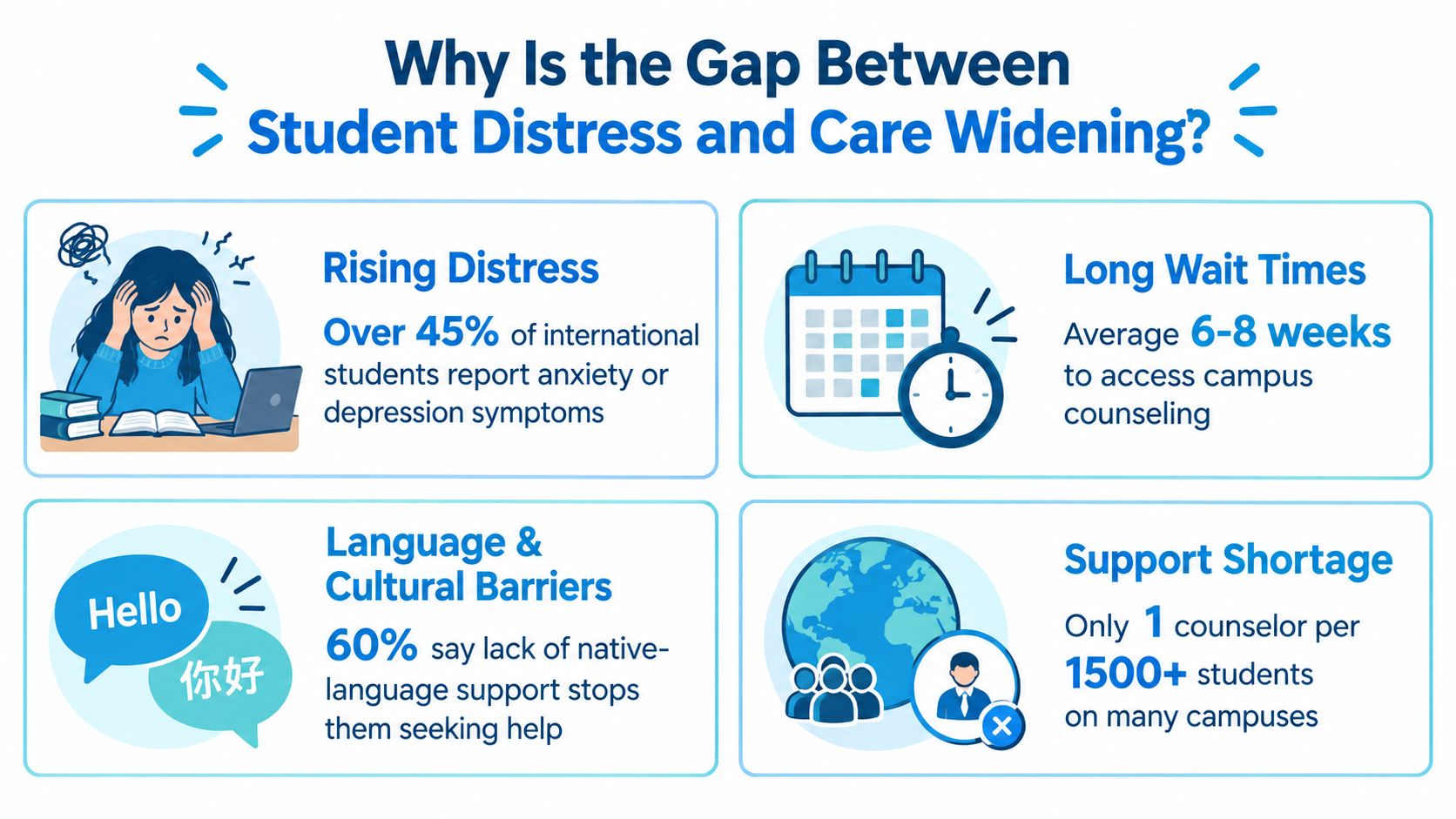
The gap is widening because international students report substantial distress while counseling use remains much lower, reflecting access, language, cultural, and trust barriers rather than personal failure.
A large U.S. longitudinal study illustrates the problem clearly. From 2015-2016 to 2023-2024, weighted anxiety prevalence among international students rose from 20.46% to 36.47%, while depression rose from 20.44% to 35.37% and suicidal ideation rose from 5.35% to 10.30%. Counseling use increased from 5.26% to 7.67%, leaving a wide distance between reported need and formal support uptake, as documented in the peer-reviewed longitudinal study of international student mental health.
Why might students avoid counseling even when they need it?
The reasons often accumulate. A student may not know whether the university offers therapy, worry that speaking English will be viewed as inconvenient, fear that a counselor won't understand family expectations, or assume that asking for help could affect academic or immigration matters. Others may be managing financial strain, discrimination, loneliness, and academic pressure at the same time.
A 2025 review found wide international variation in reported anxiety, depression, and psychological distress among international university students. It also identified particularly high levels of loneliness, financial strain, and discrimination across the reviewed evidence, showing why generic counseling alone may not address the whole experience. The review and earlier U.S. research are summarized in the peer-reviewed review of international university student mental health.
Across the full sample in the longitudinal study, 33.68% experienced clinically significant anxiety, 32.55% experienced clinically significant depression, 9.61% reported suicidal ideation, and 8.48% were receiving mental health services. Those figures don't diagnose any individual student, but they do show why universities need proactive referral routes and culturally responsive care rather than relying only on students to find a walk-in appointment.
How Do University Counseling Desks Actually Work in Italy?
University counseling desks usually provide a confidential entry point for students, with eligibility, language options, appointment formats, and continuity determined by the individual institution.
The first step is to search the university website for terms such as servizio di counseling psicologico, sportello psicologico, servizi per studenti internazionali, or benessere studenti. The international students office can also direct a student to the correct form or booking page. If the information is only in Italian, asking the international office to clarify the process is reasonable.
What can a university counseling service help with?
A university desk can help a student discuss adjustment, academic stress, homesickness, relationships, anxiety, and the emotional impact of cultural transition. It can also explain whether the service offers assessment, short-term counseling, referral to external care, or support in another language.
The University of Palermo states that its Psychological Counselling Service is intended specifically for international and incoming mobility students. The service supports educational, social, and cultural adjustment and is free of charge, according to the university's official information for international students.
The University of Bari provides another practical example. Its dedicated counseling desk for international students offers support in Italian, English, Spanish, and Portuguese, and addresses stress, homesickness, language barriers, integration difficulties, anxiety, and relationship problems, as described on the university's multilingual mental health support page.
What limitations should students check before booking?
A desk may be free but still have limited appointment availability, a short-term focus, or a restricted language list. Students should ask:
- Eligibility: Is the service available to exchange students, doctoral candidates, and students enrolled in private institutions?
- Format: Are appointments online, in person, or both?
- Continuity: Can the same counselor be seen regularly?
- Language: Can sessions happen in the student's first language?
- Referral: What happens if the student needs longer-term or specialist care?
Students who want to understand how private and public psychological care can fit together may also review information about the psychologist of basic support for expats in Italy. A university desk isn't a failed option if it cannot provide every type of care. It can still be a useful first assessment and referral point.
Should You Choose Campus Counseling or Private Therapy?
Campus counseling suits students prioritizing free institutional support, while private multilingual therapy suits students who need greater choice over language, therapist, appointment timing, and continuity.
| Feature | University Counseling Desk | Private Multilingual Therapy |
|---|---|---|
| Cost | Often free or institutionally funded | Paid, with fees varying by therapist and service |
| Access | Depends on university procedures and availability | Direct contact with a private service |
| Language | Depends on the individual desk | Can be selected according to available languages |
| Scheduling | Often linked to campus hours | Usually arranged around student and therapist availability |
| Format | May be online, in person, or limited to one format | Online and in-person options may be available |
| Continuity | May be short-term or referral-based | Can be arranged as ongoing therapy |
| Cultural fit | Depends on the assigned counselor | Can be part of the matching criteria |
| Best suited to | Initial support, orientation, and lower-cost access | Regular care requiring flexibility or specialist fit |
When is campus counseling the better first choice?
A student with a manageable concern, limited finances, and a university desk offering a suitable language may reasonably begin there. The desk can help clarify whether the student needs brief support, medical evaluation, academic accommodations, or a referral for ongoing therapy.
Campus services also offer an important sense of institutional belonging. The student doesn't need to explain why they're enrolled or where to find university offices. That context is already available to the counselor.
When does private therapy make practical sense?
Private therapy can be more appropriate when the student needs sessions outside campus hours, wants to work in a first language, or is looking for continuity beyond a short university program. It may also help when the student prefers to choose a therapist with experience in migration, identity, trauma, attachment, or intercultural relationships.
The decision isn't a judgment about either system. It's a question of fit. A free service that cannot offer the necessary language or continuity may be less accessible in practice than a paid service that removes those barriers.
At Therapsy, the matching process is handled by the Clinical Director rather than an algorithm. Students can compare the practical implications of therapy services for expats in Italy with the support available through their university, then choose the route that feels workable.
Why Does Language Matching Matter for Clinical Outcomes?
Language matching matters because emotional expression depends on nuance, cultural meaning, trust, and shared understanding, not only on conversational fluency.
A student may write essays in English and participate confidently in seminars, yet struggle to describe shame, grief, family duty, bodily sensations, or memories in the same language. Academic fluency and emotional fluency are related, but they aren't identical.

Can a fluent English speaker still need a therapist who understands their culture?
Yes. Cultural and linguistic matching can help a student communicate distress more precisely and feel understood within the social world that shaped it.
A review of international student support identifies language barriers, cultural mismatch, and limited awareness of services as important reasons students delay or avoid care. It also notes that students with strong English may still find it difficult to express distress or understand counseling nuances in an English-speaking environment. The broader discussion appears in the research on culturally sensitive support for international students.
The issue isn't that therapy in a second language is always ineffective. The issue is that some experiences become harder to access when the person must translate them while also regulating emotion. A therapist who understands the student's cultural references may notice meanings that would otherwise be lost.
How do therapy approaches work across cultures?
Cognitive behavioural therapy, or CBT, examines the relationship between thoughts, feelings, and actions. Cultural context matters because beliefs about responsibility, family, success, and respect can influence what a student calls an “unhelpful thought.”
EMDR uses structured bilateral stimulation while processing distressing memories. A therapist must still understand how the student describes safety, memory, bodily reactions, and culturally shaped experiences of threat.
Schema Therapy explores enduring patterns formed through relationships and earlier experiences. Attachment-informed work examines how separation, family expectations, belonging, and dependence may affect present relationships. Cross-cultural psychology adds another layer by considering how migration, discrimination, language, and identity shape those patterns.
Therapsy's therapy in a native language can be relevant when a student wants to work through homesickness, identity conflict, trauma, or attachment concerns without constantly translating the emotional meaning of each experience.
How Can Students Access Culturally Matched Support Through Therapsy?
Students can access Therapsy by sharing their needs, speaking with the Clinical Director, meeting the proposed therapist in a free first call, and choosing online or in-person sessions.
What happens after the first contact?
The process is designed to reduce the need for a student to search through profiles alone.
- Share the situation: The student explains preferred language, location, availability, and the kind of support being considered.
- Receive human matching: The Clinical Director reviews the request and identifies a suitable therapist. Therapsy accepts less than one applicant in one hundred into its network, reflecting a selective clinical screening process.
- Have the first conversation: The first assessment call is free and takes place with the therapist chosen for that person.
- Choose the format: Sessions can take place online or in person across 24 Italian cities.
- Review the fit: If the match doesn't feel right, the student can discuss alternatives rather than treating the first appointment as a permanent commitment.
Therapsy has 50+ therapists, supports 14 languages, and has served 1,500+ clients since 2023. Available languages include Italian, English, French, Spanish, German, Portuguese, Ukrainian, Russian, Greek, Arabic, Urdu, Hebrew, Hindi, and Persian (Farsi).
How much does private therapy cost?
Individual therapy starts from EUR 70, while couple therapy starts from EUR 100. A psychodiagnostic assessment starts from EUR 255 for three sessions, and psychiatric consultations start from EUR 110. The Therapsy therapist matching process begins with a free first assessment call, and the final fee depends on the therapist's experience and specialization.
For students with changing timetables, online sessions can reduce travel and make regular attendance easier. In-person sessions may feel preferable when a student needs a clear boundary between university life and personal support. Neither format is automatically better for every person.
What Do Students Ask Before Booking Their First Session?
Students commonly ask about confidentiality, bureaucracy, language, and whether the first call commits them to ongoing therapy.
Is therapy confidential for international students?
Therapy is a confidential professional service, subject to the legal and ethical duties that apply to the clinician and the situation. A student can ask the therapist to explain confidentiality, its limits, record handling, and communication procedures before discussing sensitive details.
Do students need to understand Italian bureaucracy first?
No. A student can ask the service to explain the practical steps in an accessible language before booking. A private matching service may reduce administrative friction, while university and public services can explain their own eligibility and referral requirements.
What happens during the free first assessment call?
The therapist usually discusses what brought the student to therapy, preferred language, relevant background, practical availability, and what kind of support may be appropriate. It isn't a diagnostic verdict, and the student isn't required to continue after the call.
Students who want a clearer overview of the first appointment can read about what happens in a first psychological session. Therapy doesn't replace medical care, and a student with urgent medical or safety concerns should contact appropriate emergency or healthcare services.
Therapsy offers international students human matching through the Clinical Director, therapy in their own language across 14 languages, and a choice between online and in-person sessions in Italy. Students can visit Therapsy for a free first call with the therapist chosen for them, with no obligation to continue.