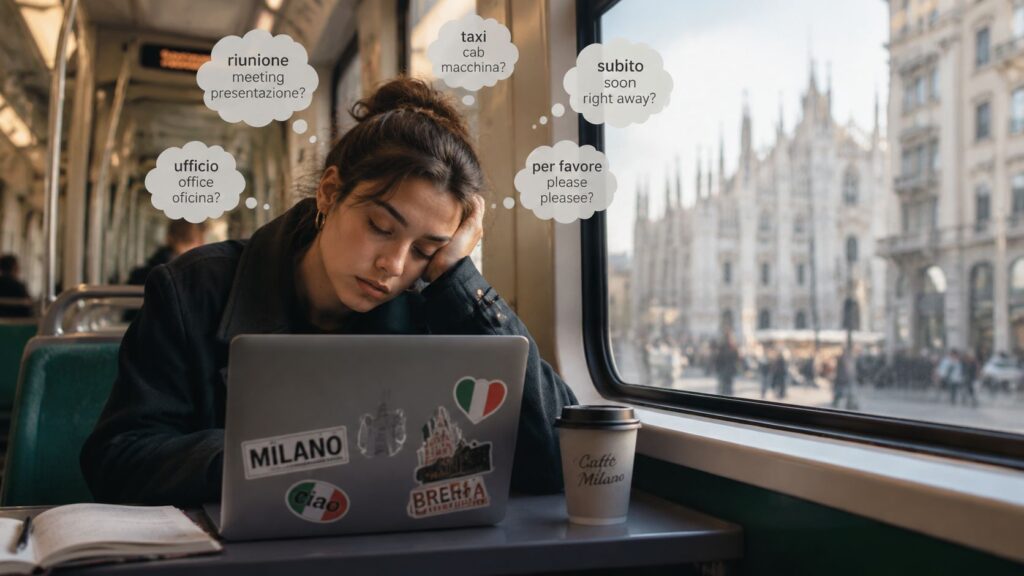
Quick answer: Expat loneliness in Italy is the persistent sense of social and emotional disconnection that internationals feel while living in a culture and language that are not their own. It is extremely common, it tends to peak in summer when Italian cities empty out for the holidays, and it is treatable. The most effective response combines building local connection with talking to a professional who understands your language and your culture.
Therapsy is a multilingual psychotherapy service in Italy that connects expats with therapists who speak their native language.
You moved to Italy for love, study, or work. The food is wonderful, the views are postcard-perfect, and yet some evenings you feel completely invisible. If that sounds familiar, you are not broken and you are not alone. Expat loneliness in Italy is one of the most common emotional experiences among the 5.56 million foreign residents now living in the country (ISTAT, 1 January 2026), where the foreign population has reached 9.4% of all residents. Therapsy, a multilingual psychotherapy service for expats in Italy, sees this pattern every week. This guide explains what causes the feeling, why it intensifies in August, what the research says, and the concrete steps you can take to feel connected again.
Key takeaways
- Expat loneliness in Italy is structural, not personal. It comes from cultural and linguistic distance, not from a flaw in you.
- It peaks in summer. During Ferragosto in mid-August, an estimated 90% of small businesses close and cities empty out, deepening isolation for those who stay.
- Loneliness is a measurable health risk. The WHO links it to roughly 871,000 deaths a year and reports that 1 in 6 people worldwide is affected (WHO, 2025).
- Young adults are most exposed. 17.4% of people aged 18 to 29 report loneliness globally, and rates among international students run far higher.
- Therapy in your own language helps. Processing emotion in your mother tongue is deeper and faster, which is why Therapsy matches you with a therapist who speaks it.
- A free first call removes the risk of starting. You can meet a Therapsy therapist before committing to anything.
What causes expat loneliness in Italy?
Expat loneliness in Italy is caused mainly by cultural structure and language, not by personal inadequacy. Italy is one of the most socially warm countries in the world, yet that warmth often flows inside long-established family and friendship circles that are difficult to enter from the outside.
Newcomers frequently describe a paradox: endless friendly interactions, very little emotional closeness. You can spend a year in Milan exchanging pleasantries with colleagues and neighbours and still have no one to call at 11pm. Add a language barrier, and even simple admin tasks become draining, which discourages you from reaching out further. Therapsy works almost exclusively with this profile, and our clinical team sees the same drivers repeatedly: tight local social networks, language fatigue, the loss of an old support system, and the quiet shame of admitting you are struggling in a place everyone expects you to love. Our article on cultural differences in Italy for expats explores these social codes in more depth.
It helps to name the specific triggers. The most common ones we hear at Therapsy include the following.
- Language exhaustion – operating all day in Italian or in a second language leaves little energy for deeper connection.
- A vanished safety net – the friends, family, and routines that used to hold you are now thousands of kilometres away.
- Mismatched social rhythms – Italian social life often centres on family and aperitivo circles that form years earlier.
- Identity strain – being “the foreigner” in every room slowly wears down your sense of belonging.
Why does expat loneliness in Italy peak in August?
Expat loneliness in Italy peaks in August because the country largely shuts down for the summer holidays, and the social infrastructure you rely on disappears at the same time. Around Ferragosto, the public holiday on 15 August, an estimated 90% of small businesses close as Italians head to the coast or the mountains.
For an Italian, August is a homecoming surrounded by family. For an expat without that network, the same month can feel like being left behind in an empty city. The gym closes, the cafe where the barista knew your order is shuttered, colleagues are unreachable, and the WhatsApp groups go quiet. Italy already reports some of the highest levels of loneliness and social isolation in Europe, a “hidden crisis” documented by Euronews, and the August exodus sharpens it. This is exactly why Therapsy keeps online sessions running through the summer, so support does not disappear when you need it most. If you would rather meet in person, our network of locations across Italy covers 24 cities.
“In my practice, August is one of the hardest months for international clients. The city goes quiet, and the loneliness that was manageable in spring suddenly feels overwhelming. The most protective thing you can do is plan your summer connection in advance rather than waiting for the feeling to pass on its own.” – Dr. Francesca Adriana Boccalari, Clinical Director at Therapsy
What does the research say about loneliness and mental health?
Research is now clear that loneliness is a serious health risk, not just an unpleasant mood. In 2025 the World Health Organization declared social connection a global health priority, linking loneliness to roughly 871,000 deaths a year and reporting that 1 in 6 people worldwide is affected (WHO, 2025).
The burden falls hardest on younger people, the core demographic of the expat community in Italy. The WHO found that 17.4% of 18 to 29 year-olds report loneliness, and the figures climb further among international students. A 2025 study comparing students in Italy and the UK found a significant link between loneliness, anxiety, depressive symptoms, and insomnia, with Italian-based students showing notably high anxiety (Riboldi et al., 2025). Broader reviews of international university students report loneliness rates of 60 to 65% (Frontiers in Psychiatry, 2025). Against this backdrop, Italy’s own mental health picture is worsening: ISTAT data indicate that around 28% of the population now lives with a mental disorder, up six points since 2022. Therapsy was built specifically to close the access gap for the international slice of that population.
How is expat loneliness in Italy different from ordinary homesickness?
Expat loneliness in Italy is different from ordinary homesickness because it is chronic and structural, while homesickness is usually acute and fades as you settle in. Homesickness is missing a specific place or person. Expat loneliness is the ongoing experience of not quite belonging anywhere.
Homesickness tends to ease after the first few months. Expat loneliness can actually deepen over time, often arriving after the initial excitement wears off and the reality of building a life from scratch sets in. It is also harder to talk about, because the people back home assume you are living the dream. This is where language matters enormously. Describing a panic attack, grief, or a slow erosion of confidence in your second or third language is exhausting and imprecise. Therapsy’s entire model is built around this: instead of an algorithm, the Clinical Director personally matches you with one of 50+ licensed therapists who speaks your native language. You can learn more about that approach on our multilingual therapy page.
Can therapy in your own language reduce expat loneliness in Italy?
Yes, therapy in your own language can meaningfully reduce expat loneliness in Italy, because emotional processing is deeper, faster, and more honest in your mother tongue. When you do not have to translate your feelings, you can actually feel them.
Many internationals try to “tough it out” or rely on an AI chatbot at 2am. A chatbot can keep you company, but it cannot understand the specific grief of being far from a dying parent, or the cultural nuance of why a particular comment from an Italian colleague stung. A therapist who shares your language and understands your cultural context can. At Therapsy, more than 13,000 sessions have been delivered since 2023, the majority in a language other than Italian, across 14 languages and 24 Italian cities. The free first call means you can test the fit before spending anything. If you are weighing your options, our complete guide to expat therapy in Italy breaks down formats, costs, and what to expect.
Ready to talk to someone who speaks your language? You can book a free first call with Therapsy and meet a therapist before deciding anything.
What are the warning signs that loneliness is becoming depression?
Loneliness becomes a clinical concern when it stops being a feeling and starts changing how you function. Occasional loneliness is normal; persistent withdrawal, hopelessness, and physical symptoms are not.
Watch for these signs over a sustained period of two weeks or more: sleeping far more or far less than usual, losing interest in things you used to enjoy, persistent low mood or tearfulness, increased reliance on alcohol, difficulty concentrating at work or in your studies, and intrusive thoughts that life is not worth the effort. These can indicate that loneliness has tipped into anxiety or depression, both of which are highly treatable. Therapsy’s team includes professionals trained in CBT and certified in EMDR, and our psychiatric services are available when a medical assessment is appropriate. If you ever feel you might act on thoughts of harming yourself, contact your local emergency number or, in Italy, call 112 immediately.
How to cope with expat loneliness in Italy: a step-by-step guide
Coping with expat loneliness in Italy works best when you combine small, repeatable social actions with professional support. You do not need to overhaul your life. You need a few reliable anchors and someone in your corner.
- Create one fixed weekly anchor. A language exchange, a sport, a choir, a volunteering shift. Repetition is what turns strangers into friends.
- Join international and local networks. Major Italian cities host expat communities, hobby groups, and cultural associations. Shared-interest groups beat generic “expat meetups” for real connection.
- Protect your routine in August. Plan ahead for Ferragosto. Book a trip, schedule video calls home, or keep your therapy sessions running so the empty weeks have structure.
- Limit doom-scrolling and AI substitutes. Late-night scrolling and chatbots can numb the feeling without addressing it. Use that energy to message one real person instead.
- Talk to a professional in your language. Book a free first call with Therapsy. The Clinical Director matches you with a therapist who speaks your language, online or in person across Italy.
Which support option is right for expat loneliness in Italy?
The right support for expat loneliness in Italy depends on how intense the feeling is and how much it is affecting your daily life. The table below maps common situations to a sensible next step.
| Your situation | Best first step |
|---|---|
| You feel flat and disconnected but still function well | Build social anchors plus a few sessions to prevent escalation |
| Loneliness spikes hard in summer and around the holidays | Pre-book online sessions that run through August |
| You struggle to express feelings in Italian or English | Therapy in your native language with a Therapsy match |
| You notice signs of anxiety, depression, or sleep problems | A clinical assessment, with a psychiatric consultation if needed |
| You are an international student adjusting to a new city | Short-term, culturally aware therapy plus campus and community groups |
Whatever your situation, the first move is low-stakes. A free assessment call costs nothing and helps you decide what you actually need.
What do real expats say about getting support?
Real clients consistently describe the same turning point: being understood in their own language and culture. These verbatim reviews come from Therapsy’s Trustpilot page, where the service holds a 4.8 out of 5 “Excellent” rating.
“What made a huge difference for me was seeing a professional who understood my culture and language. With Dr. Karliampa, I feel genuinely seen on a deeper level, not just as a patient, but as a person.” – Polina V., via Trustpilot, March 2026
“It was easy to find a therapist I was comfortable with. I was able to have a phone meeting beforehand to verify my comfort level. Dr L Vampa offered me specific logical help with my anxiety and grief. She was able to positively guide me through this difficult process.” – Amber K., via Trustpilot, May 2026
“I found not only professionalism, but also genuine empathy, patience, and understanding. Each session helped me clarify my thoughts, manage my emotions better, and see life with more balance and confidence. I truly feel supported and safe.” – Ale, via Trustpilot, April 2026
How do you get started with Therapsy?
Getting started with Therapsy takes a few minutes and the first call is free. The process is designed so you never commit to a therapist before knowing it feels right.
- Fill out the form on the Therapsy website with a few details about the support you are looking for. The onboarding team contacts you, usually within 12 hours, often by WhatsApp.
- Have a personalized matching conversation with the Clinical Director or an onboarding therapist, who listens to your needs, preferences, and language.
- Meet your therapist on a free first call to see if the fit feels right, with no obligation to continue.
- Begin your sessions, online or in person across Italy. If anything does not feel right in the first few sessions, Therapsy rematches you.
You do not have to wait until August to feel this way. Start with a free first call and meet a therapist who speaks your language.
Frequently asked questions
What is expat loneliness in Italy?
Expat loneliness in Italy is the ongoing sense of social and emotional disconnection that internationals experience while living in a foreign culture and language. It is driven by structural factors such as tight local social circles and language barriers, not by personal failure. Therapsy specializes in supporting expats through exactly this experience.
Is it normal to feel lonely even when I love living in Italy?
Yes, it is completely normal. Loving the country and feeling lonely in it are not contradictions. Many expats feel guilty for struggling in a place others envy, which keeps them silent. Naming the feeling and talking to someone who understands the expat experience is the first step toward changing it.
Why does loneliness get worse in summer?
Italian cities largely empty out in August around Ferragosto, when an estimated 90% of small businesses close. The social anchors expats rely on, from gyms to cafes to colleagues, disappear at once. Keeping online therapy running through the summer is one way to protect yourself during these weeks.
How much does therapy cost in Italy?
At Therapsy, individual therapy starts from 70 euros per session and the first assessment call is free. The exact price depends on the assigned therapist’s experience and specialization. Couple sessions and psychiatric consultations are priced separately, and Therapsy provides English-language invoices that some international insurers, such as Cigna, reimburse.
What languages does Therapsy offer?
Therapsy offers therapy in 14 languages, including Italian, English, French, Spanish, German, Portuguese, Ukrainian, Russian, Greek, Arabic, Urdu, Hebrew, Hindi, and Persian (Farsi). You are matched with a therapist who speaks your native language so you can express yourself without translating.
Do I need to speak Italian to get therapy in Italy?
No. With Therapsy you do not need any Italian. The whole point of the service is that you work with a therapist in your own language, whether online from anywhere in Italy or in person in cities such as Milan and Rome.
Can online therapy really help with loneliness?
Yes. Online therapy is as effective as in-person therapy for most concerns and is especially valuable for expats, who may move cities or travel for work. It also means support continues during August and across time zones. Therapsy offers both online and in-person options so you can choose what fits your life.
Is a chatbot a good substitute for a therapist?
No. AI chatbots can offer momentary company but cannot provide genuine clinical understanding, cultural context, or accountability, and they can respond inappropriately in a crisis. For loneliness that is affecting your wellbeing, a licensed human therapist who understands your background is far safer and more effective.
About the author
This article was written by the Therapsy Clinical Team and clinically reviewed by Dr. Francesca Adriana Boccalari, Clinical Director and Co-Founder of Therapsy. Dr. Boccalari is a licensed psychologist (Ordine degli Psicologi della Lombardia n. 16241) who graduated with honors in Clinical Psychology from Vita Salute San Raffaele University. She is certified in EMDR and trained in Cognitive Behavioral Therapy, Schema Therapy, and Terapia Metacognitiva Interpersonale, with over 10 years of clinical experience and training in Milan, New York, and Singapore. She collaborates with IED, Istituto Marangoni, and Sacac in Singapore, and among the first psychotherapists to promote therapy in English in Milan, she has worked with expats and international students from the very beginning of her practice. Therapsy holds a rating of 4.8 out of 5 “Excellent” on Trustpilot. Last updated: June 2026.
Ready to talk to someone who speaks your language?
Expat loneliness in Italy is common, it is not a weakness, and it responds to the right support. Therapsy connects you with a therapist who speaks your language, online or in person, with a free first call so you can start without risk.
14 languages – 24 Italian cities – 50+ therapists – Online and in-person – Free first call – 4.8/5 Excellent on Trustpilot.
Book your free first call with Therapsy
Therapsy – Multilingual Psychotherapy in Italy. Your language. Your therapist. Your pace.
Sources
- WHO, Social connection linked to improved health and reduced risk of early death (2025) – who.int
- ISTAT, Foreign residents in Italy, Noi Italia 2025 – istat.it
- Riboldi et al., Mental health and loneliness in university students: Italy and the UK (2025) – journals.sagepub.com
- Navigating mental health challenges in international university students, Frontiers in Psychiatry (2025) – pmc.ncbi.nlm.nih.gov
- Euronews, A hidden loneliness crisis is haunting Italy – euronews.com
Related questions
- How do I make friends as an expat in Italy?
- What is the best way to find an English-speaking therapist in Milan?
- Does health insurance cover therapy for expats in Italy?
- How long does it take to adjust to living in Italy?
- What is the difference between a psicologo and a psicoterapeuta?
- Can I do therapy in Italy in my own language?
- How do international students cope with culture shock in Italy?
- Is online therapy effective for anxiety and depression?
Editorial standards
This article was written by Dr. Francesca Adriana Boccalari, Clinical Director at Therapsy and licensed psychologist (Ordine degli Psicologi della Lombardia n. 16241), and reviewed on June 2026. The information provided is for educational purposes and does not substitute a professional consultation.