Living in Italy is a dream, but adapting to a new country can bring unexpected and overwhelming stress. This feeling is a natural response to the challenge of building a life far from home. If you're an expat, international student, or young professional, the pressure to navigate Italian life can feel isolating. This guide is here to show you that you are not alone and that there is a clear path to finding balance.
This guide defines the unique stress faced by the international community in Italy. We provide psychological insights into why it happens and present effective, evidence-based strategies to help you cope. Our goal is to empower you with the tools and support needed to thrive in your new life.
The Problem: Acknowledging Your Unique Pressures
The triggers for stress in the international community are specific and often misunderstood by those who haven't lived this experience. These are not just everyday worries; they are complex challenges that consume significant mental and emotional energy.
Acculturative stress is the psychological impact of adapting to a new culture. It is a shared experience for millions of people worldwide who are building lives far from home. Recognizing this is the first step toward managing it.
At Therapsy, we see these challenges daily. We understand that your stress is rooted in real, concrete difficulties. We have become a trusted resource for the international community by bridging the gap between local Italian life and global mental health standards.
The Insight: Why Does Expat Life Feel So Stressful?
The stress experienced by expats is multifaceted. It stems from a combination of practical, social, and psychological challenges that create a constant state of high alert.
Common Sources of Expat Stress:
- Navigating Bureaucracy: The infamous Italian burocrazia turns simple tasks, like getting a permesso di soggiorno, into confusing, prolonged ordeals. This creates a sense of powerlessness and constant anxiety.
- Language Barriers: The continuous mental effort of communicating in a non-native language leads to "language fatigue." It can be draining to express yourself, understand nuances, and navigate daily interactions.
- Cultural Differences: Adapting to new social norms, workplace expectations, and unwritten rules can leave you feeling like an outsider. This constant adjustment requires significant cognitive and emotional resources.
- Social Isolation: Being far from your established support network of family and friends can lead to profound loneliness. Building new, meaningful connections takes time and effort, which can be stressful in itself.
- Academic and Professional Demands: International students and professionals face intense pressure to perform in an unfamiliar system, often without their usual support networks. This is a common trigger for exam stress among international students in Italy.
The Solution: Expert, Empathetic Support from Therapsy
Our approach is built on a foundation of empathy and professional expertise. We believe everyone deserves to be understood, especially when feeling vulnerable. Therapsy provides a safe, supportive space to address these unique challenges.
How Therapsy Helps:
- Multilingual Therapists: Our team of carefully selected, licensed professionals offers support in your native language, ensuring you can express yourself fully and comfortably.
- Intercultural Expertise: Our therapists understand the specific context of expat life in Italy. You won't have to explain the nuances of acculturative stress; we already get it.
- Flexible Sessions: We offer both online and in-person sessions across Italy, providing accessible support that fits your lifestyle.
- Free First Assessment: The first step is a free assessment call. It’s a risk-free opportunity to discuss your needs and learn how we can help.
You can learn more about our dedicated approach in our guide to mental health support for expats in Italy.
What Stress Actually Does to Your Body and Mind

Think of your body’s reaction to stress as a finely-tuned alarm system. When you face a short-term threat, this "fight-or-flight" response is a brilliant survival mechanism. It is powered by a flood of hormones, mainly adrenaline and cortisol.
Adrenaline provides a jolt of energy. Your heart rate increases, and your senses sharpen. Cortisol, your body’s main stress hormone, releases sugar into your bloodstream, preparing your brain and muscles for intense action. In small doses, this is exactly what you need. This is acute stress, and it’s a normal part of life.
The Problem: The Difference Between Acute and Chronic Stress
The real issue arises when the alarm system never shuts off. Acute stress is a sprint—intense but brief. An example for an expat in Italy might be the panic of missing the last train home. Once the crisis passes, your body returns to a state of calm.
Chronic stress, however, is a marathon with no finish line. It is the slow, relentless pressure of long-term problems, such as struggling to find work, battling persistent loneliness, or feeling constantly misunderstood. When stressors don’t let up, your body remains on high alert.
Cortisol levels remain elevated, and your body never receives the signal to return to rest. This prolonged activation turns a life-saving mechanism into one that causes harm, leading to physical and emotional exhaustion.
The Insight: The Real-World Impact of Chronic Stress
This constant state of alert has tangible consequences. For international students, academic pressure can be overwhelming. Research highlights similar challenges young adults face in Italy and abroad, with a significant number of students reporting chronic anxiety during exam periods. The impact of burnout and stress on young adults from mentalhealth-uk.org shows a clear link between academic pressure and mental health challenges.
When your system is constantly flooded with stress hormones, it affects nearly every aspect of your well-being.
Physical Symptoms of Chronic Stress:
- Persistent Fatigue: You feel exhausted all the time, even after a full night's sleep. Your body is burning through its energy reserves.
- Headaches and Muscle Tension: Chronic tension in your neck, shoulders, and back is a classic sign, as your muscles remain braced for a threat that never arrives.
- Digestive Issues: Stress can disrupt your gut health, leading to stomach aches, heartburn, and other digestive problems.
- Weakened Immune System: High cortisol can suppress your immune response, making you more vulnerable to colds and other illnesses.
- Sleep Problems: You may struggle to fall asleep or stay asleep as your mind races, leaving you feeling unrested.
Emotional and Cognitive Signs of Chronic Stress:
- Irritability and Mood Swings: Small frustrations feel enormous, and you may find yourself snapping at others or feeling easily upset.
- Anxiety and Worry: A constant feeling of unease or dread can become your new normal.
- Brain Fog: Difficulty concentrating, making decisions, or remembering things is a clear signal that your brain is overloaded.
- Feeling Overwhelmed: A persistent sense that you cannot cope with daily demands, no matter how small.
Recognizing these as physiological responses—not personal failings—is the first, most important step. Your body and mind are sending clear signals that they need support.
At Therapsy, our licensed, multilingual therapists help you understand these signals and develop personalized strategies to manage chronic stress, guiding you back to a state of balance.
Unique Stress Triggers for Expats and Students in Italy
While stress is a universal human experience, the specific triggers for expats, international students, and young professionals in Italy are unique. It is often the slow, steady accumulation of small daily pressures that leads to significant mental and emotional strain.
Living abroad means even routine tasks demand a level of energy you never needed back home. Every interaction becomes a small test of your language skills and cultural knowledge. This constant low-level effort creates a high cognitive load, a major source of underlying stress.
The Problem: Common Stressors for the International Community
| Stressor Category | Description | Example Scenario |
|---|---|---|
| Bureaucracy | Navigating Italy’s complex administrative systems, which involve unclear rules, long waits, and heavy documentation. | The months-long process of applying for or renewing a permesso di soggiorno, filled with uncertain timelines and anxiety-inducing appointments at the questura. |
| Language & Culture | The mental exhaustion (language fatigue) from constantly speaking a non-native language and the pressure to adapt to new social norms. | Feeling drained after a social event, not from physical activity, but from the mental work of translating thoughts and navigating conversations in Italian. |
| Social Isolation | The feeling of being disconnected from your established support system, even when surrounded by people. | Attending a party and feeling profoundly alone because you lack the shared history and effortless understanding you had with friends back home. |
| Academic/Professional Pressure | The high expectations and unique challenges of performing in a foreign academic or professional environment. | An international student struggling with a different exam format and teaching style, leading to exam stress among international students in Italy. |
These triggers are significant psychological hurdles that can impact your sense of stability and well-being.
The Insight: The Psychological Toll of Expat Challenges
The Infamous Challenge of La Burocrazia
Navigating the Italian bureaucratic system is a notorious source of intense stress. Simple administrative tasks can feel like marathon ordeals filled with confusing rules and endless waiting.
The stress from bureaucracy isn't just about wasted time. It’s about the feeling of powerlessness and the constant worry that one small mistake could have major consequences, undermining your entire sense of security.
When you deal with these external pressures, your body reacts internally. The chart below illustrates the biological process that occurs when you face a stressful trigger, like an impending official appointment.
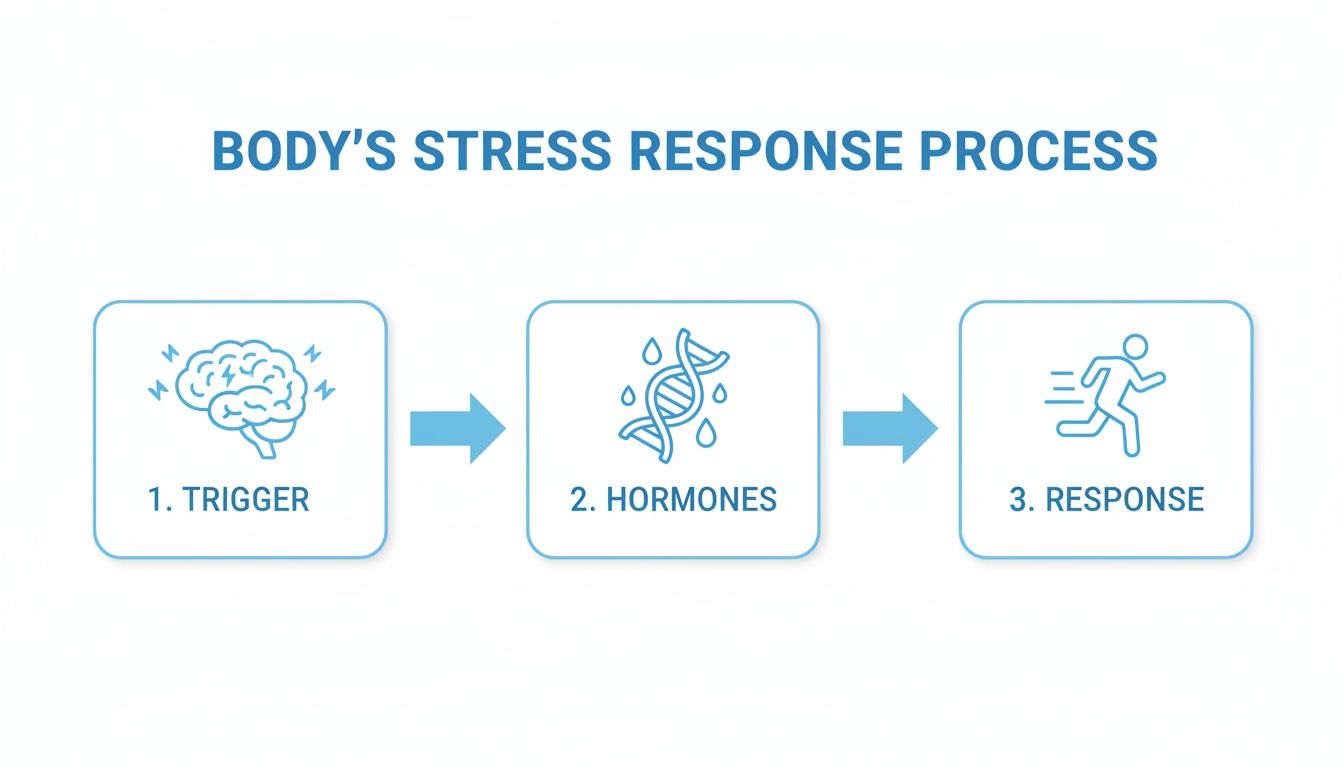
This process, where the brain releases hormones to prepare your body for a "fight or flight" response, is the core of what you feel as stress.
The Subtle Exhaustion of Language and Culture
Daily life presents its own set of persistent challenges. Even as you become more fluent in Italian, the mental effort of constantly translating thoughts and navigating conversations can be deeply draining. This is known as language fatigue, a very real form of mental exhaustion. This can lead to:
- Social Withdrawal: You may start to avoid social situations because they feel like too much work, which can lead to isolation.
- Feelings of Inadequacy: It's common to feel frustrated that you can’t express your true personality or sense of humor as easily as you could in your native tongue.
- Misunderstandings: Small cultural differences in communication can lead to misinterpretations, causing social anxiety and stress.
The Profound Impact of Isolation
Perhaps the most difficult trigger is the deep sense of isolation that can surface, even in a bustling Italian city. Being far from your established support system can leave you feeling adrift. This isn't just homesickness; it's a deeper feeling of being fundamentally disconnected.
The Solution: Targeted Support from Therapsy
At Therapsy, our multilingual therapists have supported countless members of the international community through these specific pressures. We recognize that your feelings are a valid response to a genuinely challenging set of circumstances. Our goal is to provide the expert, empathetic support you need to navigate them, helping you build resilience and find connection in your new home.
Recognizing the Warning Signs of Chronic Stress and Burnout
How do you know if you're having a tough week or sliding towards something more serious, like chronic stress or burnout? Learning to read the signals your body and mind are sending is the first, crucial step.
When stress becomes a permanent resident in your life, it starts to leave its mark. The occasional restless night can morph into persistent issues that disrupt your daily life. It’s vital to listen to these signals before they get louder.
The Problem: Identifying the Signs of Overload
These warning signs can be subtle at first but build over time. They typically appear across four key areas: your physical health, your emotional state, your thought processes, and your behavior.
Physical Signs Your Body Is Under Stress:
- Persistent Fatigue: A deep, bone-weary exhaustion that sleep doesn’t fix. Your body is telling you it’s running on empty.
- Frequent Headaches: If tension headaches or migraines are becoming regular, it’s a classic sign of chronic stress.
- Muscle Aches and Tension: Constant stiffness or pain in your neck, shoulders, and back means your muscles are tensed for a threat that never goes away.
- Digestive Problems: Stress can wreak havoc on your gut health, leading to stomach aches, acid reflux, or irritable bowel syndrome (IBS).
Emotional and Cognitive Symptoms:
- Increased Irritability and Anxiety: A short fuse where small frustrations feel massive. A constant sense of unease can also become your new normal.
- Feelings of Hopelessness: A nagging feeling that things will never improve or that you’re powerless to change your situation.
- Brain Fog: Trouble concentrating, making decisions, or remembering things. Your mind feels cluttered and unfocused.
- Loss of Motivation: A clear drop in your passion for activities you used to love, both at work and in your personal life.
The Insight: From Chronic Stress to Full-Blown Burnout
Burnout is not just feeling tired; it’s a specific and severe state of exhaustion from prolonged, unmanaged stress, especially from your job or studies. For expats and professionals in Italy, recognizing the signs of business burnout is crucial.
Burnout is defined by three main experiences: overwhelming exhaustion, a growing sense of cynicism and detachment from your work, and a feeling of being ineffective. It is the feeling of being completely drained, with nothing left in the tank.
This is a widespread problem. Data shows that young adults aged 25-34 are increasingly taking mental health days, driven mainly by heavy workloads and job insecurity, as shown in reports like the detailed 2025 financial stress report on lifestance.com.
The Solution: Professional Guidance from Therapsy
Learning to spot these patterns is the first step toward pulling back from the brink. At Therapsy, we specialize in helping international professionals and students identify the root causes of their stress and burnout. Our therapists provide you with personalized tools to restore your energy, reconnect with your purpose, and build sustainable habits for long-term well-being.
Actionable Strategies to Manage Your Stress
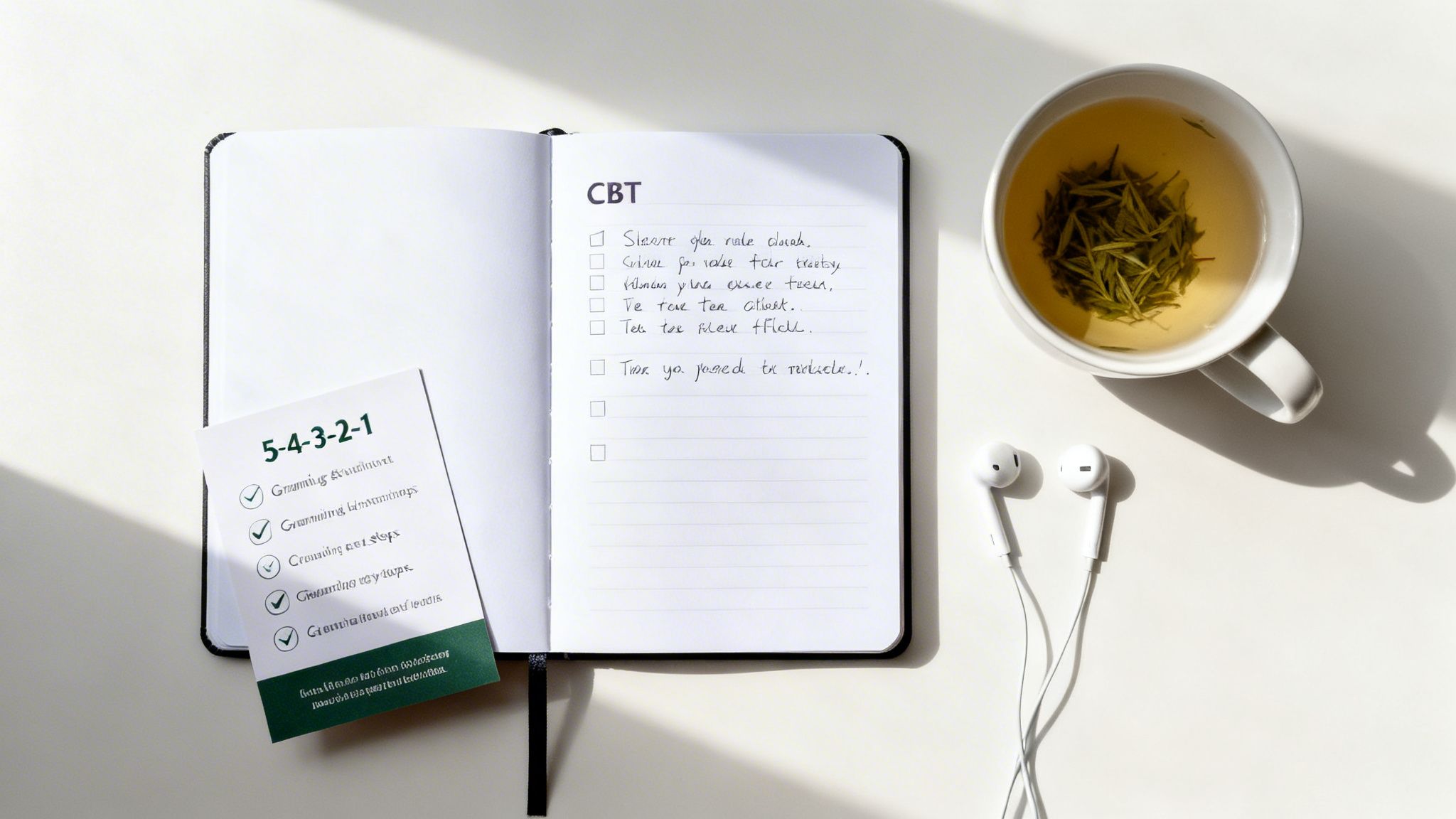
Knowing what stress is and recognizing its signs is a great first step. Now, it's time to take action. This is your practical toolkit—a collection of proven strategies you can start using today for immediate relief and build into your daily life for lasting resilience.
These methods are concrete, evidence-based techniques designed to calm your nervous system, challenge unhelpful thinking, and strengthen your body and mind against the pressures of life abroad.
Cognitive Techniques for Immediate Relief
When you feel overwhelmed, your thoughts can spiral, making stress feel even bigger. Cognitive Behavioural Therapy (CBT) offers simple but effective tools to break these cycles. The aim isn't to ignore negative thoughts but to challenge their power and find a more balanced perspective.
CBT is built on the idea that our thoughts, feelings, and actions are interconnected. By changing how you think about a stressful situation, you can directly influence how you feel and react. For a deeper dive, explore our comprehensive guide on Cognitive Behavioural Therapy.
Reframe Your Negative Thoughts
When stressed, it’s easy to fall into "thinking traps" like catastrophizing or black-and-white thinking.
To break free, try this simple reframing exercise:
- Identify the Thought: Write down the exact thought causing you stress. (e.g., "I will never get my permesso di soggiorno sorted; everything is going wrong.")
- Challenge It: Ask yourself: Is this thought 100% true? Is there a more balanced way to see this? (e.g., "The process is slow, but many people get through it. I have already completed the first steps.")
- Create a New Thought: Craft a more helpful, balanced statement. (e.g., "This is a difficult process, but I can handle it one step at a time. I will focus on what I need to do next.")
Mindfulness and Grounding Exercises
Mindfulness pulls you out of anxious loops about the future and anchors you in the present moment. These exercises are excellent for calming acute stress and can be done anywhere, anytime.
“Sometimes the most important thing in a whole day is the rest we take between two deep breaths.” — Etty Hillesum
This quote captures the essence of mindfulness—even tiny, intentional pauses can prevent stress from escalating.
The 5-4-3-2-1 Grounding Technique
When you feel panic or anxiety, use your five senses to connect with your immediate surroundings. This technique quickly shifts your focus away from what is causing you stress.
- 5: Name five things you can see (your laptop, a plant, a shadow).
- 4: Acknowledge four things you can feel (the texture of your jeans, the cool surface of a table).
- 3: Listen for three sounds you can hear (a distant siren, the hum of your computer).
- 2: Identify two things you can smell (the scent of your coffee, fresh air from a window).
- 1: Name one thing you can taste (the last sip of tea, the faint taste of mint).
Essential Lifestyle Adjustments
Your daily habits form the bedrock of your resilience. When under chronic stress, it's easy to let the basics slide, but recommitting to them can make an enormous difference.
- Prioritise Sleep: Wind down for an hour before bed without screens. Scrolling can overstimulate a mind already taxed by stress. Aim for a consistent sleep schedule.
- Nourish Your Body: Stress can disrupt digestion. Eat mindfully, paying attention to the flavors and textures of your food. Stay hydrated—even mild dehydration can spike cortisol levels.
- Move Your Body: A simple 20-minute walk is enough to lower stress hormones and release endorphins. Find small ways to build movement into your day.
- Physical Relaxation: Specific therapies can provide profound relief. For example, exploring how Swedish massage therapy helps reduce anxiety and stress can be a powerful way to address both physical and mental symptoms.
While these strategies are effective, professional support can provide the structured guidance needed for lasting change. Therapsy’s expert therapists can help you integrate these techniques into a personalized plan to manage your stress effectively.
How Professional Therapy Helps You Find Balance
Self-help strategies are fantastic for managing everyday pressures, but sometimes, the weight is too much to carry alone. This is especially true when building a life in a new country. Reaching out for professional therapy is not a sign of failure; it is a courageous, proactive step toward reclaiming your well-being.
Therapy offers a dedicated, confidential space to work through the real sources of your stress with an expert guide. It is a shift from general advice to personalized strategies that fit your unique situation.
The Problem: Finding the Right Support is Hard
For expats in Italy, finding a therapist who understands your language and cultural context can feel like another source of stress. You need a professional who not only has clinical expertise but also grasps the specific challenges of acculturative stress, bureaucracy, and social isolation. Without this understanding, therapy can feel less effective.
The Insight: Why Intercultural Expertise Matters
The challenges of adapting to a new culture are very real. Studies show that a significant percentage of young adults and professionals in new settings report moderate to high stress levels, sleep problems, and relationship strain. This data, which can be explored in resources about work-related stress from wellhub.com, mirrors the pressures faced by the international community in Italy and underscores the need for accessible, understanding support.
Therapy is a collaborative process. It's about working with a professional who can offer new perspectives, teach you proven coping mechanisms, and support you as you build lasting resilience against stress.
An intercultural therapist understands that your stress is connected to your life in Italy. This shared understanding builds immediate trust and makes your sessions more focused and effective from the very beginning.
The Solution: Therapsy's Unique Approach for the International Community
At Therapsy, we built our service from the ground up to support the international community. We connect you with licensed, multilingual therapists who possess both clinical expertise and a genuine understanding of the intercultural context.
Making Therapy Accessible and Supportive
We believe getting help should be as simple and stress-free as possible. From the moment you contact us, you’ll find our process is clear and supportive. We take the guesswork out of finding the right therapist in a foreign country. And for those feeling overwhelmed by digital noise, learning to achieve mental clarity with Inbox Zero can be another practical step toward reducing your mental load.
How Therapsy Supports You:
- A Free Initial Assessment: Your journey starts with a free assessment call. This is a real conversation where you can talk about your challenges and what you’re hoping to get from therapy.
- Expert Matching: Based on that call, our Clinical Director personally matches you with a licensed therapist carefully chosen based on your specific needs, goals, and language.
- Flexible Sessions: We offer both online psychotherapy and in-person sessions in major Italian cities. You have the flexibility to get support in a way that works for you. Learn more about the benefits of online psychotherapy with Therapsy.
- Multilingual Support: Express yourself fully and comfortably in your native language. Our therapists offer sessions in multiple languages, so nothing important gets lost in translation.
Deciding to start therapy is a powerful act of self-care. With Therapsy, you’re choosing a partner dedicated to helping you manage stress, navigate the challenges of expat life, and build a more balanced and fulfilling life in Italy.
Your Questions About Stress, Answered (FAQ)
Living abroad in Italy often brings up hard questions about stress. To help, we’ve gathered some of the most frequent questions we hear at Therapsy, with straightforward answers designed to provide clarity and reassurance.
When should I consider therapy for stress?
It’s time to consider therapy when stress becomes a constant and starts interfering with your daily life, work, or relationships.
Think of therapy as a proactive tool, not just a last resort. If your own coping strategies no longer feel sufficient and you experience persistent feelings of being overwhelmed, hopeless, or anxious, working with a professional can provide personalized strategies and dedicated support before stress spirals into burnout or other serious mental health conditions.
Therapsy helps you identify these patterns early and provides the tools to manage them effectively.
Is it normal to feel more stressed living in Italy?
Yes, it is completely normal and widely experienced by expats and international students. This phenomenon is known as acculturative stress.
Acculturative stress arises directly from the challenges of adapting to a new culture. It is the cumulative effect of navigating language barriers, cultural shock, bureaucratic hurdles, and social isolation. The constant mental and emotional effort required can be exhausting, even in a beautiful and exciting country like Italy. Acknowledging that this stress is a valid response to your circumstances is a powerful first step.
How can I find an English-speaking therapist in Italy?
Finding a qualified, English-speaking therapist in a new country can be a daunting obstacle, especially when you are already feeling stressed.
Services like Therapsy exist specifically to solve this problem. We specialize in connecting the international community in Italy with vetted, licensed, and multilingual therapists. Our entire process is designed to be simple and supportive, removing the stress of the search. We handle the difficult part of locating a professional who not only speaks your language fluently but also understands the intercultural context of being an expat. With options for both online and in-person sessions, we make expert mental healthcare accessible.
At Therapsy, we're here to help you navigate the pressures of life abroad. Reaching out is a sign of strength.
Book your first free assessment call.
Meta Title: Managing Stress in Italy (2026): A Guide for Expats | Therapsy
Meta Description: Feeling overwhelmed by stress as an expat in Italy? Our 2026 guide covers the unique triggers for stress—from bureaucracy to isolation—and provides actionable strategies to cope. Find balance with expert support.
Slug: managing-stress-in-italy-expat-guide
Tags: stress, expat mental health, stress in italy, international students, burnout, anxiety, psychotherapy italy, intercultural psychology
Image Alt Text: Young professional expat looking thoughtful while sitting at a cafe in Italy, a visual representation of managing stress abroad.
LinkedIn Post:
Moving to Italy is an adventure, but the reality of expat life can bring unexpected stress. From navigating bureaucracy to overcoming language barriers and isolation, the pressure can feel overwhelming. This is "acculturative stress," and it's a shared experience for many in the international community.
Our new guide explores:
🔹 The unique stress triggers for expats in Italy.
🔹 The physical and emotional signs of chronic stress and burnout.
🔹 Actionable strategies for immediate relief and long-term resilience.
🔹 How professional, multilingual therapy can provide the expert support you need.
At Therapsy, our licensed therapists specialize in supporting expats, international students, and intercultural couples across Italy. We understand your challenges because we're dedicated to bridging the gap between local life and global mental health standards.
Don't let stress diminish your experience abroad. Find your balance and thrive.
🔗 Read the full guide: [Link to be inserted here]
#ExpatInItaly #MentalHealth #StressManagement #ExpatLife #Therapsy #PsychotherapyItaly #Burnout #Wellbeing #Italy2026