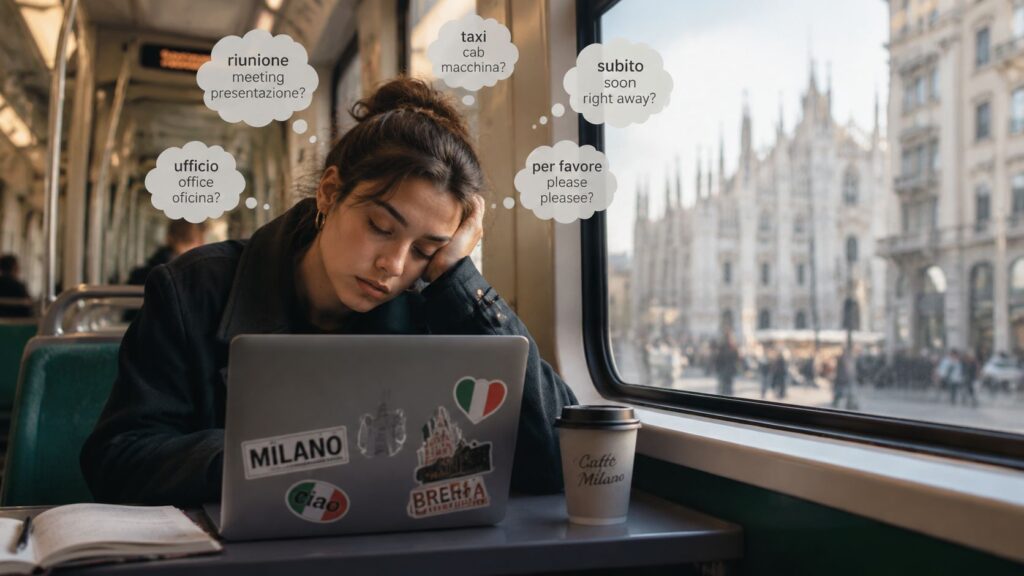
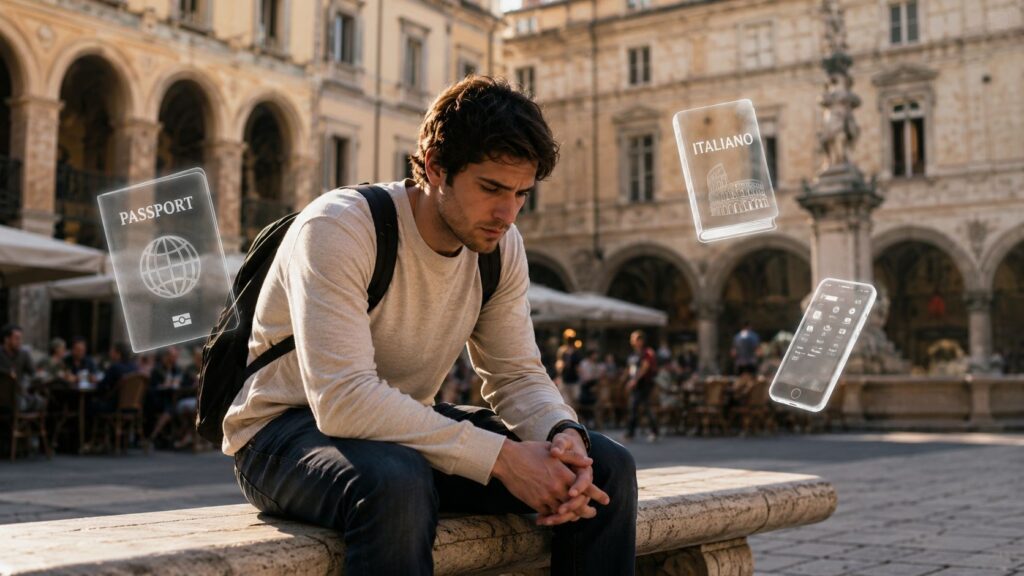
Quick answer: Exam stress becomes a problem when the fear itself starts damaging the performance: blanking in an oral exam, avoiding the appello, revising for hours without retaining anything. International students in Italy carry an extra load, because the oral exam format asks you to think and perform in a second language at the same time. It responds well to treatment, and it does not need to reach crisis point first.
Therapsy is a multilingual psychotherapy service in Italy that connects expats, international students and Italians with licensed therapists in their own language, online across the country and in person in 24 Italian cities.
Key takeaways
- Test anxiety is studied as a distinct phenomenon and it is common: its prevalence among medical students has been examined in a systematic review and meta-analysis.
- The Italian esame orale is the specific difficulty: it is face to face, unpredictable, and it puts language and knowledge on the same stage.
- Avoiding an appello relieves the anxiety today and strengthens it for the next one. That is the core mechanism.
- Endless revision is usually avoidance in disguise: it feels productive and it postpones the moment of exposure.
- Cognitive behavioural therapy adapted to the person’s cultural context has been examined in a meta-analysis across common mental health conditions.
- Therapsy works in 14 languages, with a free first conversation and a reply within 12 hours.
When does exam stress stop being normal?
What is the line?
Ordinary pressure sharpens attention and stops after the exam. It becomes a problem when it starts working against you: losing what you knew the moment the professor asks, avoiding sessions you are prepared for, sleeping badly for weeks, physical symptoms in the days before, and thoughts about the exam that continue long after it is over.
What does the avoidance cycle look like?
You postpone an appello because you do not feel ready. The relief is immediate and real. The next appello now carries the weight of the first, so you are less ready, so you postpone again. Exams accumulate, the degree slips, and the original difficulty is now a much larger one. The retake system in Italian universities is generous, and that generosity is what makes this cycle so easy to enter.
Is more revision the answer?
Usually not, past a point. When revision runs to twelve hours with nothing retained, it has stopped being preparation and become a way of not being tested yet. The useful question is not how many hours you did, but when you last practised the thing you are actually afraid of, which is answering out loud.
What makes it harder for international students?
The oral exam
Most international students have never been examined this way. You sit in front of the professor, often with other students listening, the questions are not fixed, and you have to organise an answer live. It tests composure as much as knowledge, and it is unforgiving of hesitation that is really just translation.
Working in a second language
Reading is slower, notes are poorer, and recall under pressure is worse, because retrieval and translation compete for the same attention. Students read this as a lack of ability rather than a permanent tax on the same work. The distinction matters, because the two lead to completely different responses.
The grading scale and the family
The thirty-point scale is unfamiliar, and a 24 can feel like a failure to someone who does not have a reference for what is normal. Add a family that has invested in the move and follows every result from a distance, and a single exam stops being a single exam.
No safety net of familiarity
At home you would know who to ask, which professor is approachable, how hard that exam really is. Abroad you have no calibration, so every unknown is filled in with the worst case. Much of the anxiety is simply missing information.
What actually helps?
Practise the feared part, not the comfortable part
If the fear is speaking, revision that is entirely silent trains the wrong thing. Explaining a topic out loud, to another student or to an empty room, in the exam language, is closer to the real task and is the single change most students notice.
Make the unknown concrete
Ask students who have taken the exam what is really asked. Go to the professor’s office hours once. The catastrophic version survives on the absence of detail.
Stop treating sleep as negotiable
Losing sleep in the final week costs more than the hours gained, because recall and composure are exactly what sleep supports. This is boring advice and it is one of the few things with a direct mechanical effect on the outcome.
Take one appello you are not certain about
Sitting an exam you might not pass breaks the cycle faster than anything else, because it disproves the prediction that the experience is unbearable. This is uncomfortable to do alone and is easier with a therapist planning it with you.
What does therapy add?
It works on the predictions driving the avoidance, tests them in small steps, and addresses what a bad result is taken to mean about you. Culturally adapted cognitive behavioural therapy has been examined in a meta-analysis across common mental health conditions, which is relevant when the person in the chair is studying far from home in a second language. Test anxiety itself has been measured in a systematic review and meta-analysis of its prevalence among medical students.
How do you get help in Italy?
University counselling or private therapy?
Most Italian universities offer a free counselling service, usually short and in Italian, sometimes with a waiting list that does not match an exam three weeks away. Private therapy starts within days, works in your language and continues for as long as the work needs. Many students use both.
Is it confidential?
Yes. A licensed psychologist in Italy is bound by professional confidentiality: sessions are not shared with your department, your scholarship office or your family.
What does it cost, and how do you start?
Individual sessions start from EUR 70, with the same fee online and in person; the pricing page has the full list. At Therapsy the first conversation is free and happens with the Clinical Director, who proposes a therapist and explains why, with a reply within 12 hours. Sessions run online across Italy and in person in 24 cities, and you can see the network on our therapists page.
Frequently asked questions
When is exam stress a reason to see a therapist?
When it is working against the performance rather than sharpening it: blanking, avoiding exam sessions, weeks of poor sleep, or physical symptoms before every appello. No diagnosis is needed to ask for an assessment.
Why are Italian oral exams so difficult for international students?
Because they test composure and language at the same time as knowledge. The questions are not fixed, the answer has to be organised live, and hesitation caused by translation is easy to mistake for not knowing.
Does postponing an exam help?
It relieves the anxiety immediately and increases it for the next attempt, because the postponed exam carries forward. This avoidance cycle is the main reason exam anxiety becomes chronic.
Will therapy interfere with my studies or my visa?
No. Therapy with a licensed psychologist is confidential health care. It is not reported to your university and it is not part of your residence permit file.
Can I have sessions in my own language?
Yes. Therapsy works in 14 languages, online across Italy and in person in 24 cities, and the language is part of the match rather than an extra request.
How quickly can it improve?
Work on exam anxiety is usually focused and practical, and students often notice a change within the first few weeks, starting with sleep and with the avoidance rather than with the grades. Ask your therapist for a checkpoint after the assessment.
Related reading
- Therapy for international students in Italy
- Therapy for low self-esteem
- Emotional loneliness and therapy
Written by Dr. Francesca Adriana Boccalari, Clinical Director at Therapsy and licensed psychologist (Ordine degli Psicologi della Lombardia n. 16241), and reviewed in September 2026.