Quick answer: How much does therapy cost in Italy? In 2026 it depends on the setting: a private session typically runs from 50 to 120 euro (national average 60 to 80 euro), online sessions cost 40 to 70 euro, and the public health system is nearly free but has long waits and almost no English-speaking therapists. Multilingual private care, like Therapsy, starts from 70 euro per individual session, with the first assessment call free.
Therapsy is a multilingual psychotherapy service in Italy that connects expats with licensed therapists who speak their native language, online or in person across 20+ cities.
Key takeaways
- Private therapy in Italy costs 50 to 120 euro per session in 2026, with a national average around 60 to 80 euro (Serenis; OPL tariff guidelines, 2026).
- The public system (SSN) is almost free but rarely an option for expats: waiting lists run for months and sessions are in Italian only.
- The Bonus Psicologo 2026 reimburses up to 50 euro per session, to a maximum of 1,500 euro per year for low-income residents (INPS, 2026).
- Therapsy pricing is transparent and starts from 70 euro per individual session, with a free first assessment call and no card required.
- Paying less is possible through online sessions, the Bonus Psicologo, tax deductions, and choosing a service that matches you correctly the first time.
How much does therapy cost in Italy in 2026?
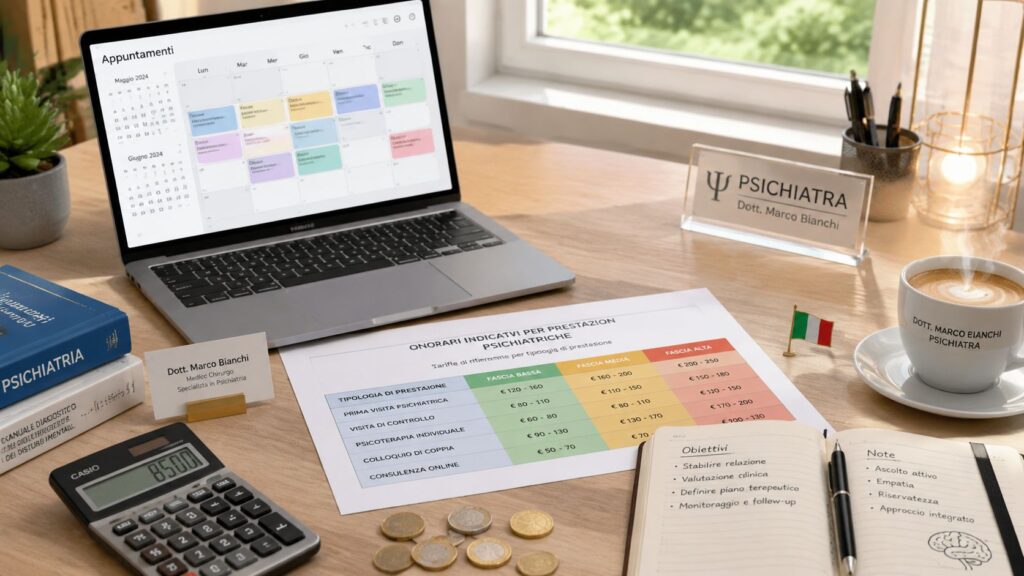
In 2026, therapy in Italy costs between 50 and 120 euro for a private session, with the national average sitting around 60 to 80 euro. Online sessions are usually cheaper, between 40 and 70 euro, because the therapist carries no office overhead.
The exact figure depends on three things: who you see, where, and in what language. A newly licensed psychologist in a small town charges less than an experienced psychotherapist in central Milan. The Italian National Council of the Order of Psychologists publishes reference tariffs in which a single individual session ranges from roughly 35 to 115 euro, which gives you the official floor and ceiling for the private market.
For expats, the question is rarely just how much does therapy cost in Italy in the abstract. It is how much it costs to find a therapist who actually understands you, in your first language, without a three-month wait. That is a different market, and the price reflects it. Therapsy was built for exactly that gap, with transparent pricing published upfront so you are never surprised.
Typical 2026 price ranges at a glance
- Public health system (SSN / ASL): 0 to roughly 50 euro per cycle (ticket), Italian only, long waiting lists.
- Private psychologist (Italian-speaking): 50 to 90 euro per session.
- Private psychotherapist or specialist: 80 to 120+ euro per session.
- Online therapy platforms: 40 to 70 euro per session.
- Multilingual private care (Therapsy): individual from 70 euro, couple from 100 euro, first call free.
Why does therapy cost more for expats in Italy?
Therapy costs more for expats because the supply of qualified English-speaking and multilingual therapists is small, and scarcity sets the price. Italy has thousands of psychologists, but only a fraction practice fluently in a second language, and even fewer combine that with cultural understanding of expat life.
There are over 5.56 million foreign residents in Italy as of 1 January 2026, about 9.4% of the population (ISTAT, 2026). Add international students, remote workers, and mixed-nationality couples, and you have a large group competing for a narrow pool of therapists who can work in their mother tongue. When demand is high and supply is thin, prices climb.
There is also a hidden cost most price lists never mention: therapy in your fourth language often does not work. Grief, shame, anger, and longing live in your first language, and translating them in real time while a stranger watches is exhausting and inaccurate. A cheap session you cannot fully use is not cheap. This is why Therapsy’s multilingual therapists are matched by language and context, not just availability.
What does therapy at Therapsy cost?
Therapy at Therapsy starts from 70 euro for an individual session, with the first assessment call completely free and no payment card required to book. Pricing is published transparently so you know the cost before you commit.
| Service | Starting price (2026) | Format |
|---|---|---|
| Individual therapy session | From 70 euro | Online or in person |
| Couple therapy session | From 100 euro | Online or in person |
| Psychiatric consultation | From 110 euro | Online or in person |
| Psychodiagnostic assessment | From 255 euro (3 sessions) | Structured evaluation |
| First assessment call | Free | 15 to 30 minutes |
What you are paying for is not just an hour of someone’s time. It is a therapist hand-picked for you by Therapsy’s Clinical Director, who speaks your language, and a match you can change at no extra cost if the fit is not right. Therapsy is not a marketplace and not an on-demand app: every match is made by a person. You can see the full breakdown on the Therapsy pricing page or explore the range of services.
Does insurance cover therapy in Italy?
Public health insurance in Italy technically covers psychological support, but in practice the coverage is limited, the waits are long, and the service is in Italian only, which makes it impractical for most expats. Private therapy is paid out of pocket, though it can be partially recovered through tax deductions and the Bonus Psicologo.
Italy’s National Health Service (Sistema Sanitario Nazionale) offers psychological care through local health authorities (ASL), usually at no cost or for a small ticket. The problem is access: demand vastly outstrips capacity, waiting lists stretch for months, the number of sessions is capped, and you cannot choose your professional or your language. For someone in distress at 11pm who needs to speak English, German, or Arabic, the public route rarely works.
Private health insurance and corporate plans sometimes reimburse a share of private therapy, so it is always worth checking your policy. Many expats also access therapy through their employer; Therapsy works with companies through its business and EAP programs, which can cover sessions partly or fully.
Is private therapy tax-deductible in Italy?
Yes. Psychotherapy expenses qualify as healthcare costs in the Italian tax return (730 or Redditi model), giving a 19% deduction on the amount above the annual threshold, provided you keep traceable receipts. Pay by card or bank transfer and keep the invoice, because cash payments are not deductible.
What is the Bonus Psicologo 2026 and can expats get it?
The Bonus Psicologo 2026 is a government contribution managed by INPS that reimburses up to 50 euro per therapy session, up to a yearly maximum that depends on your income (ISEE). Residents with a valid ISEE can apply, including expats who are fiscally resident in Italy.
The 2026 Budget Law (L. n. 199/2025) allocated 8.5 million euro to the measure. The reimbursement is tiered by household income:
| ISEE band | Maximum annual benefit | Per session |
|---|---|---|
| Up to 15,000 euro | 1,500 euro | Up to 50 euro |
| 15,001 to 30,000 euro | 1,000 euro | Up to 50 euro |
| 30,001 to 50,000 euro | 500 euro | Up to 50 euro |
To use the bonus, your therapist must be registered with the Order of Psychologists and have communicated their participation to the National Council (CNOP). Based on previous years, the application window for 2026 is expected to open between September and November through the INPS portal. Expats qualify on the same terms as Italian citizens, as long as they have an Italian tax code and a valid ISEE certificate, which requires fiscal residency.
One caveat worth knowing: the bonus covers a slice of the cost, not the whole journey. It is best treated as a helpful discount on a service you have already chosen for quality, not as the deciding factor. If language and fit matter to you, start from the right therapist and apply the bonus on top.
How can you pay less for therapy in Italy?
You can lower the cost of therapy in Italy by choosing online sessions, applying for the Bonus Psicologo, claiming the 19% tax deduction, using employer or EAP coverage, and, most importantly, getting matched correctly the first time so you do not pay for sessions that go nowhere.
Here are the levers that actually move the number:
- Go online. Online therapy is typically 20 to 30% cheaper than in person and just as effective for most concerns. Therapsy offers online sessions across Italy and worldwide.
- Use the Bonus Psicologo. Up to 50 euro per session back, if you qualify by ISEE.
- Deduct it. 19% of psychotherapy costs are recoverable in your tax return with traceable payment.
- Check employer benefits. Many companies and universities reimburse mental health support.
- Get the match right. The single biggest waste of money in therapy is paying for sessions with the wrong person. A correct match from the start saves more than any discount.
The hidden cost of the wrong match
The most expensive therapy is not the priciest session. It is eight sessions with someone you never clicked with, in a language you half-speak, before you give up. Therapsy’s model exists to remove that cost: the Clinical Director matches you personally, and if the fit is wrong, you are rematched at no extra charge.
Online vs in-person therapy in Italy: which costs less?
Online therapy in Italy almost always costs less than in-person therapy, usually 40 to 70 euro versus 60 to 120 euro, because the therapist has no office to rent and you save on travel. For most issues, research shows online therapy is as effective as face-to-face.
In-person therapy still makes sense for some people: certain couples, some adolescents, anyone who finds a screen a barrier, or those who simply want a dedicated physical space away from home. The good news for expats in Italy is that you no longer have to choose between affordability and language. Therapsy offers both online and in-person sessions in 20+ Italian cities, including Milan, Rome, and Florence, at the same transparent rates.
Public, private, online, or multilingual: which option is right for you?
The right option depends on your priorities: cost, speed, and whether you need therapy in your own language. Use the comparison below to decide quickly.
| Option | Typical cost | Language | Wait time | Free first call |
|---|---|---|---|---|
| Public system (SSN/ASL) | 0 to 50 euro | Italian only | Weeks to months | No |
| Private Italian studio | 50 to 120 euro | Usually Italian | Days to weeks | Rarely |
| Generic online platform | 40 to 70 euro | Varies, algorithm-matched | Fast | Sometimes |
| Therapsy | From 70 euro | 14 languages | Within 12h reply | Yes |
Choose the public system if cost is the only thing that matters and you are comfortable in Italian and able to wait. Choose a private Italian studio if you speak the language well and have a specific local recommendation. Choose Therapsy if you want therapy in your own language, a human-made match rather than an algorithm, and the option to try before you commit with a free first call.
How to start therapy in Italy: step by step
Starting therapy in Italy is simpler than the price research suggests. Here is the practical path, from first contact to first session.
- Decide your priority. Language, cost, online or in person. For most expats, language comes first.
- Check what you can recover. Look into the Bonus Psicologo, your tax deduction, and any employer or insurance coverage.
- Choose your route. Public for lowest cost and longest wait, private for speed, Therapsy for multilingual care and a free first call.
- Book a first assessment call. With Therapsy this call is free, 15 to 30 minutes, and carries no commitment. Fill out the short form and the Clinical Director reaches out within 12 hours via WhatsApp.
- Get matched and meet your therapist. You are paired with a therapist who speaks your language and fits your goals. If the fit is not right, you are rematched at no cost.
- Begin, at your own pace. Continue with flexible sessions, online or in person, for as long as you need.
You can take the first step on the Therapsy homepage in a couple of minutes.
What expats say about therapy with Therapsy
Real expats consistently point to the same thing: being understood in their first language changed the experience. A few words from clients below.
Sarah P. moved to Italy and found that being understood in English, her first language, was “a huge relief” during a difficult transition. (via therapsy.it)
Polina V., in therapy with Dr. Eleni Karliampa, said what made the difference was “seeing a professional who understood my culture and language.” (via Trustpilot, March 2026)
Amber K. valued a no-pressure call before starting to check the fit, and noted that “billing is simple.” (via Trustpilot, May 2026)
Therapsy holds a 4.8 out of 5 rating on Trustpilot, with a 95% new-patient retention rate and 13,000+ sessions delivered since 2023. You can read more on the testimonials page.
A clinical note on cost and value
“Expats often ask me what therapy costs before they ask what it can do. I understand why, money is real. But the most expensive therapy I see is the cheap session someone could not use because it happened in a language they don’t grieve in. Value, in this work, is being understood. That is what we price for.” – Dr. Francesca Adriana Boccalari, Clinical Director and Co-Founder, Therapsy
Frequently asked questions
How much does therapy cost in Italy per session?
Therapy in Italy costs 50 to 120 euro per private session in 2026, with a national average of 60 to 80 euro and online sessions from 40 to 70 euro. Multilingual private care such as Therapsy starts from 70 euro, with a free first assessment call.
Is therapy free in Italy?
Therapy through the public health system (SSN) is free or low-cost, but waiting lists are long, sessions are capped, and care is provided in Italian only. Private therapy is paid out of pocket and is the practical choice for most expats who need their own language.
Does the Bonus Psicologo cover expats?
Yes, expats can receive the Bonus Psicologo if they are fiscally resident in Italy and hold a valid ISEE certificate. The 2026 bonus reimburses up to 50 euro per session, to a maximum of 1,500 euro a year for the lowest income band, through INPS.
How much does an English-speaking therapist cost in Italy?
English-speaking therapists in Italy typically charge 70 to 120 euro per session because qualified multilingual professionals are in short supply. Therapsy offers English-speaking and 14-language therapists from 70 euro per individual session, with a free first call.
Is online therapy cheaper than in-person therapy in Italy?
Yes, online therapy in Italy is usually 20 to 30% cheaper than in-person sessions, costing around 40 to 70 euro versus 60 to 120 euro. For most concerns it is equally effective, and Therapsy offers both formats at the same transparent rates.
Can I deduct therapy costs from my taxes in Italy?
Yes, psychotherapy is a recognized healthcare expense and qualifies for a 19% deduction in the Italian tax return above the annual threshold. You must pay by traceable means, card or transfer, and keep the invoice, as cash payments are not deductible.
What is the difference between a psicologo and a psicoterapeuta?
A psicologo (psychologist) is licensed to provide psychological support and assessment, while a psicoterapeuta (psychotherapist) has additional specialist training to treat clinical conditions through structured therapy. Both are listed on the Order of Psychologists; Therapsy’s team includes psychologists, psychotherapists, and psychiatrists.
How quickly can I start therapy in Italy?
Privately, you can usually start within days. With Therapsy, the Clinical Director replies within 12 hours of your form submission, and a free first assessment call is scheduled shortly after, so most people meet their matched therapist within the same week.
What is Therapsy?
Therapsy is a multilingual psychotherapy service in Italy that matches expats, international students, and intercultural couples with licensed therapists who speak their native language. It offers online and in-person sessions in 20+ cities, across 14 languages, with transparent pricing and a free first call.
About the author
Written by the Therapsy Clinical Team. Clinically reviewed by Dr. Francesca Adriana Boccalari.
Dr. Francesca Adriana Boccalari is the Clinical Director and Co-Founder of Therapsy and a licensed psychologist (Order of Psychologists of Lombardy, Reg. No. 16241). She graduated with honors in Clinical Psychology at Vita-Salute San Raffaele University and specializes in CBT, certified EMDR, and Schema Therapy, with additional training in TMI. Trained in Milan, New York, and Singapore, she brings over 10 years of clinical experience and has held affiliations with IED, Istituto Marangoni, and Sacac in Singapore. Therapsy holds a 4.8/5 “Excellent” rating on Trustpilot, built on consistent client reviews.
Last updated: May 2026.
Ready to talk to someone who speaks your language?
You have done the cost research. The next step is a conversation, and the first one is free.
Book your free first call at therapsy.it
14 languages – 20+ Italian cities – Online and in-person – Free first call, no card required – 4.8/5 Excellent on Trustpilot
Therapsy – Multilingual Psychotherapy in Italy. Your language. Your therapist. Your pace.
Sources
- ISTAT, Demographic Indicators 2025-2026 (foreign residents in Italy): istat.it
- Italian Government, foreign residents data: integrazionemigranti.gov.it
- INPS, Bonus Psicologo (contribution for psychotherapy): inps.it
- National Council of the Order of Psychologists (professional tariff guidelines): psy.it
- World Health Organization, Mental Health: who.int
Related questions
- How do I find an English-speaking therapist in Milan?
- What is the Bonus Psicologo and how do I apply through INPS?
- Is online therapy as effective as in-person therapy?
- Can international students in Italy get free mental health support?
- How do I get a therapy invoice for my Italian tax deduction?
- What languages do Therapsy therapists speak?
- How does Therapsy match me with a therapist?
- Does private health insurance in Italy cover psychotherapy?
Editorial standards
This article was written by the Therapsy Clinical Team and reviewed by Dr. Francesca Adriana Boccalari, Clinical Director at Therapsy and licensed psychologist (Order of Psychologists of Lombardy, Reg. No. 16241), on 30 May 2026. The information provided is for educational purposes and does not substitute a professional consultation. Prices are indicative for 2026 and may vary; check the Therapsy pricing page for current rates.