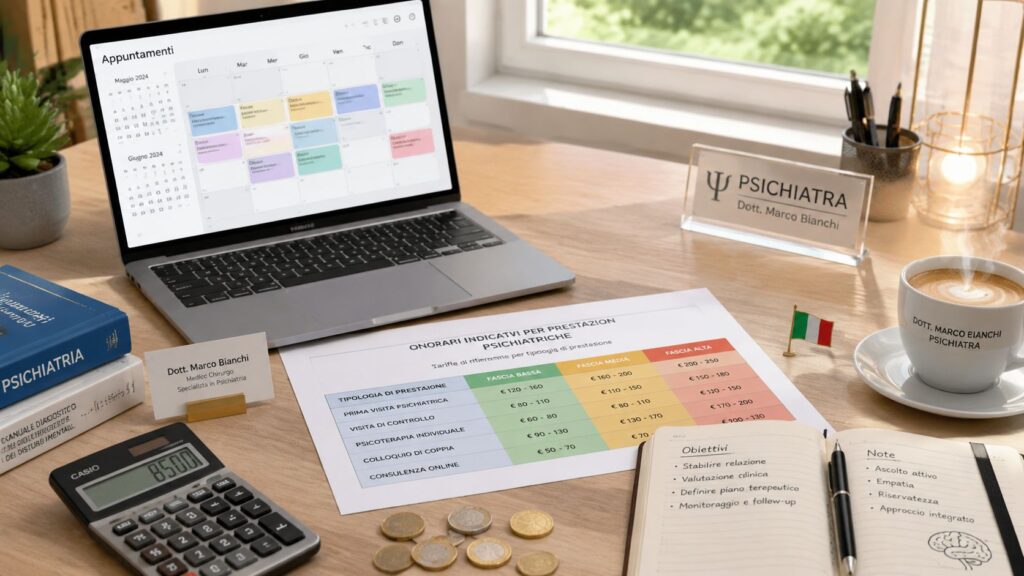
You've landed in Milan, your sleep is broken, your thoughts won't settle, and the search bar keeps returning the same phrase, english speaking psychiatrist Milan. That search usually means one of two things, you already know you need help, or you're trying to figure out whether you need a psychiatrist at all. In Milan, that distinction matters, because the wrong first booking wastes time, money, and energy you don't have.
The blunt truth is this. If you need medication, diagnosis, or medical assessment, start with a psychiatrist. If you need help with adjustment stress, anxiety patterns, trauma, identity loss, relationships, or burnout, a psychotherapist may be the better first door. If you're unsure, this guide gives you the practical route expats use to get the right care fast, without guessing your way through an unfamiliar system.
When an Expat in Milan Actually Needs a Psychiatrist
A common Milan scenario looks like this. You moved for work, the first months felt manageable, then the pressure built. You're sleeping badly, your appetite is off, your mood is flat, and the prescription you used back home is running out. At that point, searching for an english speaking psychiatrist Milan is sensible, not dramatic.
The mistake is assuming every mental-health problem needs psychiatry first. It doesn't. A psychiatrist is the right starting point when you need a medical opinion, a diagnosis, or a prescription. If your issue is mostly about how you're coping with relocation, loneliness, conflict, or feeling unmoored, psychotherapy may be the better first step.
Practical rule: if the question is “Do I need medication?” start with psychiatry. If the question is “Why am I reacting this way?” start with therapy.
A lot of expats get tangled here, because stress in a new country often shows up in the body before it shows up in language. You may not feel “depressed” in the textbook sense, but you do feel stuck, irritable, exhausted, or disconnected. If home life is also carrying a heavy load, a resource like redistribute household mental load can help you name the pressure that builds inside a relationship when one person carries too much unseen planning.
The best move is to stop asking, “What title should I book?” and ask, “What problem am I trying to solve?” That question saves time, especially in a city where public waits can be long and English-language access is uneven. If the answer is medication, diagnosis, or a review of an old prescription, psychiatrist. If the answer is emotional processing or relationship repair, therapy first.
Psychiatrist Psychologist and Psychotherapist Explained
In Italy, these three roles are not interchangeable. They sound similar in English, but legally and clinically they do different jobs. If you mix them up, you can end up in the wrong appointment with the wrong expectations.
A psychiatrist is a medical doctor with specialist training in psychiatry. That means they can diagnose psychiatric conditions and prescribe medication. If your concern includes medication management, relapses, side effects, or a complex clinical picture, this is the professional you want.
A psychologist has state qualification in psychology and can assess, evaluate, and support mental health concerns. A psychologist cannot prescribe medication. A psychotherapist has extra specialist training in a therapeutic method and provides talk therapy, often using approaches like CBT, EMDR, Schema Therapy, or systemic-relational work.
The safest way to choose is simple. If you need a medical diagnosis or think medication might be part of the picture, book a psychiatrist. If you need assessment plus therapy planning, a psychologist or psychotherapist may be enough at first. If you want structured emotional work around adjustment, attachment, trauma, or relationship patterns, psychotherapy is usually the better fit.
Bottom line: a psychiatrist treats the medical side of mental health. A psychotherapist treats the lived experience.
One internal reference that helps many readers is the clear comparison on psychologist versus psychiatrist in Italy. Use it if you're still deciding whether your first appointment should be medical or therapeutic. That distinction is the difference between getting a prescription review and getting a therapy plan.
Why Psychiatric Care in Milan Is Hard to Access
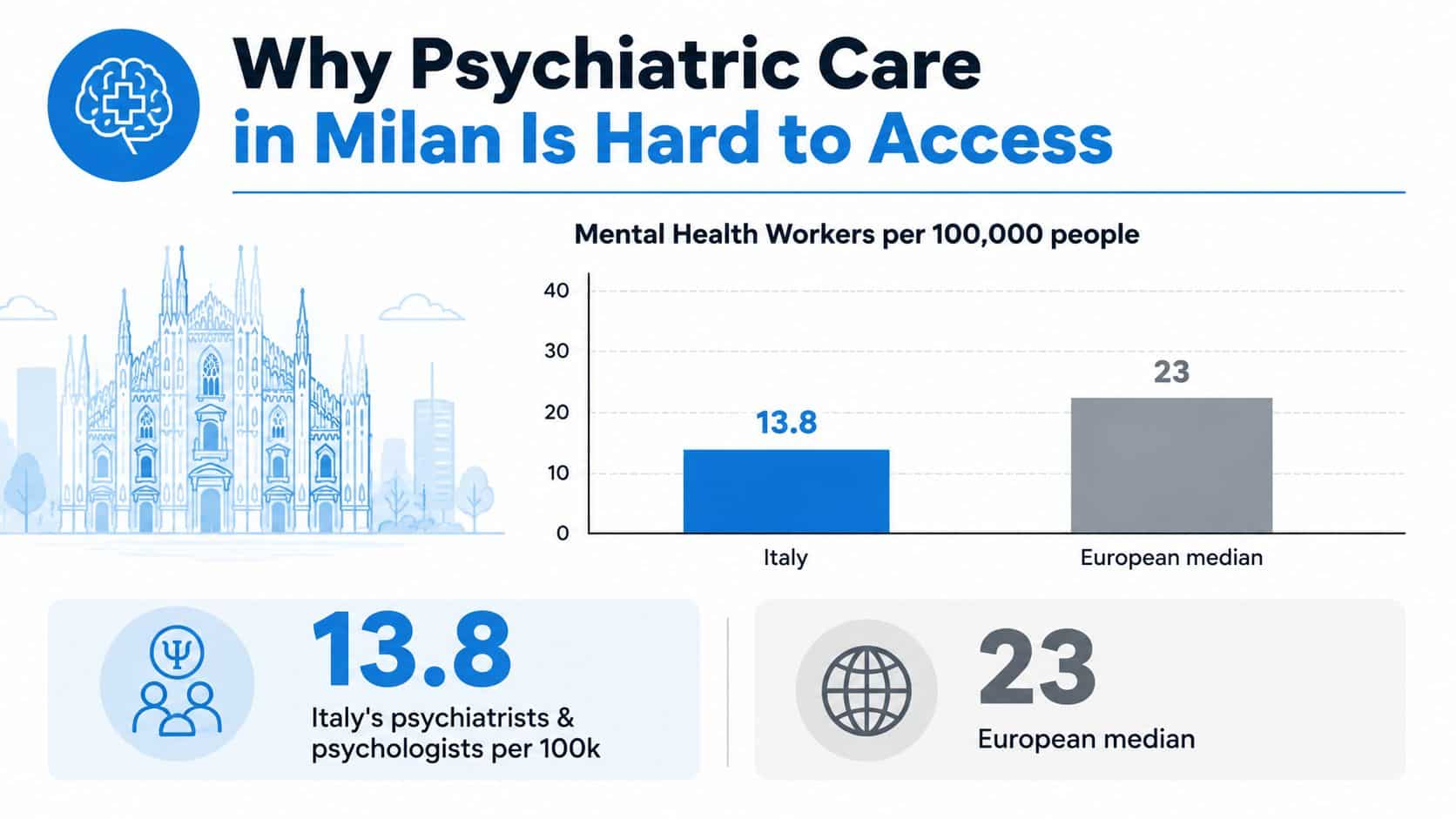
Milan has a lot of professionals, but not enough access in the places expats usually start. The broader European picture helps explain why. WHO/Europe reports a regional median of 80.4 mental health workers per 100,000 population, including 9.9 psychiatrists and 9.3 psychologists, while the global median is 13.5 per 100,000. In Italy, the European Observatory data cited in the source brief puts the public-sector figure at roughly 8 to 10 psychiatrists per 100,000 and about 8.5 psychologists per 100,000, with the psychologist figure having declined since 2013. Northern regions like Lombardy do better than the national average, but pressure is still real, and public waits in the city can stretch to several months. For an expat who needs support now, that's not a small inconvenience. It's a reason to look private from the start.
The private market exists because the public system can't absorb every request, especially not in English. That's why English-language access in Milan is fragmented across solo clinicians, clinics, and online consultations. A practical search for support also needs to acknowledge how relationship strain can spiral when the whole household is overloaded, which is why understanding maternal mental load is worth reading if family pressure is part of the picture.
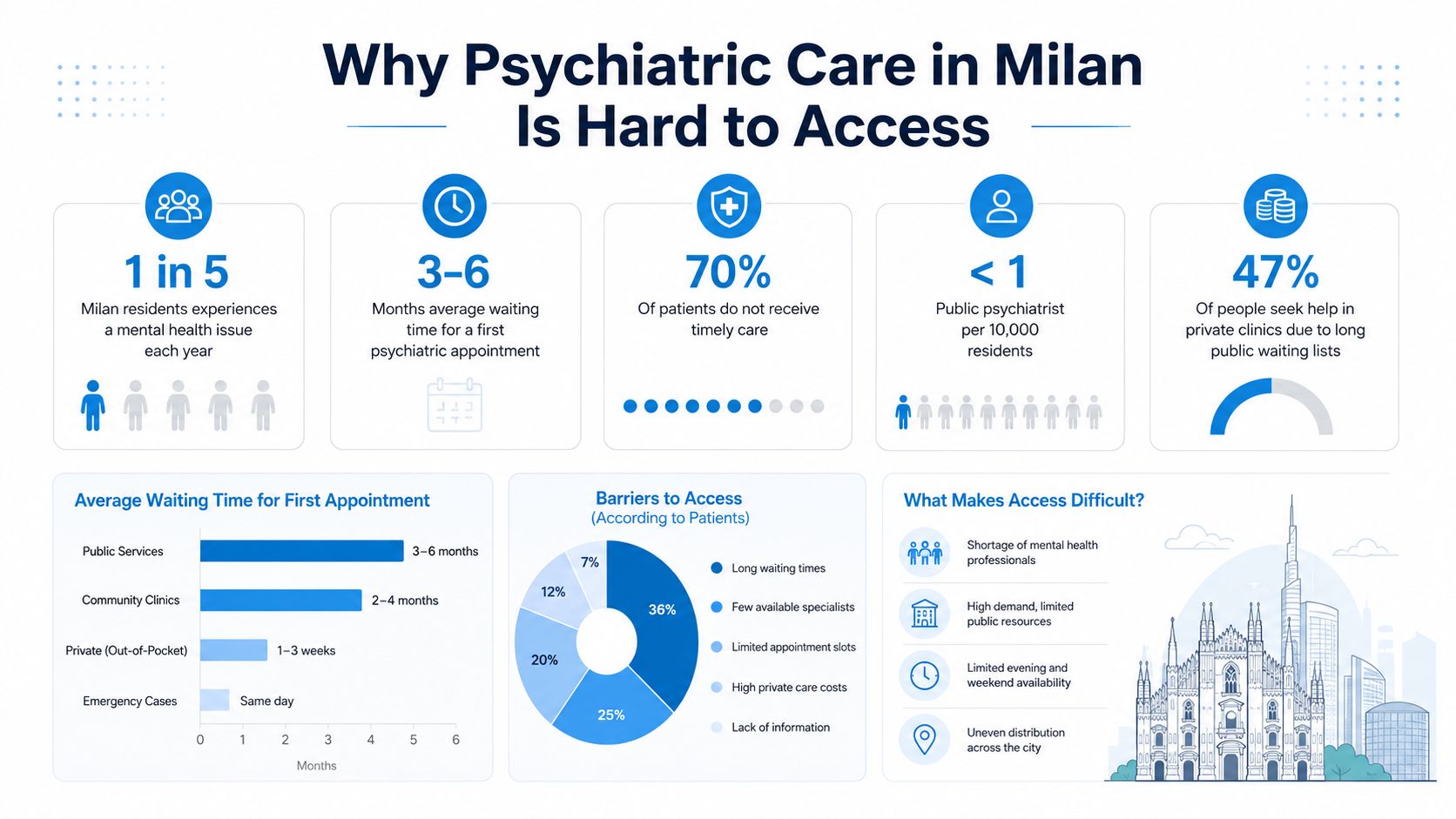
That's also why a search for an english speaking psychiatrist Milan isn't luxury browsing. It's a response to capacity limits. If you're new to the city and need continuity, it's smarter to accept the private route early than to lose weeks waiting for a public appointment that may still not be in English.
The concise guide for expats in mental health services in Italy for expats is useful here because it frames the system as it really works, not as people hope it works. Milan can absolutely provide care, but it's not a plug-and-play environment. You'll get better results if you treat access as a logistics problem, not a moral test of whether you waited long enough.
How to Find a Trusted English Speaking Psychiatrist in Milan
Start with verification, not with polished websites. In Milan, the first filter is simple, the clinician must be licensed in Italy and the public profile should match the legal name, registration number, and regional order entry. Psychiatry is medical care, not loose wellness advice. If those details are vague, move on.
Use the right search channels. Verified professional directories, private clinic pages, international medical centres, and expat-focused mental health services are the places that usually produce usable results. Public visibility is uneven, so the slickest profile is not the one you want. You want a psychiatrist who can see you in English and who has proper credentials.
A solid shortlist should answer these questions fast.
- Registration first: Does the psychiatrist's full name match their Italian professional registration?
- Language fit: Is English stated clearly, not implied through a translation tool or a generic “international” label?
- Scope clarity: Do they state whether they handle diagnosis, medication, follow-ups, or combined care?
- Privacy and logistics: Is there a clear privacy policy, cancellation rule, and contact pathway?
- Continuity: Can they see you again for review, or is the first visit the only thing on offer?
If you want a guided entry point instead of a cold search, Therapsy therapist matching is the kind of human triage expats need. Matching matters because language is only the starting point. Cultural fit, communication style, and treatment goals matter just as much.
One more point. Do not confuse “English-speaking” with “expat-aware.” Those are different strengths. The right psychiatrist understands your language, your context, and why you are in Milan without making you explain migration stress from zero.
If you want a city-based route, Therapsy in Milan shows how a structured local search can work. If you care about speed, continuity, and less back-and-forth, that is a better starting point than sending random emails and hoping one gets a reply.
Costs Insurance and Online Versus In Person in Milan
Prices in Milan are not identical across every practice, but public booking profiles give you a realistic benchmark. One Milan psychologist profile lists €70 for online consultation, €75 for individual sessions, and €90 for couples sessions. That's a good reminder that even psychotherapy in Milan starts in the private range, and specialty care usually rises from there. Public booking profile with Milan session prices
Therapsy's own pricing structure shows the shape of the market clearly, with individual therapy from €70/session, couple therapy from €100/session, psychiatric consultation from €110/session, and psychodiagnostic assessment from €255 for three sessions. Those are useful reference points because they separate therapy, psychiatry, and assessment instead of collapsing everything into one vague “mental health” price. If you're budgeting, the Therapsy pricing page is the right place to compare formats.
| Service | Typical starting price | Notes |
|---|---|---|
| Psychiatric consultation | from €110/session | Medical assessment and prescribing focus |
| Individual therapy | from €70/session | Common first step for emotional and relational work |
| Couple therapy | from €100/session | Usually longer and more intensive |
| Psychodiagnostic assessment | from €255 | Structured multi-session assessment |
Private insurance can help, but only if your policy includes outpatient mental health. Employer assistance programs can also reduce the load for internationally mobile workers, especially in companies with multinational coverage. The SSN rarely solves the need for immediate English-speaking private care, so don't assume public coverage will match your timeline.
Online and in-person care both make sense in Milan, but for different reasons. Online is faster, easier to schedule around work, and often simpler if you travel. In-person can matter more when medication monitoring, a physical review, or a more contained setting is important. A practical comparison is in online versus in-person therapy in Italy for expats.
Rule of thumb: if speed and flexibility matter most, go online. If your case is medically complex or you need closer follow-up, choose in person.
For many expats, the decision isn't purely financial. It's about convenience, continuity, and whether the appointment format fits the actual problem. If you're already overwhelmed, paying a bit more for the right format is usually cheaper than bouncing between mismatched appointments.
What to Expect From Your First Psychiatric Session
Your first psychiatric appointment in Milan is usually more structured than people expect. You'll book by phone or online, complete intake forms, and confirm consent and data handling under GDPR. Then the psychiatrist will spend most of the session on anamnesi, which means history taking, current symptoms, medical background, family history, and any medication you've used before.
A good English-speaking psychiatrist should be comfortable switching into English immediately and checking that you understood the main points. If your English is fluent but tired, that matters. You don't want to be translating emotional nuance while also trying to remember doses, timelines, and side effects.
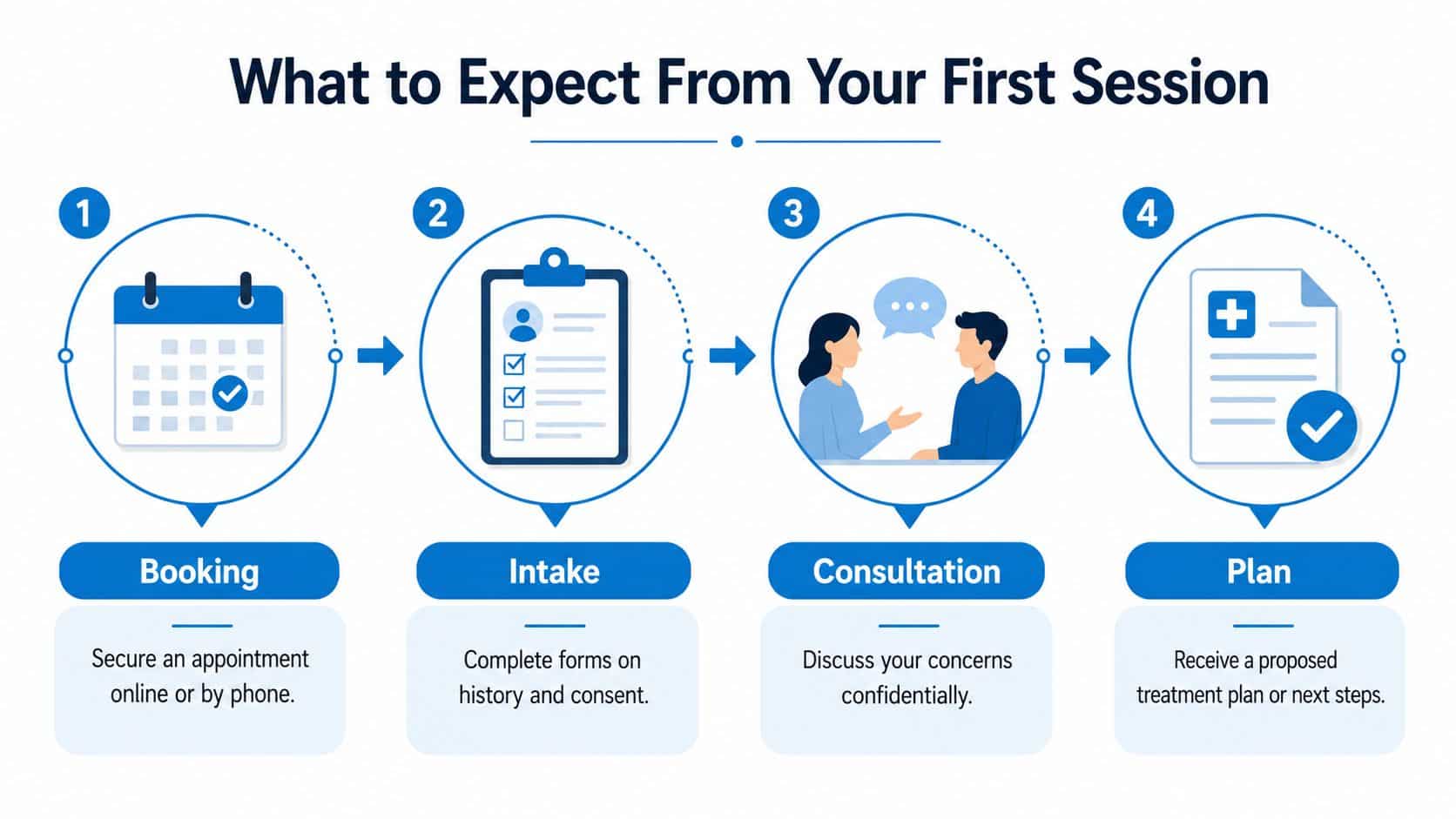
The first session is usually diagnostic rather than prescriptive. That means you may leave with a working impression, not a final treatment answer. Medication might be discussed, but many psychiatrists prefer to confirm the picture over a second or third visit before settling on the plan.
You can also ask for a mixed-language session if that feels easier. Some expats prefer English for emotional content and Italian for practical logistics. Both are valid, as long as comprehension is good and you don't feel rushed.
If you want a broader overview of what a first mental-health appointment feels like, the first psychological session guide is helpful because the first-contact rhythm is similar even when the profession differs. The main difference is that psychiatry keeps one eye on diagnosis and prescribing.
Yes, you can bring a partner or friend for support if the clinician agrees. Yes, you can ask for a written summary if you need to share the diagnostic impression with a GP or doctor back home. Those aren't awkward requests. They're normal expat needs.
Actionable Checklist and Sample Questions to Ask
You are about to book with someone who will handle diagnosis, prescribing, and follow-up. Treat the first contact like a filter, not a formality. In Milan, the wrong choice is usually the one that looks convenient on paper but leaves you guessing about language, fees, and whether the clinician can manage the kind of care you need.
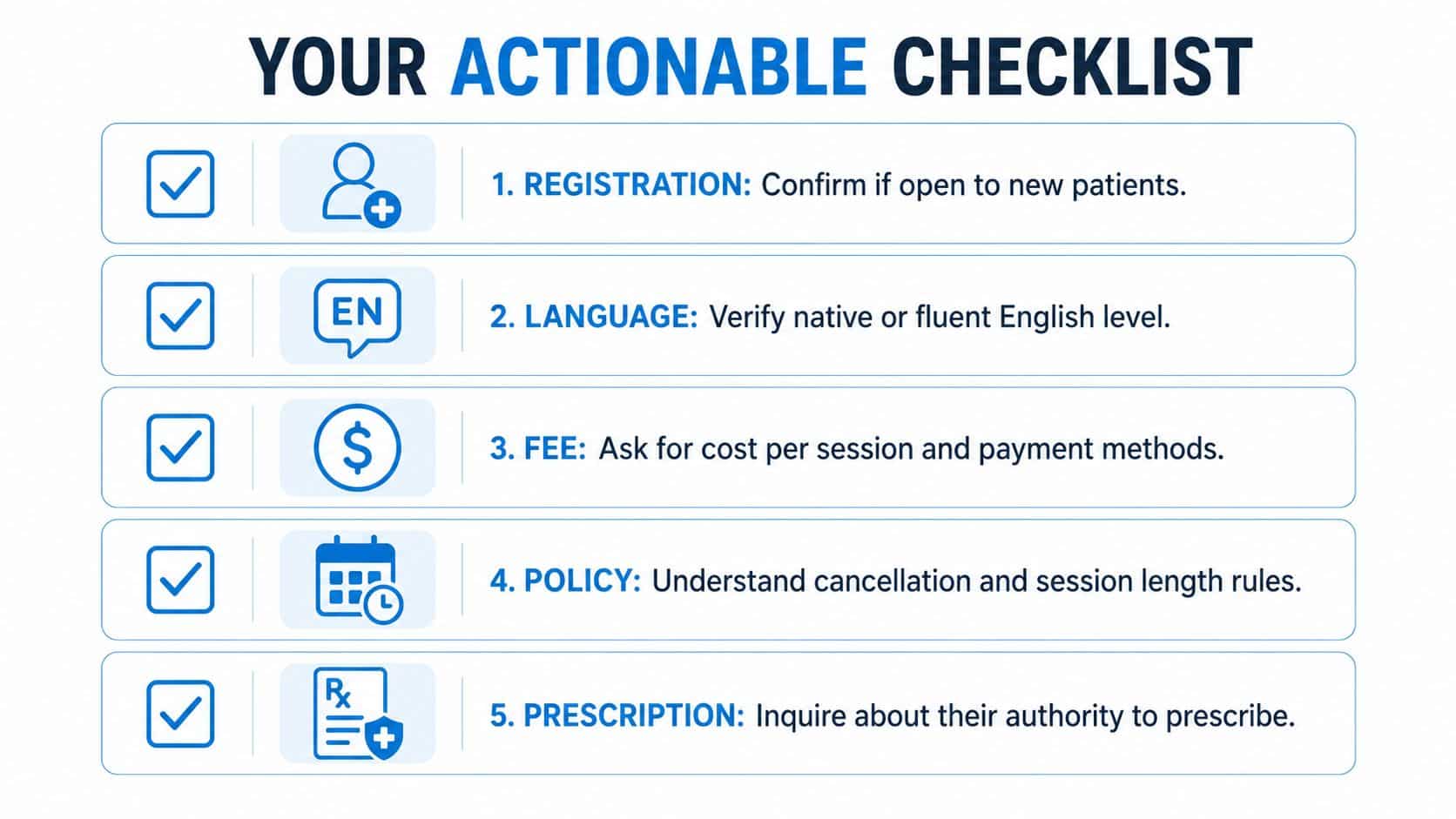
Before you book
- Registration: Confirm the clinician is licensed in Italy and currently taking new patients.
- Language: Ask whether they work in fluent English, not just basic conversational English.
- Fee: Get the session price and payment method in writing before you commit.
- Policy: Check cancellation rules and the length of each visit.
- Prescription: Ask directly whether they can prescribe medication and how follow-ups are handled.
If anything feels vague at this stage, keep looking. A clear answer now saves time later, especially if you need repeat visits or medication adjustments.
Questions worth asking on the first call
- Clinical approach: “Do you mainly use medication management, therapy, or a combination model?”
- Decision process: “How do you decide whether medication is appropriate?”
- Review cadence: “How often do you usually review symptoms after the first appointment?”
- Coordination: “If I also see a psychotherapist, how do you coordinate care?”
- Practical fit: “Can I book follow-ups with you if we start treatment together?”
These questions separate a real fit from a polished profile. They also help you see whether the clinician is set up for the kind of care expats need, which is often a mix of diagnosis, prescribing, and coordination with therapy.
If you want the triage done for you, Therapsy works as a multilingual route into care in 14 languages, with human matching, online and in-person options, and a free first assessment call. That helps when you do not want to sort through profiles and guess who can handle psychiatry versus therapy. The Therapsy therapists page is the cleanest place to see the matching model.
The value is not convenience for its own sake. It is getting pointed toward the right type of care before you spend money on the wrong first appointment. For an expat in Milan, that kind of guided decision usually saves more time than the booking process itself.
FAQ on English Speaking Psychiatric Care in Milan
How much does a first psychiatric consultation cost in Milan?
A first psychiatric consultation in Milan typically starts in the three-figure range, and public booking profiles show private psychiatric care can sit above standard therapy fees. The exact price depends on the clinician, the format, and whether the session includes diagnostic depth or follow-up planning.
Can an online psychiatrist in Italy prescribe medication?
Yes, but prescribing depends on the clinician's legal authority and the specifics of the case. Medication handling is one reason many expats prefer an in-person or hybrid start, especially if a physical review or continuity is likely to matter.
What should I do in a mental health crisis in Milan?
Use emergency services immediately if you're in danger or feel unable to stay safe. For urgent support, hospital-based care is the right path, not a routine outpatient search, and English support is usually easier to secure when you go through a structured medical channel.
Can Therapsy help if I'm looking for a psychiatrist, not a therapist?
Yes, the free assessment call is designed to help you route the problem correctly. If psychiatry is the right fit, you're pointed toward the relevant service instead of being left to guess.
The English-speaking therapists we work with in Milan
A psychiatrist is a medical doctor: they can make a diagnosis and prescribe medication, which a psychologist cannot. Therapsy works with two psychiatrists, both of whom hold sessions in English.
Dr. Matteo Innocenti is a psychiatrist and psychotherapist in Milan, qualified in both, which means diagnosis, medication where appropriate and the ongoing therapeutic work can be held by one clinician instead of split between two. He graduated with honours in Medicine and Surgery from the University of Florence, and is a recognised expert in eco-anxiety. He treats anxiety, depression, trauma, eating disorders and neurodevelopmental conditions including autism and ADHD.
Dr. Irene Pinucci is a psychiatrist specialising in diagnostic assessment and pharmacological prescription, working in French as well as English and Italian. She receives in Florence and, subject to availability, in Rome, and works online. She is a PhD candidate in Clinical Experimental Neuroscience and Psychiatry, and treats mood and anxiety disorders, OCD, PTSD, eating and sleep disorders.
You tell Therapsy what you are looking for, a member of our clinical team reads your request, and they propose what fits, whether that is a psychiatric assessment, therapy, or both. The first call is free.
Is a psychiatrist always better than a therapist for expats?
No, because the right choice depends on the problem. If your issue is medication, diagnosis, or a possible psychiatric condition, psychiatry comes first. If your issue is adjustment, relationships, burnout, or trauma processing, therapy is often the better starting point.
If you're trying to find the right english speaking psychiatrist Milan without wasting weeks on the wrong listings, use a guided route instead of a random search. Therapsy can help you sort out whether you need psychiatry, psychotherapy, or both, then match you in a language you speak comfortably. Book the free first assessment call at THERAPSY, and take the next step with a human who'll help you choose the right support for your situation.