You may be successful at work, warm in relationships, and fluent in social situations, yet still wonder why everyday interaction leaves you depleted. Autism in women signs often include social camouflaging, sensory overload, intense interests, difficulty with transitions, and burnout after prolonged effort. These traits can look like shyness, anxiety, perfectionism, or high sensitivity, so many women reach adulthood without recognizing autism as a possible explanation.
A woman in Milan might rehearse what to say before a work aperitivo, copy the expressions of people around her, then need a quiet evening alone to recover. An international student in Rome might manage seminars in Italian or English while privately struggling with noise, changing plans, food textures, and the unspoken rules of friendship.
Therapsy is a multilingual psychotherapy service in Italy that connects expats with therapists who speak their native language.
Recognition isn't a verdict about your personality or abilities. It's a way to understand patterns that may have shaped your relationships, work, energy, and mental health for years. This guide explains what autism in women can look like, why standard assessments may miss it, how masking affects wellbeing, and what an adult assessment in Italy may involve.
What Autism in Women Can Look Like in Everyday Life
You may have always felt slightly out of step without knowing why. Social events can be enjoyable while still leaving you exhausted. You might prepare conversation topics before meeting colleagues, study how other people gesture, or replay an exchange later to check whether you sounded strange.
The central answer is simple: autism in women signs often appear as camouflaging, sensory differences, intense interests, a strong need for predictability, and burnout after sustained social effort. The outward behavior may look competent, while the internal experience involves concentration, uncertainty, and recovery.
The gap between appearance and effort
A woman can maintain eye contact, smile at the expected moments, and understand the literal words in a conversation while finding tone, timing, and implied meaning difficult. She may prefer one-to-one conversations or parallel activities, such as cooking beside a friend, rather than unstructured group interaction.
The important clue is often the energy cost. Someone who appears socially capable may need hours of solitude afterward, become unusually irritable, or lose the ability to manage ordinary tasks. A brief assessment may capture presentation, but it may not capture the effort required to produce it.
Why expat life can make signs clearer
Moving to Italy can remove familiar routines and cultural shortcuts. You may need to interpret gestures, humor, bureaucracy, workplace expectations, and relationship customs in a second language. Even when your Italian or English is strong, the extra uncertainty can expose longstanding difficulties with unspoken rules and sensory demands.
Support can feel safer in the language in which you explain childhood memories and emotional pain. For readers exploring practical autism adult social skills training, the most useful approach is one that builds communication options without treating your natural style as a defect.
You don't need to decide whether you're autistic before asking for help. You can begin by recording patterns, discussing your experience with a qualified professional, and noticing what makes daily life easier or harder.
Understanding Autism in Women and Why It Goes Unnoticed
A woman can finish school, build a career, maintain friendships, and still spend much of her life wondering why ordinary interactions leave her exhausted. Autism is a neurodevelopmental difference involving social communication, sensory processing, routines, flexibility, and focused interests. Because these traits combine differently from person to person, support needs can also vary across settings.
Diagnostic expectations were shaped for many years around boys. Girls are diagnosed less often and, on average, later. The figures commonly cited for this gap should be read as evidence of missed recognition, not proof that autism is rare in women. Research on sex differences in autism presentation describes patterns that can make autistic women harder to identify.
A woman may look socially fluent while using a level of conscious effort that other people never see.
Presentation is not the same as experience
Presentation is what an observer notices. Experience includes the mental and physical work behind that behavior.
A woman may appear attentive because she has learned to maintain eye contact. She may seem relaxed because she has memorized useful phrases and studied how conversations usually unfold. She may agree to a sudden change, then experience intense distress, exhaustion, or a strong need to recover alone.
Clinicians sometimes describe a female-typical phenotype, meaning patterns reported more often among autistic women. These may include repetitive behavior that is less visible, interests that appear socially acceptable, and distress expressed through anxiety, withdrawal, shutdown, or exhaustion rather than disruption. Women may also use compensatory social strategies, which can delay recognition and make an assessment focused only on outward behavior incomplete.
Why screening can miss the pattern
The DSM-5 describes autism through lasting differences in social communication and restricted or repetitive patterns of behavior, interests, or activities. Screening can still miss the pattern when a woman has strong language skills, has learned to copy social behavior, or directs intense interests toward subjects adults consider typical.
A social costume can fit well enough for a short meeting while causing pain after hours of wear. A clinician who sees only the costume may underestimate the effort involved and the support required.
| Trait | Common in Women | Common in Men |
|---|---|---|
| Social communication | Scripting, imitation, intense friendships, and reviewing conversations internally | More visible difficulty with reciprocal conversation or social cues |
| Interests | Deep focus on socially accepted subjects such as literature, psychology, design, or relationships | Interests may appear more unusual to observers |
| Repetitive behavior | Private stimming, internal routines, or repetition that looks socially typical | Repetitive movements or routines may be easier to notice |
| Distress | Anxiety, shutdown, exhaustion, depression, or self-criticism | Distress may be expressed outwardly or recognized earlier |
These are tendencies, not rules. Any woman can show any autistic trait, and men can also camouflage extensively. An assessment should therefore examine childhood patterns, sensory experiences, relationships, work, and the energy required to function, rather than relying on a brief impression.
Attention difficulties can overlap with autistic traits. If you are also examining organization, distractibility, or lifelong problems sustaining focus, this guide to female ADHD and late diagnosis can help you prepare questions for a clinician in Italy. Discussing these concerns in the language that feels most precise, including through multilingual therapy, may make the assessment safer and easier to explain.
Masking and Camouflaging the Hidden Cost of Passing
Masking, or camouflaging, means hiding autistic traits, copying other people's behavior, or preparing social responses in advance. It may begin in childhood, when a girl notices that certain movements, interests, expressions, or communication styles draw criticism. For a high-achieving woman, this can look like competence from the outside while requiring constant effort internally.
A teenager may study how classmates greet one another and copy their tone and gestures. As an adult, she may rehearse replies before a meeting, force eye contact, imitate a colleague's expressions, and stop herself from moving or fidgeting. The interaction can appear successful while feeling like a demanding examination.
What masking can involve
Common examples include:
- Conversation scripts: Preparing greetings, questions, jokes, or replies before contact.
- Imitated expression: Copying smiles, laughter, posture, or gestures to show the expected emotion.
- Forced eye contact: Looking at someone's eyes because it seems required, even when this disrupts concentration.
- Suppressed stimming: Staying still in public, then using repetitive movement privately to regulate.
- Post-event analysis: Replaying conversations and searching for mistakes.
- Role-based identity: Becoming the agreeable colleague, attentive friend, or capable partner while losing touch with personal needs.
Masking often develops because fitting in has felt necessary for safety, belonging, education, work, or relationships. It can help a woman pass through settings that were not designed around her needs, but the effort may leave less energy for rest, health, and ordinary responsibilities. Higher camouflaging is associated with later recognition and greater emotional strain, including anxiety, depression, and stress.
Masking is not proof that you're fine. It may be evidence that you've been carrying an invisible load.
Burnout after prolonged effort
After a social day, you may need silence, predictable food, dim lighting, and no conversation. During burnout, ordinary planning can become difficult, sensory sensitivity can intensify, and responsibilities that once seemed manageable may feel impossible. This pattern is useful to record for an assessment, especially if your achievements have hidden the cost of maintaining them.
An expatriate may also mask across languages. She may translate words, social tone, and cultural expectations at the same time. A therapist who speaks the language in which she understands her emotions most precisely can make it safer to describe what she says outwardly, what she feels internally, and what interaction costs. In Italy, multilingual support may therefore help her prepare for assessment and discuss needs without translating every experience first.
Therapy can offer a gradual place to reduce masking and identify personal limits. People-pleasing therapy for women may be relevant when constant accommodation has made those limits difficult to recognize.
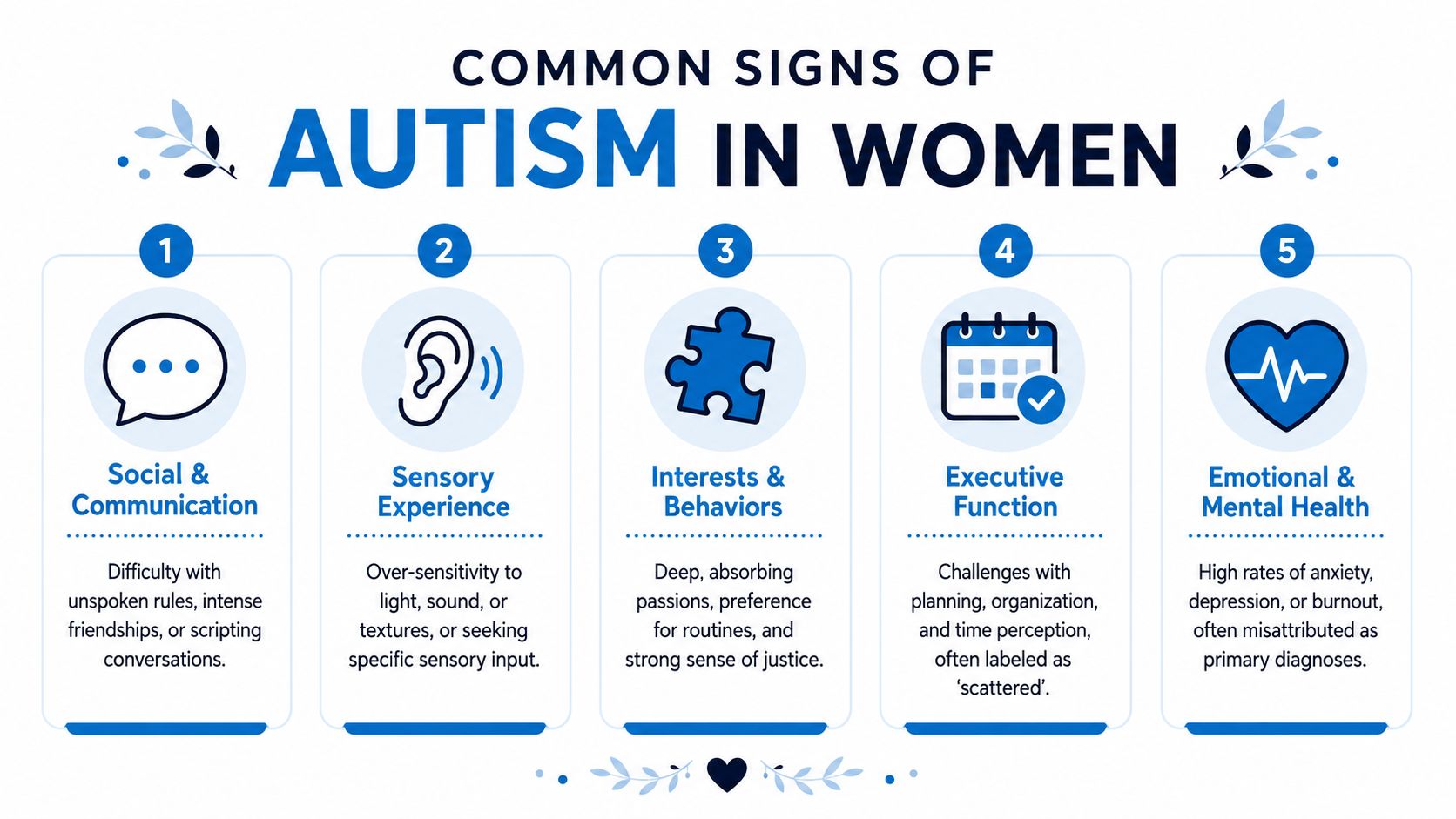
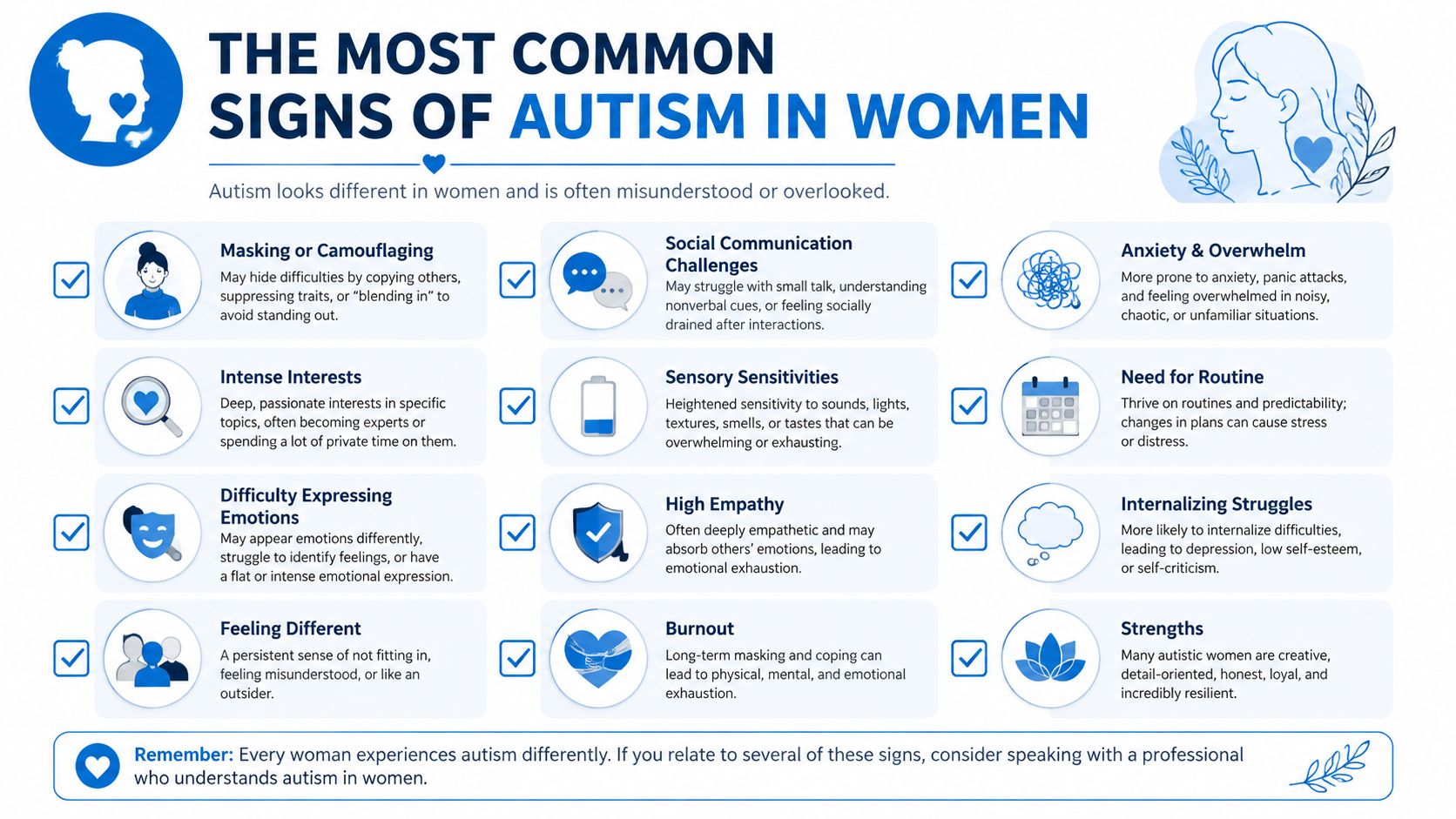
The Most Common Signs of Autism in Women
No single trait confirms autism. The more useful question is whether several patterns have been present across your life, whether they began early, and whether they create a meaningful gap between your abilities and your available energy.
Social communication differences
You might understand conversation better when the topic is clear than when it depends on hints or changing social rules. Small talk may feel like a performance, while deep discussion about a specific subject feels natural.
Possible signs include:
- Unstructured interaction: Group conversations, parties, networking, or workplace banter leave you unsure when to speak.
- Social recovery: You need solitude after contact, even with people you like.
- Friendship intensity: Relationships may become very close quickly, or feel difficult to maintain when expectations are unclear.
- Literal processing: Sarcasm, indirect requests, or mixed messages take extra effort.
- Parallel connection: You feel most comfortable sharing an activity without constant conversation.
Sensory processing differences
Autistic sensory experiences can involve both avoiding and seeking input. You may avoid fluorescent lights, crowded streets, certain fabrics, strong smells, or overlapping voices. You may also seek pressure, movement, particular sounds, repetitive textures, or intense exercise because they help your body feel organized.
Notice whether sensory demands affect your ability to work, sleep, eat, travel, or socialize. A restaurant can be emotionally comfortable but physically unbearable because of music, lighting, smells, and unpredictable movement.
Interests and routines
Special interests in women can look socially acceptable, which makes them easier to dismiss. The relevant feature is often the depth, persistence, emotional importance, and regulatory function of the interest, not whether the subject appears unusual.
Examples might include psychology, fantasy series, history, animals, design systems, languages, horse riding, or true crime. You may collect detailed knowledge, lose track of time, use the interest to recover from stress, and feel distressed when interruptions prevent engagement.
Executive function and transitions
Planning, time perception, prioritization, and switching between tasks can require more effort than others realize. You may succeed with a predictable schedule but become overwhelmed when plans change, instructions remain vague, or several demands arrive together.
Emotional overload can lead to shutdown rather than a visible outburst. You may stop speaking, withdraw, cry after holding everything together, or need to lie down before you can process what happened. These responses aren't character flaws, and they shouldn't be assessed without considering the context around them.
Emotional patterns and burnout
Many women describe intense empathy, strong reactions to injustice, and difficulty recovering from emotional experiences. Anxiety or depression may be genuine and important while still not explaining lifelong sensory, social, and flexibility differences.
If you're comparing these experiences with attention and organization difficulties, you can review the adult ADHD test resource as preparation for a broader professional conversation. Recognizing autism in women signs is not the same as self-diagnosis. It's a reason to gather history and seek an assessment that considers the whole pattern.
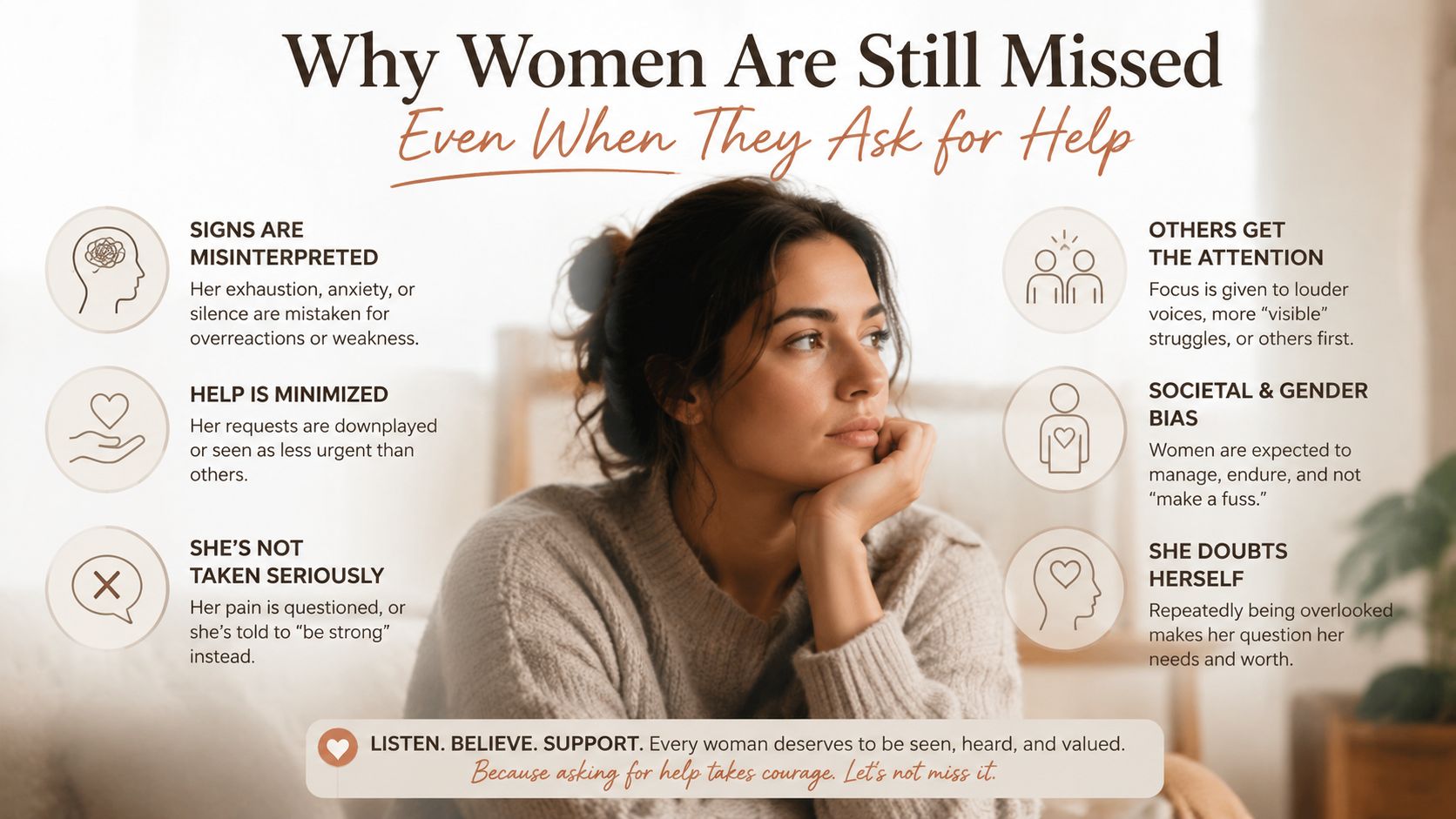
Why Women Are Still Missed Even When They Ask for Help
You may explain your distress clearly, seek help early, and still leave with treatment for anxiety, depression, obsessive-compulsive symptoms, eating difficulties, burnout, or relationship problems. Those concerns can be real and deserve support, yet nobody may ask whether autism helps explain the longer pattern.
Delayed recognition has several causes. Women may receive another diagnosis, or be told that their traits do not reach the expected threshold, before autism is considered. A 2025 analysis found that women took 2.3 years longer to suspect autism and 3 years longer to receive a correct diagnosis than men, as reported in this peer-reviewed analysis of diagnostic pathways. These figures describe a wider pattern, not a timetable that predicts what will happen in your case.
Why the misreading happens
Clinicians often begin with the problem causing the greatest immediate harm. Panic, low mood, insomnia, an eating disorder, or relationship distress may require attention first. A brief appointment may not leave enough room to ask whether related sensory, social, communication, or routine differences were present in childhood.
Presentation can also hide the effort involved. A woman who makes eye contact, gives detailed answers, and appears cooperative may look comfortable in an appointment. The clinical picture changes when you ask what it costs her to maintain that presentation, and whether she later needs hours of recovery. Research on adult diagnosis describes this gap between outward social functioning and daily exhaustion as relevant when autistic traits are less visible, as discussed in this adult diagnostic research review.
What you can do if the explanation never fits
A previous diagnosis does not become invalid when autism is considered later. Anxiety, depression, trauma, attention differences, and autism can exist together. The practical question is whether the current explanation accounts for your developmental history, sensory experience, communication style, routines, and recovery needs.
A second opinion or specialist adult assessment may be reasonable if:
- The treatment helped partly: Your mood improved, while sensory or social exhaustion remained.
- The pattern is lifelong: You can trace differences to childhood, even if adults called you quiet or mature.
- The labels feel incomplete: Each diagnosis explains one crisis but not the wider pattern.
- The cost is hidden: Others see competence, while you experience collapse at home.
This is not your fault, and it does not prove that a clinician acted carelessly. Assessment tools and assumptions have limits, particularly for women who have learned to camouflage. A multilingual setting such as Therapsy may make it easier to describe subtle experiences without translating emotional meaning into a second language, which can make the conversation feel safer and more accurate.
What an Adult Autism Assessment Looks Like in Italy
An adult autism assessment usually combines an interview, developmental history, standardized tools, clinical observation, and a feedback discussion. No single questionnaire should decide the outcome, especially when a woman has learned to camouflage.
The usual stages
- Initial clinical interview: You discuss current concerns, childhood patterns, relationships, school, work, sensory experiences, routines, and mental health.
- Screening questionnaires: A clinician may use tools such as the Autism Quotient, RAADS-R, or other validated measures to identify areas requiring closer exploration.
- Structured observation: Some assessments include the ADOS-2. It can provide useful information, but the clinician should interpret it alongside your history and not as an isolated verdict.
- Developmental information: Old school reports, family memories, childhood behavior, play patterns, friendships, and early sensitivities can add context.
- Psychodiagnostic assessment: Several sessions may be used to examine autism alongside attention differences, anxiety, trauma, mood, and other relevant concerns.
- Feedback and report: A good clinician explains the reasoning, describes strengths and support needs, and gives you time to ask questions.
Before booking, it helps to understand the difference between a psychologist and a psychiatrist through this practical guide to psychologist versus psychiatrist. Assessment and treatment are related but aren't identical, and some people need psychological support, psychiatric consultation, or both.
Costs and practical preparation
At Therapsy, a psychodiagnostic assessment starts from €255 across three sessions, while individual therapy starts from €70 per session. These are starting prices rather than fixed fees, and the final cost depends on the professional and the service selected.
Prepare a short personal record:
- Childhood examples: Solitary play, intense interests, sensory dislikes, difficulty with change, or feeling socially different.
- Current patterns: What happens before and after work, travel, parties, conflict, or appointments.
- Relationships: Repeated misunderstandings, intense attachment, boundaries, or exhaustion from maintaining contact.
- Sensory needs: Light, sound, touch, clothing, food texture, smells, and crowded environments.
- Previous care: Diagnoses, therapies, medications, and what improved or remained unresolved.
Online assessment may be useful for expats living outside major cities, although suitability depends on the clinician, the purpose of the assessment, and local requirements. Ask what the process includes before you begin.
Coping Strategies and Therapeutic Supports That Actually Help
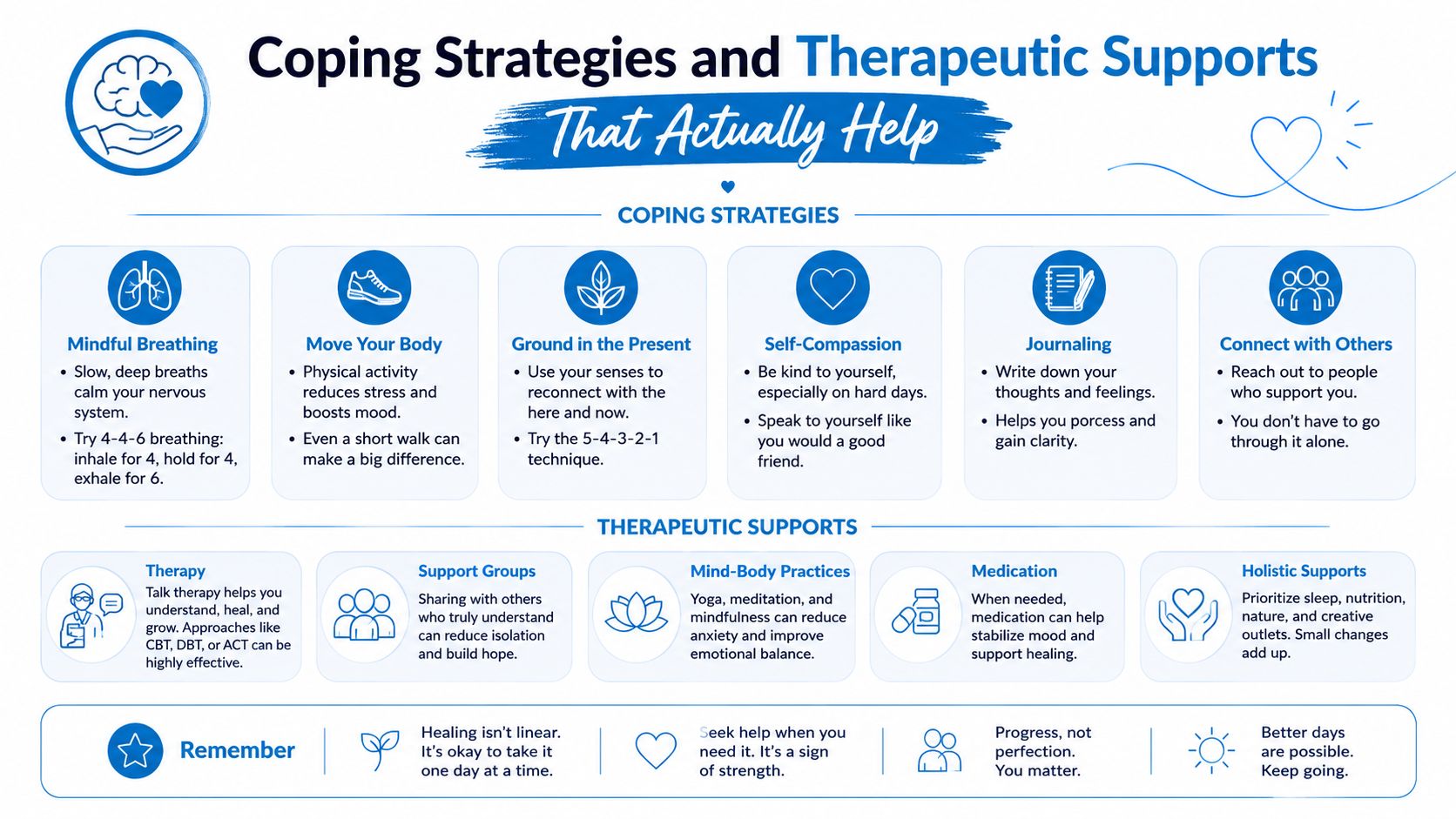
Support should reduce unnecessary strain, not teach you to perform harder. Unmasking usually happens gradually, through small experiments that show you which environments, relationships, and routines allow more genuine recovery.
Start with practical changes that don't require a diagnosis:
- Protect recovery time: Place quiet periods after demanding social or professional events.
- Build a sensory kit: Keep headphones, comfortable clothing, sunglasses, a familiar snack, or a regulating object available.
- Identify one safe person: Tell someone you trust when you need direct language, reduced stimulation, or time without conversation.
- Make transitions visible: Use written plans, warnings before changes, and clear next actions.
- Respect focused interests: An absorbing interest can provide pleasure, regulation, identity, and connection. It doesn't need an apology.
A simple log can help you see patterns without turning your life into a performance review. Record the setting, sensory demands, social demands, energy before and after, and what helped.
How therapy can support late-identified women
Therapy doesn't cure autism. It can help you understand your nervous system, recover from chronic masking, communicate needs, process grief, and choose strategies that fit your actual life.
Different approaches may serve different goals:
- CBT: Helps with anxiety, rigid self-criticism, catastrophic thinking, and practical problem-solving. It should be adapted so it doesn't push you toward more masking.
- EMDR: May support trauma processing, including experiences of bullying, coercion, invalidation, or crisis. It can also help with grief connected to late recognition.
- Schema Therapy: Explores longstanding beliefs such as “I'm defective,” “I must meet impossible standards,” or “other people's needs come first.”
- Humanistic therapy: Creates space for identity, self-acceptance, emotional language, and values.
- Ethnopsychotherapy: Considers culture, migration, language, family expectations, and the meaning of distress in your community.
Therapsy offers psychotherapy in 14 languages, including Italian, English, French, Spanish, German, Portuguese, Ukrainian, Russian, Greek, Arabic, Urdu, Hebrew, Hindi, and Persian (Farsi). Its professionals provide online and in-person sessions across 24 Italian cities, which can make support more accessible when discussing autism, burnout, or identity in your strongest language.
If you're ready to talk, you can request a free first assessment call with the Clinical Director, with no payment or commitment. The purpose is to listen to your concerns and consider what kind of professional support may fit.
For readers who want more targeted support with overwhelm and physiological stress, nervous system regulation therapy can be a useful starting point for discussing sensory load, recovery, and emotional shutdown.
Recognising yourself in these patterns is usually where the work starts, not where it ends. Therapsy offers autism-affirming support online in English and Persian, including clinical assessment when a formal picture would help.
Next Steps, Trusted Resources, and Common Questions
If you have spent years succeeding at work while feeling depleted by ordinary social demands, your next step can be small. You do not need to settle the diagnostic question today.
- Notice patterns: Look for themes that reach back to childhood, rather than isolated traits.
- Track your experience: Record demands, energy costs, sensory triggers, shutdowns, and recovery time.
- Choose carefully: Seek a clinician who assesses adults and understands camouflaging in women.
- Ask directly: Explain that you want autism considered alongside anxiety, depression, attention differences, or trauma.
- Move slowly: Assessment may bring relief, grief, confusion, or several of these feelings together.
Background information from autism organizations and peer-reviewed research indexed on PubMed can help you prepare. Their guidance may not describe every Italian service pathway, so use it to form questions rather than replace local professional advice.
Therapsy supports expats and international adults in Italy through online and in-person psychotherapy in 14 languages, with sessions available across 24 cities and 90+ physical locations. The Clinical Director matches clients with professionals rather than relying on automated questionnaires. The first assessment call is free and carries no commitment. Discussing autism, burnout, or identity in your strongest language may make the conversation feel safer and clearer.
Frequently asked questions about autism in women signs
Does Therapsy assess autism in adults?
Yes. The psychodiagnostic assessment covers autism in adults as well as ADHD: three sessions, online or in person, with a psychologist registered with the Italian Ordine degli Psicologi, ending with a written clinical report. It is a clinical report, not a certificate from a publicly accredited centre.
What are the most common autism in women signs?
Common signs include social camouflaging, sensory differences, intense interests, difficulty with transitions, and exhaustion after social interaction.
These traits may be difficult to notice in a woman with strong language skills or well-practised social scripts. The useful question is whether a consistent pattern appears across childhood and adulthood, not whether one experience seems familiar.
Can a woman be autistic if she has friends and a successful career?
Yes. Friendships and professional success do not rule out autism.
Some women maintain these roles through extensive preparation, observation, imitation, and recovery afterward. Consider the effort required, the level of distress involved, and what happens once the social or professional demand ends.
Why is autism diagnosed later in women?
Camouflaging and socially accepted interests can make autistic differences less visible during standard screening and brief clinical observation. A woman may appear socially capable while privately relying on scripts and experiencing significant exhaustion.
Girls are also reported to receive diagnoses about 0.8 to 1 year later on average than boys, according to evidence summarized earlier by Autism Speaks. A careful clinician examines developmental history, not only current presentation.
Can anxiety or depression be mistaken for autism?
Anxiety and depression can overlap with autism, or become the main explanation when autistic traits remain unrecognized.
Assessment should examine when difficulties began, how sensory and social differences appear, and whether mood treatment addressed the whole pattern. Therapy can also help an expat discuss these overlapping concerns in her preferred language while the diagnostic question remains open.
How do I get an adult autism assessment in Italy?
Contact a qualified psychologist or psychiatrist who assesses adults and understands camouflaging in women.
Ask about training, assessment tools, developmental-history questions, written feedback, fees, and whether online sessions are suitable. Therapsy offers a free initial conversation to help identify an appropriate next step.
Is masking linked to burnout?
Yes. Masking is associated with anxiety, depression, stress, and autistic burnout.
Burnout may involve reduced energy, greater sensory sensitivity, shutdown, and difficulty with tasks that once felt manageable. Helpful support reduces unnecessary demands and protects recovery time, rather than teaching you to hide more effectively.
Who works with autism in adults at Therapsy
Reaching this question late, after years of being told you were careless or too sensitive, is common. These are the clinicians who work on it, in English.
Dr. Matilde Gargani collaborates with specialised centres for autism spectrum evaluations and supports neurodivergent adults in understanding their own functioning and recognising their strengths, rather than listing what they fail to do.
Dr. Silvia Cau is a Board Certified Behavior Analyst and works with an explicitly neurodiversity-affirming approach: the aim is to find the conditions in which a mind functions well, not to make it pass as typical. She is also LGBTQIA+ affirming.
Dr. Jasper Gardner-Medwin works with autism, ADHD and specific learning differences across every age group, from children to adults, in Bologna and online.
You do not have to work out who fits on your own. You tell Therapsy what you are looking for, a member of our clinical team reads your request, and they introduce you. The first call is free.
Do I need a diagnosis before starting therapy?
No. You can begin therapy while exploring whether autism explains your experience.
Therapy can address anxiety, burnout, trauma, identity, relationships, and self-trust without deciding the diagnostic question immediately. Therapsy's free assessment call offers a low-pressure way to describe what you are experiencing and discuss suitable support.
Therapsy provides human-matched online and in-person psychotherapy in Italy, with therapists who speak 14 languages and work with expats exploring autism-related questions, masking, burnout, and identity. When you are ready, you can book a free first assessment call, with no commitment, through Therapsy.