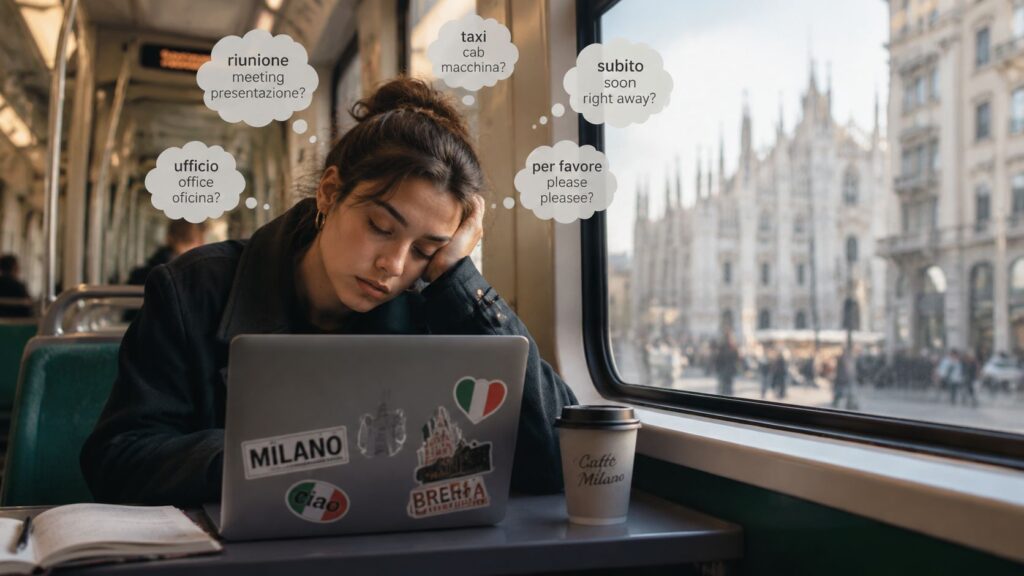
Homesickness as an American in Italy: The Unspoken Truth
Homesickness is a profound psychological response to change, especially for Americans moving to Italy. It represents the often jarring gap between the romanticized dream of la dolce vita and the day-to-day reality of expat life, leading to feelings of isolation and being misunderstood. Dealing with homesickness as an American in Italy is a common but frequently unspoken challenge that many face when relocating.
Homesickness is not a weakness; it is a legitimate and predictable reaction to losing the familiar cultural scaffolding that holds your life together. It is a form of grief for a life, an identity, and a community left behind.
As the Clinical Director at Therapsy, a multilingual psychotherapy service for expats in Italy, I, Dr. Francesca Adriana Boccalari, have guided hundreds of American clients through this challenging transition. Understanding the psychological underpinnings of homesickness is the first step toward transforming this painful experience into an opportunity for profound personal growth.
The Reality of Homesickness for Americans in Italy
For many Americans, a move to Italy feels like the ultimate life goal. But the homesickness an American in Italy experiences is a significant and often unspoken reality. At Therapsy, we see this pattern every single day.
The following table breaks down this contrast, showing how the idealized Italian dream often clashes with the practical and psychological challenges that trigger homesickness.
American in Italy: The Dream vs The Reality
| The Expectation (La Dolce Vita Dream) | The Reality (Culture Shock Triggers) |
|---|---|
| Effortless socializing in charming cafes. | Deep feelings of loneliness and difficulty breaking into established Italian social circles. |
| A romantic, slower pace of life. | Frustration with navigating complex and slow-moving bureaucracy (the questura, the Agenzia delle Entrate). |
| Seamlessly picking up the beautiful Italian language. | Language fatigue and the stress of not being able to express complex emotions or needs. |
| Feeling a deep sense of belonging in a vibrant culture. | A persistent feeling of being an outsider, misunderstood, or "out of sync" with social norms. |
| A glamorous adventure filled with travel and beauty. | The emotional weight of being far from your support system of family and friends back home. |
As you can see, the romantic image of life in Italy often doesn't account for the daily friction that wears down an expat's emotional resilience.
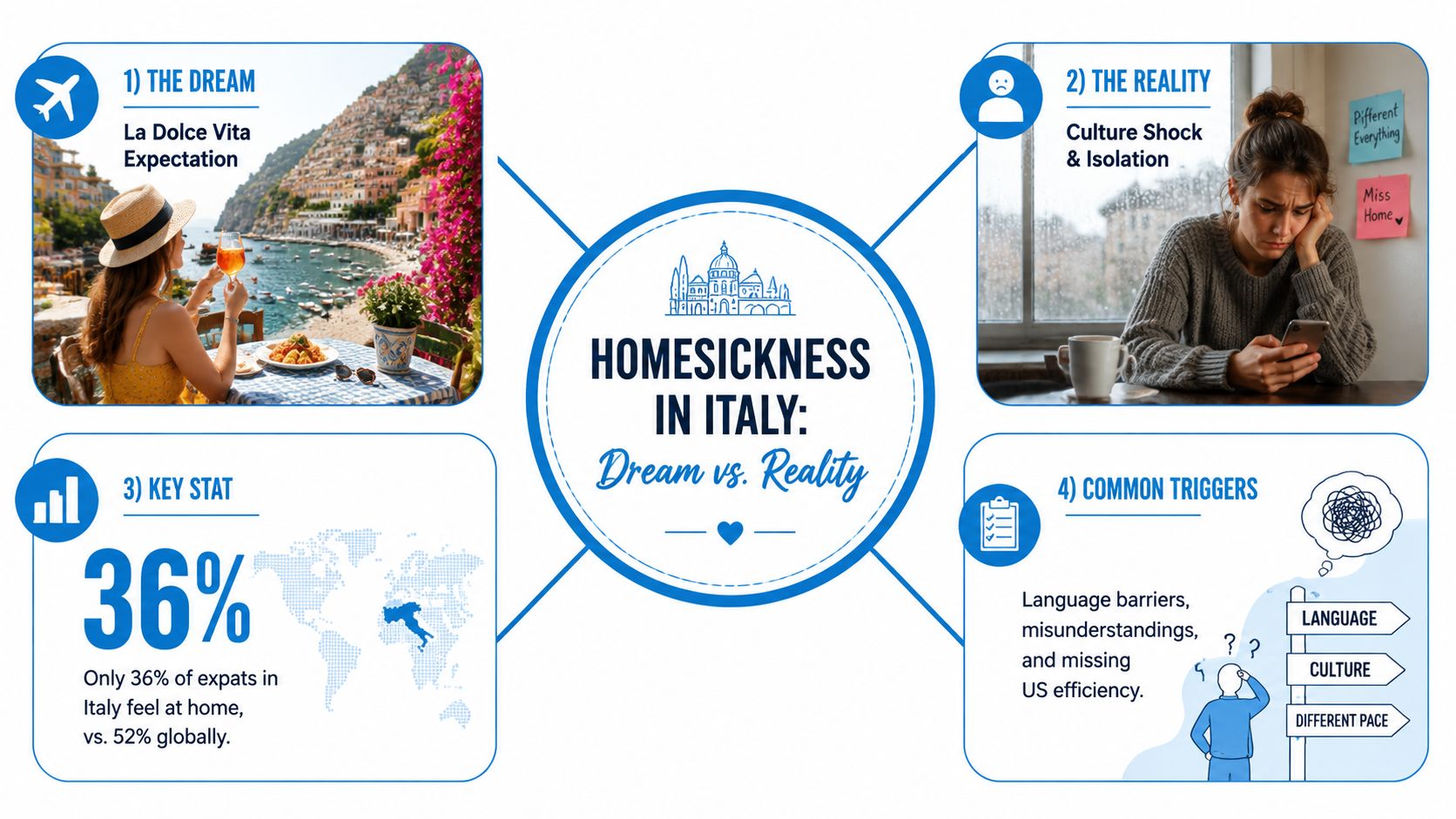
Why It Hits American Women and Young Professionals Hardest
At Therapsy, we’ve supported over 1,500 clients since 2023. For American women and young professionals who move for work, relationships, or to study, the challenges are particularly sharp.
Homesickness is often a form of grief for a life left behind. It’s the loss of spontaneous conversations, effortless social navigation, and the comfort of being implicitly understood.
Daily friction points – from deciphering indirect communication styles to dealing with endless paperwork – can build up and trigger symptoms that feel a lot like grief:
- A constant, low-level anxiety and irritability
- Lingering self-doubt and a profound sense of loneliness
- The feeling of being perpetually out of sync with everyone around you
These feelings aren't a sign that you've failed. They are a normal response to the immense stress of adapting to a new world. Acknowledging this is the first real step toward finding your footing. With the right support, you can turn this incredibly challenging period into an opportunity for deep personal growth.
Why Italy Can Feel Uniquely Challenging for Americans
The romantic idea of Italy – the sun, the food, the art – often runs headfirst into the day-to-day reality of living here. This collision can create a special kind of friction for Americans, fuelling a deep sense of homesickness. From my experience as a psychotherapist working with expats, I can tell you this isn't a personal failure; it’s a predictable and understandable clash of cultures.
What you might see as frustrating inefficiency or a lack of urgency is, most of the time, just a different philosophy of life playing out in real-time.

The Clash of Cultural Rhythms
Life in the United States is often organised around a "get-it-done" mentality. We value efficiency, directness, and punctuality. Italy, on the other hand, frequently moves to the rhythm of piano, piano (slowly, slowly), placing a higher premium on relationships and flexibility than on rigid schedules.
This isn't just a stereotype; it’s a recognised concept in intercultural psychology known as monochronic versus polychronic time.
Americans tend to be monochronic, treating time as a limited resource to be managed one task at a time. Italian culture is more polychronic, viewing time as fluid and adaptable, where multiple conversations and activities can happen at once.
This fundamental difference creates a constant, low-grade stress. For an American wired for speed, waiting in a seemingly disorganised queue at the post office, dealing with unpredictable shop hours, or navigating a long, meandering chat before getting to the point can be maddening. This chronic friction slowly chips away at your emotional reserves, making you far more vulnerable to feeling isolated and overwhelmed.
Navigating Bureaucracy and Indirect Communication
Italian bureaucracy is legendary for a reason. For an American used to streamlined digital forms and clear instructions, it can feel like a personal test of endurance. Every interaction, from getting your residency permit (permesso di soggiorno) to opening a bank account, can feel like an uphill battle against an illogical system.
It gets even trickier when you factor in communication styles. Americans generally prefer direct, "say what you mean" communication. Italians, however, often communicate more indirectly, relying on context, tone of voice, and what is left unsaid. An answer that an American might hear as vague or non-committal is often just a culturally nuanced way of being polite or avoiding direct confrontation. You can learn more about how to navigate these moments by understanding the realities of culture shock in Italy.
This constant need to "read between the lines" is mentally exhausting. But having that 'aha' moment – realising these challenges are products of deep cultural differences, not a personal flaw – is a game-changer for many expats. It reframes the frustration from a personal struggle to a predictable part of the adaptation process, which is the first step toward learning and, eventually, finding your footing.
Differentiating Homesickness from Clinical Depression
Living as an American in Italy can feel like an emotional rollercoaster. One day you’re in awe of the beauty, the next you’re hit with a wave of sadness for everything you left behind. It’s a completely normal part of the expat journey.
But when that sadness lingers, it can be hard to tell what’s what. Are you just homesick? Or is it something more serious, like clinical depression? Knowing the difference is key to getting the right kind of support.
Homesickness is a very specific kind of grief. It’s an intense ache for the familiar – your people, your places, the easy rhythm of your old life. These feelings often come and go. A great conversation in your broken Italian or discovering the perfect corner cafe can lift your spirits, even if just for a little while. The pain is tied directly to what you’re missing.
Depression, on the other hand, isn’t so specific. It’s a heavy fog that can settle over everything, dulling the colours of your new Italian life and your memories of home. It’s marked by a persistent lack of interest or pleasure in things you used to love, not just a longing for what’s far away.
Key Signs to Watch For
Both can leave you feeling sad and drained, but the real difference is in their scope. Here’s a simple way to think about it:
- Homesickness: You feel a sharp pang of sadness when you think about home, but you can still find moments of joy and excitement in Italy. The low mood is usually triggered by something specific – missing a family holiday, hearing a familiar song, or just craving a certain food.
- Depression: You feel a constant sense of emptiness or numbness that just won’t lift, no matter what you do. You lose interest in your hobbies, in socialising, and even in exploring the very country you moved for.
Homesickness says, "I wish I were there." Depression often says, "I wish I weren't anywhere." This shift in feeling is a critical signal that you might need more than just time to adjust.
When Nostalgia Becomes a Clinical Concern
Sometimes, prolonged homesickness can slide into depression, or even mask it. The non-stop stress of adapting to a new culture slowly wears down your emotional reserves, leaving you more vulnerable. At Therapsy, we see this often with our American clients. A young professional in Milan might blame her low energy, poor sleep, and social withdrawal on just missing home.
But when those symptoms dig in for weeks and are joined by feelings of worthlessness or a bleak view of the future, it’s a clear sign of something more. If you’re struggling, it’s vital to get a clearer picture of what you're up against; our guide on how to deal with depression can help you find some clarity.
Asking for help isn’t a sign you’ve failed at the expat life. It’s a brave and proactive step toward taking care of yourself.
Practical Strategies to Feel More at Home in Italy
Knowing why you feel homesick is one thing. But figuring out what to actually do about it is what helps you build a life in Italy that feels like your own. Getting through those first waves of isolation takes a real, conscious effort to build new routines and connections from the ground up.
It’s all about striking a balance – holding space for what you miss about home while making room for what your new life in Italy has to offer.

Create Hybrid Routines
One of the best ways to feel grounded again is to create routines that mix the best of both worlds. You don’t have to give up all your American habits. The trick is to adapt them to your Italian surroundings.
- Morning Ritual: If you’re used to a morning run, keep it. But afterwards, stop by your local bar for a proper Italian espresso. This simple act combines a familiar comfort with a classic Italian daily ritual.
- Weekend Habits: Do you miss your weekend grocery run to Whole Foods? Try exploring your neighbourhood’s outdoor market on a Saturday morning. You’ll find incredible produce and start building a friendly rapport with the local vendors.
- Evening Wind-Down: Miss vegging out with Netflix on the couch? Go for it. Just maybe pair it with a glass of local wine you picked up from that market.
This “hybrid” method brings a sense of stability and predictability back into your life, which is a powerful antidote to the daily chaos of culture shock.
Find Your "Third Place"
Sociologists use the term “third place” to describe a spot outside of your home (the first place) and work (the second place) where you can relax and feel part of a community. For an American in Italy, finding one of these is absolutely crucial for pushing back against loneliness.
Your third place is your anchor in the community. It’s where you shift from being an anonymous foreigner to a familiar face – a regular. That transition is a huge psychological step toward feeling like you truly belong.
This could be a café where the barista starts to remember your order, a local library, a yoga studio, or even just a specific bench in your favourite piazza. Making a conscious effort to show up at the same places helps you form those casual, friendly connections that make a new city finally start to feel like home.
Embrace Imperfect Language Learning
The pressure to speak flawless Italian can be completely paralysing. It’s time to reframe your goal: you’re not aiming for perfection, you’re aiming for connection.
Learning just enough Italian to handle your day – ordering coffee, buying a train ticket, saying hello to your neighbours – is a massive win. Most Italians genuinely appreciate the effort.
Each small victory in Italian builds your confidence and helps you integrate more deeply into daily life. For a more structured plan to get ahead of these challenges, our mental health checklist for moving to Italy can be a great resource.
How Professional Support Can Help You Thrive in Italy
While building new routines and social circles can make a huge difference, sometimes self-help isn't enough to quiet the ache of homesickness. When the sadness or isolation starts to feel bigger than you are, seeking professional support is a powerful, proactive step toward building a truly fulfilling life in Italy.
Therapy isn't about "fixing" something broken. It's about giving yourself a dedicated, confidential space to make sense of the monumental changes you're navigating. As Clinical Director at Therapsy, I, Dr. Francesca Adriana Boccalari, have seen firsthand how the right therapy can make a significant difference for Americans struggling to adapt.
Evidence-Based Tools for Your New Life
Therapy offers much more than just a listening ear. Our team of over 50 licensed therapists uses evidence-based approaches to give you concrete tools for managing homesickness and building resilience.
- Cognitive Behavioral Therapy (CBT): This approach is incredibly practical. CBT helps you catch and reframe the negative thought patterns that fuel homesickness. For example, we can work together to challenge an overwhelming thought like, "I'll never fit in here," and gently replace it with more balanced, constructive perspectives.
- EMDR (Eye Movement Desensitization and Reprocessing): For some, homesickness can feel like a deep sense of grief or even a small trauma, representing the loss of identity and community. EMDR can be incredibly effective in processing these deeper, more painful emotions, helping to reduce their intensity and untangle them from your present experience.

Why a Specialist for Expats Matters
Talking to friends and family back home is vital, but a therapist who understands the specific context of being an American in Italy offers a unique advantage. They get the nuances without you having to explain everything from scratch.
Therapy for expats is not just about mental health; it's about cultural translation. It bridges the gap between your inner world and your new outer world, helping you make sense of the friction and find your place.
At Therapsy, this is our specialty. Our 50+ multilingual therapists offer support in English, Italian, and 12 other languages. They understand the specific cultural clashes and bureaucratic headaches you're facing. We offer flexible sessions both online and in-person across 24 Italian cities, including Milan and Rome, ensuring support is always within reach.
For a deeper dive into this specialized care, you can explore our guide on finding an American therapist in Italy.
Reaching out for therapy isn't an admission of failure. It's an investment in your own wellbeing and a sign that you are committed to not just surviving, but thriving, in your new Italian life. The process begins with a simple conversation.
Book your first free assessment call – no commitment, just a conversation with our Clinical Director who will listen and match you with the right therapist for you. Visit therapsy.it.
FAQ
How Long Does Homesickness in Italy Usually Last for Americans?
There is no universal timeline for homesickness. It often comes in waves and gradually lessens as you build new routines, improve your language skills, and form meaningful connections in Italy. Many expats report feeling more settled after the first year, but the process is unique for everyone.
Is Therapy Worth It If I Can Talk to Friends Back Home?
Yes, because therapy offers a different kind of support that complements conversations with friends. A therapist provides an objective, confidential space and uses evidence-based strategies specifically designed to address the challenges of expat life. At Therapsy, our specialists in intercultural psychology offer tools to navigate culture shock and identity shifts, going beyond the emotional support friends can provide.
What Does Therapy for Homesickness Actually Involve?
Therapy for homesickness focuses on building resilience and a sense of belonging in your new environment. A therapist might use an approach like Cognitive Behavioral Therapy (CBT) to help you challenge and reframe the negative thoughts that intensify feelings of isolation and sadness. The goal is to equip you with practical tools to manage culture shock, process your emotions, and actively create a fulfilling life in Italy.
How Can I Cope with Missing American Things in Italy?
Coping with missing American comforts involves finding a healthy balance between home and your new life. It's perfectly fine to schedule video calls with family, cook familiar meals, and connect with fellow American expats. The most effective strategy combines these comforting activities with active engagement in Italian culture, such as exploring local markets, practicing your Italian, or joining community groups to foster both integration and connection.
Book your first free assessment call – no commitment, just a conversation with our Clinical Director who will listen and match you with the right therapist for you. Visit therapsy.it.