Find Your Trauma Therapist English Speaking in Italy: A Guide for Expats in 2026
A trauma therapist English speaking in Italy is a licensed mental health professional who specializes in treating trauma and is fluent in English, making them accessible to the international community living in Italy. They are trained in evidence-based therapeutic approaches like EMDR and CBT, and understand the unique psychological pressures that come with being an expat. The primary goal is to provide a safe, linguistically and culturally sensitive space for healing. The search for this type of specialist often begins when the stress of relocation, culture shock, or isolation becomes overwhelming.
Many expats don’t realize these experiences can be genuinely traumatic until the weight becomes too much to carry alone. It’s a crucial first step to acknowledge that what you’re feeling is valid and that expert help is available.
The Unique Psychological Pressures of Expat Life in Italy
Living abroad, especially in a place as layered and complex as Italy, is more than just a change of scenery. It’s a profound life event. While often painted as a romantic escape, the day-to-day reality can bring a set of unique stressors that accumulate, leading to real psychological distress. These aren’t just minor hurdles; they are deep shifts that can rock your sense of self and safety.

Experiences that might not seem like “classic” trauma can still have a traumatic impact. In my clinical experience, these are the most common triggers I see among expats seeking support:
- Chronic Culture Shock: This is the constant, nagging feeling of being an outsider. You struggle with unspoken social rules and a persistent sense of not belonging, which slowly eats away at your confidence and creates a baseline of anxiety.
- Language Barriers: Not being able to express your needs, navigate simple bureaucracy, or even just have a deep conversation can be intensely frustrating. This experience can leave you feeling powerless and isolated.
- Social and Professional Isolation: Losing your support network from back home is hard enough. When you also struggle to build new, meaningful connections or face a career setback, that loneliness can feel all-consuming.
These pressures often lead to a quiet ‘aha’ moment – a realization that the constant stress has morphed into something bigger. That’s the moment when finding a specialist becomes so important.
Recognizing Trauma Symptoms as an Expat
Trauma doesn’t always look like a single, dramatic event. For expats, it often manifests as a slow burn of chronic stress and emotional dislocation. The symptoms can be subtle and easily mistaken for “just having a hard time adjusting.” This is a critical insight from cross-cultural psychology.
As a psychotherapist specializing in the expat experience, I’ve seen countless individuals whose initial excitement for life in Italy has turned into a quiet struggle. They often feel guilty for not being happy, but what they’re experiencing is a valid, often traumatic, response to profound life changes. Recognizing this is the first step toward healing.
The following are common ways trauma can show up in an expat context:
Emotional & Psychological Symptoms
- Persistent anxiety or irritability
- Feeling emotionally numb or disconnected
- Sudden bouts of sadness or anger
- Feeling guilty for not being “happy” in Italy
Behavioural Symptoms
- Social withdrawal and avoiding contact
- Increased reliance on alcohol or other substances
- Procrastination with essential tasks (like visa renewals)
- Losing interest in hobbies you once loved
Physical & Somatic Symptoms
- Chronic fatigue or exhaustion that sleep doesn’t fix
- Unexplained headaches, stomach issues, or body aches
- Feeling constantly on edge or jumpy (hypervigilance)
Cognitive Symptoms
- Difficulty concentrating or making decisions
- Negative, intrusive thoughts about your move or future
- A persistent feeling of hopelessness or powerlessness
Recognizing these patterns in yourself is not a sign of failure; it’s a sign of self-awareness. It’s the first step toward getting the right kind of support to process these experiences and find your footing again. The challenge is that while Italy has many qualified psychotherapists, relatively few are both fluent in English and trained in trauma-focused approaches like EMDR. This is the gap Therapsy exists to fill.
Why Healing from Trauma Demands Your Native Language
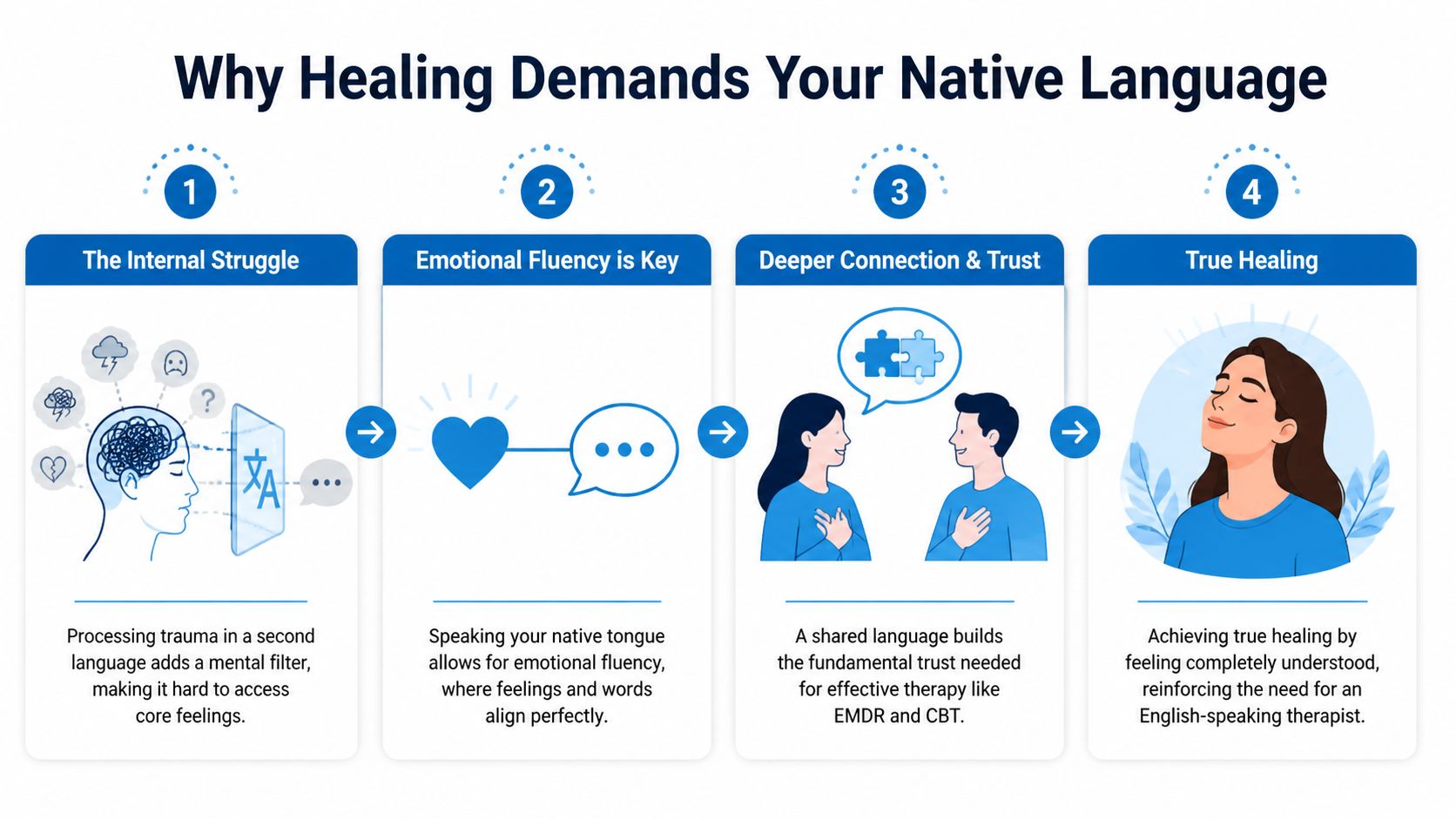
When you’re dealing with something as raw and personal as trauma, the language you use isn’t just a detail – it’s everything. Trying to unpack painful memories or give voice to complex feelings in a second language puts a heavy filter between you and your own experience. It’s like trying to describe the color of a feeling through a black-and-white screen.
This extra mental step of translating can make it incredibly difficult to reach the core emotions tied to what happened. We call this ’emotional fluency’– the ability to connect what you feel with the words you use, without having to think about grammar or vocabulary. For proven, evidence-based treatments like EMDR and CBT, this fluency is not just helpful, it’s essential. These therapies depend on your ability to describe thoughts, bodily sensations, and fragmented memories with precision. If you’re constantly searching for the right word, the whole process can slow down, or worse, get stuck on the surface.
As an EMDR therapist, I know that healing from trauma is a delicate process that requires the patient to access fragmented memories and feelings. Forcing them to do this in a non-native language is like asking someone to describe a vivid dream while solving a math problem. It divides their focus and prevents deep processing.
The Power of Being Truly Understood
Real healing can only happen when you feel fundamentally safe and truly heard by your therapist. When you share a native language, you build an immediate bridge of trust. It removes a massive barrier to being vulnerable. You can just talk, knowing that the subtle meanings, the cultural shorthand, and the emotional weight behind your words will be received exactly as you mean them.
For any English speaker looking for a trauma therapist in Italy, finding someone you can speak with in your mother tongue isn’t a luxury. It’s a basic requirement for the therapy to actually work. You can read more about the impact of a shared language in our guide to multilingual psychotherapy for expats in Italy.
How to Find a Qualified Therapist You Can Trust
Finding the right support for trauma while you’re also navigating a foreign healthcare system can feel overwhelming. The key is to turn a daunting search into a manageable process by knowing where to look and, more importantly, what to ask. Going beyond generic online directories to find a genuinely qualified trauma therapist English speaking in Italy is the first critical step toward effective healing.
First, you need to understand the local professional landscape. In Italy, it’s vital to know the difference between a ‘psicologo’ (psychologist) and a ‘psicoterapeuta’ (psychotherapist). While both are university-trained, only a psychotherapist has completed an additional four years of specialized postgraduate training. This makes them legally qualified to provide psychotherapy, and for something as serious as trauma, this distinction is non-negotiable.
Vetting Potential Therapists and Their Qualifications
Once you have a list of potential therapists, the real work begins. This isn’t just about checking a box on their credentials; it’s about making sure their specific expertise matches your needs as an expat dealing with trauma. A therapist’s experience with the unique stressors of intercultural life is just as important as their clinical certifications.
An initial consultation call is your chance to ask direct questions. A good, confident therapist will welcome them.
- Experience with Expats: “What’s your experience working with expats or people who’ve relocated to Italy?”
- Trauma Specialization: “Are you certified in evidence-based trauma therapies like EMDR or Schema Therapy?”
- Cultural Sensitivity: “How do you approach cultural differences in the therapy room?”
- Language Nuance: “How comfortable are you discussing complex emotional topics in English?”
Your initial consultation call is a two-way interview. You are assessing whether the therapist is a good fit for you, just as they are assessing how they can help. Trust your gut; the connection you feel is a vital part of what makes therapy work.
Finding the right professional on your own can be hard, which is why services that pre-vet and match therapists for you can be such a relief. For a deeper dive into this process, check out our guide on finding the right therapist for expats in Italy. This search isn’t just about finding any therapist – it’s about finding your therapist.
Online vs. In-Person Therapy: Which is Right for You?
One of the biggest questions for expats starting their search for a trauma therapist in Italy is whether to meet online or in person. There’s no single “right” answer. The best format is the one that allows you to feel the most stable and safe, and that depends entirely on your personal situation, where you live, and the kind of therapeutic work you’ll be doing.
For some people, especially when diving into intensive work like EMDR (Eye Movement Desensitization and Reprocessing), being in a physical therapy room feels more containing. A dedicated, neutral space away from home can create the psychological boundary needed to process difficult memories without interruption. This can be particularly true if your living situation in Italy is temporary, shared with others, or simply lacks the privacy you need to feel fully at ease.

The Unmatched Accessibility of Online Therapy
That said, online therapy has been a game-changer for expats needing specialized care. If you live outside a major hub like Milan or Rome, finding a qualified, English-speaking trauma specialist in your local area can feel almost impossible. Online sessions break down those geographical walls completely.
The flexibility is undeniable:
- Unprecedented Access: You can connect with the right specialist for your needs, not just the one who happens to be closest.
- Scheduling Flexibility: Sessions can fit more easily around work, study, or family life, without having to factor in travel time to and from an office.
- Continuity of Care: If you move to another city in Italy – or even another country – your therapeutic relationship can continue without interruption. For long-term healing, that consistency is invaluable.
The most important factor is the therapeutic relationship, not the medium. A strong, trusting connection with your therapist is the foundation of healing, whether you are in the same room or connecting through a screen. Focus on the quality of the match.
Ultimately, the choice is deeply personal. Therapsy offers both options to provide maximum flexibility. We provide in-person sessions in 24 Italian cities at 90 physical locations, alongside secure online sessions accessible from anywhere. This hybrid model ensures you can find the support that truly fits your life. Learn more about our approach to online therapy in English in Italy.
What Your First Sessions Will Actually Feel Like
Walking into therapy for the first time, especially to talk about trauma, can feel incredibly intimidating. Many people I’ve worked with have the same fear: that they’ll be pushed to relive their most painful memories right away. Let’s be clear: this is a huge misconception.
Your first sessions with a good trauma therapist are not about excavating the past. They are about building safety in the present so you have a solid place to stand for the future. The initial phase of therapy is all about one thing: creating a strong, trusting relationship between you and your therapist. This is what we call the therapeutic alliance, and it’s the foundation for any real healing. Your therapist’s main goal is to create a space where you feel seen, heard, and – above all – safe.
Building a Foundation Before You Build the House
A skilled trauma therapist will never ask you to explore fragile or difficult memories before you have the tools to handle them. Before any deep work begins, the focus is on building your resources. Think of it as co-creating a personalized toolkit for emotional regulation. The whole point is to make sure you have solid skills to manage difficult feelings when they show up, both inside and outside of your sessions.
This foundational work often involves:
- Grounding Techniques: Learning simple, body-based exercises that pull you back into the present moment when you start to feel overwhelmed. They are small anchors for the here-and-now.
- Psychoeducation: Finally understanding how trauma affects the brain and nervous system. Just knowing why you feel the way you do can be incredibly empowering and helps dial down the self-blame.
- Establishing a “Safe Place”: In trauma-focused approaches like EMDR, you’ll work with your therapist to create a detailed, calming internal sanctuary. It’s a mental space you can access anytime you need to feel secure.
Therapy is a collaboration, not an interrogation. You are always in the driver’s seat when it comes to the pace. The early stages of trauma therapy are about carefully constructing a stable platform. It’s about building strength, not forcing confrontation with the past.
What to Expect in Early EMDR or Schema Therapy
In specific modalities like EMDR (Eye Movement Desensitization and Reprocessing) or Schema Therapy, the first sessions are structured, gentle, and all about preparation. Your therapist will spend time carefully gathering your history, getting a sense of your current life, and identifying your strengths. They’ll also explain the therapeutic model clearly, making sure you understand every part of the process before it begins. There should be no surprises.
This completely reframes the experience. Therapy stops being an ordeal to endure and becomes an empowering partnership. You and your therapist work together as a team, ensuring you never feel pushed beyond what you can handle as you build the resilience needed for lasting healing.
How Therapsy Simplifies Your Search for Healing
Finding the right support for trauma is a deeply personal process. When you’re also navigating life in a new country, the search can feel like another mountain to climb, adding stress at a time when you need it least. That’s exactly why we built Therapsy around a simple, human-first idea: your healing journey should start with being heard, not with filling out a form or talking to a chatbot.
We’ve deliberately moved away from algorithms and automated questionnaires. Instead, your very first step is a free, no-obligation conversation directly with me, Dr. Francesca Adriana Boccalari, the Clinical Director. This initial call is a protected space for you to share what you’re going through, ask your questions, and feel understood from the outset. It’s my responsibility to listen carefully and personally match you with a therapist who has the right expertise, temperament, and cultural understanding for you.
Healing begins when we feel truly seen and supported. My role as Clinical Director is to ensure that from your very first contact with Therapsy, you feel that sense of safety and expert guidance, knowing you are being matched with a professional who genuinely understands the expat experience.
A Vetted Team for Your Specific Needs
Therapsy is a multilingual psychotherapy service in Italy for the international community. Our team includes over 50 carefully selected psychotherapists, all of whom are licensed, supervised, and deeply experienced. Many are specifically trained in evidence-based trauma treatments like EMDR and Schema Therapy. We offer therapy in 14 languages, including English, Spanish, French, German, and Ukrainian, among others.
This allows us to make a truly informed match based not just on language, but on your unique story and what you need to feel safe. You can explore the diverse specializations of our team of therapists to see the depth of experience we offer. We provide both online sessions and in-person appointments in 24 cities across Italy, removing the geographical barriers that so often prevent expats from accessing quality, timely care.

FAQ
What is the best therapy for trauma?
The therapies most consistently recommended for trauma are evidence-based approaches like Eye Movement Desensitization and Reprocessing (EMDR) and Trauma-Focused Cognitive Behavioral Therapy (TF-CBT). These methods are specifically designed to help the brain process and integrate traumatic memories in a safe, structured way. The “best” therapy, however, is always the one that fits your individual needs and is delivered by a skilled, empathetic therapist.
How much does therapy with an English-speaking trauma therapist in Italy cost?
The cost for a specialized English-speaking trauma therapist in Italy typically reflects their advanced training and expertise, with prices for individual therapy starting from €70 per session. At Therapsy, we believe in transparent pricing to ensure you can access high-quality, specialized care without financial surprises. We provide clear information on costs from our very first conversation.
Can I use my international health insurance?
Yes, you can often use international health insurance plans like Cigna to cover the costs of therapy in Italy. Many of our expat clients successfully get reimbursement for their sessions. Therapsy simplifies this process by providing all the necessary official invoices and documentation you need to submit your claim.
Is EMDR therapy available in English in Italy?
Yes, certified EMDR therapy is available in English in Italy, though finding an available, qualified practitioner can be challenging due to high demand. Therapsy has a dedicated team of carefully vetted therapists who are not only certified in EMDR but also experienced in working with the expat community. This ensures you have access to this highly effective trauma treatment.
What if I don’t connect with my matched therapist?
A strong therapeutic relationship is the most critical factor for successful therapy, so feeling a good connection is non-negotiable. If you feel the match isn’t right for any reason, you can simply let our Clinical Director know without any hassle or judgment. We will then work with you to find a more suitable therapist from our extensive team, as your comfort and safety are our highest priorities.
Book your first free assessment call – no commitment, just a conversation with our Clinical Director who will listen and match you with the right therapist for you. Visit therapsy.it.