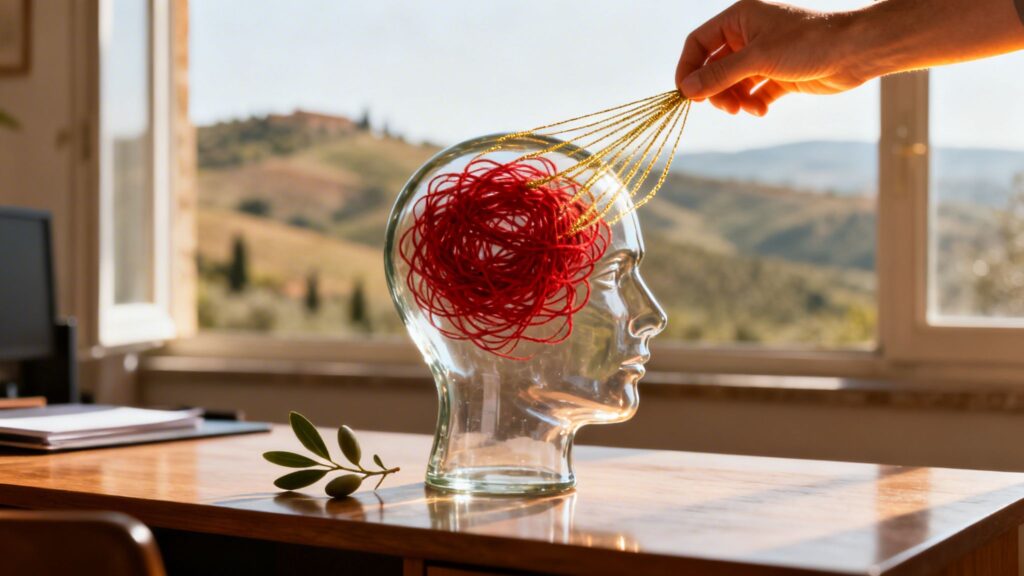
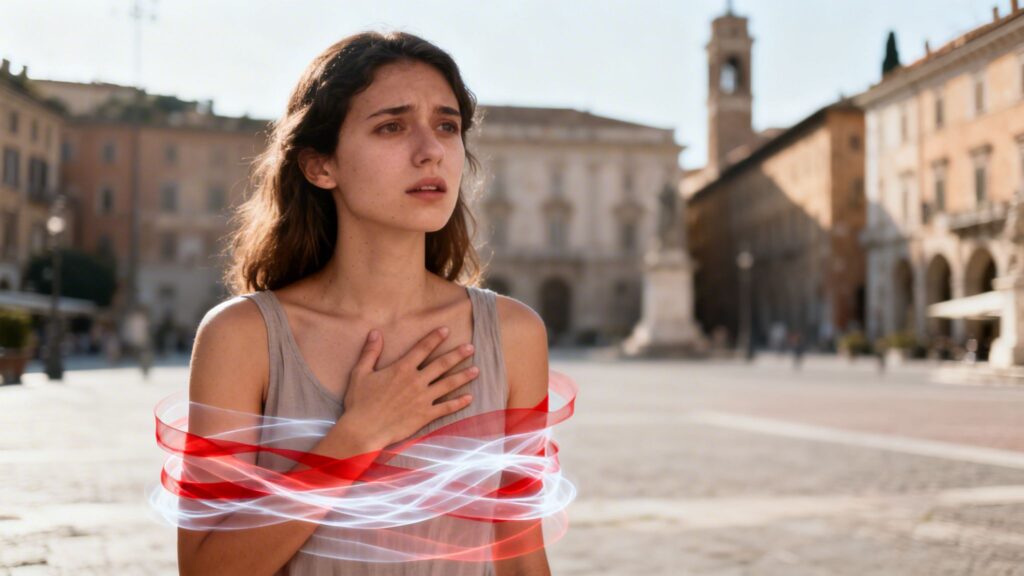
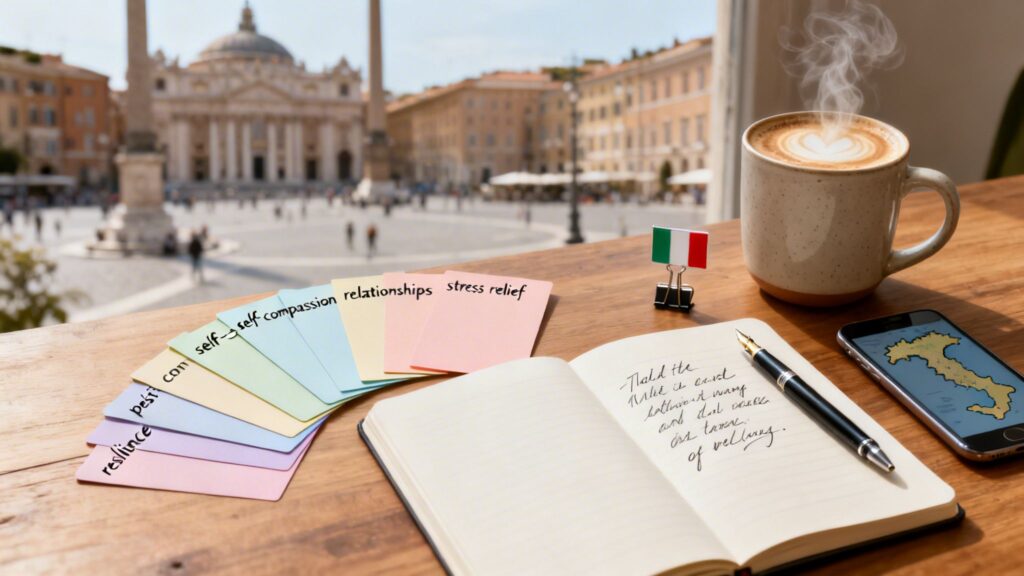
A guide for expats in Milan, Rome, Florence, and across Italy who struggle with low mood, anxiety, and loneliness when spring arrives – and how multilingual therapy can help.
Introduction
Have you ever felt guilty for being sad on a beautiful spring day in Italy? The spring depression expats experience is a real, clinically recognized phenomenon – and if you are feeling worse instead of better as the days get longer, you are not alone.
Research shows that depression and anxiety peak in April and May, not in winter as most people assume (Johns Hopkins Medicine, 2019). For the 5.56 million foreign residents living in Italy (ISTAT, 2026), this seasonal paradox is amplified by culture shock, isolation, and the challenge of navigating mental health in a second language.
Therapsy is a multilingual psychotherapy service in Italy that connects expats with licensed therapists who speak their mother tongue. With over 50 therapists, 11 languages, and sessions available online and in-person across 20+ Italian cities, Therapsy understands that spring depression expats face requires specialized, culturally sensitive support.
This guide explores what spring depression is, why it hits expats harder, the science behind reverse seasonal affective disorder, and practical steps to get help – in your own language, at your own pace.
What is spring depression and why does it affect expats?
Spring depression – also called reverse seasonal affective disorder or summer-pattern SAD – is a form of depression that emerges in spring and summer rather than in winter. Approximately 10% of people with seasonal affective disorder experience this reverse pattern (NIMH, 2024), and it affects expats disproportionately because of the compounding stress of living abroad.
Unlike winter SAD, which is linked to reduced sunlight and tends to cause oversleeping and overeating, spring depression is associated with insomnia, loss of appetite, agitation, and heightened anxiety (Psychiatry.org, 2024). The shift in light, temperature, and social rhythms disrupts the body’s internal clock – and for expats already struggling with adjustment, this disruption can feel overwhelming.
For many expats in Italy, spring brings an additional layer of pressure. The Italian social scene comes alive – aperitivi on terraces, weekend trips, outdoor gatherings – and if you have not yet built a solid social network, watching others enjoy the season can deepen feelings of isolation.
At Therapsy, the clinical team has observed that spring and early summer are among the busiest periods for new client inquiries, particularly from expats in their first or second year in Italy.
Why do depression and anxiety peak in spring?
Studies consistently show that suicide rates and depression symptoms reach their highest point between April and June – not during the dark winter months as commonly believed. A landmark study published in the Journal of Affective Disorders found significant spring peaks in suicide, with the risk increasing for individuals with a history of mood disorders (Postolache et al., 2010).
Several biological and psychological mechanisms explain this counterintuitive pattern. Rapid changes in sunlight exposure affect serotonin and melatonin production, disrupting sleep and mood regulation. Seasonal allergies, which peak in spring, trigger inflammatory responses that have been linked to worsening depressive symptoms. And the social pressure to “feel happy” when the weather is beautiful creates a painful gap between expectation and reality.
For expats, this gap is even wider. You may have moved to Italy partly for the lifestyle – the sun, the food, the beauty – and when spring arrives but your mood does not improve, the cognitive dissonance can be profound. “I should be happy here” becomes an internal refrain that prevents many expats from seeking help.
This is precisely why services like Therapsy specialize in supporting the expat community. Understanding that spring depression expats deal with is not a personal failure but a documented clinical phenomenon is the first step toward recovery.
How does spring depression feel different when you are living abroad?
The experience of spring depression as an expat is uniquely layered because it combines seasonal mood changes with the ongoing stress of cultural adjustment. You are not just dealing with hormonal shifts – you are managing them while navigating a foreign healthcare system, communicating in a second language, and missing the support network you had back home.
Common symptoms of spring depression in expats include persistent feelings of sadness or emptiness despite sunny weather, difficulty sleeping even when exhausted, irritability and restlessness that feels out of character, withdrawal from social activities you previously enjoyed, loss of appetite or changes in eating habits, difficulty concentrating at work or study, and increased anxiety about the future.
The language factor
One of the most overlooked barriers for expats seeking help for spring depression is language. Research on multilingualism in psychotherapy demonstrates that emotional processing is significantly deeper in a person’s first language (Dewaele & Costa, 2013). When you try to describe complex emotions like shame, grief, or existential anxiety in a second language, nuance is lost – and therapy becomes less effective.
This is a core principle at Therapsy: offering therapy in 11 languages – including English, French, Spanish, German, Portuguese, Greek, Arabic, and more – so that every client can express themselves fully.
As Ana, a Therapsy client, shared on Trustpilot: “Finding someone I could talk to in my native language was essential to express myself.”
What is reverse seasonal affective disorder (reverse SAD)?
Reverse seasonal affective disorder is a clinical subtype of major depressive disorder with a seasonal pattern, where depressive episodes begin in spring or summer and remit in fall or winter. About 1% of Americans experience reverse SAD specifically (American Psychiatric Association, 2024), though the number may be higher among populations already under psychological stress – such as expats.
The symptoms of reverse SAD differ from winter-pattern SAD in important ways. Where winter depression often brings lethargy and carbohydrate cravings, reverse SAD is more likely to manifest as agitation, insomnia, decreased appetite, and episodes of anxiety or even mania-like restlessness.
Diagnostic criteria
Clinically, reverse SAD requires recurrent depressive episodes that consistently begin and end at specific times of year, with at least two consecutive years showing the seasonal pattern. However, many expats experience a subclinical version – they do not meet full diagnostic criteria but still notice a significant decline in mood and functioning every spring.
If you recognize this pattern in yourself, it is worth discussing with a mental health professional. Therapsy’s clinical team, led by Dr. Francesca Adriana Boccalari, can assess whether your symptoms align with reverse SAD or another form of seasonal mood disturbance, and create a personalized treatment plan.
Why does spring depression hit harder in your first years abroad?
The first two years of living in a new country are consistently identified as the most psychologically challenging period for expats. During this time, the initial excitement of the move fades and is replaced by the daily friction of cultural adjustment – bureaucracy, language barriers, unfamiliar social norms, and the absence of deep friendships.
When spring arrives during this vulnerable window, it can act as a trigger. The season that was supposed to make everything better instead highlights everything that feels incomplete: you still do not have close friends nearby, you still struggle with Italian bureaucracy, and you still feel like an outsider at social gatherings.
Research confirms this: expats are 2.5 times more likely to experience mental health challenges than people living in their home country (The Recover, 2025). The combination of relocation stress, cultural dissonance, and seasonal mood shifts creates a perfect storm.
Therapsy was founded in 2023 specifically to address this gap. Co-founders Lorenzo Ferrari and Dr. Francesca Adriana Boccalari recognized that expats in Italy needed more than just an English-speaking therapist – they needed a service that understood the full complexity of life abroad.
How can you tell the difference between spring depression and normal adjustment difficulties?
It is normal to have difficult days when living abroad – homesickness, frustration with the language, moments of loneliness are all part of the expat experience. However, when these feelings become persistent, interfere with daily functioning, and seem to intensify rather than ease with the arrival of warmer weather, it may be spring depression.
Key signs that suggest clinical attention is needed include feelings of sadness or hopelessness lasting more than two weeks, sleep disturbances that do not resolve on their own, loss of interest in activities you normally enjoy, difficulty performing at work or maintaining relationships, physical symptoms like headaches, digestive issues, or chronic fatigue, and thoughts of self-harm or suicide.
If you are experiencing any of these symptoms, reaching out to a professional is important. Therapsy offers a free initial assessment call where the Clinical Director personally evaluates your needs and matches you with the right therapist – someone who speaks your language and understands the expat experience.
Expert insight
Dr. Fabia Pietersen, a CBT and EMDR-certified therapist at Therapsy with over 10 years of experience, notes: “Many of my expat clients tell me that spring is actually their hardest season. The expectation to feel better when the sun comes out creates enormous pressure. When they realize they are not alone in this – that it is a recognized pattern – the relief is immediate. From there, we can start working with evidence-based tools to manage the symptoms.”
What treatments work best for spring depression in expats?
The most effective treatment for spring depression combines psychotherapy with lifestyle adjustments, and in some cases, medication. For expats, the therapeutic approach needs to account not only for the seasonal component but also for the cultural and linguistic dimensions of the experience.
Cognitive Behavioral Therapy (CBT)
CBT is the gold standard for treating seasonal depression, including reverse SAD. It helps identify and challenge the negative thought patterns that worsen spring depression – such as “I should be happy because the weather is beautiful” or “Something is wrong with me for feeling this way.” Research by Tannenbaum and Har (2020) found that CBT delivered in the mother tongue is significantly more effective than in a second language, because emotional processing requires access to deep linguistic structures.
EMDR
For expats whose spring depression is connected to past trauma – including the trauma of displacement and identity loss that comes with international relocation – EMDR (Eye Movement Desensitization and Reprocessing) can be highly effective. Several therapists at Therapsy are certified EMDR practitioners, including the Clinical Director, Dr. Boccalari.
Lifestyle interventions
Alongside therapy, evidence-based lifestyle changes can support recovery from spring depression. These include maintaining consistent sleep and wake times despite longer daylight hours, managing allergy symptoms (which can worsen mood), setting realistic social goals rather than comparing yourself to others, establishing a routine that includes physical activity and contact with nature, and limiting alcohol intake, which tends to increase during the social spring season.
What do real Therapsy clients say about their experience?
Hearing from others who have walked the same path can be powerful. Here are some experiences shared by Therapsy clients.
Sarah P. shared via Trustpilot: “Dr. Boccalari helped me through a difficult time with tools for my transition to Italy.”
Tarek N. wrote on Trustpilot: “Great service, fast, tailored and understanding of what you need.”
Anastasia E. noted on Trustpilot: “I got the response almost immediately and they helped with my specific request.”
Alex C. shared via Trustpilot: “I felt like I was able to make the most significant breakthroughs with Dr. Damiani.”
These testimonials reflect a consistent pattern: fast response times, personalized matching, and therapists who genuinely understand the challenges of life abroad. With a 4.4/5 rating on Trustpilot, Therapsy has built a strong track record of trust within the expat community.
How can expats in Italy access mental health support in spring?
Accessing mental health care in Italy can feel overwhelming for expats – between the language barrier, the unfamiliar healthcare system, and the stigma that still surrounds therapy in many cultures. Here is a step-by-step guide to getting started.
Step 1: Recognize that your feelings are valid. Spring depression is not a sign of weakness or ingratitude for your life in Italy. It is a documented medical condition with biological and psychological causes.
Step 2: Reach out for a free assessment. Therapsy offers a complimentary initial call where the Clinical Director, Dr. Boccalari, personally evaluates your situation and matches you with the right therapist. You can fill out the contact form on therapsy.it and expect a response within a few hours via WhatsApp.
Step 3: Choose your preferred format. Therapsy provides both online and in-person sessions across 20+ Italian cities – including Milan, Rome, Florence, Turin, Bologna, and more. Choose whatever feels most comfortable for you.
Step 4: Begin therapy in your language. With 11 languages available – English, French, Spanish, German, Portuguese, Greek, Arabic, Hebrew, Ukrainian, Russian, and Italian – you can express yourself fully without worrying about translation.
Step 5: Build your support toolkit. Your therapist will work with you to develop personalized strategies for managing spring depression, addressing both the seasonal component and the specific challenges of expat life.
Does insurance cover therapy for expats in Italy?
Many international health insurance policies cover psychotherapy for expats in Italy, though the specifics vary by provider and plan. Therapsy partners with Cigna, one of the world’s largest international health insurers, and works with several EAP (Employee Assistance Program) providers.
If you have Italian public health coverage (SSN), access to psychological services is technically available but often limited by long waiting lists and language barriers – the vast majority of public-sector psychologists in Italy work only in Italian.
Private therapy through Therapsy starts from €70 per session for individual therapy and from €100 per session for couple therapy. Given that the free first assessment call removes the financial risk of starting with the wrong therapist, many expats find that Therapsy offers exceptional value compared to navigating the system independently.
For detailed information about pricing and insurance, visit the Therapsy services page.
FAQ: Spring Depression in Expats
What is spring depression?
Spring depression is a form of seasonal affective disorder where depressive symptoms emerge in spring and summer instead of winter. It affects approximately 10% of people with SAD and is characterized by insomnia, anxiety, agitation, and loss of appetite.
Why do expats experience spring depression more intensely?
Expats face a compounding effect: seasonal mood changes combine with culture shock, social isolation, language barriers, and the stress of living far from their support network. Studies show expats are 2.5 times more likely to experience mental health challenges than people in their home country.
Is spring depression the same as reverse SAD?
Yes. Spring depression is the informal term for reverse seasonal affective disorder (reverse SAD) or summer-pattern SAD. It is a clinically recognized subtype of major depressive disorder with a seasonal pattern. At Therapsy, therapists can conduct a thorough assessment to determine whether your symptoms meet the clinical criteria.
Can I get therapy in English in Italy?
Absolutely. Therapsy offers therapy in 11 languages, including English. In fact, 60% of Therapsy’s 1,000+ clients use English as their therapy language. All therapists are pre-screened for language fluency and cultural competence with the expat community.
How much does therapy cost for expats in Italy?
At Therapsy, individual therapy starts from €70 per session and couple therapy from €100 per session. The first assessment call is free, and Therapsy partners with Cigna and several EAP providers for insurance coverage.
How quickly can I start therapy at Therapsy?
Therapsy typically responds within a few hours of receiving your request. After the free assessment call with the Clinical Director, you can be matched with a therapist and begin sessions within days.
What therapeutic approaches work for spring depression?
CBT (Cognitive Behavioral Therapy) is the most evidence-based treatment for seasonal depression, including reverse SAD. EMDR can also be effective when seasonal depression is linked to trauma. Therapsy’s team uses a range of approaches including CBT, EMDR, Schema Therapy, and systemic-relational therapy.
Do I need a referral to see a therapist in Italy?
No. In Italy, you do not need a medical referral to see a psychologist or psychotherapist privately. You can contact Therapsy directly through their website and begin the process immediately.
Is spring depression common in Italy specifically?
Italy’s dramatic seasonal shift – from gray winters, especially in northern cities like Milan and Turin, to suddenly vibrant springs – can intensify the reverse SAD effect. Additionally, the strong social culture around outdoor activities in spring can amplify feelings of isolation for expats who have not yet built a local network.
Can online therapy help with spring depression?
Yes. Research supports the effectiveness of online therapy for depression, including seasonal forms. Therapsy offers full online therapy sessions in all 11 languages, making it accessible even if you do not live near one of their 50+ physical locations across Italy.
About This Article
Author and clinical reviewer: Dr. Francesca Adriana Boccalari, Clinical Director at Therapsy. Dr. Boccalari is a licensed Clinical Psychologist and Psychotherapist with over 10 years of experience. She graduated with honors from Vita Salute San Raffaele University in Milan and is specialized in Cognitive Behavioral Therapy (CBT), certified in EMDR, and trained in Schema Therapy. She has studied and practiced in Milan, New York, and Singapore. Dr. Boccalari is responsible for the listening desk service at IED (Istituto Europeo di Design) and collaborates with Istituto Marangoni as psychotherapist consultant. She was among the first psychotherapists to promote therapy in English in Milan and has worked with expats and international students from the very beginning of her clinical practice.
Published by: Therapsy – Multilingual Psychotherapy in Italy. Rated 4.4/5 on Trustpilot. Trusted by Cigna, World Food Programme, FAO, MUR, InterNations, IED, and Istituto Marangoni.