You've just moved to Monza, your calendar is full, your Italian is still shaky, and you need someone to talk to who won't make you fight the language barrier before you even begin. That's the reason people search for an English speaking therapist in Monza. They're not just looking for a name on a list, they're trying to solve a practical problem, find a therapist they can trust, in a format they can maintain, without turning mental health support into another relocation task.
An English speaking therapist in Monza is a licensed psychotherapist who offers sessions in English, either in Monza itself, in nearby Milan, or fully online. For expats, the better question isn't merely whether English is available, it's whether the therapist's language, specialization, and format fit your life well enough to keep therapy consistent. That's where many get stuck, and that's also where the smartest choice usually becomes obvious.
What an English Speaking Therapist in Monza Actually Looks Like
A lot of newcomers start with the same instinct. They type english speaking therapist Monza into a search bar, then assume the answer is a local clinic around the corner. In practice, the market is broader than that. A Monza-based English therapist can mean a local office, a therapist in Milan who is worth the train ride, or an online clinician who works with clients across Lombardy.
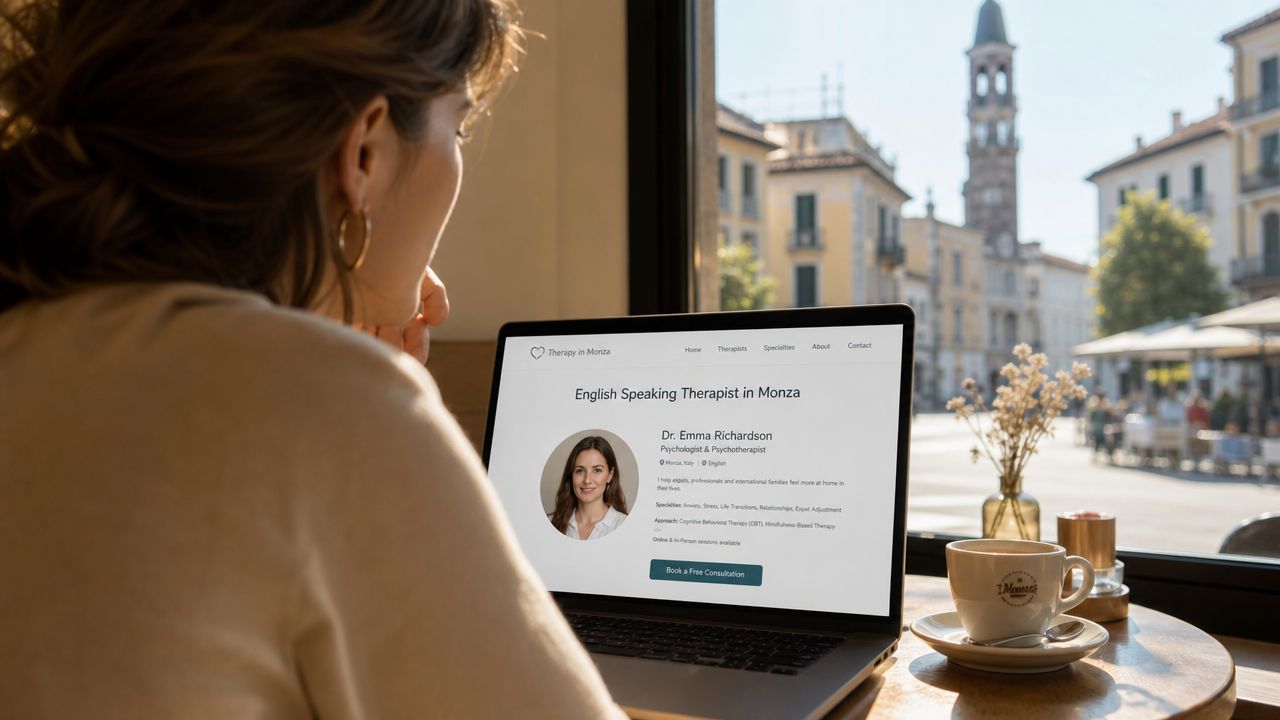
What matters is the match between your needs and the therapist's setup. If you're dealing with culture shock, burnout, loneliness, or relationship tension, the best first step is not to chase the nearest listing, it's to choose the format that lets you stay in treatment long enough for it to work.
Practical rule: If a therapist's English is good but their schedule, specialization, or location makes sessions hard to keep, that is not a good fit.
Monza works well for people who want convenience and local continuity. Milan becomes attractive when you need niche expertise or broader language options. Online is the easiest path if your work, travel, or energy levels are unpredictable.
There's also a quieter truth here. Some clients don't need “more therapy options”, they need one therapist who can stay with them through an actual transition, from arrival stress to routine, from isolation to stability, from uncertainty to something that feels manageable. That's why the search term is only the beginning, not the answer.
How Therapy Access Works in Italy for Expats
In Italy, the public mental health pathway can be useful, but it isn't fast or frictionless. You usually need to register with the national health system, get a health card, and obtain a referral from a general practitioner before booking with public psychologists or psychiatrists. Expatica also notes that the government-funded Bonus Psicologo can cover up to €1,500 for private psychotherapy, with lower tiers of €1,000 and €500 depending on income. For a practical overview of that system, see Expatica's guide to mental healthcare in Italy.
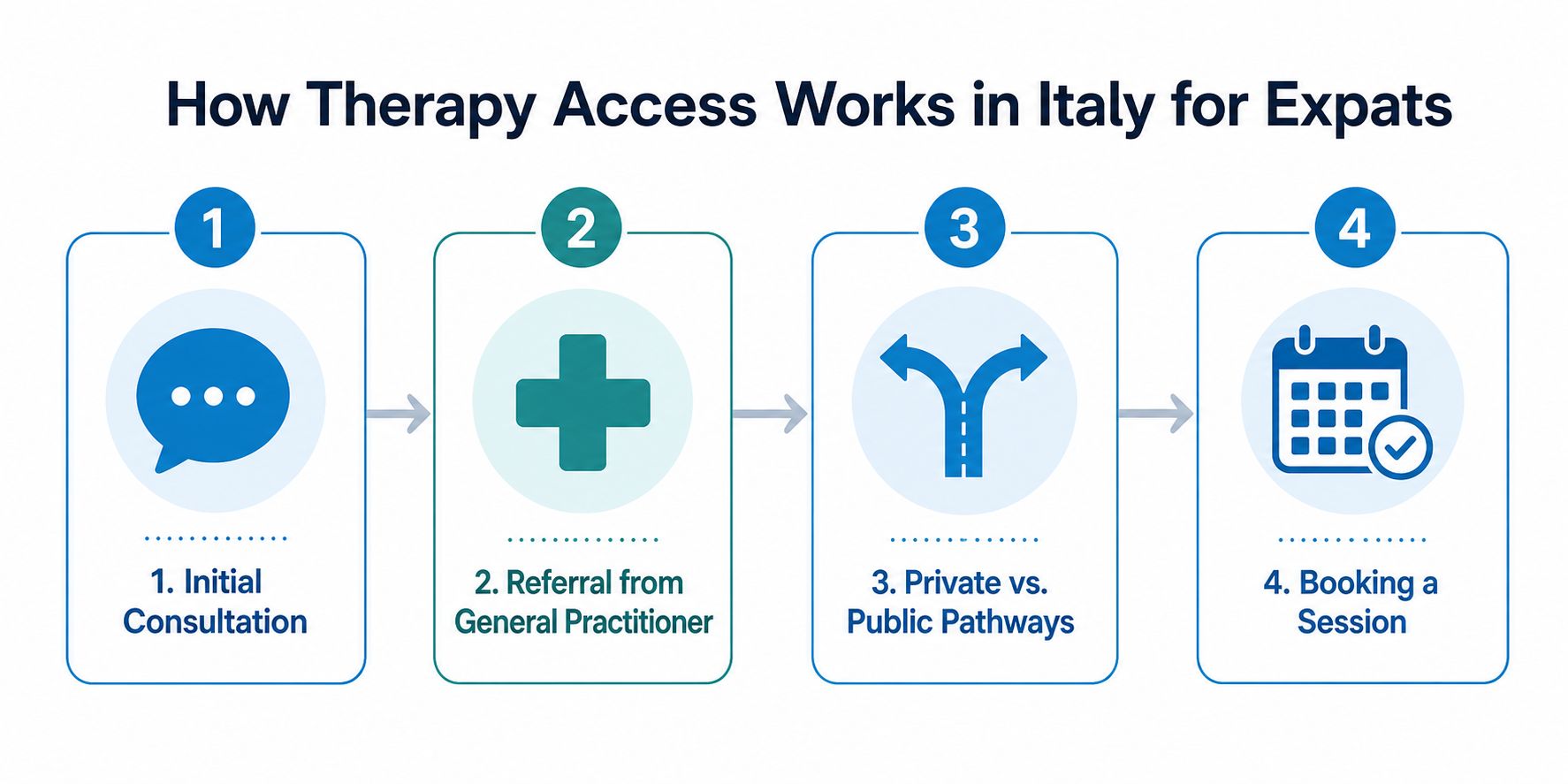
For many expats in Monza, that is enough to tip the decision toward private care. Public pathways can involve regional booking steps and waiting, while private therapy lets you move faster and choose the language you think and feel in.
What the practical route usually looks like
- Register and orient yourself. If you plan to use the public system, you need the Italian administrative basics in place first.
- Use private care if speed matters. If you're struggling now, waiting for a referral chain can feel like too much friction.
- Check price and format before you book. Private psychologists commonly start from about €50, and psychiatrists from about €120.
- Use available support where it fits. The Bonus Psicologo can reduce the burden of paying privately, depending on eligibility.
Therapy in Italy is often less about finding “a therapist” and more about choosing the path that matches your urgency, your language, and your tolerance for bureaucracy.
That is why English-speaking therapy in Monza tends to live in the private, flexible side of the market. For expats, that is usually a feature, not a compromise.
Monza vs Milan vs Online Compared
The wrong way to choose is to ask which option is “best” in the abstract. The right way is to ask which one fits your life this month. A therapist in Monza is often the most convenient if you want low-friction regular sessions. Milan makes more sense when you need more specialist variety. Online removes geography and makes continuity easier if you travel, change jobs, or split your time between cities.
| Factor | Monza in-person | Milan in-person | Online |
|---|---|---|---|
| Convenience | Best for local residents who want a short trip and a steady routine | Good if you already commute or don't mind reaching a broader city | Best if you want to avoid travel entirely |
| Specialist range | More limited, especially for niche needs | Broader access to specialists and multilingual clinicians | Depends on the therapist, but geography is no barrier |
| Language fit | English is often available, but options can be fewer | Wider choice, especially for mixed-language needs | Often the easiest way to find the right language match |
| Continuity when traveling | Less flexible if you are away from Monza | Moderate flexibility | Strongest continuity, since sessions can follow you anywhere |
| Cost control | Usually simpler if you stick with one local clinic | Can vary by specialization and setting | Often easier to maintain over time because switching formats is straightforward |
For someone just settling in, the smartest path is often hybrid. Start online if your schedule is unstable, then move in-person once you know what kind of support you need. Or start in Monza for convenience, then shift to Milan if you discover that you need a therapist with deeper experience in trauma, couples work, or another niche area.
The key decision is not distance alone. It is whether the format supports consistency, because therapy only becomes useful when you can keep showing up.
What English Speaking Really Means in Therapy
“English-speaking” is not the same thing as “best fit in English.” That distinction matters more than most listings admit. A therapist can communicate well in English and still miss the emotional nuance a client needs, especially when the client's strongest feelings come out in another language.
A useful bilingual-therapy principle is simple. Language preference should be discussed at the start of treatment, not assumed. Some expats feel more precise in English, others feel more honest in their native language, and mixed-nationality couples often need a therapist who can move comfortably between both. For broader multilingual care in Italy, Therapsy works in 14 languages, which shows how much the demand goes beyond English alone. See the language-fit concept map below.
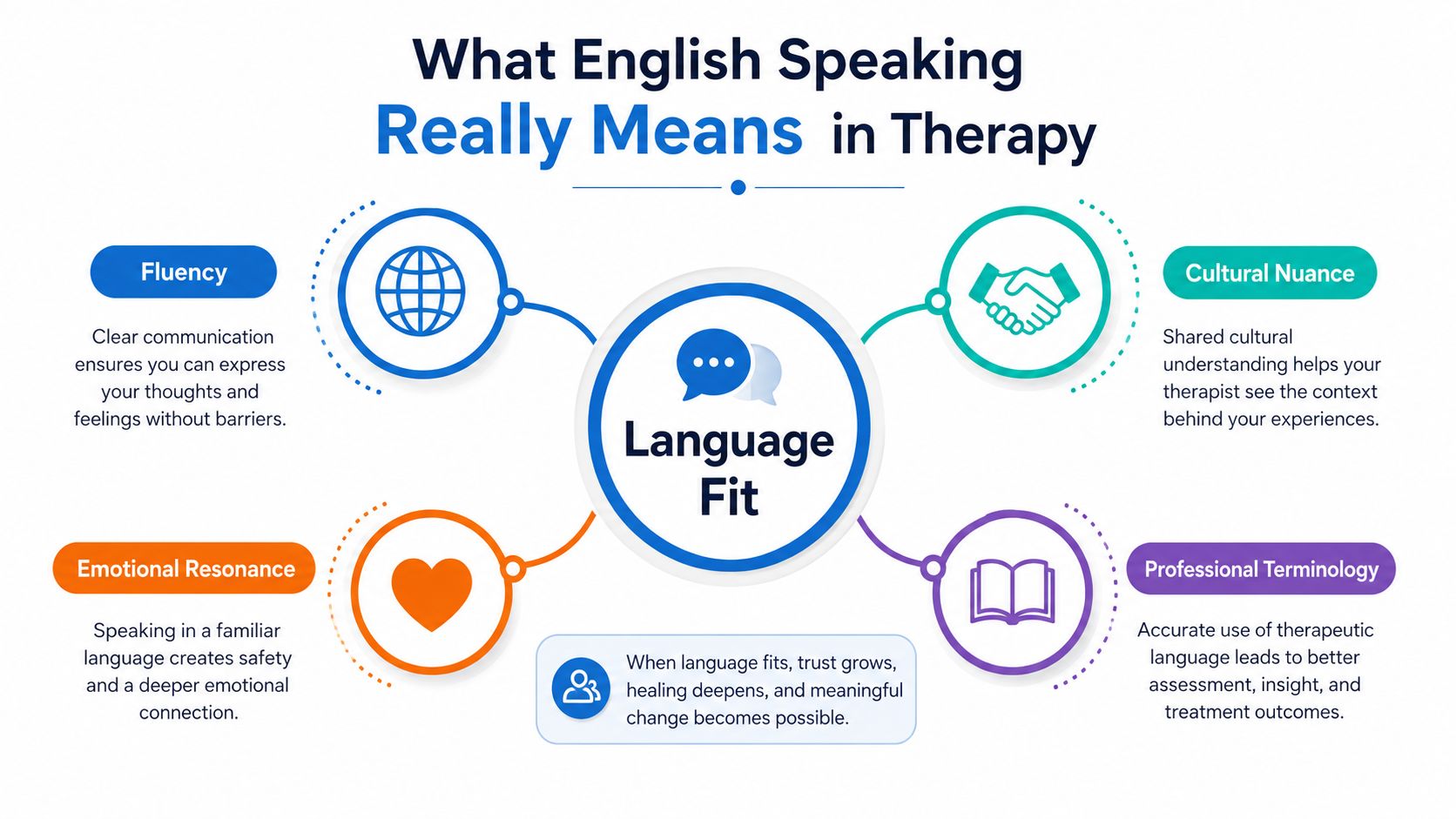
Ask these questions before you book
- Can I speak partly in another language if I need to? Some clients switch naturally when emotions get heavy.
- Do you work with bilingual or mixed-language couples? This matters if one partner prefers English and the other prefers Italian.
- Are you comfortable with cultural context, not just vocabulary? Cultural attunement is often what makes therapy feel safe.
- What happens if my language needs change over time? That can happen as trust grows.
The point is not to chase the most impressive language list. It is to find the language that lets you disclose more openly, stay regulated during hard moments, and really use the session for real work.
What Your First Session With an English Speaking Therapist in Monza Looks Like
Your first contact should feel low-pressure, not like a commitment. With THERAPSY, the process starts with a free assessment call, then a human matching conversation, then a free call with the assigned therapist before regular sessions begin. That matters because matching is done by a person, not by an automated questionnaire, so your language needs, topic, and schedule are heard before you're paired.
The first real session usually covers three things. The therapist listens to why you reached out, asks about your recent history, and checks what you want from therapy. Confidentiality is explained clearly, and you should leave with a sense of whether you can speak openly with this person.
The first session is not a test of whether you are “good at therapy”. It is a check on whether the therapist is good for you.
If the fit feels off, say so. A good matching process allows rematching without drama. That's especially important for expats, because language comfort and trust often determine whether someone keeps showing up or disappears after one awkward session.
A strong first session usually feels structured but human. You should understand who will support you, how the work will proceed, and what your next appointment is for. If you don't get that clarity, keep looking.
Pricing, Formats, and How to Book
Therapy in this market is easier to understand when you look at it as a set of formats, not a single product. In Monza, private individual therapy starts from €70 per session with Therapsy, couple therapy starts from €100, psychiatric consultation starts from €110, and psychodiagnostic assessment starts from €255 for 3 sessions. For the local market backdrop, Expatica notes that private psychologists commonly start from about €50 and psychiatrists from €120, depending on the pathway and provider. You can also read the Monza location details on Therapsy's Monza page, which lists Via Tolomeo 10 and explains that clients can book online or in person with no surcharge for the online format.
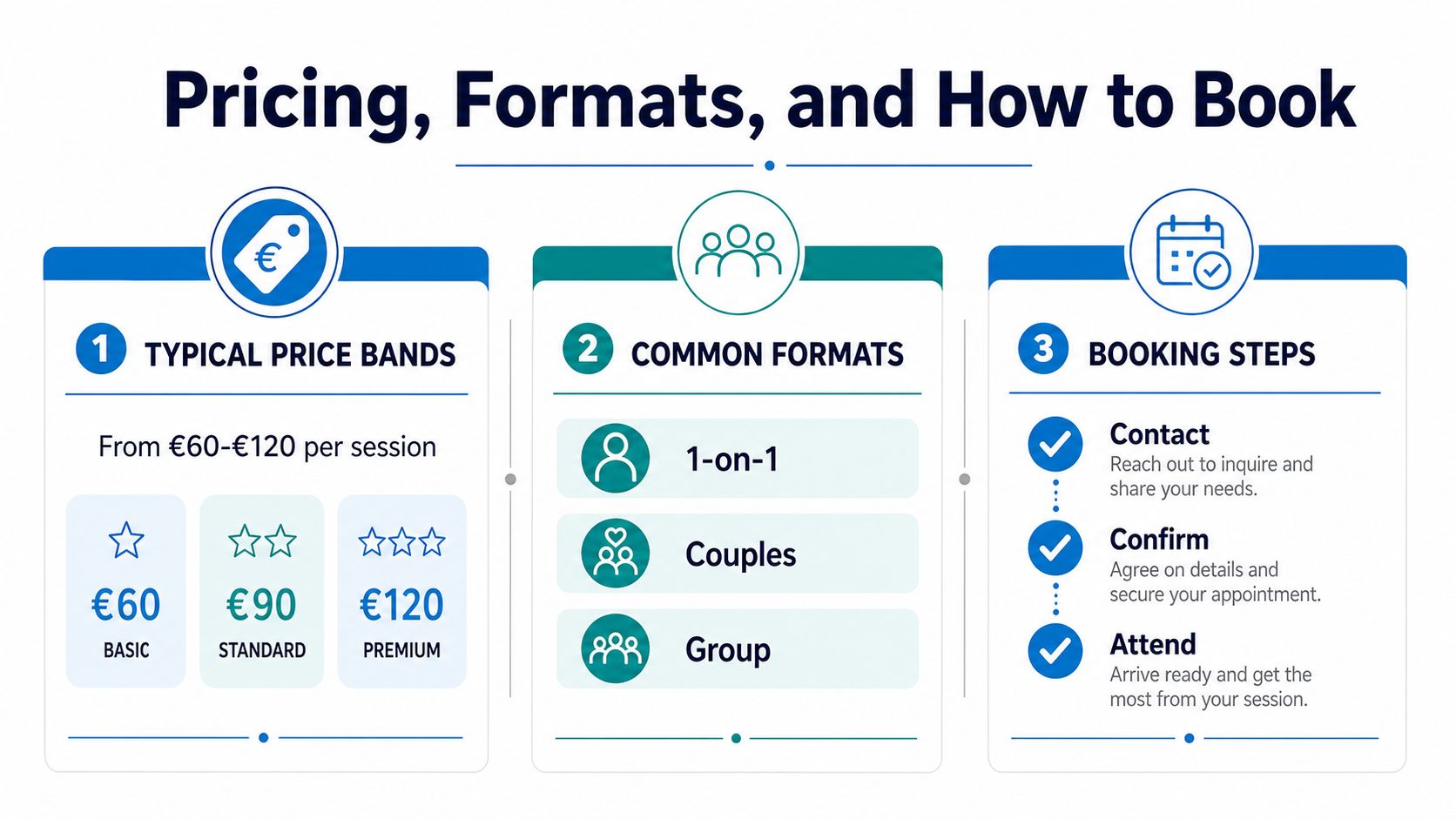
The booking flow is straightforward
- Send the first contact form. That starts the process.
- Get a reply within 12 hours. Initial contact is fast, usually through WhatsApp.
- Have the free assessment call. The Clinical Director listens and matches you.
- Speak with the assigned therapist. You get one more free call before committing.
- Begin with the format that suits you. You can stay online or move in-person later.
That hybrid setup is the key advantage. It gives a Monza-based client local access when life is stable, and flexibility when life gets messy, which is often exactly when therapy matters most.
Choosing the Right Therapist for Your Situation
Use four filters, in this order. First, language fit. Second, specialization. Third, format. Fourth, logistics. If your partner needs Italian and you need English, that immediately changes the shortlist. If trauma, burnout, or couples conflict are central, specialization matters more than proximity.
A few common matches are obvious. A cross-cultural couple in Monza usually benefits from a therapist who can hold both languages and the relationship dynamic. A burned-out professional with employer support should ask whether coverage or an EAP applies. A young adult with a packed schedule usually needs online evening sessions before anything else.
The safest choice is the one you can keep. That often means prioritizing a therapist who can offer the right language, the right method, and a format you won't abandon after two inconvenient weeks.
Common Questions From Expats Looking for Therapy in Monza
Are online sessions as effective as in-person ones?
Yes, for many expats they are a strong option, especially when consistency matters more than location. Online therapy also makes it easier to keep the same therapist if you travel or change cities. The best format is the one you can stick with regularly.
How quickly can I start?
Usually faster in private care than in the public system. If you want to avoid referral steps and waiting lists, a private matching process is the clearest route. A free assessment call is the easiest first move.
Can I use the Bonus Psicologo and still choose private therapy?
Yes, if you're eligible and the provider accepts it. Expatica notes that the subsidy can cover up to €1,500, with lower tiers of €1,000 and €500 depending on income. The practical question is whether your chosen therapist supports that pathway.
The English-speaking therapists we work with near Monza
Therapsy works with therapists in Milan, and all of them also see patients online, wherever in Italy you live.
Dr. Alexandra Kraslavski offers sessions in Hebrew as well as English and Italian, and works with a difficult relationship with food, weight and addiction.
Dr. Eleni Karliampa offers sessions in Greek, and works specifically on cultural identity and migration difficulties, which she knows from the inside.
Dr. Matteo Innocenti is a psychiatrist and psychotherapist, qualified in both, and a recognised expert in eco-anxiety.
You tell Therapsy what you are looking for, a member of our clinical team reads your request, and they introduce you to whoever fits, in person where possible and online where it works better. The first call is free.
What if the first therapist match doesn't feel right?
Ask for a rematch. That's normal and it should be easy. The point of a human-matching process is to find a better fit, not to force you to stay in the wrong one.
If you want therapy that fits real expat life in Lombardy, THERAPSY is set up for that mix of language, flexibility, and human matching. You can book a free first assessment call, talk through what you need, and decide whether a Monza, Milan, or online format makes the most sense for you. Visit THERAPSY when you're ready to take the next step.