Perimenopause anxiety is a specific psychological and physiological experience triggered by hormonal fluctuations. The most common perimenopause anxiety symptoms include a racing heart, sudden irritability, persistent worry, and brain fog. These are not simply feelings of stress; they are legitimate, biologically driven events that often feel overwhelming, especially for expat women navigating life in Italy without their usual support systems.
This guide, written by a clinical psychologist specializing in expat mental health, explains the root causes of these symptoms and outlines effective, evidence-based paths to relief.
"Perimenopausal anxiety is not a personal failing but a valid psychobiological response. It’s the brain's reaction to the fluctuating hormonal environment, often amplified by the unique stressors of living abroad, far from your established support systems."
– Dr. Francesca Adriana Boccalari, Clinical Director at Therapsy
Understanding the Rise of Anxiety in Perimenopause
For many women, perimenopause feels like navigating a new and unpredictable landscape inside their own body and mind. One day you feel capable; the next, you are blindsided by a sense of impending doom or physical symptoms like a racing heart that feel terrifyingly real.
If you're an expat woman living in Italy, this internal turmoil can feel especially isolating. This experience is a normal, though often unspoken, part of life. It can be deeply confusing, especially when it surfaces amidst the pressures of a career, family, and the ongoing challenge of adapting to a new culture.
Why This Anxiety Feels Different
Unlike generalized anxiety you might have experienced before, perimenopausal anxiety often feels distinctly physical and unprovoked. The experience is characterized by sudden, unprompted physical and emotional shifts.
It can show up as:
- Sudden Panic: A wave of intense fear that strikes without a clear trigger.
- Constant Worry: A persistent feeling of unease about your health, family, or work that you can't switch off.
- Heart Palpitations: A fluttering, pounding, or racing sensation in your chest that is deeply unsettling.
- Irritability: A short fuse or feeling intensely agitated by things that wouldn't normally bother you.
Research confirms this is a high-risk time. A study in Frontiers in Psychiatry found that women in early perimenopause report the most severe levels of anxiety and stress. This isn't a minor issue; it's a critical window where getting support can prevent these feelings from spiraling. To understand the broader context of these feelings, you may want to check out our guide on common anxiety symptoms in adults.
How Hormones and Life Stress Fuel Perimenopause Anxiety
That sudden, gripping feeling of anxiety during perimenopause isn’t just in your head. It’s a complex and completely real response, born from a collision between your biology and your life circumstances. Your hormones, especially estrogen and progesterone, act as your body’s internal emotional stabilizers.
During perimenopause, the production of these hormones becomes chaotic. It's not a gentle decline; it's more like a rollercoaster of spikes and drops. This hormonal static directly interferes with the brain's calming neurochemicals, like serotonin and GABA, leaving your nervous system on high alert.
The Biological Side of the Story
This link between your hormones and your anxiety is a measurable biological process. When your estrogen levels fluctuate wildly, they directly impact the parts of your brain that manage mood and your response to stress. This is why you might suddenly experience a racing heart, a dizzy spell, or a wave of doom that comes out of nowhere.
Your nervous system is simply more easily triggered. These aren't signs of weakness. They are physical responses to a changing internal environment.
The 'Perfect Storm' for Expats in Italy
For an expat woman living in Italy, this biological vulnerability often crashes head-on into a specific set of life stressors. The pressure to live up to the fantasy of 'la dolce vita' can feel almost suffocating when you’re internally struggling just to feel normal.
This infographic breaks down some of the most common ways perimenopause anxiety shows up, particularly in the context of life abroad.
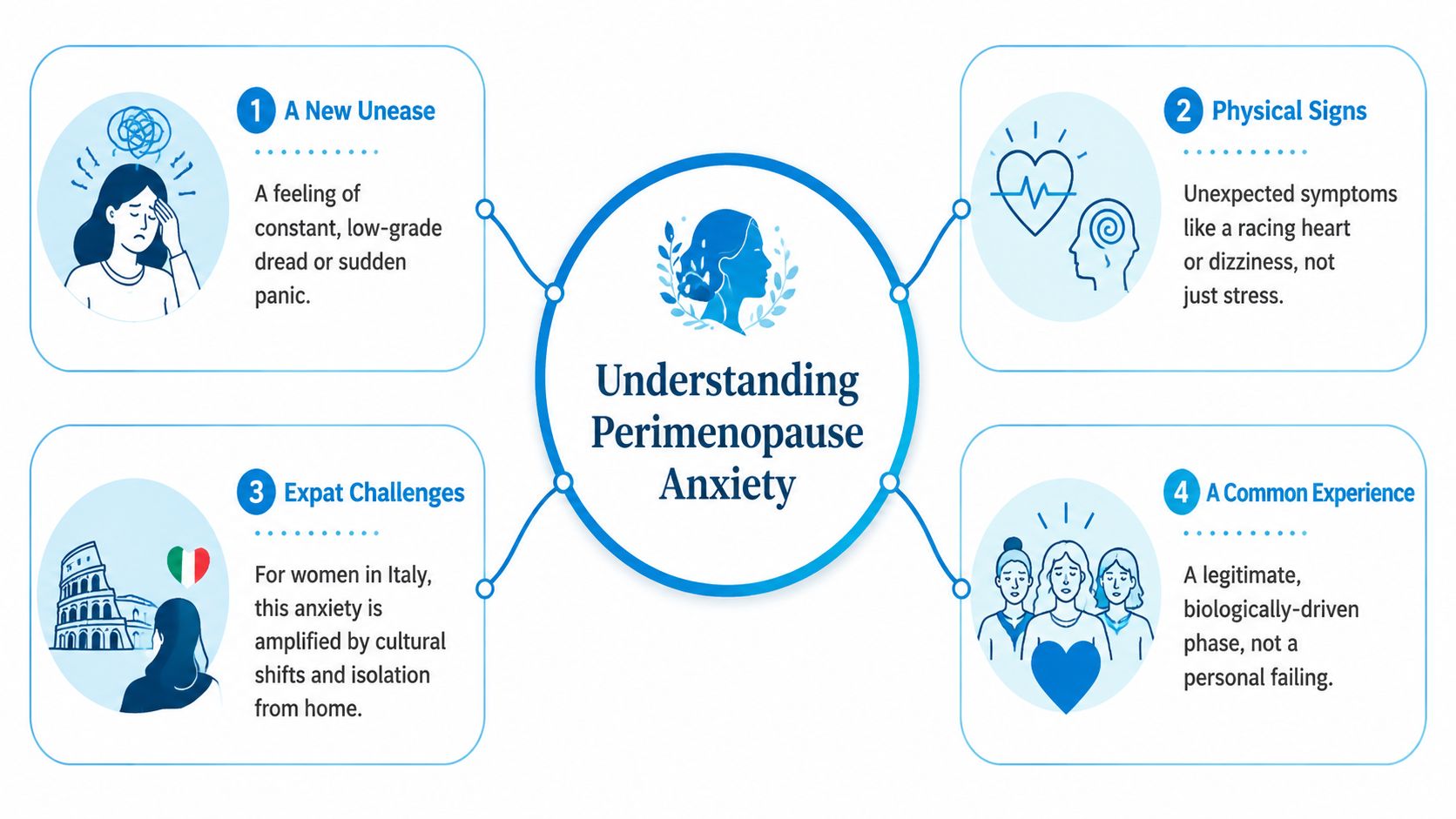
When this new, unsettling feeling inside you meets the very real challenges of expat life, it can create what feels like a perfect storm for anxiety. The challenges fueling this anxiety are often unique to the expat experience:
- Navigating a foreign healthcare system just to get basic answers about your symptoms.
- Feeling deeply isolated from your usual support network of family and lifelong friends.
- Trying to manage career demands while coping with brain fog or a sudden drop in confidence.
- Adapting to cultural differences that add another layer of mental load to every single day.
The anxiety you’re feeling is real, and it has a clear cause. It’s your body’s alarm system reacting to both the hormonal transition inside you and the very real stressors of adapting to a new life in another country. Acknowledging this connection is the first step toward managing it.
Understanding the root cause is crucial. For those interested in how these hormonal changes relate to other mood states, exploring resources on holistic care for perimenopausal mood can provide a broader picture. Managing these interconnected stressors is also a key part of feeling better; you can learn more about identifying the sources of stress in your life in our dedicated article.
Identifying the Key Perimenopause Anxiety Symptoms
Of all the changes perimenopause brings, anxiety is one of the most unsettling. It’s not always the classic, heart-pounding panic attack. More often, it’s a quiet hum of dread, a sudden dizzy spell, or a wave of irritability that seems to come from nowhere.
Understanding the specific ways this anxiety shows up is the first step toward getting the right kind of support. This isn’t just ‘stress’ or ‘having a bad day’ – it’s a distinct pattern of physical and psychological shifts driven by hormones.
Physical and Psychological Manifestations
Perimenopause anxiety often feels like your body and mind are working against each other. You might have a perfectly logical thought – "I need to prepare for that meeting" – but your body reacts with a racing heart and a sense of impending doom. These symptoms blur the lines between physical and mental but almost always appear together.
This table can help you connect the dots between what you’re feeling physically and what’s happening in your mind.
Common Perimenopause Anxiety Symptoms
| Symptom Type | Examples |
|---|---|
| Physical Symptoms | Heart palpitations or a racing heart, sudden shortness of breath, unexplained dizziness or feeling lightheaded, tingling sensations in hands or feet, digestive upset (like a 'nervous stomach'), and severely disrupted sleep. |
| Psychological Symptoms | A constant, low-grade sense of dread or impending doom, persistent worrying that feels uncontrollable, sudden and intense irritability, difficulty concentrating or 'brain fog', and a sudden drop in self-confidence. |
Simply seeing your experiences listed can be a powerful validation. It provides a language to describe what’s happening, whether you’re talking to your partner, your doctor, or a therapist.
Beyond Classic Panic Attacks
It’s crucial to understand that perimenopause anxiety doesn’t always fit the textbook definition of a panic disorder. In my clinical work with expats in Italy, I often see it manifest as a cluster of persistent, underlying symptoms like chronic sleep disruption, a short fuse, and a constant, humming nervousness.
The biology behind this is clear. Research shows that about 4 in 10 women experience significant mood symptoms during the perimenopausal transition. As your estrogen and progesterone levels fall, they can take serotonin – your brain’s natural mood stabilizer – down with them. This hormonal dip doesn't just cause anxiety; it amplifies it. You can learn more from this comprehensive research on menopausal transition symptoms to understand the clinical patterns more deeply.
Perimenopausal anxiety can manifest as a sudden drop in confidence, making professional and social situations feel overwhelming. This isn’t a personal failing; it’s a neurological response to hormonal shifts.
Realizing that your anxiety has a biological root is a game-changer. It’s the first step toward finding solutions that work and reclaiming your sense of control.
The Unique Challenges for Expat Women in Italy
Going through perimenopause anxiety is challenging no matter where you are. But navigating it as an expat woman in Italy adds layers of complexity that can make the experience feel profoundly lonely.
You might be surrounded by the undeniable beauty of Italian life, but your inner world feels like a storm. This gap between how things look and how they feel can be incredibly painful. The pressure to embrace ‘la dolce vita’ can feel like a heavy weight when you’re secretly grappling with a racing heart or a constant sense of dread. This unspoken expectation often stops women from admitting they’re struggling, worsening the anxiety and isolation.

Navigating Practical and Emotional Hurdles
Beyond cultural pressure, a unique set of hurdles can make perimenopause anxiety symptoms feel much more intense for expats.
- Language and Healthcare Barriers: Trying to explain something as subtle as brain fog or a feeling of doom to a doctor in a language that isn't your own can feel impossible. This often leads to misdiagnosis, dismissal of symptoms as “just stress,” or avoiding medical care altogether.
- Loss of Support Systems: You’re thousands of miles from your lifelong friends and family. A spontaneous coffee chat or quick call to a trusted friend is now a scheduled video call across time zones, which isn’t the same.
- Identity and Belonging: Many expat women find their professional identity shifts or is lost after moving. Combined with feeling like an outsider, this can chip away at your self-confidence right when hormonal changes are already making you feel less like yourself.
These pressures combined can lead to deep emotional exhaustion. When the internal chaos of perimenopause crashes into the external stress of expat life, it’s easy to feel overwhelmed. You can learn more by reading our guide to the symptoms of expat burnout.
Finding a therapist who understands both the psychological shifts of perimenopause and the specific cultural context of expat life in Italy is not a luxury – it is essential for effective support. You need a space where your entire experience is validated.
Finding Effective Therapeutic Support for Perimenopause Anxiety
Realizing that your anxiety has a biological and situational cause is a huge first step. The next is discovering that highly effective, evidence-based support exists to help you feel in control again. Managing perimenopause anxiety isn't about "toughing it out"; it's about actively using proven strategies to calm your nervous system and reframe your experience.

This path forward combines targeted psychotherapy with supportive lifestyle adjustments. You absolutely have the power to influence how you feel, and the right professional support can show you how.
Evidence-Based Therapies That Bring Relief
Not all therapy is created equal. When it comes to perimenopause anxiety, certain approaches directly address the thought patterns, emotional responses, and underlying triggers that hormonal changes amplify.
Effective therapy for perimenopause anxiety gives you practical tools to manage symptoms in the moment and addresses the deeper emotional patterns this transition brings to the surface. It empowers you to navigate both biological and life stressors with greater resilience.
At Therapsy, our clinical team is trained in these exact methods. We ensure you receive care that is not just supportive, but genuinely effective. We focus on three key approaches:
- Cognitive Behavioral Therapy (CBT): This is often the first-line approach. CBT helps you identify and challenge the catastrophic thought patterns that anxiety feeds on – like interpreting a racing heart as a definite sign of a heart attack. You can learn more about how CBT specifically helps with anxiety in our detailed guide.
- EMDR (Eye Movement Desensitization and Reprocessing): Sometimes, hormonal shifts can bring old, unresolved traumas or distressing memories to the surface, fueling current anxiety. EMDR is a powerful therapy that helps your brain process these memories so they no longer trigger a fight-or-flight response.
- Schema Therapy: This approach goes deeper to address long-standing emotional patterns or "schemas" that are now being activated by the vulnerability of perimenopause. It helps you heal the roots of recurring feelings like abandonment, failure, or not being good enough.
Integrating Lifestyle and Medical Support
Therapy is a powerful pillar, but a holistic approach often brings the best and most lasting results. A good therapist can also help you implement and stick to lifestyle changes that stabilize your mood and energy.
- Nutrition: Balanced meals with lean protein and complex carbohydrates help stabilize your blood sugar, which in turn helps stabilize your mood.
- Movement: Gentle, regular exercise like walking or yoga is proven to reduce cortisol (the main stress hormone) and boost calming endorphins.
- Sleep Hygiene: Prioritizing a consistent sleep schedule is fundamental. Poor sleep is a massive driver of anxiety, creating a vicious cycle.
It's also crucial to work in tandem with a medical doctor. For many women, interventions like hormone replacement therapy (HRT) can be a key part of the solution by treating root causes of female hormone imbalances. An integrated approach, where your therapist and doctor are both aware of your full treatment plan, ensures you receive cohesive and effective care.
How Therapsy Provides Specialized Support for Expat Women in Italy
You don’t have to navigate the choppy waters of perimenopause alone. Therapsy is a multilingual psychotherapy service in Italy for the international community, bridging local life and global mental health standards. Our entire approach starts not with a form or a chatbot, but with a real human conversation.
A Safe Space to Be Heard
We begin with a free, no-commitment assessment call with me, Dr. Francesca Boccalari. This is a confidential space for you to share what you’re going through and have your feelings validated. This conversation is the foundation of our human-first matching process.
Instead of an algorithm, I personally listen to your story and match you with a therapist who has specific experience with perimenopause anxiety and understands the unique pressures of expat life in Italy. Finding the right professional fit is critical, and you can explore this topic in more detail by learning how to find the right therapist as an expat in Italy.
Support That Speaks Your Language
Effective therapy can only happen when you’re able to express yourself fully. Our team of 50+ carefully selected, licensed therapists offers sessions in 14 languages, available online or in-person across 24 Italian cities from our 90+ physical locations. This ensures you can find someone who truly gets you.
The need for this kind of support is growing. A global burden analysis projected that by 2035, the disability burden from perimenopausal anxiety will rise by over 40% compared to 2021. For an expat woman in Italy, this highlights how much professional help can make a meaningful difference. Seeking professional support helps you build concrete coping strategies. Resources on tailored therapy for managing anxiety show just how valuable specialized care can be.
FAQ
How do I know if my anxiety is from perimenopause or something else?
The clue is often in the timing and the feel of the anxiety itself. If you're suddenly hit with new or much worse anxiety – especially physical symptoms like a racing heart, dizziness, or a sense of dread that seems to come from nowhere – and it’s happening alongside other perimenopausal signs like irregular periods or sleep problems, it's very likely linked to your hormones. A good therapist can help you untangle the specific causes.
Is perimenopause anxiety actually treatable?
Yes, absolutely. Perimenopause-related anxiety responds very well to the right support. A combination of therapy, lifestyle shifts, and sometimes medical interventions can make a huge difference. Therapeutic approaches like Cognitive Behavioral Therapy (CBT) are incredibly effective for giving you practical, real-world tools to manage anxious thoughts and calm the physical sensations.
When should I get professional help for my symptoms?
The right time to seek professional help is when the anxiety starts getting in the way of your life. If you find your worries are constant, if you're avoiding social events or work responsibilities, if your sleep is consistently disrupted, or if you just feel a persistent sense of doom, it’s time to talk to someone. You deserve support, and you don't have to wait until you are at a breaking point.
Can therapy really help if the cause is hormonal?
Completely. While hormones might be pulling the strings, therapy is about managing your reaction to the anxiety they create. A therapist can teach you powerful strategies to soothe your nervous system in the moment. They'll help you challenge the catastrophic "what if" thoughts that anxiety loves to fuel and give you a safe space to process the deeper emotional shifts that this life stage can bring up.
Book your first free assessment call – no commitment, just a conversation with our Clinical Director who will listen and match you with the right therapist for you. Visit therapsy.it.