Two people can love each other intensely and still keep having the same exhausting argument in Italy. One partner wants plans confirmed early. The other assumes that “we'll see” is normal and flexible. One expects direct honesty with in-laws. The other hears that as rude. Then a visa renewal is delayed, one family lives abroad, and a simple disagreement suddenly feels much bigger than it should.
Intercultural couples therapy is a specialised form of couple therapy that helps partners understand how culture, language, migration, family expectations, and attachment patterns shape conflict and closeness. For couples living in Italy, that work often includes daily realities that generic relationship advice misses. Bureaucracy, distance from home, mixed languages, and different assumptions about family roles all enter the room.
I'm Dr. Francesca Adriana Boccalari, Clinical Director at Therapsy, and this is exactly the kind of complexity many international and mixed-nationality couples bring to therapy in Italy. The relationship is real. The cultural layer is real. The expat layer is real too.
Navigating Love Across Cultures in Italy

A familiar scene looks like this. One partner is Italian or has lived in Italy long enough to manage life almost automatically. The other is still translating everything. Language, tone, paperwork, social codes, family rituals, even what counts as “normal” conflict. They sit at dinner after a long day, and the argument starts over something small. Timing. Money. A comment from a parent. Who should call the comune. Who should have known how the appointment worked.
The surface topic is rarely the whole problem.
In intercultural relationships, conflict often carries two meanings at once. There is the practical disagreement, and then there is the emotional meaning each person attaches to it through their own cultural history. That is why a conversation about lateness can become a fight about respect, or a discussion about holidays can become a fight about loyalty.
Intercultural couples therapy helps partners separate the event from the meaning they each assign to it.
That distinction matters in Italy because many couples are also building a life in a system that can feel unfamiliar and demanding.
A good therapy process doesn't decide whose culture is “right”. It helps the couple understand what each partner has learned about love, conflict, family, privacy, duty, and repair. Then it helps them build something shared.
If you're living this reality, it can also help to understand the wider emotional impact of adapting to a new country. I often recommend reading about cultural differences in Italy for expats because many relationship tensions make more sense once the broader adjustment context is visible.
Understanding the Unique Challenges of Intercultural Relationships
Some intercultural couples struggle because they disagree. Others struggle because they think they disagree, when in fact they are using the same words to mean different things.
That is a different problem.
Communication is not just language
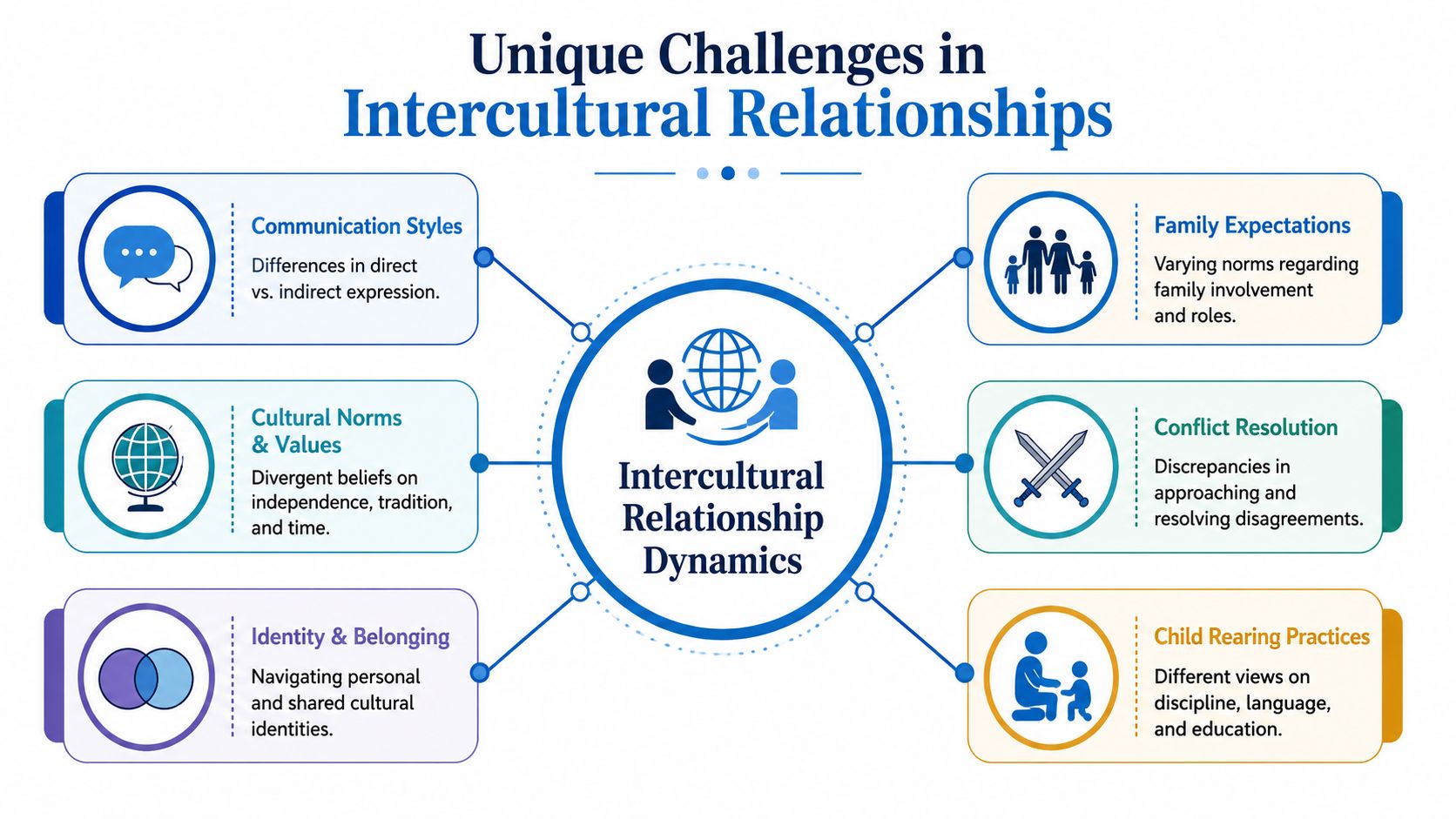
A couple may both speak English, or Italian, and still miss each other repeatedly. One partner uses direct language and sees it as clarity. The other uses indirect language and sees it as respect. One wants to address conflict immediately. The other needs time before speaking. One expects verbal reassurance. The other expresses care through action and reliability.
None of these patterns are automatically unhealthy. The issue is what happens when each partner interprets the other through their own rules.
What sounds calm to one partner may sound cold to the other. What sounds honest to one may sound aggressive to the other.
This is why intercultural work has to go beyond “communicate better”. Couples need help naming hidden rules.
The pressure points I see most often
- Family involvement: In some families, parents and siblings are central to decisions. In others, the couple is expected to be more independent.
- Time and planning: Flexibility can feel warm and human to one person, unreliable to the other.
- Money scripts: Saving, spending, helping relatives, and combining finances all carry cultural assumptions.
- Conflict rules: Raised voices may mean engagement in one background and danger in another.
- Belonging: One partner may feel rooted in Italy while the other still feels temporary, exposed, or dependent.
For couples early in the relationship, many of these issues first appear during dating. The patterns usually become more obvious once practical life begins. That's why some people benefit from reflecting on dating across cultures before conflict hardens into resentment.
Italy adds a practical layer many articles ignore
Most content about intercultural relationships focuses on identity and communication. That matters, but it often skips one of the biggest stressors for couples here: administration.
A mixed-nationality couple in Italy may be dealing with residence permits, visa renewals, healthcare access, tax questions, housing documents, or work permissions.
That strain often gets mislabelled.
One partner says, “You're always tense.”
The other is really thinking, “I don't know if I can stay in this country without you.”
One says, “Why do I have to do everything?”
The other is really facing the fact that only one person understands the system.
A useful turning point in therapy is learning to distinguish relationship pain from administrative strain. If the couple treats bureaucracy as proof that the relationship is failing, they usually become more reactive. If they treat it as an external pressure that needs teamwork, they often become more compassionate with each other.
The Goals and Benefits of Intercultural Therapy
The purpose of intercultural couples therapy is not to flatten difference. It is to help the couple use difference without letting it become a weapon.
That means therapy has to do several jobs at once. It needs to reduce blame, slow down misinterpretation, and make each partner's emotional logic understandable to the other. It also needs to protect the relationship from the common trap of debating culture at the level of ideology while ignoring what is happening emotionally in the room.
What therapy is actually trying to build
A strong intercultural couple doesn't erase two backgrounds. They create a shared relational culture that can hold both.
I often describe that shared culture in practical terms:
A common language for conflict
The couple learns how to name the pattern they get stuck in, instead of only arguing about the topic.A fair translation of intentions
The therapist helps each person understand what the other is trying to do, not just how it lands.A workable way of belonging together
The relationship becomes a place where both identities can remain visible.
The best outcome is not sameness. It is a relationship that feels safe enough for difference.
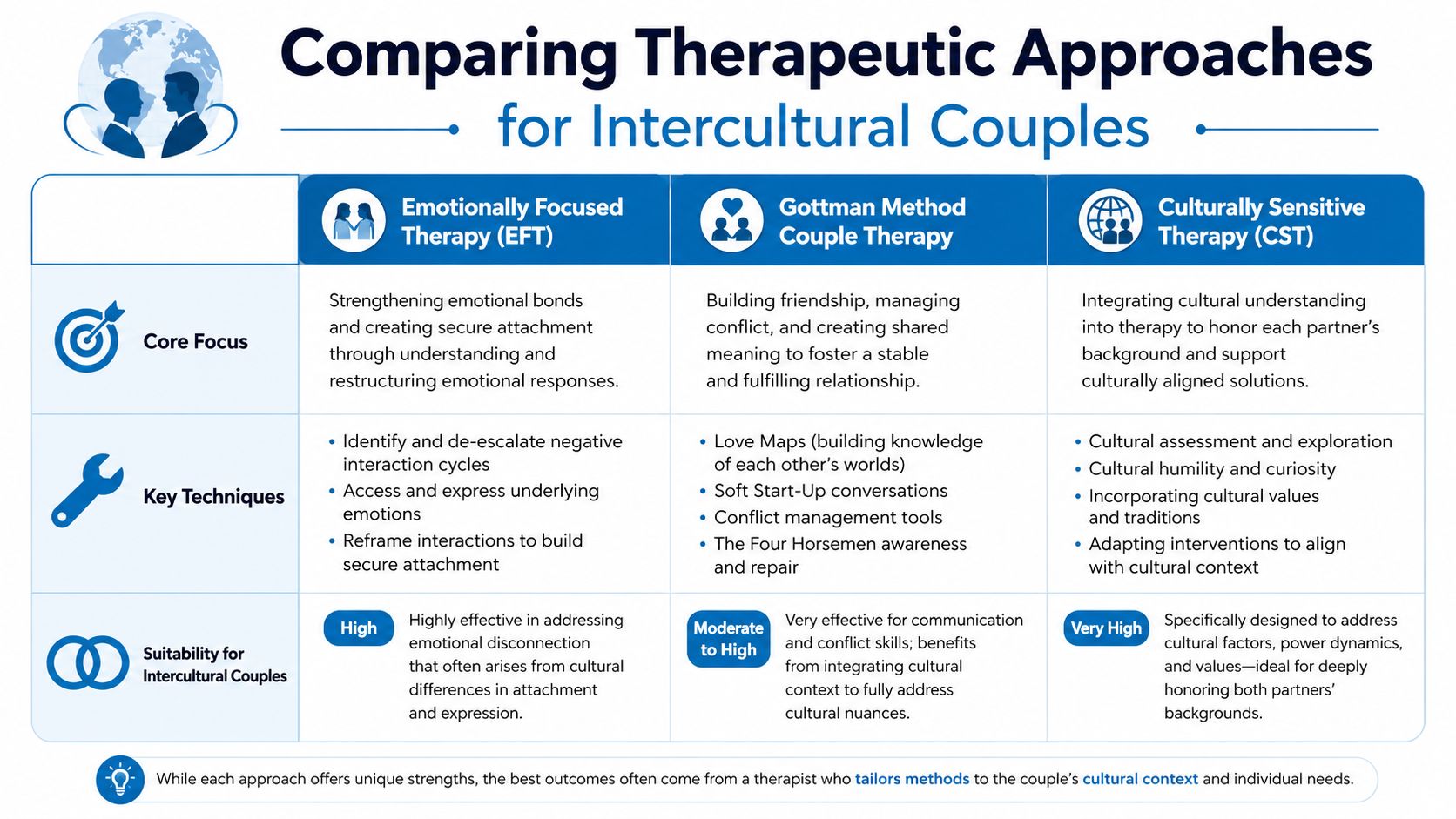
Emotionally Focused Therapy, often called EFT, is especially useful here. In the case-based EFT paper on intercultural couples, therapists describe how EFT helps partners identify how culturally driven norms, values, and expectations shape the emotional meaning of conflict, then translate those differences into attachment needs rather than blame.
That matters because many intercultural couples are not fighting only about chores, sex, parents, or planning. They are fighting about what those things symbolise. Am I important? Am I respected? Do you stand with me? Do I still belong if I'm different from you?
What tends to work and what usually doesn't
What works:
- Curiosity before defence
- Explaining family rules instead of assuming they are obvious
- Linking reactions to needs
- Making room for grief about migration, distance, or divided loyalties
What usually doesn't work:
- Colour-blind relationship thinking: pretending culture doesn't matter
- Forced compromise: where one partner's individuality fades
- Using “that's just my culture” to avoid accountability
- Treating every practical stress as proof of incompatibility
Some couples also benefit from adding forms of co-regulation outside the therapy room. For a few, movement-based practices can help reduce stress and restore connection. If that speaks to you, this piece on dance for mental health offers a gentle example of how body-based experiences can support emotional wellbeing alongside talking therapy.
Evidence-Based Approaches for Lasting Change
The field of couple therapy is no longer built only on theory or good intentions. A 2023 review reports that the average person completing couple therapy is better off than 70%–80% of people who do not receive treatment, according to the PMC review on couple therapy in the 2020s.
For intercultural couples, that matters because the work needs more than sensitivity. It needs method.
How different approaches help
| Approach | What it focuses on | Best use in intercultural work |
|---|---|---|
| EFT | Emotional bonding and attachment patterns | When conflict quickly becomes hurt, panic, distance, or protest |
| IBCT | Acceptance, behaviour patterns, and workable change | When couples keep fighting over enduring differences |
| Schema Therapy | Core beliefs formed earlier in life | When cultural friction activates old wounds such as rejection, defectiveness, control, or abandonment |
| Systemic-relational therapy | Relationship patterns in context | When extended family, roles, and multi-person dynamics strongly shape the couple |
| Ethnopsychotherapy | Meaning shaped by culture, language, and migration | When identity, displacement, belonging, and cultural narratives are central |
The PMC review notes that modern couple therapy often shares strategies such as tracking patterns, psychoeducation, and creating attachment-enhancing experiences. Different models place the emphasis in different places. Some work more through emotion. Some through behaviour and acceptance. Some through cognition and meaning.
What this looks like in practice
IBCT can be useful when the issue is not “How do we change this person?” but “How do we stop turning this difference into a recurring injury?” That is often the core question in intercultural relationships.
Schema Therapy helps when a present-day disagreement activates something older. A partner may react strongly not only because of a cultural clash, but because the clash touches a long-standing schema such as “I will be left”, “I am too much”, or “My needs do not matter”. Culture may shape the trigger. Personal history often shapes the intensity.
CBT can also help when conflict is fuelled by assumptions, catastrophic thinking, or rigid interpretations. If you want a clear overview of how structured thought work supports emotional change, this guide to cognitive behavioral therapy for anxiety is a useful starting point, even though couple work itself is broader than anxiety treatment alone.
A good therapist does not force one model onto every couple. The method should fit the pattern in front of them.
When I assess an intercultural couple, I'm listening for several layers at once. Is the core problem emotional disconnection, behavioural escalation, cultural misunderstanding, old trauma, or external stress that the relationship is absorbing? The answer shapes the intervention.
What to Expect in Your Therapy Sessions
The first session usually feels less dramatic than people expect. It is not a courtroom. It is not a debate about who is right. It is a structured conversation where the therapist starts mapping the relationship clearly.
Early sessions often explore:
- Each partner's background: country, language, family style, migration story, and previous relationships
- The current pattern: what happens before, during, and after a typical conflict
- Hot topics: family obligations, money, intimacy, bureaucracy, parenting, religion, or future plans
- Strengths: what still works, when connection feels easier, and what keeps the couple invested
The therapist is listening for the cycle
Intercultural couples therapy works best when the therapist can hear both content and process. The content is the argument about the mother-in-law, the permit renewal, or the child's school language. The process is what the couple does with each other under stress.
The practical work often involves communication techniques such as open-ended questioning, active listening, clarification, and sometimes allowing one or both partners to speak in their native language when needed.
A session may sound like this:
- “When she goes quiet, what do you assume it means?”
- “When he raises the issue immediately, what happens inside you?”
- “What did conflict look like in your family?”
- “What part is about today, and what part is about feeling alone in Italy?”
That kind of questioning slows the interaction down enough for both people to see the pattern instead of only defending themselves inside it.
Language matters more than couples often expect
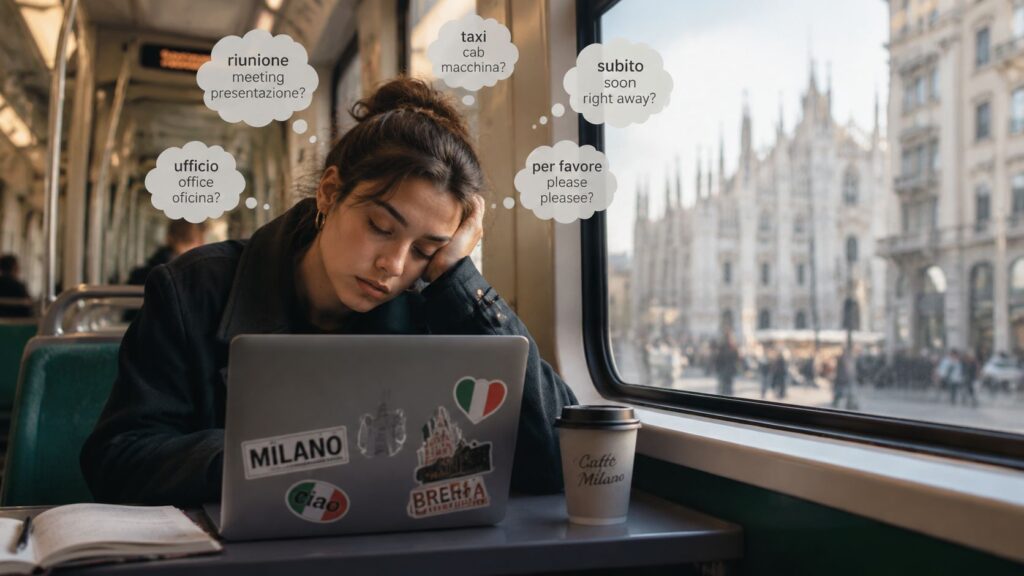
Many mixed-nationality couples function in a shared language that is neither partner's first language. That can work well socially and still fail under emotional pressure. People often lose nuance when they are upset, ashamed, afraid, or trying to explain family dynamics that live more naturally in another language.
That is one reason some couples look specifically for online therapy in English in Italy or for a therapist who can flex between languages when necessary.
Practical questions also matter. Sessions need to fit work schedules, travel, and city changes, especially for expat couples. For couples seeking structured support in this context, Therapsy offers multilingual online and in-person options across Italy, and couple therapy starts from €100 per session.
How to Find the Right Therapist in Italy
Finding the right therapist is not only about credentials. It is about fit, method, and whether the therapist can hold cultural complexity without reducing everything to stereotypes.
A technically trained couple therapist may still miss the migration layer. A culturally aware therapist may still lack a strong method for couple dynamics. You need both.
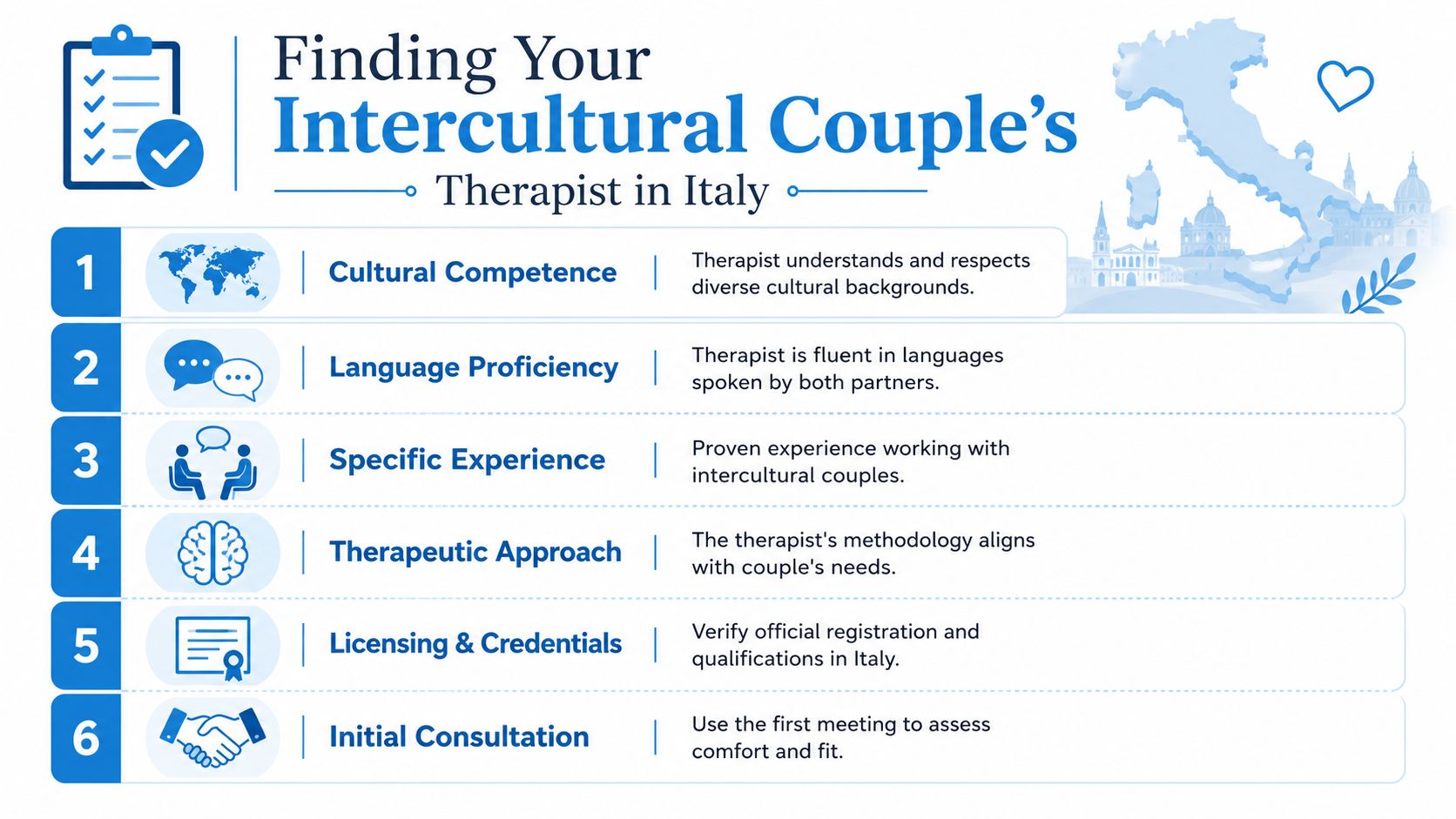
A practical checklist
Look for cultural competence
The therapist should be able to explore difference without exoticising it or pretending it does not matter.Check language fit
If one or both partners express emotion more precisely in a non-Italian language, that matters clinically, not just logistically.Ask about experience with intercultural couples
Experience helps the therapist recognise patterns around migration, family distance, visa stress, and divided belonging.Ask how they work
A good answer should include an evidence-based approach, not only vague reassurance.Verify licensing and professional background
In Italy, proper credentials are essential.Notice the feeling in the first consultation
You do not need instant comfort, but you should feel understood, not judged or simplified.
The right therapist helps both partners feel visible, while still challenging the pattern that keeps hurting the relationship.
Red flags worth noticing
Some signs of poor fit appear quickly:
- The therapist takes sides too fast
- Culture is treated as a curiosity rather than a clinical factor
- One partner's language limitations are ignored
- Administrative stress is dismissed as “not emotional”
- Sessions stay at the level of advice instead of pattern change
For couples specifically seeking this kind of support, it helps to review options for an English-speaking couples therapist in Italy and ask direct questions before committing. You are not being difficult by screening carefully. You are protecting the process.
Who works with intercultural couples at Therapsy
A couple that does not share a first language, a passport or a set of assumptions about family is not a couple with a problem. It is a couple with a specific set of problems, and these clinicians work on them.
Dr. Maria Luisa Vampa works with couples in every kind of relationship, including interracial and intercultural ones, married or not, and her clinical experience covers adoptive, blended and LGBTQ+ families. She works in French as well as English, and has lived as an expat in several countries.
Dr. Svetlana Loginova has international couples and intercultural relationships as a declared specialism. Her systemic training reads a difficulty inside the relational system rather than assigning it to one partner. She offers sessions in Russian.
Dr. Alessia Ranieri works with intercultural couples and family dynamics alongside relocation and cross-cultural life. She lived in London and holds a PhD from Henley Business School.
You do not have to work out who fits on your own. You tell Therapsy what you are looking for, a member of our clinical team reads your request, and they introduce you. The first call is free.
FAQ
Is intercultural couples therapy only for couples from different nationalities
No. Intercultural couples therapy is for any couple whose relationship is shaped by meaningful cultural differences. That can include nationality, ethnicity, religion, language, migration history, class background, or very different family systems.
Does the therapist need to share our culture
No. The therapist does not need to come from your exact background, but they do need cultural competence and a strong couple therapy framework. The key is whether they can understand the role of culture without stereotyping either partner.
Can therapy help if our biggest stress is bureaucracy in Italy
Yes. Therapy can help when legal and administrative strain is fuelling conflict. A useful process separates paperwork stress from relationship meaning, so the couple can respond as a team rather than turning external pressure into mutual blame.
What if my partner says this is just a communication problem
That may be partly true. In intercultural relationships, communication problems often reflect deeper differences in meaning, attachment, and expectation. Therapy helps identify what each partner hears underneath the words, which is usually where the conflict becomes repetitive.
How do sessions work if we speak different native languages
Sessions can still work very well. A skilled therapist will slow the conversation down, check meaning carefully, and may allow one or both partners to use their native language when needed. Emotional accuracy matters more than keeping everything in one shared language at all costs.
How long does intercultural couples therapy take
It depends on the couple's pattern and goals. Some couples come for a focused piece of work around one repeating conflict, while others need longer-term support because culture, attachment, migration, and family issues are tightly linked. What matters most is whether sessions are creating better understanding, less reactivity, and more reliable repair.
Is therapy appropriate if we still love each other but keep having the same fight
Yes. That is one of the most common reasons couples seek help. Repeating fights usually mean the couple is caught in a pattern they can no longer see clearly from inside, even when the love is still present.
When should we seek help instead of waiting
Seek help when the same conflict keeps returning, when one partner feels increasingly alone, or when practical life in Italy is putting constant pressure on the relationship. Earlier support is often easier than waiting until every disagreement feels loaded with resentment.
If you're navigating love, migration, language differences, or family pressure in Italy, support can help you make sense of the pattern without blaming each other. Book your first free assessment call with Therapsy. It's free, with no commitment, just a conversation with our Clinical Director who will listen and help match you with the right therapist for your situation.
Dr. Francesca Adriana Boccalari, Clinical Director at Therapsy