Thrive Globally: Long Distance Relationship Counseling for Expats in 2026
Long distance relationship counseling for expats is a specialized form of psychotherapy designed for partners living in different countries, often due to work, studies, or the complexities of immigration. This therapy addresses the unique pressures of expat life, particularly in a country like Italy, where physical distance is compounded by time zones, cultural differences, and the stress of navigating a new world alone. It is not just a tool for crisis intervention; it is a proactive strategy to build a relationship that can withstand the significant strain of separation.
Related reading: long distance relationship therapy and intercultural couples therapy.
The primary goal of this counseling is to equip couples with the tools to maintain emotional intimacy, improve communication, and align on a shared future, despite the miles between them. For an expat in Italy, this support can be the bridge that keeps the connection strong and healthy while they build a new life abroad.
More Than Just Miles Apart: The Psychological Core of Expat LDR Counseling
Navigating a relationship across borders introduces challenges that standard couples therapy may not fully address. When one partner is building a new life as an expat in Italy, the distance is not merely geographical—it becomes emotional and cultural. Long distance relationship counseling for expats is a specialized therapeutic approach designed to support these unique partnerships. This form of therapy goes beyond generic advice, tackling the specific stressors that come with an international lifestyle.
Think of it as building a 'relational bridge.' While you and your partner are on separate shores, a therapist helps you construct a strong, resilient connection that spans the distance. This bridge is built with crucial psychological materials:
- Secure Communication: Learning to talk openly and resolve conflict productively, even when you cannot be in the same room. This involves skills derived from therapeutic models like CBT.
- Shared Goals: Aligning on a future vision, whether that means reuniting in Italy, moving elsewhere, or defining the relationship's next chapter. This addresses the uncertainty that can erode a long-distance partnership.
- Managing Expat Stress: Addressing feelings of loneliness, guilt, or resentment that can surface when one person is adapting to a completely new life abroad, while the other is not.
- Maintaining Intimacy: Finding creative ways to foster emotional and physical closeness, using principles of attachment theory to keep the bond secure despite thousands of miles of separation.
As the Clinical Director at Therapsy, specializing in expat mental health, I see this not as managing a problem, but as turning separation into an opportunity. It is a chance for couples to build exceptional communication skills and a deeper understanding of one another, often leading to a stronger bond than before.
— Dr. Francesca Adriana Boccalari
This counseling acknowledges how deeply the expat journey impacts a relationship. For instance, the partner in Italy might be busy building a new social circle, while the partner back home feels left behind—a dynamic we call 'asymmetric belonging.' A therapist trained in intercultural psychology can help you both navigate these feelings without blame or judgment. Ultimately, this is a proactive step. It provides a structured, safe space to strengthen your bond, ensuring that distance fortifies your relationship instead of weakening it. If you're an expat navigating love across borders, our guide to expat therapy in Italy can be a helpful resource.
The Unique Stressors Expat Couples Face in Italy
Living as an expat in Italy is an experience filled with immense beauty, but it also comes with significant challenges. When you're in a long-distance relationship, these challenges are often amplified, creating a unique set of stressors that go far beyond typical LDR issues. The fantasy of la dolce vita can clash painfully with the reality of one partner navigating a foreign system entirely on their own.
What may have started as a shared dream of moving to Italy often becomes a solitary journey for one person. This partner is left to handle complex Italian bureaucracy, build a social circle from scratch, and create a daily life in a new culture. Meanwhile, the partner back home watches this new life unfold from a distance, which can easily breed feelings of loneliness, jealousy, or being left behind.
The Challenge of Asymmetric Belonging
A core psychological issue we often see in long distance relationship counseling for expat couples is a phenomenon known as 'asymmetric belonging.' It’s a powerful term for a simple, painful imbalance. One partner becomes deeply integrated into their new Italian life—making friends, learning the language, and creating local routines—while the other remains anchored to their home environment, feeling like an outsider looking into their partner's world.
This growing gap in experience, not just physical distance, is a potent source of conflict. One person is adapting and changing, while the other feels static. It creates two separate worlds where a shared one used to be.
The infographic below illustrates how specialized expat counseling is designed to address these distinct pressures, which standard relationship support often overlooks.
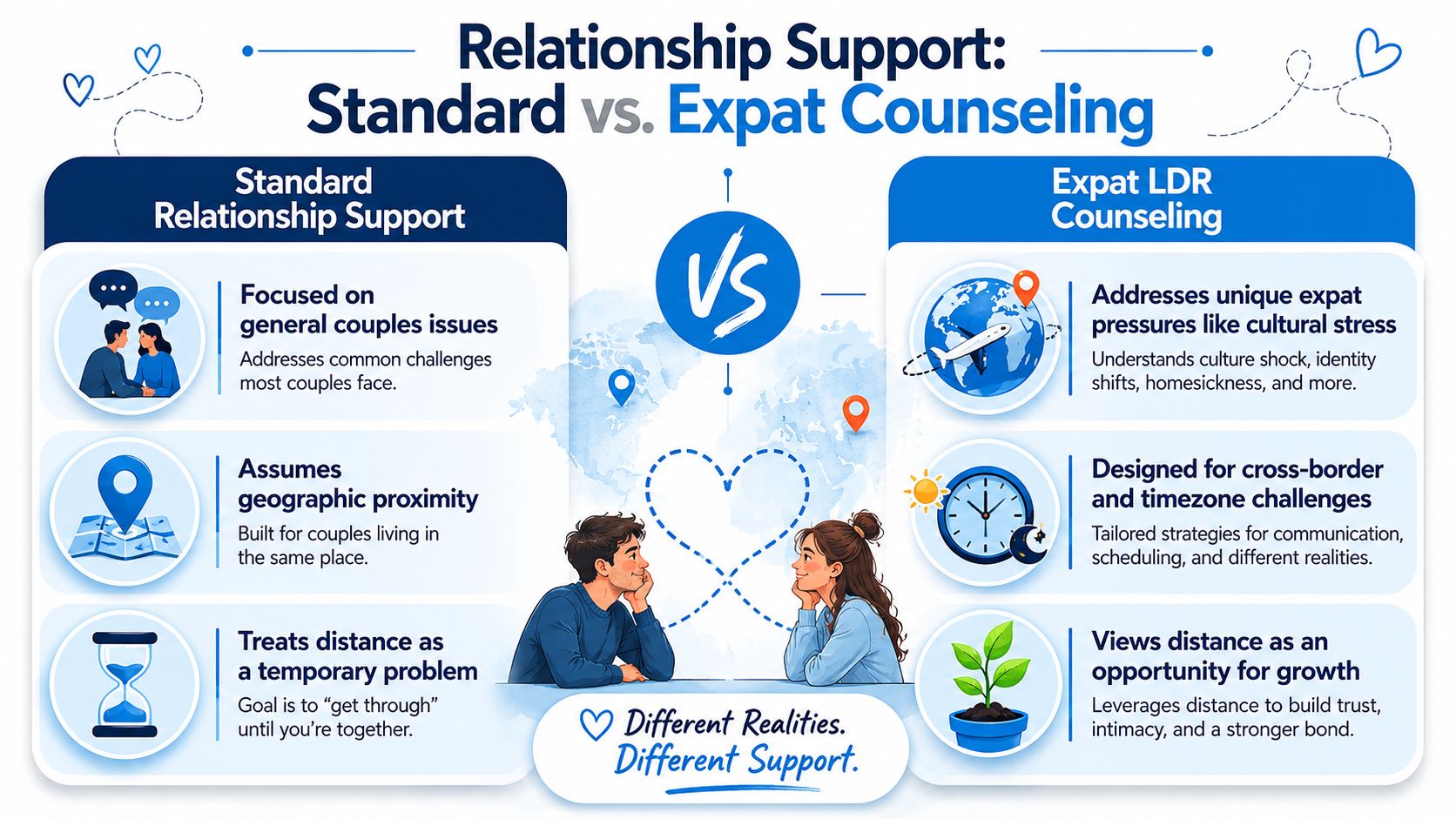
As you can see, expat-focused therapy is built specifically for the cross-border and cultural challenges that more generic approaches may not be equipped to handle.
Common LDR Problems, Magnified for Expats
Every long-distance couple deals with trust, communication, and loneliness. But for expats in Italy, these common issues are intensified by unique local factors. We often see general LDR challenges become much more acute in the expat context.
Here is a quick comparison of how general LDR challenges are magnified for expats trying to build a life in Italy.
| General Challenge | Expat-Specific Challenge in Italy |
|---|---|
| Communication Gaps | A simple disagreement can escalate when one person is exhausted from speaking a foreign language all day, and the other can't grasp the cultural context of the frustration. |
| Loneliness | Feeling lonely is normal in an LDR, but for an expat, it’s compounded by cultural isolation and being physically far from any familiar support system. |
| Different Schedules | One partner may be enjoying an aperitivo with new colleagues in Milan while the other is just starting their workday. This creates a disconnect in daily experiences. |
| Trust and Jealousy | Worries about a partner's social life become intensified when that life is happening in an exciting new country, full of new people and unfamiliar cultural norms. |
| Future Planning | Vague plans to "be together one day" become fraught with the concrete, stressful realities of visas, work permits, and the immense pressure on one partner to adapt. |
| Feeling "Left Out" | Missing a partner's life events is hard, but it’s even harder when you’re missing out on their entire process of cultural adaptation and personal transformation. |
These layered stressors require more than just generic advice; they demand a therapeutic approach that truly understands the intersection of relationship dynamics and the complex expat experience. You can learn more about navigating these complexities in our guide to intercultural couples therapy.
How Evidence-Based Therapy Bridges the Distance
When you're navigating long distance relationship counseling for expat couples, you need more than just a space to talk. Effective therapy provides a structured, evidence-based roadmap to close the distance, both emotionally and physically. It’s about turning abstract feelings of doubt and loneliness into concrete problems you can solve together, even when you're continents apart.
Think of the therapist as an expert guide, helping you have the conversations you can’t seem to have on your own. The goal is to break the cycle of missed calls and misunderstood texts, creating a safe harbor where real understanding can finally take root.
Challenging Destructive Thoughts with CBT
One of the most powerful tools in our toolkit is Cognitive Behavioral Therapy (CBT). When you're in a long-distance relationship, your mind can become a storyteller, and often, it tells a painful tale based on very little evidence. A missed call isn't just a missed call; it quickly spirals into, "They're forgetting about me," or worse, "They must have found someone else."
CBT helps you and your partner catch, challenge, and reframe these automatic negative thoughts. A therapist works with you to see these mental traps for what they are—patterns—and then gives you the skills to replace them with more balanced, realistic perspectives. This isn't about naive optimism; it's about building a foundation of rational trust that reduces anxiety and stops resentment before it starts.
Therapy gives you a shared language to discuss these fears. It transforms a lonely, internal struggle into a collaborative effort to maintain a healthy mindset, which is essential for surviving the distance.
Uncovering Deeper Patterns with Schema Therapy
Sometimes, the conflicts that flare up in a long-distance relationship feel painfully familiar because they are. The physical separation doesn't create new problems so much as it activates deep-seated emotional patterns, or "schemas," that were often formed in childhood. For instance, if you have a deep-rooted fear of abandonment, the distance can feel like a constant, unbearable threat, no matter how much your partner reassures you.
Schema Therapy helps you both understand why you get stuck in the same arguments again and again. It works by:
- Identifying Core Schemas: Pinpointing the specific emotional triggers—like abandonment, mistrust, or failure—that are at play for each of you.
- Understanding Their Origins: Gently exploring how past experiences are shaping your reactions to being apart right now.
- Developing New Coping Skills: Learning healthier ways to respond when a schema gets activated, so you can finally break free from old, destructive cycles.
Therapsy’s 50+ multilingual therapists are trained in these powerful, evidence-based techniques, guiding expat couples through these complex emotional landscapes with expertise and deep cultural sensitivity. If you're wondering how this all works when you're not in the same room, you can learn more about the specifics and effectiveness of online psychotherapy. By using these proven methods, a therapist doesn't just offer a temporary patch; they help you build a stronger, more resilient relationship architecture that can withstand the unique pressures of expat life.
Actionable Strategies for a Stronger Connection
While structured therapy provides a guided path, there are immediate, practical strategies you can start using today to strengthen your bond. This isn't about generic advice like "schedule more video calls." It's about creating intentional habits grounded in psychological principles that build a secure connection, even across continents and time zones.

It’s important to remember that distance itself is not automatically destructive. Long-term success rates for long-distance relationships are estimated to be around 58% to 60%. The decisive factors are almost always the quality of communication, mutual commitment, and having a clear plan for eventually closing the distance. For expats, this is particularly relevant. Therapy often helps turn vague hope into a concrete plan, replacing uncertainty with timelines and clearer communication.
Create Meaningful Connection Rituals
Rituals provide stability and predictability in a relationship that can feel uncertain. They create small, shared moments that anchor you to each other. Instead of just talking, focus on doing things together, even when you're apart.
- Watch a show simultaneously. Use a streaming service extension to sync your viewing. The shared experience of a laugh or a gasp creates powerful feelings of closeness.
- Share a daily photo. It doesn't have to be a perfect selfie. A picture of your morning coffee, a book you're reading, or the view from your window offers a glimpse into your world, making your partner feel part of your day.
- Plan a ‘virtual’ date night. Order each other a meal from a local delivery service. Dress up as you would for a real date. This small effort signals that your time together is special and worth prioritizing.
Foster Individual Growth
One of the healthiest things for a long-distance relationship is for both partners to have fulfilling individual lives. This reduces the risk of codependency, where one person’s happiness becomes entirely dependent on the other.
Maintaining your own hobbies, friendships, and goals is not a threat to the relationship; it’s a vital component of its health. It ensures you both grow as individuals, bringing more richness to the relationship when you reconnect.
This individual strength also provides a buffer against the loneliness that can accompany an expat lifestyle. Encouraging each other’s personal growth builds mutual respect and makes your shared time more meaningful. For couples struggling with arguments that arise from these dynamics, exploring new approaches to conflict resolution in relationships can be incredibly beneficial. Professional guidance can help you tailor these strategies to your specific cross-cultural situation.
Finding the Right Multilingual Therapist in Italy
Finding the right support for a relationship that spans borders is one of the most important decisions you can make. When you’re looking for long distance relationship counseling for an expat couple, the choice of therapist is everything. You don’t just need a clinical expert; you need a professional who genuinely understands the realities of expat life, cultural adaptation, and the specific pressures of keeping a relationship alive across different countries.
A good therapist acts as a guide, helping you build a stronger connection that can bridge any physical distance. The right professional for you will be fluent in your shared language, but just as importantly, they will have the cultural awareness to help you both make sense of your international relationship.
Key Criteria for Choosing Your Therapist
When you start your search, you need to look beyond a simple directory listing. Your therapist should feel like a trusted ally for both you and your partner. Here are the most important things to consider:
- Multilingual and Culturally Competent: Being able to speak in your native or shared language is non-negotiable. A therapist who is fluent in your language means nothing gets lost in translation, especially when conversations get emotional. Cultural competence is just as vital—it means they understand how different backgrounds shape communication styles, relationship expectations, and family dynamics.
- Experience with Expat Issues: Look for a professional with specific experience in the challenges of expat life. This includes loneliness, the stress of Italian bureaucracy, identity shifts, and the unique strain of living in Italy while your partner is somewhere else.
- Flexibility with Online Sessions: A therapist who is experienced with online counselling knows how to manage sessions across time zones. They can make sure both partners feel equally present and heard, no matter where they are in the world.
Finding a good fit is about more than just credentials; it’s about connection. The relationship you build with your therapist is a powerful part of the healing process, so feeling understood and supported is essential.
At Therapsy, we built our service specifically to meet these needs. Our team is made up of 50+ multilingual therapists who are not only licensed professionals but are also deeply familiar with the expat experience themselves, offering services both online and in-person across 21 Italian cities. We know that algorithms and questionnaires can't grasp the complexities of a human relationship. That's why our Clinical Director, Dr. Francesca Adriana Boccalari, personally handles the matching process. This human-first approach means you get paired with a therapist who truly fits your unique situation. The initial assessment call is always free—it’s a no-risk way to have a real conversation, ask your questions, and feel confident that you’ve found the right support. You can read more about how we help couples in our guide to finding an English-speaking couples therapist in Italy.
Navigating the Transition to Living Together Again
Reuniting after living apart is a huge milestone, but it's also a transition that many couples underestimate. The truth is, closing the distance isn't the finish line; it's a new starting line with its own set of challenges. Making the leap from a long-distance relationship to sharing a home requires patience, open communication, and a real willingness to redefine your life as a team.

From an Idealized Partner to a Real Person
When you're in a long-distance relationship, it’s completely normal to idealize your partner and the life you'll eventually build together. It’s a healthy way to cope with the distance. But when you finally move in, you have to reconcile that idealized version with the real person who has everyday habits, moods, and needs—the person who leaves their socks on the floor or gets quiet when they're stressed.
That shift from intermittent, high-quality time to the constant, mundane reality of daily life can be jarring. You’re essentially renegotiating your attachment, moving from scheduled video calls to sharing a physical space 24/7. This can bring old insecurities to the surface or trigger patterns you thought you had already worked through.
Addressing the Friction Points of Moving In
The most common points of friction often seem practical, but they usually point to deeper emotional adjustments. For expat couples, especially those from different cultural backgrounds, these transitions can be uniquely complex. For example, one partner may have given up their career, friends, and country to make the move, creating an unspoken power imbalance or pressure for the move to be "worth it."
Cultural and logistical pressures can amplify misunderstandings, as you can see in the data on connected couples. You’re not just merging two lives; you’re often merging two worlds.
"Moving in together after being apart is a beautiful, vulnerable process. You’re learning how to be a team in a shared space, not just on a video call. It’s essential to give each other grace and create new routines together."
— Dr. Francesca Adriana Boccalari
This is where long distance relationship counseling for an expat couple can be invaluable. A therapist provides a neutral ground to help you navigate this new territory. They can help you:
- Negotiate your shared space: Figuring out the balance between 'your' things, 'my' things, and 'our' home.
- Merge your daily routines: Creating new rituals for mornings, evenings, and weekends that work for both of you.
- Redefine your roles: Moving from two independent individuals to interdependent partners without losing your sense of self.
Therapy gives you a safe space to manage these adjustments, helping you build a new ‘in-person’ dynamic that is even stronger and more resilient than the one you built from afar.
FAQ
How effective is online therapy for long-distance couples?
Online therapy is highly effective for long-distance couples because it removes the geographical barrier that defines their challenge. Secure video platforms allow a skilled therapist to observe non-verbal cues and relational dynamics just as they would in person. The effectiveness lies not in the physical room, but in the therapist's ability to create a safe, focused space where both partners feel equally heard and understood, regardless of their location.
What if we are in very different time zones?
This is a very common and solvable logistical hurdle for expat couples seeking therapy. An experienced therapist who works with international clients will offer flexible scheduling, including evening or early morning appointments, to accommodate significant time differences. At Therapsy, our team is accustomed to bridging these gaps to find a consistent time that is sustainable and stress-free for both partners.
Should we do therapy together or individually?
The most effective approach often involves a combination of both couples and individual sessions. Couples sessions are crucial for working on shared communication patterns, resolving conflicts, and aligning on future goals—the "us" part of the relationship. However, individual sessions provide a private space to process personal feelings like loneliness, resentment, or identity shifts, which are common in the expat experience, allowing you to strengthen both the "we" and the "me."
What can we expect in a first session?
The first session is primarily about establishing connection and understanding in a safe, non-judgmental environment. You can expect to discuss your relationship history, the specific challenges that brought you to therapy, and your hopes for the process. At Therapsy, the first assessment call with our Clinical Director is always free, offering a no-commitment opportunity to ask questions, share your story, and ensure you feel comfortable before proceeding.
Navigating a relationship across borders can be challenging, but you don't have to manage it alone. Book your first free assessment call — no commitment, just a conversation with our Clinical Director who will listen and match you with the right therapist for you. Visit therapsy.it.