A panic attack after a therapy session can happen, especially after emotionally intense work, and it usually doesn't mean therapy is failing. The attack may be delayed as the nervous system continues processing difficult material. Grounding, slow breathing, hydration, light food, and a calm plan for the next 24 to 72 hours can help. Severe or unusual physical symptoms require medical evaluation.
Therapsy is a multilingual psychotherapy service in Italy that connects expats with therapists who speak their native language.
Why Panic Attacks Happen After Therapy
Leaving a session feeling exposed, then experiencing panic on the walk home or after returning to an empty apartment, can feel like proof that something went wrong. In many cases, it reflects a temporary increase in activation after difficult material has been discussed, not a failure of therapy.

Is a panic attack after therapy normal?
A brief increase in panic symptoms can occur after intense therapy, while the broader treatment pattern usually moves toward improvement.
CBT explains panic as a feedback loop between bodily sensations, fearful interpretations, and protective behavior. Therapy may temporarily bring that loop into sharper focus, particularly when someone is learning to notice sensations without treating them as proof of danger. Trauma-informed approaches also recognize that discussing grief, migration stress, family separation, discrimination, or relationship insecurity can leave the nervous system activated after the conversation ends.
The therapy room provides structure and interpersonal safety. Once a client steps into a busy street, a train station, or a quiet home, the mind may continue processing without the same immediate support. The body can then register the emotional impact later, producing shaking, breathlessness, racing thoughts, or a sudden fear of losing control.
Clinical evidence supports a balanced interpretation. A pilot study of a single group CBT session found significant improvements eight weeks after treatment across panic frequency, distress during attacks, anticipatory anxiety, agoraphobic fear and avoidance, fear of panic sensations, and work and social functioning (clinical study summary). A separate focused CBT trial also found greater reductions in panic severity than treatment as usual.
That evidence doesn't mean every reaction is harmless or that every therapy plan is suitable. It means a difficult evening should be assessed in context, including whether symptoms settle, whether functioning returns, and whether the therapist can adjust the work collaboratively.
People seeking more detail about an attack during the appointment can also read Therapsy's guide to what happens during a panic attack in therapy. For readers considering supplements, a separate CBD for panic attacks safety guide may help explain why safety, interactions, and medical advice matter before adding anything to a treatment plan.
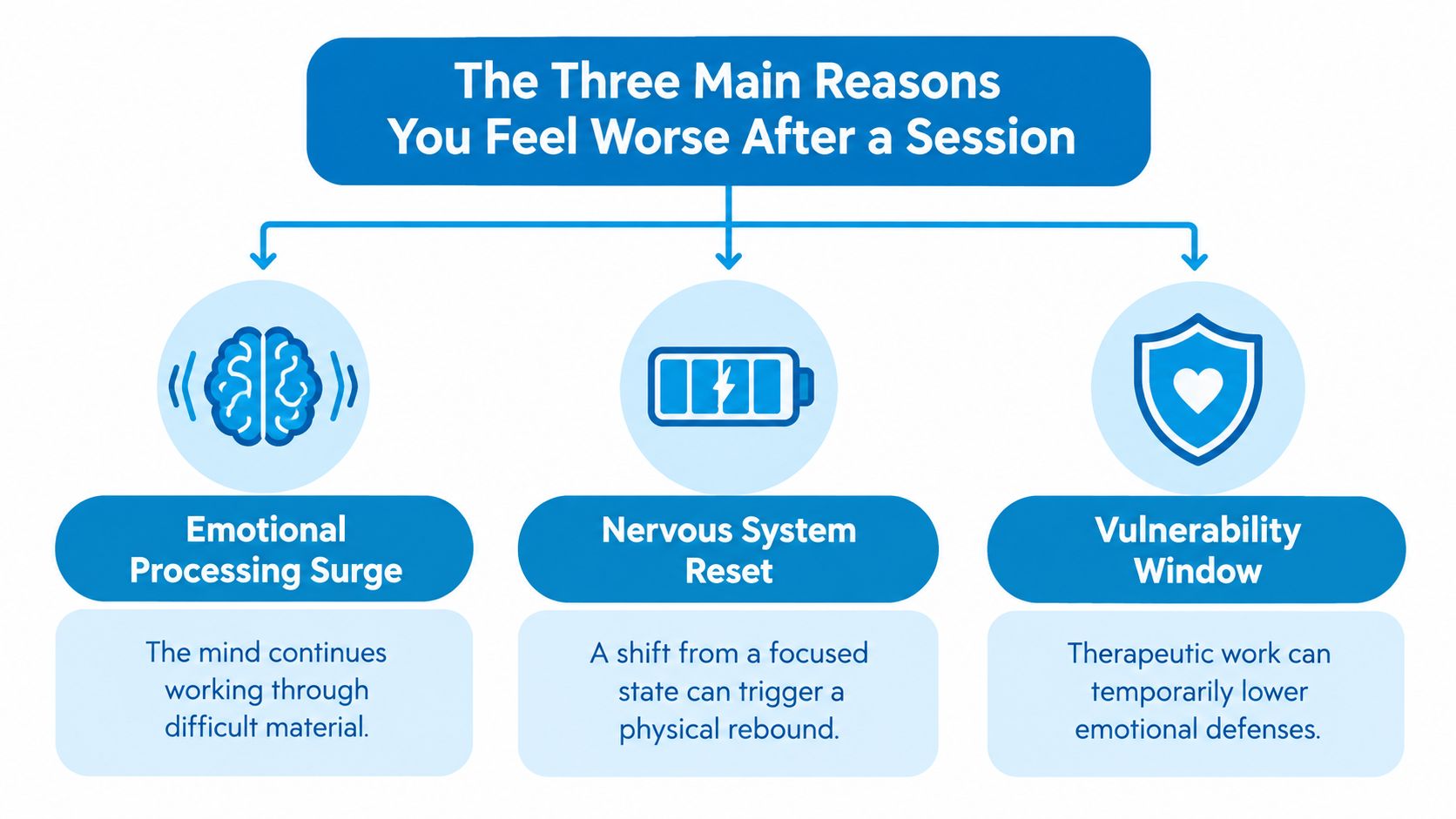
The Three Main Reasons You Feel Worse After a Session
Feeling worse afterward often reflects delayed emotional processing, exposure aftereffects, or increased attention to bodily sensations.
Why can emotional processing trigger delayed panic?
The mind may continue working through difficult material after the session, so the body's alarm response can appear later.
An expat discussing a painful relocation, separation from family, or fear of failing in a new country might remain composed while speaking. Later, once work demands stop, the emotional material can become more noticeable. The resulting panic may feel sudden, but the processing began earlier.
This is a delayed processing surge. The person may notice fatigue, tearfulness, muscle tension, intrusive memories, or a strong need to withdraw. Such reactions can be temporary, but they're useful information for the next appointment.
Can CBT or EMDR make panic worse after a session?
CBT and EMDR can activate feared sensations or memories as part of carefully planned treatment, which may leave temporary aftereffects.
In panic-focused CBT, interoceptive exposure may deliberately evoke sensations such as a racing heart, dizziness, depersonalization, or shortness of breath. EMDR may also bring emotionally charged memories into active attention. Exposure isn't about producing fear. It requires appropriate preparation, repetition, processing, and a gradual reduction in the meaning assigned to the sensation or memory.
A clinical summary describes repeated exposure until feared sensations become “boring,” while also cautioning that activation alone isn't enough. The therapist needs to consider dose, pacing, safety behaviors, and what the client learns from the exercise. A nervous system regulation therapy approach can be relevant when stabilization and emotional regulation need more attention before further exposure.
Why do normal body sensations suddenly feel dangerous?
Therapy can increase interoceptive attention, making ordinary changes in breathing, heartbeat, balance, or temperature feel more prominent.
For example, an international student might notice a normal heartbeat while walking home and immediately connect it with the fear of another attack. The sensation isn't necessarily stronger than before. It may be receiving more attention, followed by a catastrophic interpretation.
The useful question is not, “Why did the body create this symptom?” It is, “What meaning did the mind attach to it?” That distinction helps a therapist refine CBT work without dismissing the physical experience.
What to Do in the 24 Hours After a Difficult Session
After an intense session, the safest immediate plan is to reduce stimulation, orient to the present, support basic physical needs, and record what happened.
What should happen immediately after leaving?
During the journey home, grounding can interrupt the loop between bodily alarm and catastrophic interpretation.
The 5-4-3-2-1 exercise asks the person to identify things visible, sounds, physical sensations, smells, and taste. It moves attention from internal threat monitoring toward the current environment. A person walking through Milan, Rome, or another unfamiliar city can name building colors, pavement underfoot, nearby sounds, and the feeling of a phone or bag in the hand.
Paced breathing can also help if it feels comfortable. One practical pattern is an inhalation lasting 4 seconds followed by an exhalation lasting 6 seconds. Slow breathing can reduce the effects of hyperventilation and help restore carbon dioxide balance (breathing and grounding guidance).
The aim isn't to force the panic away. Struggling to eliminate every sensation can become another safety behavior, which keeps attention locked onto the body.
What helps during the first few hours?
A light meal, water, reduced screen input, and gentle movement can give the nervous system a less demanding environment in which to settle.
A person might choose soup, toast, fruit, or another easy food, then take a slow walk or stretch the shoulders and jaw. Rest is reasonable, but complete stillness can leave the person monitoring every sensation. A quieter room, softer lighting, and fewer urgent messages can reduce additional stimulation.
Short journaling can also close the loop. The entry might record what was discussed, when symptoms began, what the body felt, what interpretation appeared, and what helped. Readers who need broader ideas can consult these stress regulation tips for busy professionals, while remembering that general advice doesn't replace individualized medical or therapeutic care.

What should happen the next morning?
The next morning, the person can check whether symptoms are easing, whether ordinary tasks are possible, and whether the reaction needs to be discussed before another intense session.
Delayed reactions may appear after emotionally demanding or trauma-focused work, so the next 24 to 72 hours can provide useful information. The person shouldn't treat every fluctuation as evidence of danger, but persistent escalation deserves attention. A structured panic attack treatment approach may include skills practice, exposure planning, medical follow-up, or changes to session pacing.
Core principle: The aim isn't to suppress every feeling. It's to help the brain file the episode as a completed event rather than an ongoing threat.
When Post-Session Panic Is Normal Versus a Warning Sign
A short-lived reaction that gradually settles is different from severe, persistent, or medically concerning symptoms.
| More consistent with temporary processing | Reasons to seek evaluation or review the pace |
|---|---|
| Intensity reduces over time | Panic remains severe despite slow breathing |
| Grounding offers some relief | Chest pain, fainting, or an irregular or very fast heartbeat appears |
| Basic self-care remains possible | Basic functioning becomes impossible for several days |
| The person eventually returns toward baseline | Symptoms keep escalating across sessions or between them |
How can someone tell whether the reaction is settling?
A temporary post-session response generally becomes less intense, even if tiredness or emotional sensitivity lingers.
The NHS states that panic attacks usually last about 5 to 20 minutes, although some can last up to an hour, and are frightening but not usually dangerous (NHS anxiety and panic guidance). The duration of one episode doesn't determine the whole clinical picture. What matters is the direction afterward, including whether the person can drink, eat, sleep, communicate, and resume ordinary responsibilities.
A treatment study reported panic-free status increasing from 18.2% before treatment to 87.2% afterward, with weekly mean panic frequency dropping from 2.0 to 0.1 episodes (panic treatment outcome data). These figures describe treatment outcomes, not a guarantee for an individual, but they help explain why one difficult episode shouldn't automatically be labeled a setback.
When should medical help be sought?
Chest pain, fainting, an irregular or very fast heartbeat, persistent breathlessness, or feeling physically unwell after breathing normalizes should be assessed medically.
Urgent guidance also recommends seeking help when panic lasts longer than 20 minutes despite slow breathing, particularly when physical symptoms are unusual or severe (medical escalation guidance). Panic symptoms can overlap with medical conditions, so therapy shouldn't replace medical evaluation.
If danger signs aren't present but the reaction repeats after every session, the next step is a direct discussion about pacing, session frequency, homework, exposure dose, and whether CBT, EMDR, Schema Therapy, attachment-focused work, or another approach fits the person's needs. A panic attack treatment plan can be revised rather than abandoned.
How to Talk to Your Therapist About a Post-Session Panic Attack
A post-session panic attack is clinically useful information, and telling the therapist allows the treatment plan to become more precise.
Many clients fear disappointing the therapist or appearing unable to cope. That concern is especially understandable for expats who are already adapting to a new language, culture, healthcare system, and social environment. Reporting the reaction isn't criticism. It gives the therapist details that weren't available inside the appointment.

What should a client tell the therapist?
The most useful report includes timing, symptoms, triggers, interpretations, coping attempts, and how long recovery took.
A client might say:
- Timing: “The panic began after leaving the session, not during it.”
- Body: “There was shaking, a racing heartbeat, and pressure in the chest.”
- Meaning: “The heartbeat was interpreted as a sign of medical danger.”
- Aftercare: “Grounding helped somewhat, but the symptoms returned at home.”
- Impact: “Sleep and work were affected afterward.”
This level of detail helps distinguish exposure learning from excessive activation, incomplete processing, or a safety behavior that may be maintaining fear. It also gives the therapist a basis for deciding whether homework needs to be simplified or changed.
Which questions can guide the next session?
Clear questions can turn embarrassment into collaborative treatment planning.
The client can ask whether the intensity fits the agreed approach, whether the pace should slow, whether the exposure needs a smaller dose, and what signs would indicate that the nervous system is becoming overloaded. Questions about EMDR, Schema Therapy, attachment theory, or cross-cultural psychology may also be appropriate when the current formulation doesn't capture the person's cultural identity, migration history, or relational context.
A productive response includes validation, curiosity, and a concrete adjustment. The therapist shouldn't treat worsening symptoms as automatic proof of healing, nor dismiss them as resistance. Someone who wants help preparing for this conversation can use Therapsy's guide on how to talk to a therapist.
Therapsy's clinical team connects clients through human matching by the Clinical Director rather than an algorithm, therapy in the client's own language across 14 languages, and a choice between online and in-person sessions. The first call is free and is with the therapist chosen for that person, so the client can discuss post-session reactions before deciding whether to continue.
Frequently Asked Questions
Why can panic happen days after a therapy session?
A delayed panic reaction can appear after the mind has had time to process emotionally intense material, especially when daily distractions initially keep feelings out of awareness. It doesn't automatically mean the session caused harm, but a delayed or escalating pattern should be recorded and discussed with the therapist.
Does repeated panic mean the therapy approach is wrong?
Repeated panic after sessions doesn't prove that an approach is wrong, but it may indicate that the pace, exposure dose, preparation, or therapeutic fit needs review. The therapist should consider the pattern collaboratively and may adjust the work, add stabilization, or discuss another modality.
How long does post-session activation last?
Post-session activation can fade over hours, while tiredness, emotional sensitivity, or difficulty concentrating may last longer. The NHS describes most panic attacks as lasting about 5 to 20 minutes, but ongoing or worsening physical symptoms require medical assessment rather than being assumed to be therapy-related.
Is it safe to continue therapy if panic follows every session?
Continuing therapy may be reasonable only after the recurring reaction has been discussed and the plan has been reviewed. A therapist should help assess safety, pacing, functioning, and medical factors instead of treating repeated severe panic as something the client must endure.
Therapsy offers human matching by its Clinical Director, therapy in the client's own language across 14 languages, and online or in-person sessions in Italy. The first call is free with the therapist chosen for that person, with no obligation to continue, so readers can visit Therapsy and discuss a panic attack after a therapy session at a comfortable pace.