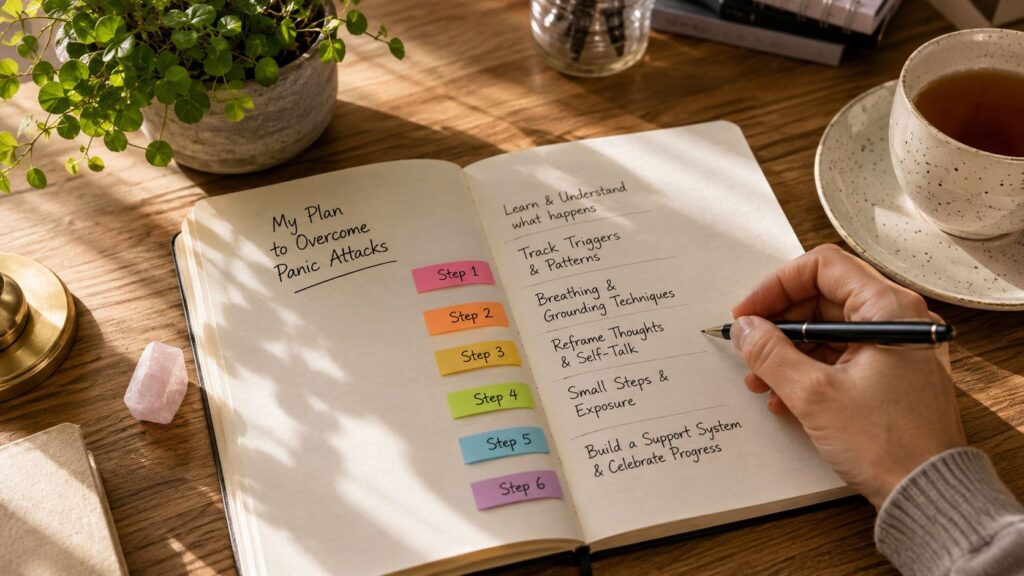
A panic attack in therapy session is usually a temporary surge of fear, not a failure of treatment. The therapist slows the room down, helps the client stay oriented, and uses the moment to learn what the panic cycle looks like in real time. With the right response, the episode can become useful clinical data rather than a reason to stop therapy.
Therapsy is a multilingual psychotherapy service in Italy that connects expats with therapists who speak their native language.
For many expats and international students, the hardest part is not only the panic itself, but the fear of not being understood in the room. A shared language, a calm pace, and a therapist who knows how to work with panic can make that difference much smaller.
What Actually Happens During a Panic Attack in Therapy Session
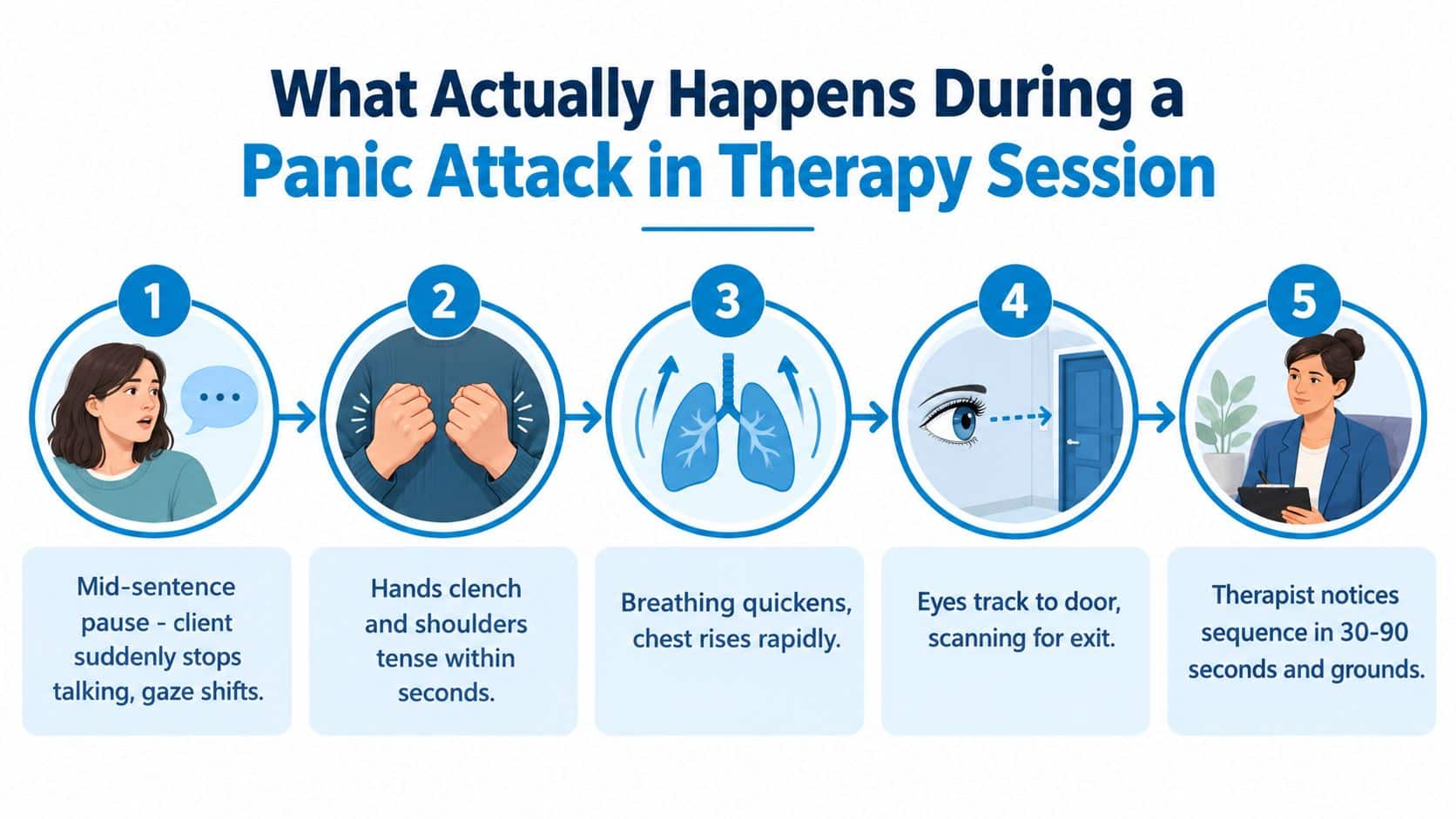
A client may be speaking normally, then suddenly stop mid-sentence, grip the chair, and start scanning the room for the door. The therapist usually notices the sequence before the client can explain it, because the body changes fast, then the thoughts race to catch up.
What does the therapist see first?
The first signs are often physical and visible, not verbal. Hands clench, shoulders lift, breathing gets shallow, and eye contact changes as the person starts searching for escape or safety.
That outside sequence matters because it gives the therapist a roadmap. Panic attacks are time-limited and usually peak within minutes, then ease as the nervous system settles, which means the room does not need to turn into an emergency to be handled well MentalHealth.com.
What does it feel like from the inside?
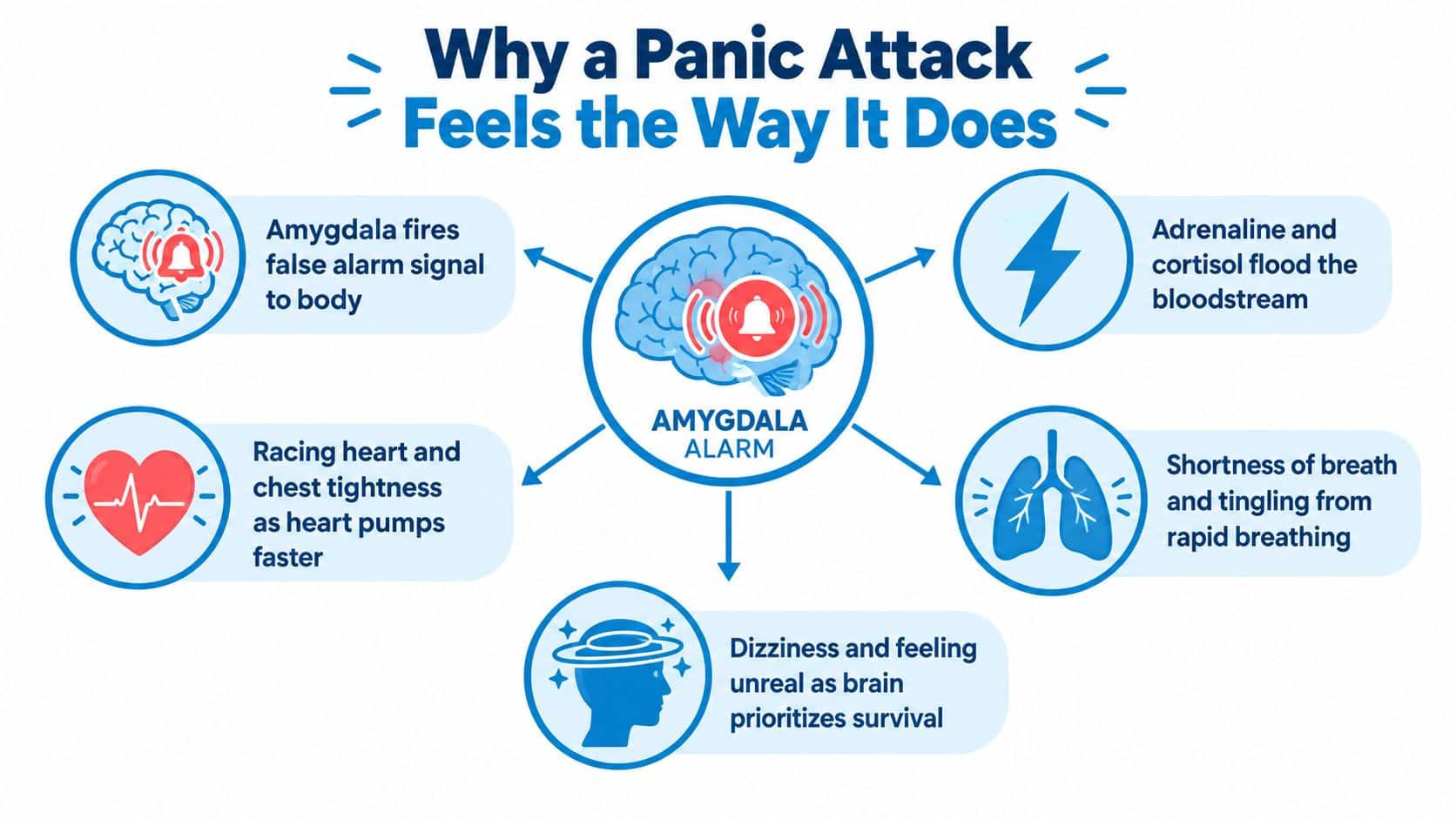
From the client's side, the experience can feel much larger than it looks. The heart may pound, the chest may tighten, the head may feel unreal, and the mind may jump straight to catastrophe, even when nothing dangerous is happening.
That mismatch is one reason panic can be so frightening. The body is sounding an alarm, the mind is trying to explain it, and the explanation usually becomes more alarming than the symptoms themselves.
A panic attack in the room is not a sign that therapy failed, it is often the exact clinical event being treated.
For people looking for panic support, this explanation of anxiety versus panic attack helps separate everyday stress from a true panic episode.
Why does this moment matter clinically?
Panic disorder became a clearly defined category only after DSM-III in 1980, and later epidemiological review estimated lifetime DSM-III panic disorder at 2.7% and repeated panic attacks at 7.1% of the general population, with panic disorder or panic attacks affecting up to 1 in 10 people overall PsychiatryOnline. That history matters because it shows panic is common enough that therapists should expect it, including during ordinary treatment.
For Therapsy, that perspective is especially useful with expats and multilingual clients. A panic attack in session is not rare, not shameful, and not a reason to rush the whole process. It is a predictable clinical event the therapist can read, pace with, and later use for treatment.
Why a Panic Attack Feels the Way It Does
A panic attack feels extreme because the brain treats harmless sensations like danger. The body reacts fast, the mind tries to explain it, and that explanation often makes the fear worse.
What happens in the body?
The alarm system starts with a threat signal in the brain, often described through the amygdala. That signal can trigger adrenaline and cortisol, which helps explain the racing heart, chest tightness, dizziness, tingling, and sense of unreality that many people notice during panic PsychiatryOnline.
A useful image is a smoke alarm set off by steam rather than fire. The alarm is real, but the danger reading is wrong, so the body reacts as if survival is on the line when it isn't.
Why do thoughts make it worse?
Once the body starts revving up, the mind often interprets the sensations catastrophically. “I'll faint,” “I'm losing control,” or “Something is seriously wrong” can intensify the loop and make the symptoms feel even more convincing.
That loop is also why panic can become self-reinforcing. Avoidance after the episode gives short-term relief, but it teaches the brain that escape was the only reason the body survived the sensation, which makes the next episode easier to trigger.
Why does this matter in therapy?
Therapist-led work becomes possible because panic has a pattern, not because the person is weak. When the therapist can recognize the body cycle early, the session can shift from fear to observation, which is the start of real change.
The goal is not to prove the sensation is imaginary. The goal is to show the body that the sensation is uncomfortable, temporary, and survivable.
Panic-focused therapy is often structured in short blocks, with one review finding an average of about 10 therapy sessions across studies from 1989 to 2020, usually with a main endpoint around week 12 PubMed. That structure makes sense because the therapist is not trying to erase panic in one moment, but to retrain the alarm over time.
How a Therapist Responds in the Room
A good therapist responds first with presence, then with structure. The room gets quieter, the language gets simpler, and the therapeutic plan pauses long enough for the nervous system to settle.
What happens in the first minute?
The therapist reads the nonverbal cues, lowers their voice, and slows their own breathing and speech. That steady rhythm helps signal safety without turning the moment into a dramatic event.
The next step is usually to pause emotionally demanding material. If the client was talking about something difficult, the therapist temporarily shifts away from content and toward stabilization, because the panic episode needs a different kind of attention than the original topic.
What does the therapist say and do?
The therapist usually names what is happening in plain language, without overexplaining it. Calm validation matters here, because the person needs to feel understood, but not told that every sensation is dangerous.
That's also where grounding comes in. A therapist might invite the client to feel their feet, orient to the room, or use a short breathing pattern, then keep the focus on the present rather than on the fear story.
For people who want a simple way to prepare for this kind of conversation, how to talk to a therapist about panic and anxiety can help make the first words less intimidating.
Why does CBT change the tone of the session?
In CBT, the panic episode is not treated as a distraction from therapy. It becomes a live demonstration of the panic cycle, which lets therapist and client test new coping language while the body is still activated.
A session like this can also clarify what the client fears most, whether that's fainting, losing control, or being judged. That information shapes later work, especially when the therapist uses exposure, cognitive restructuring, or interoceptive practice in a planned way RACGP.
Therapsy's clinical team often works this way with expats, because the therapist has to stay regulated, curious, and instructive, not rescue-driven. The person in the room does not need a performance of reassurance. They need a clinician who can keep the session safe while still using the moment therapeutically.
Grounding Techniques That Bring You Back to the Present
Grounding works best when it matches the symptom pattern in front of the therapist. The right tool depends on what the body is doing, what the client already knows, and whether the immediate goal is stabilization or later fear extinction.
Which grounding tool fits which symptom?
Slow diaphragmatic breathing is usually a fit when the person is visibly hyperventilating or talking fast. The 5-4-3-2-1 sensory scan works better when the mind is racing ahead of the body, because it pulls attention outward instead of deeper into the fear loop.
Cold water or an ice cube can help when the surge feels sudden and physical, because strong sensory input can interrupt the spiral. Paced breathing with held counts may help when the main complaint is mild dizziness or a sense of spinning.
| Technique | Best Used For | Symptom Cue | Goal |
|---|---|---|---|
| Slow diaphragmatic breathing | Visible hyperventilation | Fast, shallow breaths | Lower arousal |
| 5-4-3-2-1 sensory scan | Racing thoughts | Mental panic, scanning for danger | Re-anchor attention |
| Cold water or ice-cube anchoring | Sudden surge | Feeling overwhelmed all at once | Interrupt escalation |
| Paced breathing with held counts | Mild dizziness | Slight lightheadedness | Stabilize breathing rhythm |
| Interoceptive exposure | Rehearsing feared sensations | Client is ready to face body cues | Build tolerance and reduce fear |
When does exposure start?
Interoceptive exposure is different from rescue. It deliberately brings on feared body sensations, such as spinning, brief rapid breathing, or head movements, so the client can learn that the sensations rise, peak, and pass TherapistAssist.
That work should never be improvised in the middle of a raw, unprepared episode. Effective therapists teach at least one grounding skill before exposure work begins, because the client needs a clear way back to safety if the exercise feels too intense RACGP.
Grounding is not random comfort. It's a chosen intervention, matched to the body state in front of the therapist.
Therapsy often supports clients who need that matching process in a language that feels natural, not translated under stress. For some people, the difference between usable and unusable grounding is a single phrase they can understand in the moment, so mindfulness support in therapy can be a useful starting point.
Why Calm Reassurance Alone Is Not Enough
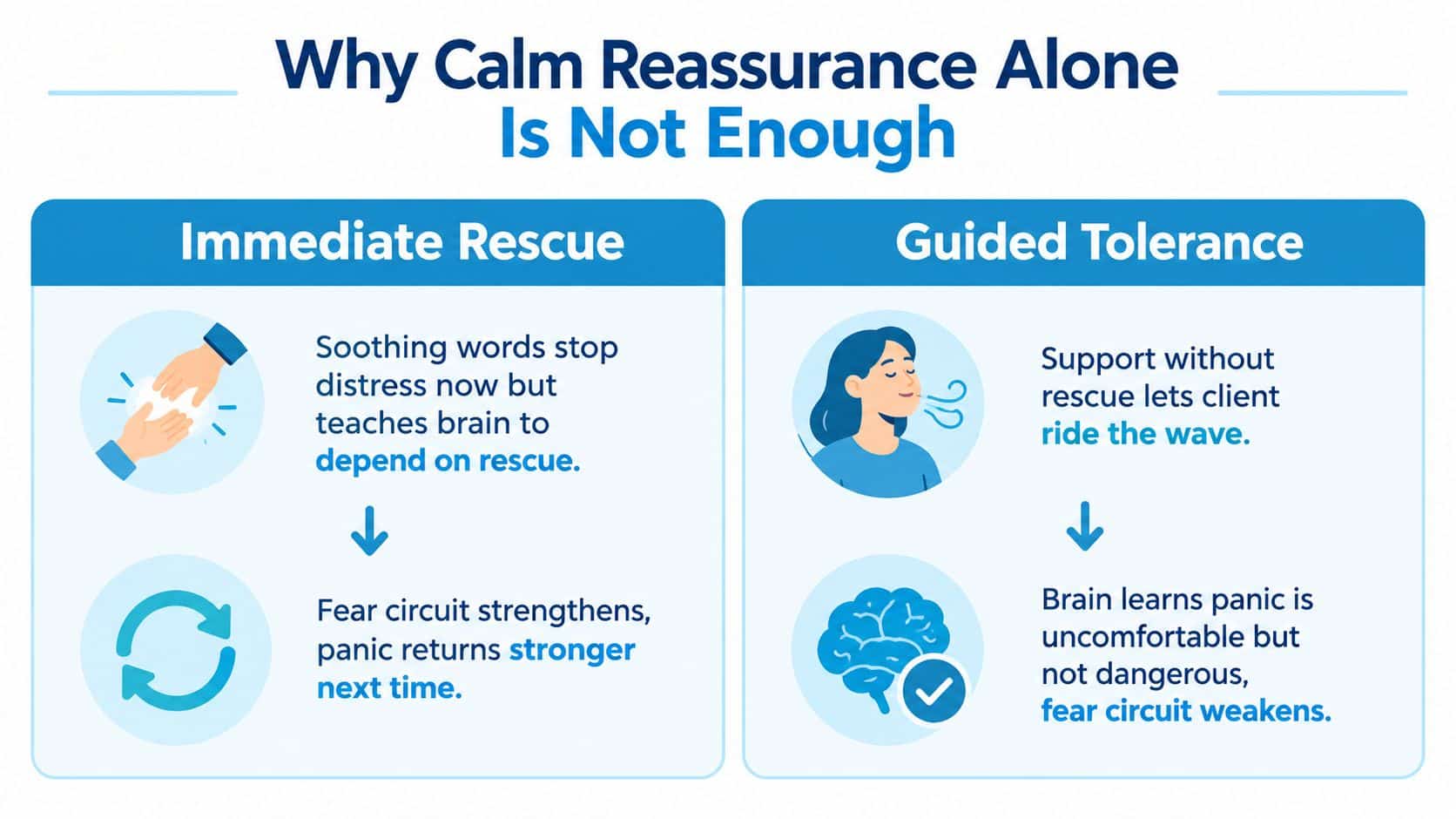
Calm words can help, but calm words by themselves don't retrain panic. If the response always becomes rescue, the brain can learn that the only safe ending is escape.
What is the risk of over-protection?
When every symptom is met with immediate reassurance, the client may feel better in the short term, but the fear circuit stays untouched. The brain keeps learning that panic was dangerous enough to require rescue, which can make the next episode feel just as threatening.
That's why CBT and exposure-based work matter. They help the person stay with the experience long enough for the body to discover that the wave can crest and fall without catastrophe RACGP.
What is the difference between validation and rescue?
Validation says, “This is scary, and it makes sense that it feels intense.” Rescue says, “This must stop now, and it's too dangerous to tolerate.” Those are not the same response, even though both can sound kind.
A therapist can be warm, calm, and supportive without reinforcing avoidance. That balance is often the turning point, because the person feels held but not taken out of the learning moment.
Why does tolerating the symptoms help?
Panic-focused CBT uses repeated experience to weaken the catastrophic interpretation loop. Over time, the body learns that symptoms can be uncomfortable without being harmful, and the mind has less fuel for emergency thinking PubMed.
A focused CBT trial reported a 73% recovery rate compared with 35% in treatment as usual PubMed. The exact number is less important than the principle behind it, which is that structured therapy can produce real change when it helps the person face, rather than escape, the fear signal.
Therapsy's multilingual clinicians often use that same principle with expats who are tired of being told to “just calm down.” Calm matters, but tolerance matters more.
Panic Attacks in Therapy for Expats and Multilingual Clients
A panic attack can feel different when it happens in a language that isn't the client's strongest one. Sometimes the body is speaking clearly, but the person cannot find the words for chest tightness, derealization, or the fear that something terrible is happening.
What changes across languages and cultures?
A client may know exactly what panic feels like in one language and go blank in another. Emotional vocabulary doesn't always transfer neatly across Italian, English, French, German, and Spanish, so the therapist may need to work from body language, short phrases, or agreed-upon cue words instead of long explanations.
For expats, that matters even more in real time. A therapist from another cultural background might misread silence, eye contact, or visible distress, especially in Mediterranean contexts where emotion can be expressed more openly than in more reserved settings.
A shared-language grounding cue can be simpler than a full explanation, and often safer when the client is overwhelmed.
What about online and in-person therapy?
Online therapy can help when travel, distance, or privacy make in-person sessions hard. In-person work can feel steadier for some clients because the room itself becomes part of the grounding process, especially when the panic has a strong bodily component.
Living with extended family can also change the picture. Confidentiality, shared walls, and limited private space may shape when and where a client feels safe enough to speak about panic at all.
For people who need support in their strongest language, therapy in your native language can make the difference between a vague struggle and a clear clinical conversation.
Why does this matter for Therapsy?
Therapsy works with multilingual and intercultural clients who often need a therapist to understand both the symptom and the setting. A panic attack in therapy session is not just a medical event, it is also a language event, a cultural event, and sometimes a migration event.
That's why the first contact, matching, and session format all matter together. The therapist's job is to understand what panic means for that person, in that language, in that life, not just to label the episode and move on.
Safety Planning and Follow-Up After the Episode
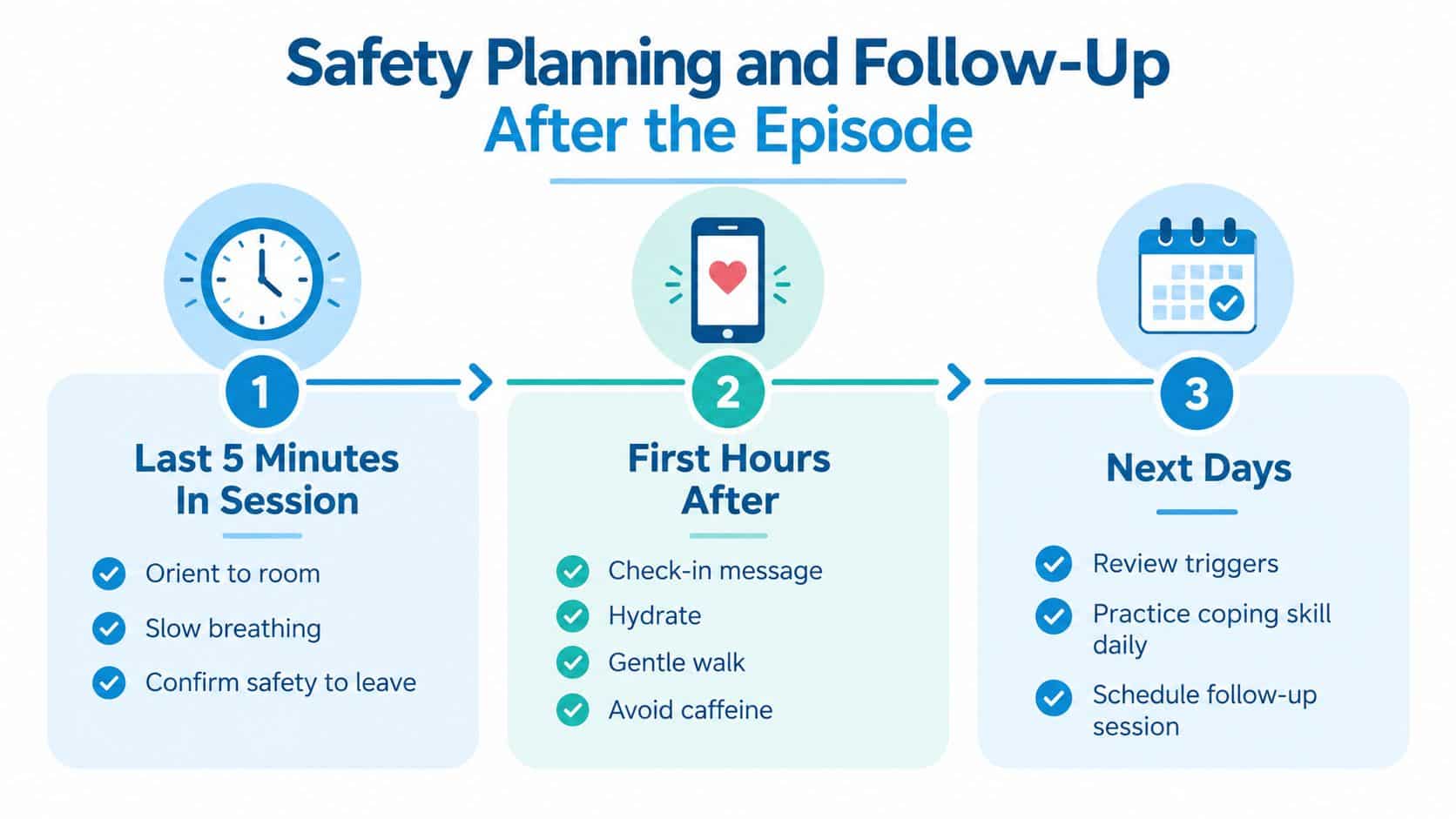
The last few minutes after panic matter because the body is still settling. The therapist usually shifts away from interpretation and toward orientation, breathing, and a gentle return to the room.
What should happen before the client leaves?
The therapist can orient the person to the room, slow the exhale into longer cycles, and offer water before starting any deeper discussion. That order matters, because thinking works better once the body is no longer in the peak of the alarm response.
The ride home should also be considered. If adrenaline still feels high, driving may not be the best choice, and a slower transition can be safer than rushing straight back into the day.
What helps in the hours after?
A light meal, less screen input, and a simple written recall of what happened can help the brain file the episode as an event rather than a threat. The point is not to analyze every detail, but to give the body a calm finish to a stressful session.
A panic treatment plan can also help make those steps feel less improvised. For clients who want a clearer structure, this panic attack treatment plan resource can be a helpful companion between sessions.
What should be reviewed over the next few days?
In the next 48 to 72 hours, journaling is most useful when it stays concrete. Triggers, early warning signs, and the technique that helped most are usually more useful than trying to explain why the attack happened.
That note can then turn into an updated safety plan for the next session. The therapist may also use the follow-up meeting for cognitive review, interoceptive homework, and any medication or somatic concerns that should be discussed with a physician RACGP.
Therapsy often helps clients organize that follow-up in a way that fits real life in Italy, especially when work, study, or family schedules are already crowded. The panic episode becomes part of the treatment story, not a reason to avoid the next appointment.
Common Questions About Panic Attacks in Therapy
Is a panic attack in therapy a sign that therapy is failing?
No. A panic attack in therapy usually means the client and therapist are close enough to real material that the body's alarm system got activated. In CBT terms, the episode is data, not proof of failure.
Can a therapist stop a panic attack right away?
A therapist can lower the intensity, improve safety, and help the client stay grounded, but no one can switch panic off on command. Panic rises and falls through the nervous system, so the goal is to help the person ride the peak until it starts to settle.
How long does it usually take to recover after panic in session?
Panic attacks are time-limited and often peak within minutes, then ease gradually. Some people feel tired, shaky, or emotionally raw afterward, so the recovery can last beyond the visible peak even when the main surge has passed MentalHealth.com.
Can a panic attack become a turning point in treatment?
Yes, if the episode is processed instead of hidden. When therapist and client review what happened, what the body did, and what coping skill worked, the attack can become a clear learning moment that reduces fear next time.
What should a client do if this keeps happening?
The most useful step is to bring the episode into the next session openly, not avoid it. A therapist can then adjust the plan, whether that means grounding practice, CBT homework, exposure work, or a conversation with a physician about physical symptoms that need medical attention.
Therapsy offers multilingual therapy in Italy with human matching by the Clinical Director, sessions in 14 languages, and both online and in-person care across Italy. For someone dealing with a panic attack in therapy session, that combination can make it easier to feel understood from the first call. Visit THERAPSY to book a free first assessment call with the therapist chosen for that person, with no obligation to continue.