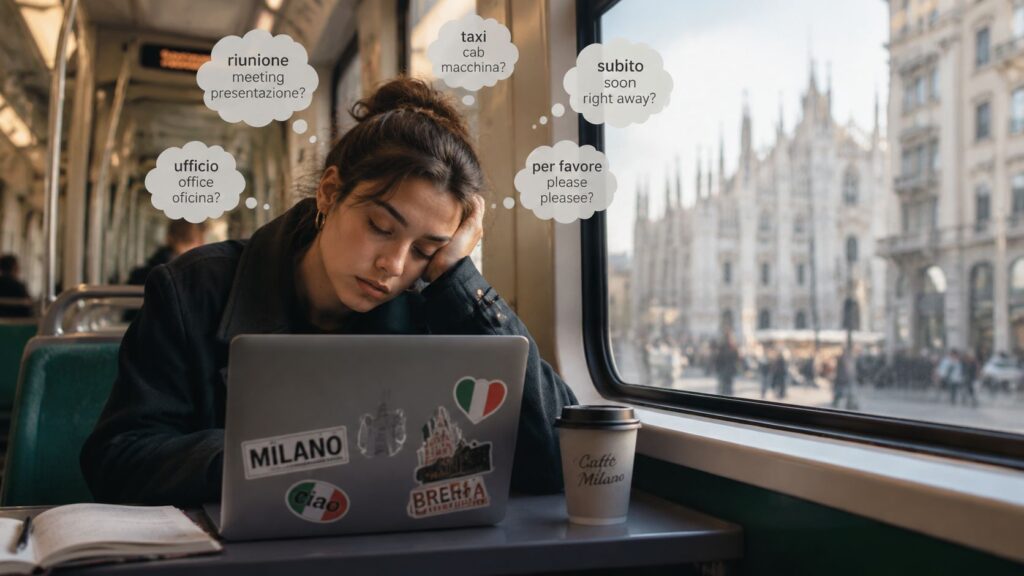
Homesickness vs depression in expats in Italy is one of the most important mental health questions people ask after moving abroad. Italy can feel inspiring, beautiful, and deeply meaningful. It can also feel disorienting, lonely, and emotionally intense. Many expats arrive expecting challenge, but not always the emotional weight that comes with daily adaptation. The first months can bring language fatigue, administrative stress, distance from family, and the pressure to “make the move worth it.” These experiences can trigger sadness, anxiety, irritability, social withdrawal, or a heavy sense of emotional confusion.
The problem is that homesickness and depression can look similar at first. Both can involve low mood, tiredness, and feeling disconnected from other people. Both can make ordinary tasks feel harder than they should. Yet they are not the same thing, and the difference matters because the kind of support you need may be different too.
This guide explains what homesickness is, what depression is, why living in Italy can intensify both, and how to recognise when emotional discomfort may require professional support. It is written for expats, international students, and intercultural couples who want a clear, practical, and compassionate answer.
Quick answer
What is homesickness?
Homesickness is a normal response to separation from familiar people, places, routines, language, and identity anchors.What is depression?
Depression is a more persistent mental health condition marked by ongoing low mood, loss of interest, fatigue, hopelessness, or emotional numbness.Can homesickness feel intense?
Yes. Homesickness can feel painful and destabilising, especially after a major move.Can homesickness become depression?
Yes. Prolonged isolation, stress, burnout, culture shock, or pre-existing vulnerability can deepen homesickness into depression.Does going back home always solve the problem?
Not necessarily. Homesickness often improves with familiarity and connection. Depression often follows you, even when the environment changes.When should an expat seek therapy in Italy?
Seek therapy when sadness becomes persistent, daily functioning declines, relationships suffer, or you feel emotionally stuck for weeks.These short answers matter because many expats delay asking for help. They assume they are “just adjusting.” Sometimes they are. Sometimes they are not. Clear emotional language is a form of care.
1) What homesickness really means for expats in Italy
Homesickness is not weakness. It is attachment under strain. When you move to Italy, you do not only leave behind a place. You also leave behind familiar rhythms, automatic habits, shared humour, cultural references, and the people who made daily life feel emotionally safe. That loss can create a quiet but persistent sense of dislocation.
For expats in Italy, homesickness often appears in waves. You may feel fine while exploring a new city, attending classes, or settling into work, and then suddenly feel overwhelmed on a Sunday afternoon, during a family holiday, after a video call home, or when you hear your native language in public. The emotional contrast can be sharp. One part of you wants to build a life here. Another part longs for what felt effortless before.
Homesickness is usually linked to something specific. You miss your family. You miss your old routine. You miss the version of yourself that did not have to translate everything. That specificity matters. Homesickness usually leaves room for moments of joy, curiosity, hope, and pleasure. The sadness is real, but it does not necessarily erase your ability to feel good. In that sense, homesickness is painful, but often still relational, contextual, and responsive to comfort.
2) What depression can feel like when living abroad
Depression is more than missing home. Depression affects mood, motivation, attention, sleep, appetite, and the sense that life has emotional colour. For expats in Italy, depression may be easy to misread because relocation already involves fatigue and emotional effort. People often tell themselves they are tired because of the move. Sometimes that is true. Sometimes depression is developing underneath the adjustment process.
A useful distinction is this: homesickness usually says, “I miss something important.” Depression often says, “I cannot feel much at all,” or “everything feels heavy.” Depression can include sadness, but it can also include numbness, emptiness, irritability, guilt, or a sense of disconnection from yourself. Activities that once helped may stop helping. Social contact may feel exhausting rather than restorative. Ordinary decisions may begin to feel too demanding.
Depression also tends to be more consistent over time. Positive moments do not bring as much relief. A nice dinner, a sunny day, or a trip to visit friends may create only a brief lift, if any. This is why depression can feel confusing abroad. The outside world may look beautiful, but the inside world feels flat. That contrast often increases shame. People think, “I live in Italy. I should be happy.” That belief can make suffering harder to name.
3) Why life in Italy can intensify emotional distress for expats
Italy is often idealised before people move. The country is associated with beauty, food, culture, romance, and slower living. Those things can be real. But expat mental health is shaped by daily life, not postcards. Even in a desirable destination, adaptation can be emotionally expensive.
Many expats in Italy face bureaucratic uncertainty, housing stress, financial pressure, unstable work, academic performance demands, and language barriers that make simple tasks feel draining. A visit to a pharmacy, a conversation with a landlord, or a missed administrative deadline can trigger disproportionate stress because the situation is not only practical. It also touches identity. You may feel suddenly dependent, incompetent, or invisible.
There is also a relational layer. Social warmth in Italy can coexist with difficulty entering established circles. You may be surrounded by people and still feel alone. You may admire the culture while struggling to decode unspoken rules around friendship, family boundaries, dating, gender expectations, conflict style, or time management. This mismatch creates what many expats describe as “low-grade emotional friction.” Nothing is catastrophic. Yet everything takes more effort.
In mental health terms, chronic adaptation stress reduces emotional reserves. When emotional reserves are low, homesickness feels stronger, anxiety becomes more reactive, and depressive symptoms become more likely to grow.
4) Homesickness vs depression in expats in Italy: the clearest differences
The question is not whether one feels more serious than the other. The real question is how the emotional pattern works. Pattern matters more than isolated bad days. A bad week abroad does not automatically mean depression. But a stable pattern of decline deserves attention.
Homesickness is usually situational. It often has triggers. It may intensify around weekends, birthdays, religious holidays, lonely evenings, or reminders of your life before Italy. Depression is often less dependent on clear triggers. The low mood is there even when nothing obvious has happened.
Homesickness usually leaves some access to pleasure. You may still laugh, enjoy a meal, feel excited about a trip, or feel better after meaningful contact. Depression often reduces that access. Pleasure feels muted. Motivation drops. Even rest may not feel restoring.
Homesickness is often future-oriented. You imagine visiting home, speaking with loved ones, or building familiarity in Italy, and that image brings some relief. Depression is often more global. Home may not feel like a solution. Italy may not feel like a solution either. The problem feels less tied to place and more tied to existence itself.
A simple clinical rule helps: if the distress is persistent, functionally impairing, emotionally flattening, and increasingly disconnected from context, it may be more than homesickness.
5) Signs that it may be more than adjustment
Adjustment is hard. That does not mean you should normalise prolonged suffering. Many expats minimise symptoms because they do not want to appear ungrateful or fragile. Others fear that admitting distress means they made the wrong decision. In reality, honest emotional assessment protects both mental health and long-term adjustment.
It may be more than homesickness if your low mood lasts for most of the day over several weeks. It may be more than homesickness if you no longer enjoy things that used to ground you. Watch for persistent sleep problems, appetite changes, unexplained tearfulness, emotional numbness, constant fatigue, or trouble concentrating. These are not just small side effects when they begin to shape daily life.
Another sign is progressive withdrawal. At first, you may isolate because you feel shy, tired, or overwhelmed. Over time, isolation can become self-reinforcing. You stop reaching out, stop exploring, stop replying, and begin living in a smaller emotional world. That shrinking process matters.
Pay attention to hopeless thoughts. These do not need to sound dramatic. They may show up as: “Nothing is getting better.” “I do not feel like myself anymore.” “I cannot imagine feeling settled.” Statements like these signal that the struggle is becoming deeper than temporary discomfort. When emotional pain starts to affect work, study, relationships, or the ability to care for yourself, support is no longer optional. It becomes important.
6) How intercultural relationships and family dynamics can complicate symptoms
For many expats, mental health in Italy is not only about the move itself. It is also about relationships. Intercultural couples often face additional stress that outsiders do not fully see. Partners may love each other deeply and still struggle with different expectations around communication, emotional expression, conflict, family involvement, money, independence, or long-term planning.
These differences matter because homesickness and depression affect relationships differently. Homesickness may increase the need for reassurance, familiarity, and emotional closeness. Depression may reduce energy for connection, lower patience, and make communication feel effortful. If both partners misunderstand what is happening, one may feel abandoned while the other feels overwhelmed.
Family dynamics can add another layer. Some expats feel pressure from relatives back home who do not understand the move. Others feel pressure from family in Italy, especially when integrating into a partner’s social and cultural world. Advice may feel intrusive. Boundaries may feel unclear. Holidays may become emotionally charged. The expat can end up feeling split between two systems and fully held by neither.
This is why relationship strain is sometimes a symptom, not only a separate problem. When an expat says, “We keep arguing since I moved,” the deeper issue may be loneliness, identity strain, grief, or depression. Good therapy looks beneath the conflict and names the emotional system underneath it.
7) Why loneliness, language fatigue, and identity loss affect mental health abroad
Many expats expect to miss people. Fewer expect to miss the version of themselves that felt effortless. Living in another language changes spontaneity. It changes humour, confidence, and social rhythm. Even highly capable people may feel less articulate, less funny, less competent, or less visible. Over time, this can create a subtle form of identity loss.
Language fatigue is real. When every interaction requires extra concentration, the nervous system stays more activated. Small misunderstandings feel larger. Delays feel more personal. Social situations become tiring, not because you dislike people, but because self-expression costs more energy than before. That exhaustion can look like low mood, avoidance, or irritability.
Loneliness abroad is also more complex than simply being alone. You can have acquaintances, colleagues, classmates, or a romantic partner and still feel unknown. Emotional belonging requires more than contact. It requires being seen in a way that feels culturally and psychologically safe. Many expats in Italy are surrounded by beauty and social activity but still feel emotionally unanchored.
This combination of loneliness, language effort, and identity disruption can intensify both homesickness and depression. It also explains why practical advice such as “go out more” often feels insufficient. The challenge is not only behavioural. It is relational and psychological. Expats do not just need more plans. They often need more meaningful emotional integration.
8) What usually helps when the problem is homesickness
If the core issue is homesickness, the goal is not to eliminate attachment to home. The goal is to create enough familiarity, continuity, and connection that life in Italy begins to feel emotionally inhabitable. Small actions matter because homesickness responds to rhythm, meaning, and relational anchors.
Routine is one of the most effective interventions. Predictable morning rituals, regular meals, exercise, weekly calls, repeated walking routes, or a consistent study and work structure give the nervous system a sense of safety. Familiarity reduces overwhelm. The brain adapts better when daily life becomes slightly more predictable.
It also helps to create bridges between old life and new life. Cook food from home. Keep a playlist that reminds you who you are. Celebrate important cultural dates. At the same time, build local rituals that belong to your life in Italy. Become a regular somewhere. Learn one practical phrase that makes daily tasks easier. Join one group that repeats. Repetition creates belonging before belonging feels natural.
Connection should be balanced. Stay in touch with loved ones, but do not live only through the screen. Exclusive emotional dependence on home can delay local adaptation. Homesickness softens when your life abroad becomes emotionally textured. You do not need a perfect social life. You need enough moments of recognition, pleasure, and consistency to remind your mind that this place can also hold you.
9) What helps when symptoms point toward depression
When symptoms are leaning toward depression, support needs to be more intentional. Depression rarely improves through self-criticism or by waiting for motivation to return on its own. The first task is often to reduce shame. Depression during expatriation does not mean you failed at living abroad. It means your mental health needs care in a high-stress transition.
Start with function, not perfection. Sleep, meals, hydration, movement, and sunlight are not simplistic suggestions. They are stabilising inputs for a nervous system under strain. Gentle structure matters even when motivation is low. So does reducing isolation in manageable ways. A short walk with someone safe may be more helpful than forcing yourself into a large social event.
It is also important to challenge the fantasy that a different location will automatically solve everything. Sometimes expats think, “If I just go home for a month, this will disappear.” A visit home can help, but depression often travels with you. This is why emotional assessment matters more than geographic change.
Professional therapy is especially useful when symptoms are persistent, confusing, or affecting relationships and functioning. Therapy helps distinguish between grief, burnout, homesickness, culture shock, trauma responses, and depression. For expats, the ideal therapy space is one where cultural context is understood and language is not another barrier. Feeling understood quickly can reduce the delay between suffering and healing.
10) Why multilingual therapy in Italy can make a real difference
Many expats do not avoid therapy because they reject help. They avoid therapy because finding the right help feels complicated. They worry about language. They worry about being misunderstood. They worry that a therapist without intercultural sensitivity will oversimplify the problem and say they only need to adjust better. These concerns are valid.
Mental health support for expats works best when the therapist understands relocation stress, identity transitions, bicultural tension, and the emotional reality of living far from one’s support system. Expats often need help not only with symptoms, but also with meaning. They want to understand why they react so strongly to ordinary situations, why relationships feel different abroad, or why they feel guilty for struggling in a country they once idealised.
This is where Therapsy can be a meaningful resource. Therapsy offers multilingual psychotherapy for expats, international students, young adults, and intercultural couples living in Italy. Support is available online and in person, which matters when emotional energy, location, or schedule make access difficult. The first assessment call is free, allowing people to speak with someone before committing to a process. That first step can make therapy feel more human and less intimidating.
The goal is not to label every expat struggle as a disorder. The goal is to offer a reliable, culturally informed space where emotional distress can be understood clearly and supported well.
FAQ: homesickness, depression, and therapy for expats in Italy
Is homesickness normal after moving to Italy?
Yes. Homesickness is a normal response to separation from familiar relationships, routines, and cultural comfort. It is especially common during the first months after relocation, during seasonal holidays, or after emotionally significant life events. Homesickness does not mean you made the wrong choice. It means the move has emotional cost as well as practical change.
How long does homesickness usually last?
There is no fixed timeline, but homesickness often comes in waves and gradually softens as routines, relationships, and familiarity grow. It may last longer when language barriers, loneliness, or work and study stress remain high. What matters most is not the exact number of weeks, but whether your overall functioning and emotional range are improving over time.
Can homesickness cause anxiety?
Yes. Homesickness can increase anxiety because the nervous system feels less anchored. When life feels unfamiliar, the mind becomes more alert to uncertainty. This may show up as overthinking, social anxiety, sleep difficulties, irritability, or a strong need for reassurance. Anxiety and homesickness often reinforce each other in early relocation.
Can homesickness turn into depression?
It can. Homesickness alone is not depression, but prolonged isolation, chronic stress, poor support, relationship conflict, trauma history, or burnout can deepen emotional pain. If sadness becomes persistent, pleasure disappears, or hopelessness grows, it is important to consider professional support rather than assuming it is still just adjustment.
What is the difference between culture shock and depression?
Culture shock is a stress response to entering a new social and cultural environment. It may involve frustration, confusion, irritability, fatigue, and feeling out of place. Depression is broader and more persistent. It affects motivation, emotional range, self-worth, energy, and daily functioning in a deeper way. Culture shock can contribute to depression, but they are not identical.
How do I know if I need therapy or just more time?
Ask whether time is helping. If your symptoms are slowly easing and you still have access to hope, pleasure, and connection, time and support may be enough. If symptoms stay intense, interfere with daily life, damage relationships, or make you feel increasingly disconnected from yourself, therapy can help you understand and treat what is happening.
Is online therapy effective for expats in Italy?
For many people, yes. Online therapy can be highly effective, especially when it improves access to a therapist who speaks your language and understands expatriate mental health. It can also reduce the practical burden of commuting, scheduling, or searching for support in a local system that may feel unfamiliar.
Can therapy help intercultural couples living in Italy?
Yes. Intercultural couples often face stress linked to communication style, expectations, extended family dynamics, conflict patterns, and identity differences. Therapy helps partners move beyond blame and understand how cultural assumptions influence reactions. It can also reduce the emotional spillover of homesickness, anxiety, or depression into the relationship.
What if I feel ashamed for struggling in a country like Italy?
This is very common. People often believe that living in a beautiful or desirable country should protect them from emotional distress. But mental health does not respond to aesthetics alone. A move can be meaningful and painful at the same time. Feeling low in Italy does not make you ungrateful. It makes you human.
Where can expats find multilingual therapy in Italy?
Therapsy is one option designed specifically for expats, international students, and multicultural clients in Italy. The service offers multilingual psychotherapy online and in person, with a free first assessment call. For people who feel emotionally overwhelmed and culturally misunderstood, that combination of accessibility and context can be especially helpful.
Final thoughts
Homesickness vs depression in expats in Italy is not a trivial question. It is a mental health question about pattern, context, and care. Homesickness says you are attached. Depression says your emotional system may be under deeper strain. Both deserve attention. Neither should be dismissed.
You do not need to wait until things become severe to ask for help. Support is appropriate when life abroad stops feeling challenging and starts feeling emotionally unmanageable. The earlier you understand what is happening, the easier it becomes to respond with clarity instead of self-judgment.
Therapsy offers multilingual psychotherapy in Italy for expats, international students, young adults, and intercultural couples. Sessions are available online and in person, and the first assessment call is free. For many people, speaking with a therapist who understands relocation, culture, language, and identity can make the difference between simply enduring life abroad and beginning to feel grounded in it.
If living in Italy has started to feel heavier than you expected, you do not have to make sense of it alone. Book your first free assessment call with Therapsy and explore support in the language that feels most natural to you.
Not sure whether what you are feeling is depression?
Our free online depression test takes two minutes. It is based on the PHQ-9, the screening questionnaire used by clinicians worldwide, and it is anonymous – no email required to see your result.
If the result suggests you could use support, the next step is a free first call with a licensed therapist who speaks your language, online or in person across Italy.
Written by Dr. Francesca Adriana Boccalari, Clinical Director at Therapsy and licensed psychologist (Ordine degli Psicologi della Lombardia n. 16241), and reviewed in September 2026.