It's late afternoon. You've already translated a nursery email in your head, carried the household plan for the week, answered work messages between pickups, and tried to keep your child moving through a meltdown in a language that still doesn't fully feel like yours. Then one small thing happens. Milk spills. Someone whines. Your partner asks an innocent question. You feel heat rise through your chest, your jaw tightens, and suddenly your reaction feels bigger than the moment.
If that sounds familiar, you're not broken, and you're not a bad mother. Mom rage therapy is support for intense maternal anger that often grows out of overload, isolation, sleep disruption, and the invisible labour of holding too much for too long. For expat mums in Italy, that load is often heavier because daily life includes cultural adjustment, distance from family, and the strain of building a support system from scratch.
As a clinical psychologist working with expat mothers, I see how much shame sits on top of this experience. Many women tell themselves that anger means they are failing. In practice, it usually means something else. It means the system around them isn't working. It means their nervous system is overactivated. It means needs have gone unattended for too long.
Mom rage is often a stress signal, not a character flaw.
This article is written for expat mothers in Italy, especially women raising children far from their original support network. I'm Dr. Francesca Adriana Boccalari, Clinical Director at Therapsy. My work focuses on evidence-based, culturally sensitive psychotherapy for international clients. If anger has started to scare you, numb you, or damage connection at home, there is a practical path forward.
Introduction
When anger feels bigger than the trigger
Most mothers get irritated. That's part of parenting. Mom rage is different because it feels explosive, fast, and hard to regulate.
It can look loud, but it can also look silent. Some women shout. Others slam cupboards, cry in the bathroom, send sharp texts, or go emotionally cold. The common thread is not cruelty. It's overwhelm.
For expat mothers, the buildup is often relentless. The ordinary demands of parenting sit on top of immigration stress, loneliness, language fatigue, and the grief of not having your usual people nearby. Even a beautiful life in Italy can feel narrow when you are parenting without backup.
Why this deserves real support
A study discussed in an Italian study summary on PubMed Central examined 65 U.S. mothers and found that experiences described as “mom rage” were commonly linked to being overwhelmed by home priorities and children's behaviour. That doesn't make rage acceptable. It does make it understandable.
Therapy helps because it addresses both the reaction and the conditions feeding it. That includes sleep, mental load, resentment, perfectionism, relationship strain, and the way shame keeps the cycle going.
What Mom Rage Is and What It Is Not
A clear definition
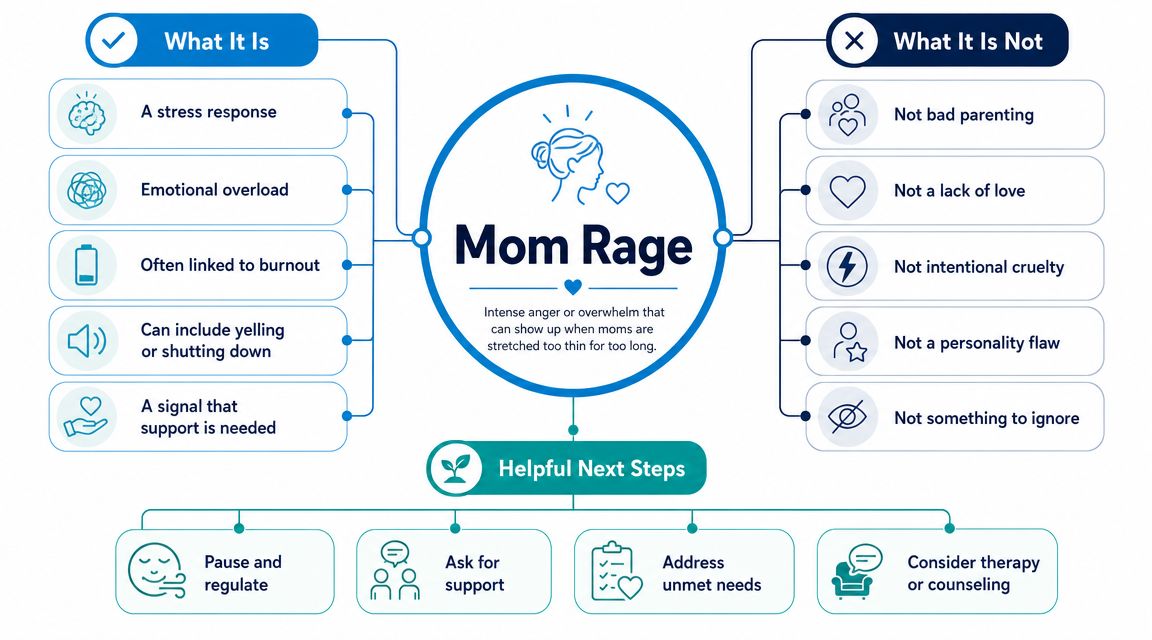
Mom rage is intense maternal anger that feels disproportionate to the moment because stress, overload, and emotional depletion have already been building in the background.
That definition matters. It separates rage from the moral story many women tell themselves. The problem is not that you are secretly an angry person. The problem is that your capacity and your demands have become badly mismatched.
Clinically, mothers describe mom rage in five measurable experiential patterns: losing control, visualising harm, expressing anger, physiological reactivity, and catharsis, which is why treatment usually combines emotion regulation, body-based downshifting, and cognitive work rather than simple advice to “calm down” (Postpartum Support International on mom rage).
What it is not
Mom rage is not the same as ordinary frustration. Everyday frustration might involve snapping, feeling irritated, or needing a break. Mom rage tends to feel more like an internal surge. Your body reacts before your thinking brain catches up.
It's also not merely “having a temper.” In therapy, anger is often better understood as a secondary emotion. Underneath it, we often find fear, helplessness, overstimulation, shame, grief, or resentment.
It's worth distinguishing mom rage from several overlapping experiences:
-
Normal parental irritation
This comes and goes. You recover quickly, and it doesn't leave you feeling frightened by your own reaction. -
Burnout
Burnout is chronic depletion. Rage can be one expression of burnout, especially when there is no restoration. -
A perinatal mental health condition
Anger can appear inside postpartum depression, postpartum anxiety, trauma responses, OCD, or thyroid-related problems. That's why assessment matters. -
A character defect
This is the explanation many mothers fear most, and it is usually the least useful one clinically.
If you want a compassionate reframing of anger, I often recommend reading about anger as vulnerability. It helps many mothers understand why anger so often appears when softer feelings feel inaccessible or unsafe.
What helps and what doesn't
Some strategies lower the pressure. Others only delay the explosion.
A practical first step is to externalise the invisible labour.
What usually helps:
- Naming the build-up early instead of waiting for the breaking point
- Tracking body cues such as jaw tension, shallow breathing, or racing thoughts
- Reducing load rather than trying to suppress anger by force
- Repairing after rupture so shame doesn't become the main family pattern
What usually doesn't help:
- White-knuckling through it
- Telling yourself to be more grateful
- Apologising without changing the conditions
- Treating each outburst as an isolated incident
Why Mom Rage Feels Worse for Expats in Italy
The expat version of overload
For mothers abroad, rage often has context. The context is not an excuse. It is the map.
The mental load and isolation of parenting abroad are structural drivers of mom rage. In Italy, that can mean managing a nursery, school, or paediatric system in a second language, trying to decode social expectations, and parenting without the casual backup that local families may have.
In clinical work with expat mothers, several pressure points come up repeatedly.
The support gap
Back home, you may have had a sister who could step in, a friend who understood your shorthand, or parents who could take over for an hour. In Italy, even when life looks good from the outside, daily parenting can become logistically and emotionally solitary.
That isolation matters because support changes how much stress a nervous system can carry before it tips into reactivity.
The second-language burden
Parenting in another language is tiring. It uses more energy than people realise.
You may spend the day translating forms, interpreting tone, worrying you missed something important, or feeling less articulate with doctors, teachers, or other parents. That doesn't just create inconvenience. It increases vigilance.
The romantic fantasy collision
Many women arrive in Italy with some version of an imagined life: slower afternoons, more family culture, a softer rhythm. Then real life arrives. There are deadlines, paperwork, expensive childcare, long commutes, a partner who works late, and a child who still wakes at night.
That gap between expectation and reality often creates shame. You think, “I wanted this life. Why am I so angry?” The answer is usually simple. Because parenting is still demanding, and relocation removed familiar coping supports.
Living in Italy can be beautiful and still be mentally taxing. Both things can be true at once.
Identity strain
For some mothers, relocation disrupts work, professional status, friendships, and confidence all at the same time. When identity narrows to “the one who manages everything at home,” anger often carries the protest.
Culture shock and mental health overlap. If that broader relocation strain resonates, culture shock in Italy and how to cope offers a useful frame for understanding why ordinary tasks can start to feel emotionally expensive.
Why generic advice often fails
“Sleep when the baby sleeps” is not a plan. “Ask for help” is not enough if no one is nearby. “Take a break” can sound absurd when your partner travels, your babysitter cancels, and you don't know who to call.
For expat mothers, mom rage therapy works best when it takes context seriously. Not just your temperament. Not just your childhood. Also your housing situation, language strain, childcare options, immigration stress, couple dynamic, and the loneliness of parenting outside your home culture.
Signs It Is Time for Mom Rage Therapy
The threshold question
You don't need to wait until something dramatic happens to seek help. The right time for mom rage therapy is often when anger starts to feel repetitive, frightening, or relationally costly.
Some mothers minimise their symptoms because they're still functioning. They're feeding the child, showing up to work, getting through the day. But functioning isn't the same as coping well.
Red flags that deserve assessment
Intense maternal anger can be a symptom of a treatable condition.
Consider professional support if you notice any of the following:
-
Your reactions feel out of proportion
You know the trigger was small, but your body and voice escalate quickly. -
You feel on edge most of the time
Not just during conflict. Even ordinary noise, mess, or interruption feels unbearable. -
You scare yourself after an outburst
The shame is intense, or you worry about what you might say or do in the moment. -
Your child or partner seems wary of you
They start monitoring your mood, going quiet, or trying not to “set you off.” -
You keep promising yourself it won't happen again
But the cycle repeats because the underlying drivers haven't changed. -
You also feel persistently sad, panicky, numb, or unlike yourself
That combination points toward a fuller assessment rather than self-help alone.
A useful rule of thumb
If anger is frequent, uncontrollable, or followed by deep shame and disconnection, it deserves more than coping tips.
Seeking therapy doesn't mean you've failed. It means you're responding early to a pattern that tends to worsen when it stays private. If you're unsure, signs you may be ready for therapy can help you think through that decision in a grounded way.
Evidence-Based Therapy for Overcoming Mom Rage
What therapy actually targets
Good mom rage therapy does not focus only on stopping the outburst. It focuses on the full stress-response cycle.
That means looking at what happens before, during, and after the moment of rage. The buildup matters. The body matters. The meaning you assign to the episode matters. So does repair.
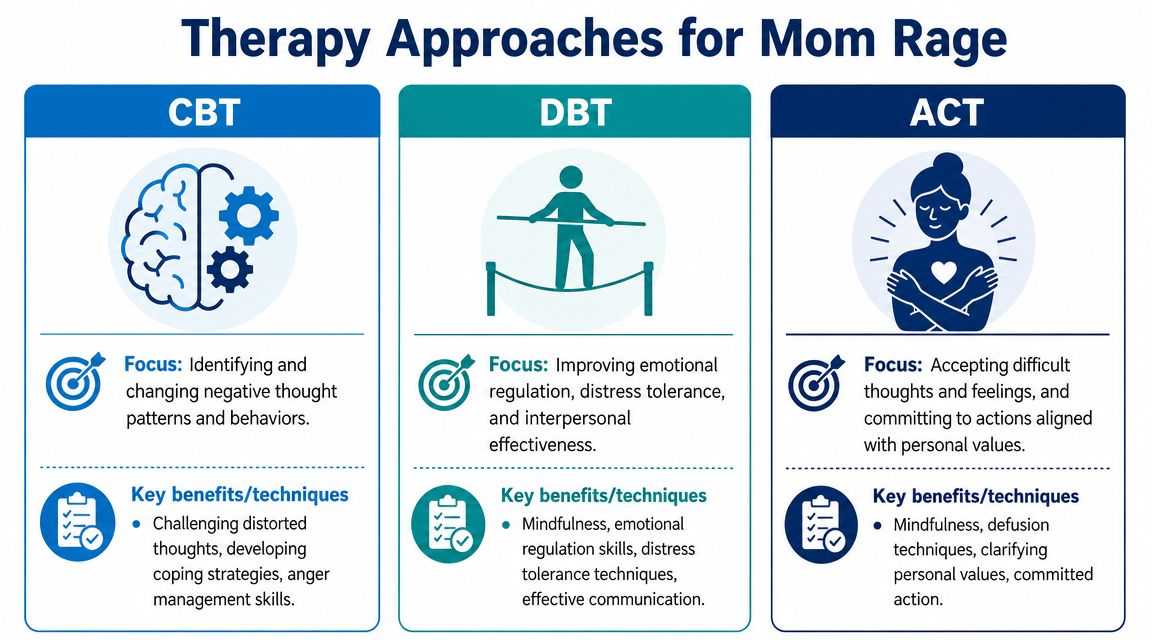
Effective therapy for mom rage focuses on repair and load reduction, not just anger suppression. Core therapeutic tasks include creating a trigger map, practising a de-escalation protocol, and learning how to apologise and repair after an outburst so secure attachment can be restored (Creekside Counseling on practical mom rage support).
CBT for the thinking patterns that fuel escalation
Cognitive Behavioural Therapy, or CBT, is often useful when rage is amplified by rigid beliefs, guilt, perfectionism, or chronic self-criticism.
In plain language, CBT helps you identify thoughts like:
- I should be able to handle this
- If I ask for help, I'm failing
- A good mother stays calm all the time
- If the house is chaotic, I'm incompetent
These thoughts don't create the whole problem, but they intensify pressure. CBT teaches you to test them, replace them, and act from a more realistic position. If you'd like a simple overview, this guide to cognitive behavioural therapy explains how the model works in everyday life.
Skills-based work for the body and nervous system
When mothers say, “I go from zero to sixty,” I think first about nervous system activation. Anger is cognitive, but it is also physical.
Therapy often includes body-based downshifting skills such as:
-
Early cue detection
Noticing the first signs of escalation, such as heat, chest tightness, fast speech, or clenched hands. -
A preplanned pause
Leaving the room if the child is safe, handing over to a partner, using cold water, stepping outside, or taking a brief movement break. -
Short regulation practices
Deep breathing, slower exhalations, grounding through the feet, or paced movement.
These tools work better when practised before crisis moments. In the heat of rage, you need familiar actions, not perfect insight.
Schema work and old emotional patterns
Some mothers react so strongly because the present moment activates something older. A child's defiance can trigger memories of being ignored, unsupported, criticised, or forced to cope alone. Schema Therapy helps identify these enduring emotional patterns.
This matters especially for expat mothers who may already feel stripped of their usual competence. When current stress lands on old wounds, anger often becomes sharper and more despairing.
EMDR and trauma-informed work
If rage appears alongside trauma symptoms, panic, freezing, or intrusive memories, trauma-focused therapy may be appropriate. EMDR can help when your reactions are linked to earlier distress that your nervous system still experiences as present.
Not every mother with rage needs trauma processing. But when anger feels disproportionate and intensely embodied, it is worth considering.
What works better than suppression
The mothers who improve most are usually not the ones who force themselves to be “nicer.” They are the ones who make concrete changes.
That often includes:
- Redistributing the physical and mental load
- Building a written trigger map
- Creating a family de-escalation plan
- Repairing with children after rupture
- Reducing shame so the pattern can be addressed openly
Therapy gives structure to that process. It turns vague guilt into an actionable plan.
Your Therapy Journey with Therapsy
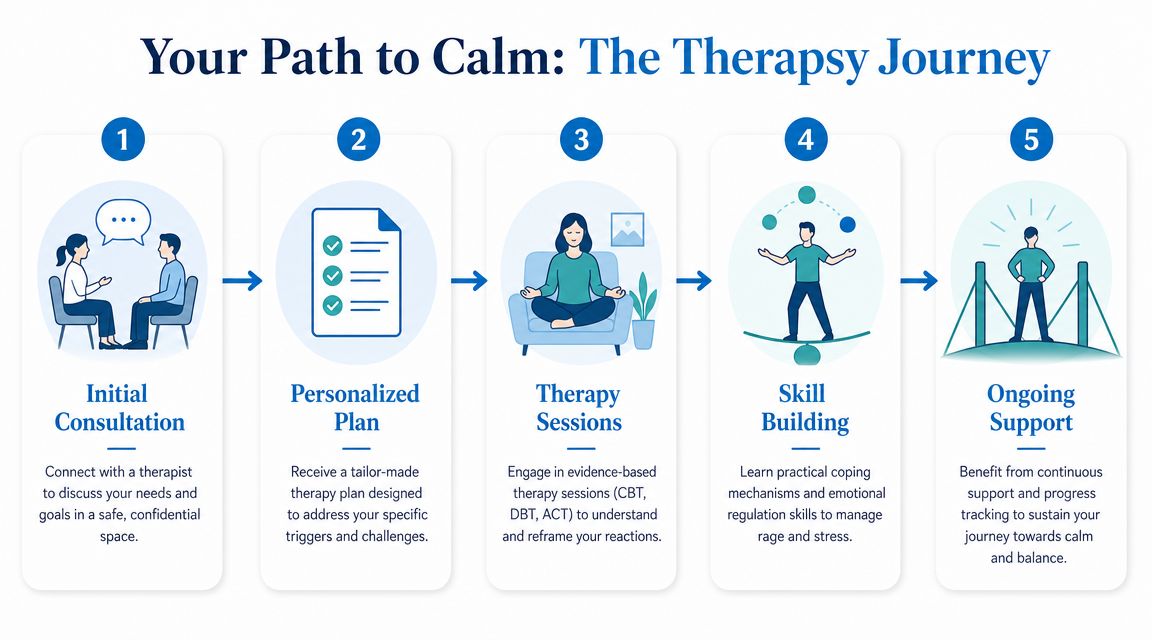
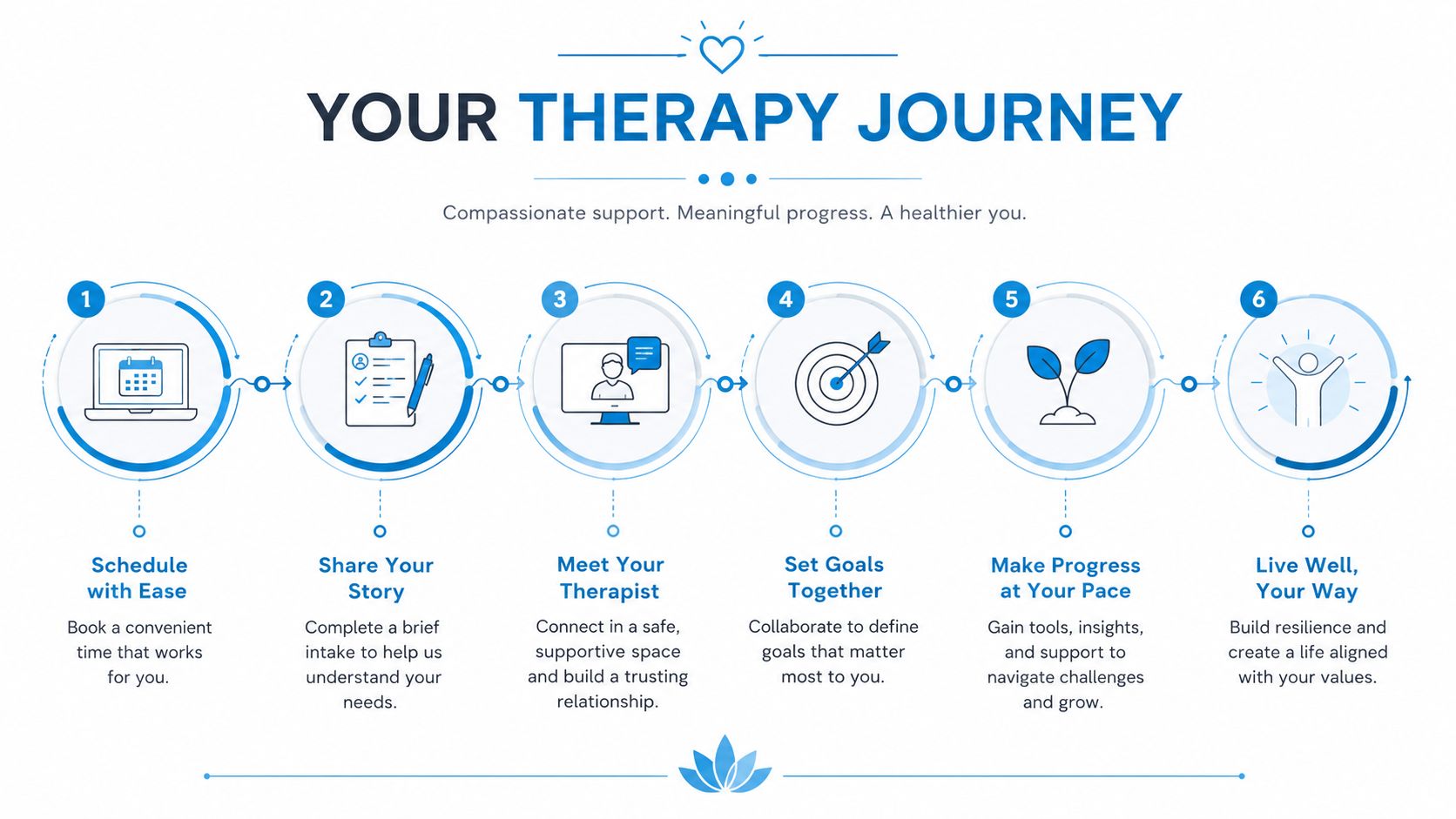
Starting therapy is easier when you know what to expect. For many expat mothers, uncertainty is one more barrier. They worry about being judged, misunderstood, or matched with someone who doesn't grasp the realities of parenting abroad.
At Therapsy, the process is designed to feel human from the beginning. You're not handed over to an algorithm or asked to fit yourself into a generic intake category.
A University of Iowa public-health report found that about 77% of participants experienced at least one rage symptom in the past month, and low or no perceived support was a key characteristic among parents experiencing anxiety and rage.
What the first steps look like
The process usually follows a simple path:
-
You reach out through the website
A short form is enough to begin. -
You receive a human follow-up
The Clinical Director contacts you personally, often via WhatsApp, to understand what's happening and what kind of support would fit best. -
You have a free first assessment call
This is not a commitment and not a sales call. It's a conversation to clarify needs, timing, language, and fit. -
You are matched thoughtfully
Matching is done by a clinician, not software. That matters when your issue includes motherhood, migration, couple strain, trauma history, or the wish to work in your native language.
What early sessions focus on
The first sessions usually combine assessment and stabilisation. That means understanding your triggers, daily context, sleep, relationship dynamic, support network, and emotional history.
From there, therapy starts building practical tools. If you're parenting young children, it can also help to pair your own emotional work with realistic parenting resources. Some families appreciate proven methods for nurturing confident kids because calmer family patterns often grow from both parent regulation and child-focused routines.
Frequency, format, and practicalities
Many mothers start weekly because momentum helps. Others begin with a different rhythm based on childcare, budget, or emotional capacity.
Therapsy offers online and in-person sessions, with individual therapy from €70, couple therapy from €100, psychiatric consultation from €110, and psychodiagnostic assessment from €255. The first assessment call is always free, and pricing depends on the therapist's experience and specialisation.
The service includes a team of 50+ multilingual therapists, with support available in Italian, English, French, Spanish, German, Portuguese, Ukrainian, Russian, Greek, Arabic, Urdu, Hebrew, Hindi, and Persian (Farsi). Sessions are available across 24 Italian cities and 90+ physical locations, including Milan, Rome, Florence, Turin, Bologna, Bergamo, Padova, and Verona, with online access from anywhere in Italy.
Why this matters for expat mothers
When you are already overloaded, friction matters. Long waits, confusing systems, and language mismatches can stop people from getting help. A service that responds quickly, offers multilingual care, and treats the first contact as a real human exchange lowers that barrier in a meaningful way.
How to Find a Multilingual Therapist in Italy
For expat mothers, the search is rarely just for “a therapist.” It's for someone who understands maternal anger, intercultural stress, and life in Italy without making you translate your whole world every session.
What to look for
A strong fit usually includes several practical elements:
-
Language comfort
If you need to describe shame, resentment, or panic, your native language may give you more precision and less self-censorship. -
Experience with expat life
Parenting abroad has specific stressors. You shouldn't have to spend half the session explaining why bureaucracy, distance from family, or bicultural parenting affect your mental health. -
Flexible access
Online therapy matters if you live outside a major city, travel often, or can only attend from home. -
A clear therapeutic approach
Ask how the therapist works with anger, overwhelm, trauma, or postpartum distress. A good answer should sound practical, not vague.
If you're specifically looking for support in English, this page on finding an English-speaking therapist in Italy is a useful starting point.
Why multilingual care matters clinically
Speaking in your own language doesn't just feel nicer. It can change the depth of the work.
Many expat mothers switch into a more functional, less emotional version of themselves when using a second language. That can be useful for daily life. In therapy, though, emotional nuance matters. The more precisely you can name your internal experience, the easier it is to work with it.
A practical option in Italy
Therapsy is well positioned for this kind of care because it offers both online and in-person psychotherapy across Italy, with multilingual support and clinical matching led by Dr. Francesca Adriana Boccalari. For expats who want a service that bridges Italian life and international mental health standards, that combination is often what makes therapy finally feel accessible.
FAQ
How is mom rage different from postpartum depression?
Mom rage is primarily about intense anger and loss of emotional control, while postpartum depression is more defined by persistent low mood, sadness, or loss of interest, although anger can absolutely be part of it. The two can overlap, which is why assessment matters.
Can therapy help if my partner doesn't see my anger as a problem?
Yes, individual therapy can still help even if your partner isn't on board yet. You can learn to recognise triggers earlier, regulate your body before escalation, and communicate your needs more clearly and calmly. Often, when one person changes the pattern, the family dynamic starts to shift as well.
What if I cannot afford weekly therapy sessions?
You can still seek help, and it's worth discussing money openly from the start. Weekly sessions are often useful at the beginning, but some people work well with a flexible rhythm after an initial phase. The goal is not perfection. It's finding a sustainable way to get support and build skills that continue to help outside the therapy room.
Is mom rage therapy covered by insurance in Italy?
Sometimes, but coverage depends on your specific insurance plan. Therapsy is a trusted provider for organisations and insurers including Cigna, and documentation can be provided for reimbursement when applicable. The best next step is to check directly with your insurer so you know what mental health benefits, referral rules, and reimbursement procedures apply to your plan.
If this article felt uncomfortably familiar, support is available. Book your first free assessment call with THERAPSY. There's no commitment, no payment, and no pressure. Just a conversation with our Clinical Director, who will listen carefully and match you with the right therapist for you.