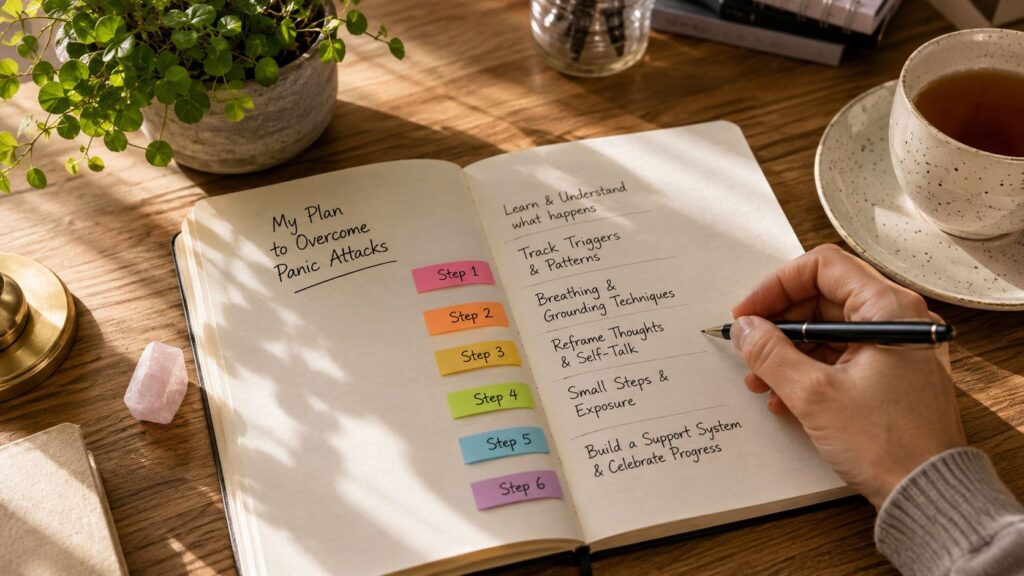
Learning how to build self esteem is about cultivating a quiet, internal anchor of your own worth. This skill is essential for young adults and expats navigating a new life abroad, especially in a country like Italy. Self-esteem isn't arrogance; it's the stable core that keeps you grounded when life feels chaotic.
What Is Self-Esteem and Why It Matters for Expats in Italy
Self-esteem is your subjective emotional evaluation of your own worth. It is the disposition to experience oneself as competent to cope with the basic challenges of life and as being worthy of happiness. This internal anchor is tested constantly for young adults living abroad.
The daily grind of living in a new country can systematically chip away at your confidence.
- Language barriers can make you feel silenced and incompetent when you can't express a complex thought in Italian.
- Cultural misunderstandings can make you feel like an outsider, reinforcing feelings of isolation.
- Professional challenges, like having your skills unrecognized in a new work culture, can lead to a quiet loss of status and identity.

These are not just "bad days." Each experience can trigger deep feelings of inadequacy, pulling you into a negative spiral of self-criticism that can be a major factor in developing anxiety and depression.
High self-esteem is a powerful protective factor for mental health.
Recognizing these unique pressures is the first step toward reclaiming your confidence. When your sense of self starts to feel fragile, it's often a sign of a deeper struggle, like an expat identity crisis. Building a resilient sense of self while living abroad is a crucial part of creating a successful and truly fulfilling international experience.
Unpacking the Roots of Low Self-Esteem
Ever found yourself spiraling after making a small mistake ordering coffee in Italian? Or maybe neutral feedback at your new job in Rome felt like a brutal confirmation that you just don't belong. When reactions feel this intense, they often point to deeper roots that began long before you moved to Italy.
Understanding where these feelings come from is the first real step in learning how to build self-esteem that’s solid and lasting. A framework like Schema Therapy helps us understand how early life experiences create deep-seated emotional and cognitive patterns, or 'lifetraps', about ourselves and the world.
As the Clinical Director of Therapsy, I often see how the stress of moving abroad can reactivate old lifetraps. Deep-seated beliefs like 'Defectiveness' (feeling inherently flawed) or 'Failure' (believing you're inadequate compared to others) can suddenly feel intensely real again when you’re stripped of your familiar support systems.
The Cognitive Triad of Self-Doubt
Cognitive Behavioural Therapy (CBT) offers another useful model: the 'cognitive triad'. This is a powerful pattern of negative, automatic thoughts about:
- Yourself: "I'm just not smart enough to ever learn Italian properly."
- The World: "People here are so judgemental and closed off."
- The Future: "I'll never feel at home or be successful in Italy."
These thoughts feel like facts, but they aren't. They’re interpretations twisted through a negative filter. For many, these thinking patterns start young. Experiences like bullying or harsh parenting can damage self-esteem early on, setting the stage for chronic low self-esteem in adulthood.
From Awareness to Action
This pattern becomes a vicious cycle. A cultural misunderstanding triggers an old 'Defectiveness' schema, which fuels the cognitive triad, leading to a downward spiral of self-criticism. This is especially true if you struggle with perfectionism and anxiety.
The goal isn’t to blame your past. It’s about building self-awareness.
Recognizing these triggers without judgment is the first move toward real, lasting change. A powerful first exercise is to uncover your limiting beliefs by writing them down. This small act starts the crucial process of separating who you are from the negative stories you’ve told yourself.
Practical Steps to Actively Rebuild Your Self-Esteem
Knowing why your confidence has taken a hit is one thing. Rebuilding it is another. Building self-esteem is an active process, made up of small, consistent choices that prove your own worth back to yourself.
Especially when navigating the pressures of expat life, it’s easy to get stuck in a negative loop of old insecurities, environmental stress, and a relentless inner critic.
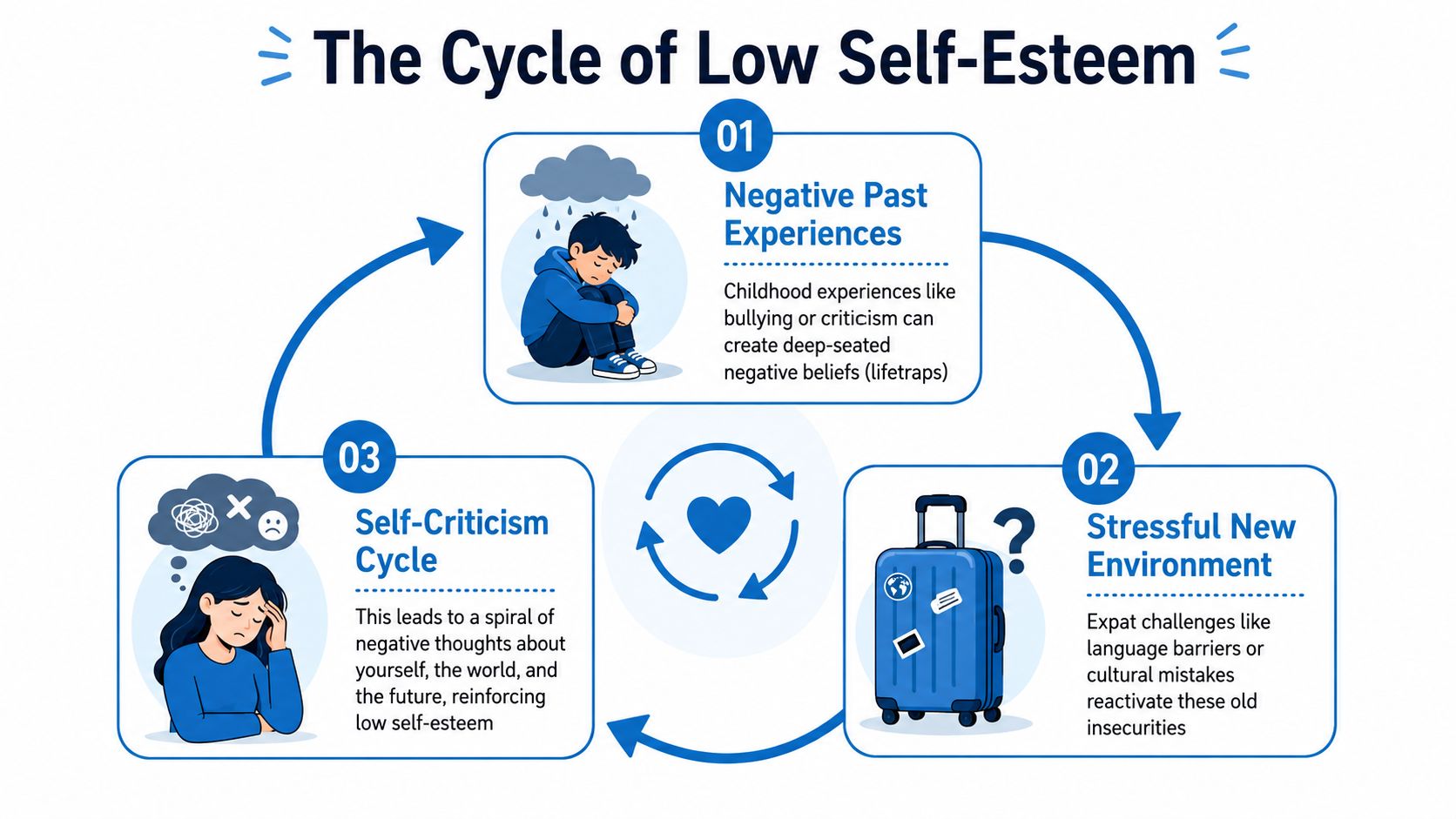
The good news is that you can break this cycle. Each exercise here is a practical tool designed to interrupt those negative patterns.
Become a Detective of Your Own Success
A powerful CBT technique is to gather evidence that proves your negative beliefs wrong. Think of your inner critic as an unreliable witness. Your job is to become a detective and find the facts.
This is what a 'Success Log' is for. At the end of each day, write down three things you did well, no matter how small they seem.
- Did you successfully order your morning cappuccino in Italian? That’s a communication win.
- Navigated a new bus route without getting lost? That’s a demonstration of resourcefulness.
- Finished a difficult report at work? Acknowledge your competence.
This isn’t arrogance. It’s about building a balanced, factual case for your own capability. Over time, this log becomes an undeniable file of evidence that you are competent, directly challenging the 'failure' lifetrap.
When Setbacks Happen, Choose Self-Compassion
You will have bad days. You’ll make a mistake at the questura, feel embarrassed speaking Italian, or just have a day where your confidence evaporates. These moments are inevitable. What’s critical is how you respond to them.
Instead of letting self-criticism take over, practice self-compassion.
As a psychotherapist, I often advise my clients to "Treat yourself with the same kindness you would offer a good friend."
When you feel that sting of failure, pause. Take a breath. Acknowledge the difficult feeling without judging yourself for having it. This simple act of noticing can stop a negative thought spiral before it gathers momentum. Exploring specific mindfulness exercises can be incredibly helpful here.
Set One Small, Powerful Boundary
Low self-esteem and people-pleasing often go hand in hand. We say "yes" when we mean "no" out of fear of disapproval. Learning to set boundaries is a powerful way to teach yourself – and others – that your needs are valid.
Start small.
- Instead of an immediate "yes," try saying, "Let me check my calendar and get back to you."
- Politely decline a social invitation if you’re drained and need a quiet night in.
Each time you set a boundary, no matter how minor, you send a powerful message to your psyche: I respect myself. Building confidence can also be an embodied practice. Activities like taking up space in a dance class can be a wonderful way to feel more confident in your own skin.
How to Navigate Setbacks and Maintain Progress
Building self-esteem isn’t a smooth, upward climb. There will be dips and detours. An awkward interaction at the local market, another bureaucratic headache, or a sudden wave of homesickness can make old insecurities resurface with surprising force. This is normal.
Expecting setbacks reframes them from failures into opportunities to practice resilience. As the Clinical Director at Therapsy, I always emphasize that consistency, not perfection, is the key to building long-term confidence.
When difficult feelings show up, acknowledge them without letting them take over. Notice the feeling of frustration, but don’t fuse with it. This creates a vital space between you and the emotion, giving you room to choose your response.

A Practical Plan for Hard Days
Instead of spiraling into self-criticism, have a concrete plan.
- Revisit Your Success Log: Open your journal and read tangible proof of your competence. This reminds your brain that a difficult moment is just one data point, not the whole story.
- Practice Self-Compassion: Acknowledge how you feel with kindness. Say to yourself, "This is a hard moment. It's okay to feel this way."
- Acknowledge External Stressors: Sometimes, it’s not you – it’s the situation. Living abroad is inherently challenging. Our guide on managing expat stress can offer helpful context.
This experience is particularly common for young adult expats. This shared reality highlights why culturally aware support is critical.
The most important skill is not to avoid falling, but to learn how to get back up with kindness. Each time you navigate a setback with self-compassion, you are actively rewiring your brain for resilience.
When to Seek Professional Support
The exercises in this guide can make a real difference in learning how to build self-esteem. But sometimes, self-help isn’t enough. This is true when low self-esteem is deeply rooted or causing serious problems in your daily life.
Knowing when to ask for support is a sign of self-awareness, not failure. If you find that low self-worth consistently leads to anxiety, depression, social withdrawal, or professional setbacks, it may be time to speak with a professional.
Therapy provides a confidential, non-judgmental space to get to the root of why you feel the way you do. It offers structure and expert guidance to help you heal faster and more deeply than you might on your own.
How a Therapsy Therapist Can Help
A therapist acts as a guide to help you dismantle the patterns keeping you stuck. At Therapsy, our work is personalized, using proven, evidence-based approaches like Schema Therapy and Cognitive Behavioural Therapy (CBT).
A therapist can help you:
- Identify Deep-Rooted Schemas: Uncover the "lifetraps" from your past that feed feelings of inadequacy.
- Challenge Negative Core Beliefs: Systematically dismantle the automatic negative thoughts that sabotage your confidence.
- Heal Underlying Issues: Use targeted approaches like EMDR to process past experiences and reduce their emotional impact.
Therapsy is a multilingual psychotherapy service in Italy for young adults and expats because we understand these unique challenges. Our team of 50+ multilingual therapists is supervised by me, the Clinical Director, and offers support in English, Italian, French, Spanish, and more.
We don't use algorithms. I personally handle the matching process to ensure you’re paired with a professional who fits your specific needs. This human-first approach means you feel understood from the first conversation. If you're wondering if therapy is right for you, our guide "Do I Need a Psychologist?" can help.
FAQ
How can I start building self-esteem today?
You can begin right now by acknowledging one small thing you did well today. True self-esteem is built through the consistent daily practice of recognizing your own competence and worth, not through grand gestures. This small act starts the process.
Is low self-esteem a mental health condition?
Low self-esteem itself is not a formal diagnosis, but it is a critical risk factor. It is often a core symptom of conditions like depression and anxiety disorders. If chronic low self-worth is interfering with your life, professional support is strongly recommended.
How long does it take to build self-esteem?
Building self-esteem is a gradual process that unfolds over months of consistent effort. While you can feel small shifts quickly, rewiring deep-seated negative beliefs is a longer journey that requires patience. Therapy with evidence-based frameworks like CBT or Schema Therapy can often accelerate this process.
What’s the difference between self-esteem and self-confidence?
Self-esteem is your overall, fundamental sense of your own value as a person. Self-confidence is your belief in your ability to succeed at a specific task. You can have high self-esteem (know you are a worthy person) even with low confidence in a specific skill, like speaking Italian at the questura.
Think of it this way: Self-esteem is the stable foundation of a house. Self-confidence is the skill you have in a particular room. A strong foundation supports everything, even when you're fumbling and learning something new.
Can therapy really help with low self-esteem?
Yes, therapy is one of the most effective ways to build lasting self-esteem. A skilled therapist provides a structured, evidence-based plan to help you heal past wounds, challenge your inner critic, and build a resilient sense of self-worth. This goes far deeper than self-help books alone.
At Therapsy, we know that building self-esteem is a journey, and you don’t have to walk it alone. As a trusted resource for the international community in Italy, our team of multilingual therapists is here to provide the expert, compassionate support you need to thrive.
Book your first free assessment call – no commitment, just a conversation with our Clinical Director who will listen and match you with the right therapist for you. Visit therapsy.it.