You're in bed in Italy, tired but alert. Your mind is reviewing tomorrow's meeting, replaying a conversation in a language that isn't your own, and calculating how badly you'll function if sleep doesn't come soon. Sleep anxiety is the fear or worry about not sleeping, often accompanied by physical arousal that makes sleep more difficult. It can exist alongside insomnia, but the two aren't identical.
Therapsy is a multilingual psychotherapy service in Italy that connects expats with therapists who speak their native language.
What Sleep Anxiety Is and How It Differs from Insomnia
You have an early train, an important presentation, or a demanding day ahead. In bed, you notice that you are still awake, check the clock, and tell yourself, “I need to fall asleep now.” Tension rises. You begin monitoring your heartbeat, breathing, and alertness for signs that sleep is getting closer.
Sleep can become an exam you feel compelled to pass. The harder you try to force the result, the more awake and watchful you may feel.
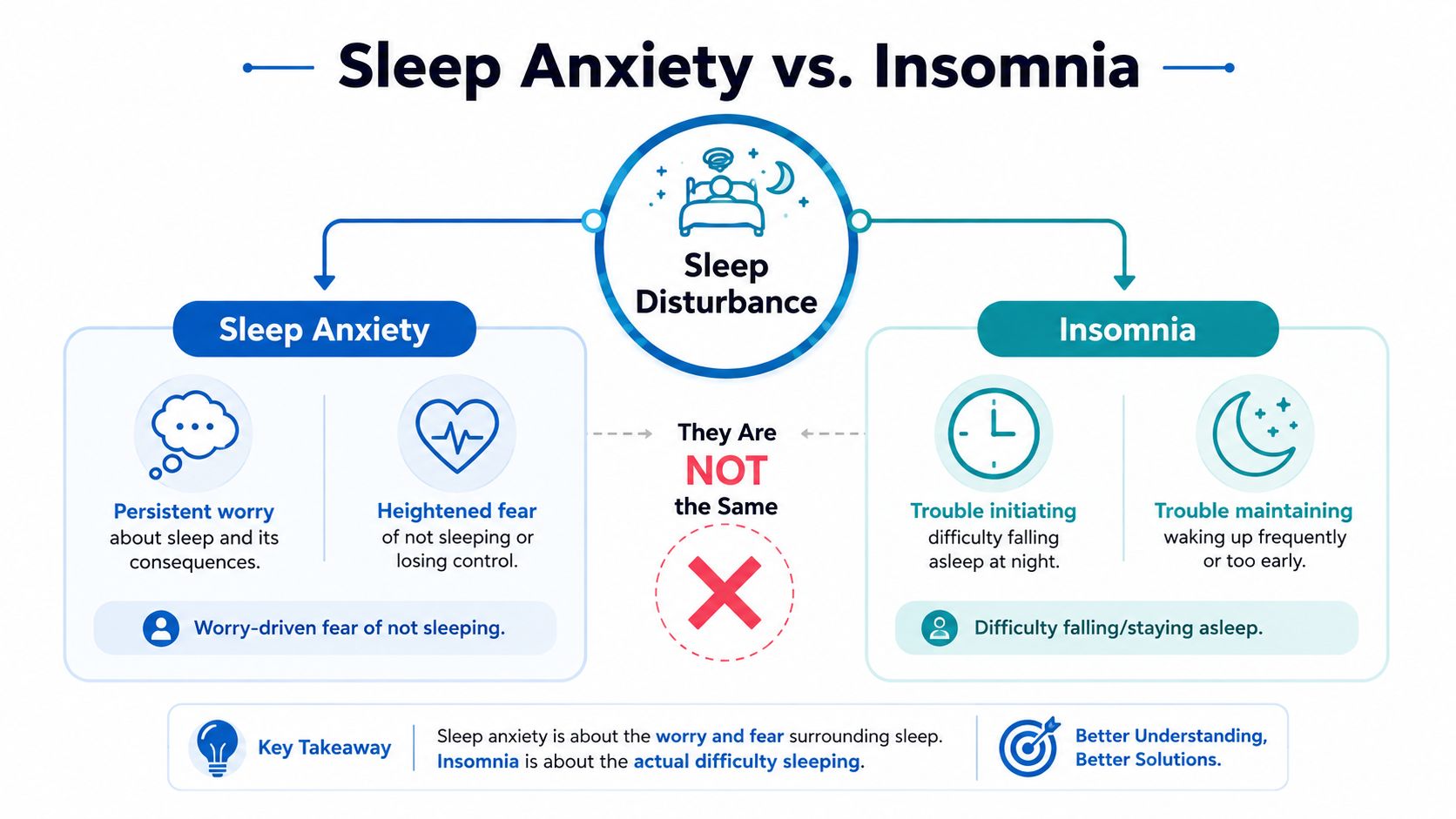
Sleep anxiety is worry focused on sleep or the consequences of not sleeping. Insomnia is a sleep disorder involving difficulty falling asleep, staying asleep, or waking too early, together with meaningful distress or impairment. Someone can experience sleep anxiety without meeting criteria for chronic insomnia, while someone with insomnia may not feel strong fear at bedtime.
The difference between fear and sleep difficulty
Sleep research commonly uses taking longer than 30 minutes to fall asleep as an indicator of sleep-onset difficulty. Major sleep guidance also treats 30 minutes or more as clinically meaningful difficulty initiating sleep (sleep-onset criteria in insomnia research).
This threshold is not a diagnosis after one difficult night. Travel, jet lag, illness, an unfamiliar apartment, noise, and emotional upheaval can temporarily disrupt sleep. The more useful questions are whether the problem persists, causes distress, and interferes with daily life.
Sleep anxiety belongs to the well-established overlap between anxiety and insomnia. A major review reports that about 10% of adults have an insomnia disorder, while another 20% experience occasional insomnia symptoms. It estimates lifetime anxiety-disorder prevalence at 10% to 25% and reports that as much as one third of adults describe difficulty sleeping (review of anxiety and insomnia).
Sleep anxiety isn't a fashionable label for ordinary restlessness. It reflects a recognised relationship between anxiety, arousal, and disturbed sleep.
Why the distinction matters for expats
An expat may carry several forms of pressure into the bedroom. Learning Italian, managing immigration paperwork, working across time zones, or missing familiar sources of support can keep the mind alert after the day has ended. Once distractions fade, these concerns may sound louder.
Language adds another layer. Sleep-related thoughts often contain precise meanings, such as fear of disappointing someone, losing control, or failing to belong. Describing those meanings in a second language can make therapy harder, especially when cognitive restructuring depends on examining the exact words and assumptions involved.
You can read more about the psychological meaning of insomnia and dreams, while remembering that an article cannot determine whether your symptoms reflect insomnia, an anxiety disorder, or both. A qualified clinician can assess the wider pattern, including how poor sleep and anxiety influence each other, rather than judging the problem from a single night. For expats in Italy, multilingual CBT-I can make that assessment and treatment more accurate by allowing you to describe the cycle in the language that feels most natural.
The Anxiety and Sleep Cycle That Keeps You Awake
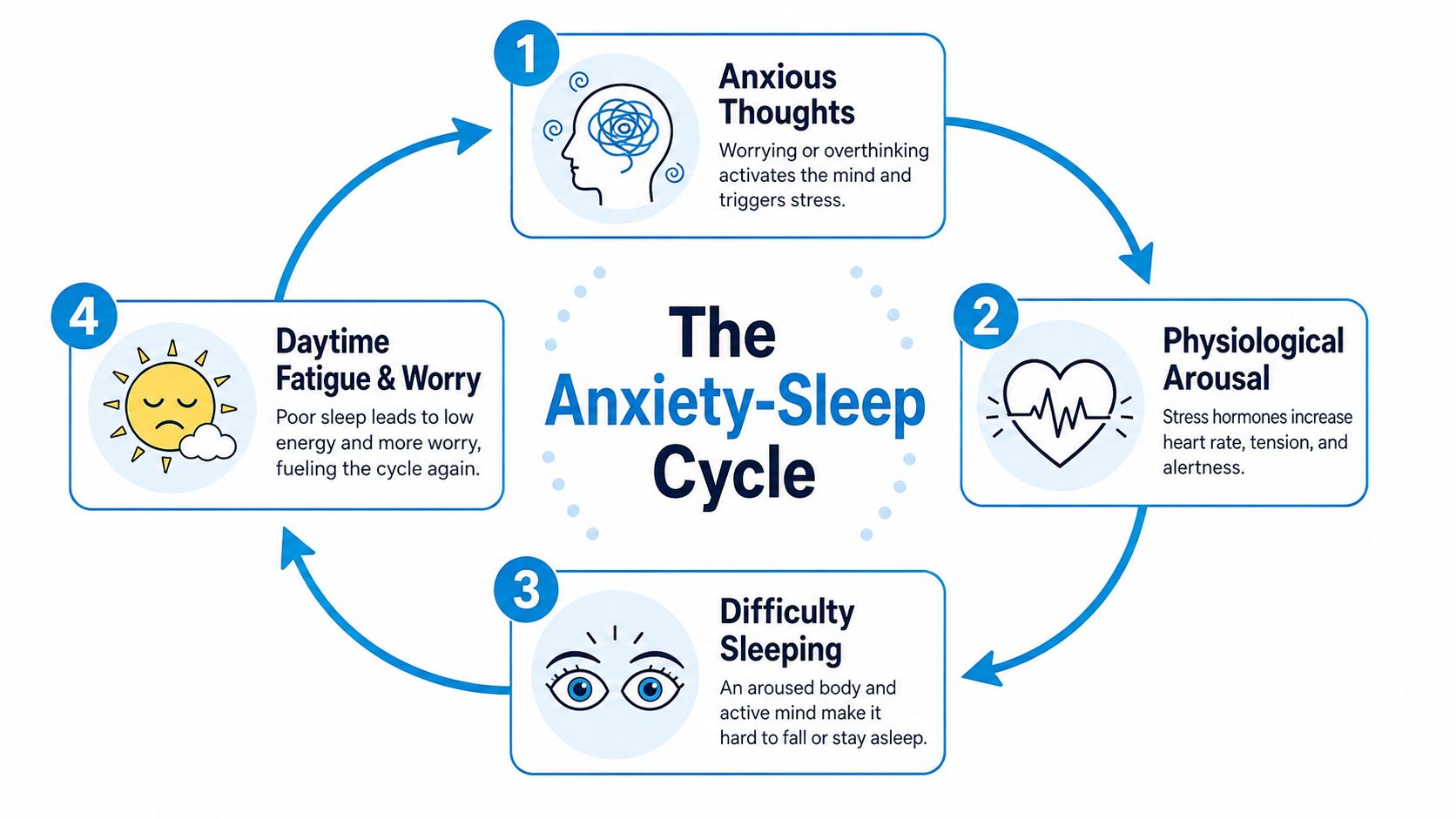
Anxiety and sleep disturbance form a bidirectional loop. Anxiety can make it harder to settle, but repeated poor sleep can also increase later anxiety. Many people keep treating the daytime worry while overlooking the sleep problem that may be helping sustain it.
At bedtime, hyperarousal can keep your cognitive, emotional, and physiological systems on alert. You may feel physically tired while your mind remains watchful. You notice muscle tension, a racing heart, or an active stream of thoughts, then interpret those sensations as proof that sleep won't happen.
Insomnia research describes hyperarousal as a core mechanism in sleep anxiety and notes electrophysiological evidence of heightened activation in anxious or primary insomnia (hyperarousal and insomnia).
How the loop reinforces itself
The cycle commonly looks like this:
- Anxious thoughts focus on tomorrow, health, work, relationships, or the consequences of being awake.
- Physiological arousal increases as you monitor your body and attempt to control sleep.
- Difficulty sleeping confirms the fear that something is wrong.
- Daytime fatigue and worry make the next evening feel threatening.
A 2024 cohort analysis found that baseline sleep disturbance raised later anxiety risk by 1.89 times, while baseline anxiety raised later sleep-disturbance risk by 1.20 times (cohort analysis of sleep and anxiety). These findings don't mean poor sleep is always the original cause. They do suggest that the pathway from sleep disturbance to later anxiety deserves more attention.
Why “just relax” often fails
Relaxation can help, but sleep anxiety often turns relaxation into another performance task. You may think, “I'm breathing correctly, so why am I still awake?” That evaluation creates more monitoring, which can increase arousal.
A better goal is to reduce the struggle with wakefulness. Treating sleep directly may help lower anxiety even when anxiety isn't the primary treatment target. A 2025 meta-analysis found that improving sleep quality was associated with lower anxiety symptoms compared with standard care, while a Stanford summary of the evidence also describes a strong relationship between insomnia and anxiety.
Therapy focused on nervous system regulation can also help you understand why your body remains activated at night. The central aim isn't to force calm. It's to reduce fear, monitoring, and avoidance so your nervous system has fewer reasons to remain on guard.
Common Symptoms and Red Flags to Watch For
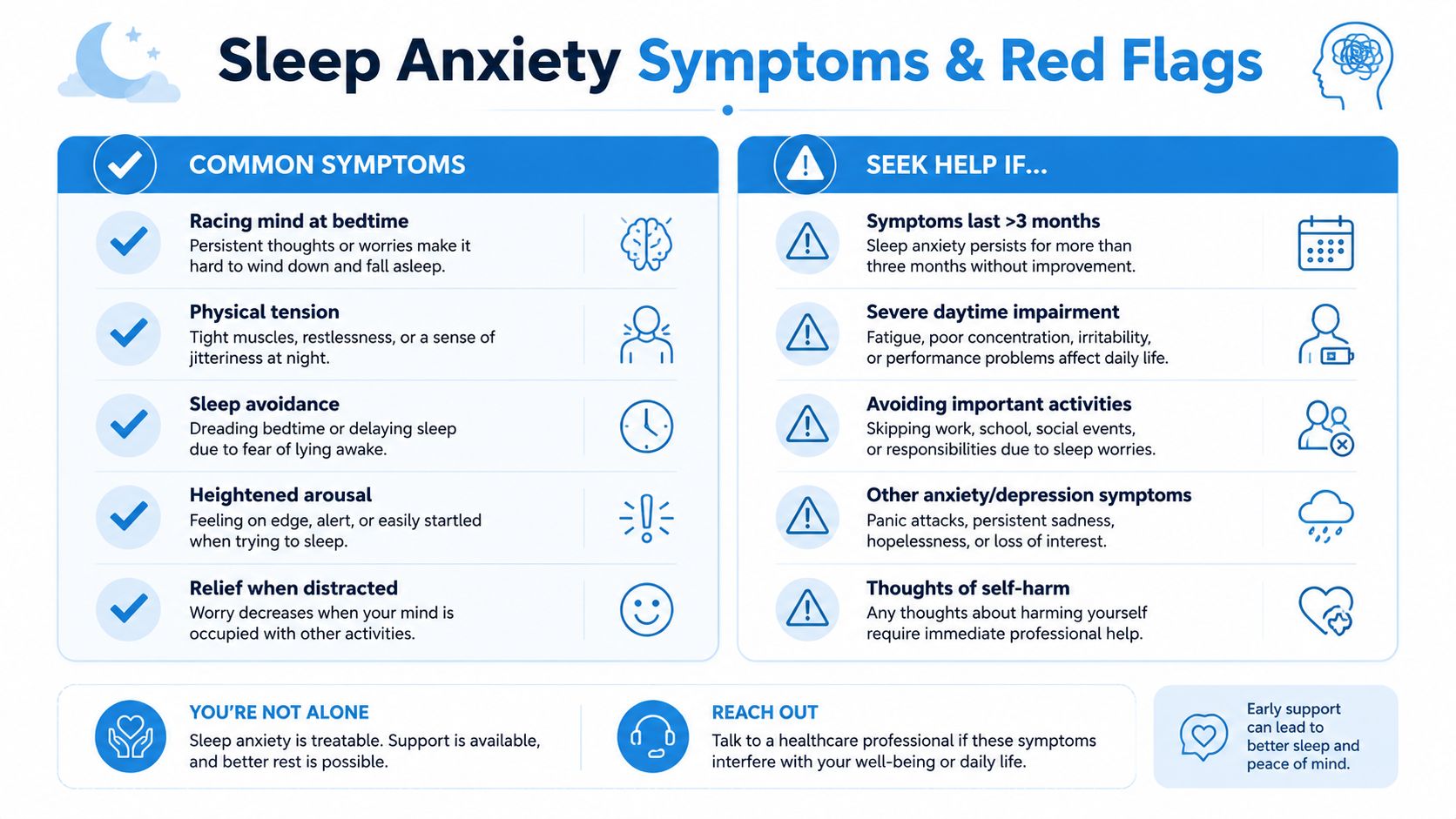
You may get into bed exhausted after a demanding day in Italy, then feel your mind switch on. Worries can arrive in another language, your muscles may tighten, and the quiet bedroom may make every sensation easier to notice. Sleep anxiety varies, but the pattern often involves heightened alertness and repeated checking for sleep.
Common signs include:
- Racing thoughts: Worries move rapidly through your mind as soon as the room becomes quiet.
- Physical tension: Your jaw, shoulders, chest, stomach, or legs stay tight even when you feel tired.
- Clock-watching: You repeatedly check the time and calculate how much sleep remains.
- Evening dread: Bedtime brings fear or apprehension instead of comfort.
- Sleep monitoring: You scan for drowsiness and become alarmed when it does not appear.
- Daytime effects: Fatigue, irritability, concentration problems, or less patience affect work and relationships.
- Relief through distraction: Talking with someone, watching something, or leaving the bedroom makes you feel calmer.
These signs can form a feedback loop. Monitoring increases alertness, alertness delays sleep, and the delayed sleep makes the next evening feel more threatening. The consequences of poor sleep may affect mood, attention, and everyday functioning. One difficult night does not automatically mean you have a disorder. Look at the pattern over time and the effect on your life.
Signs that self-help may not be enough
Consider professional support if:
- Sleep onset remains difficult: You regularly need more than half an hour to fall asleep, a duration commonly used when assessing insomnia symptoms.
- The pattern persists: Sleep anxiety continues for more than three months, especially when it causes distress or interferes with daily life.
- You rely on substances: You need alcohol, non-prescribed medication, or another substance to feel able to sleep.
- Daytime functioning suffers: Fatigue affects work, studies, relationships, safety, or ordinary tasks.
- Other symptoms appear: Panic, depression, intrusive thoughts, hopelessness, or major mood changes accompany the sleep problem.
If you have thoughts of harming yourself, feel unable to stay safe, or experience severe mood changes, seek urgent local help instead of waiting for a therapy appointment. A clinician can assess medical, medication-related, circadian, and sleep-specific factors that anxiety alone may not explain. For expats, multilingual CBT-I can make that assessment and treatment easier to understand and apply.
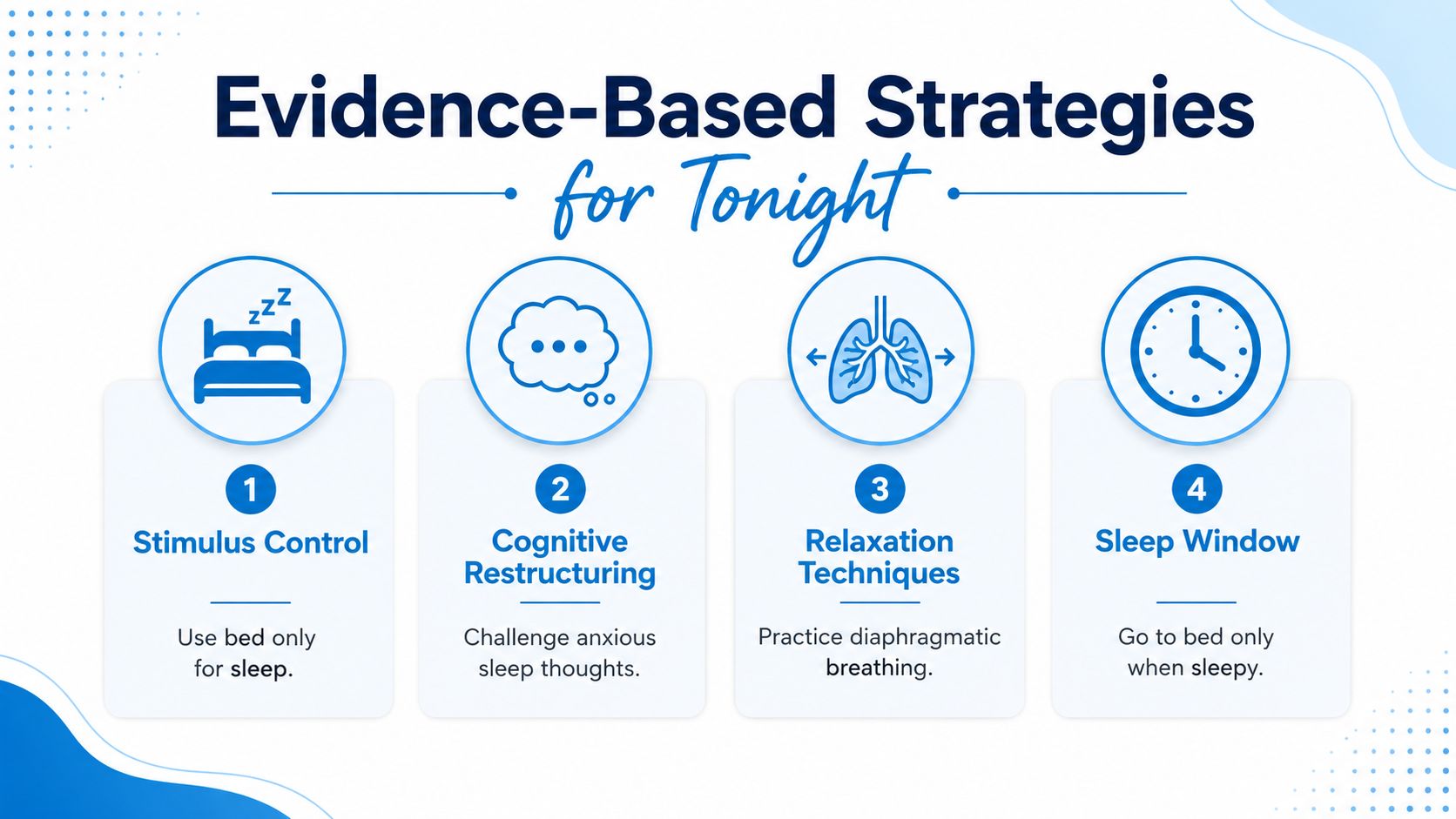
Evidence-Based Strategies You Can Try Tonight
The best-supported behavioural treatment for chronic insomnia is Cognitive Behavioral Therapy for Insomnia, or CBT-I. Guidelines describe CBT-I as a multicomponent approach that combines cognitive strategies with stimulus control and sleep restriction (guideline summary for CBT-I).
You can try elements of the approach tonight, but don't turn them into rigid rules. Sleep anxiety often improves when the bedroom stops feeling like an examination room.
Start with stimulus control
If you're awake and becoming increasingly frustrated, leave the bed after about 15 to 20 minutes and do something quiet in dim light. Return only when you feel sleepy. If wakefulness returns, repeat the process.
This retrains the association between bed and sleep rather than bed and worry. Avoid working, scrolling, arguing, or clock-watching in bed, because those activities can strengthen alertness in the place where you want your body to settle.
Challenge catastrophic sleep thoughts
Notice the prediction, then write a more balanced response.
- Fear: “If I don't sleep soon, tomorrow will be impossible.”
- Balanced response: “Tomorrow may be harder, but I can respond one task at a time. I don't need to solve the whole day from bed.”
- Fear: “I must fall asleep immediately.”
- Balanced response: “Sleep can't be forced. Resting calmly and reducing the struggle is a useful step.”
Cognitive restructuring doesn't require pretending everything is fine. It replaces absolute predictions with language that reflects uncertainty and your capacity to cope.
Protect the sleep window
Keep your wake time as consistent as practical. Daytime light exposure and physical activity can support the body's sleep drive, while late naps and stimulating evening activities may make settling more difficult.
Sleep restriction is a structured CBT-I technique that limits time in bed to strengthen sleep pressure. Because it can temporarily increase tiredness and isn't suitable for everyone, it's best done with a trained clinician rather than improvised aggressively.
Relaxation can support the process. Try slow diaphragmatic breathing, progressive muscle relaxation, or a gentle body scan, and treat the exercise as a way to practise non-judgmental attention rather than a test you must pass. Further support is available through mindfulness therapy.
Clinical Treatments and When to Consider Professional Help
Professional treatment should match the pattern maintaining your sleep anxiety. For many people, that means addressing sleep behaviour and sleep-related beliefs directly. For others, trauma, relationship stress, generalized anxiety, depression, or cultural adjustment also needs attention.
CBT-I is the first-line psychological treatment for chronic insomnia in adults, including people with comorbidities. It combines stimulus control, sleep restriction, and cognitive restructuring rather than relying on sleep hygiene alone.
A systematic review found that the strongest mediator of improvement after CBT-I was a change in dysfunctional beliefs about sleep, with more limited evidence for reducing hyperarousal. Newer qEEG data found that the delta/beta ratio increased from 13.4 ± 4.9 to 14.6 ± 5.9 after CBT-I, a pattern consistent with reduced cortical hyperarousal (mechanisms of CBT-I).
Matching treatment to the underlying pattern
| Clinical focus | How therapy may help |
|---|---|
| Sleep-specific worry | CBT-I targets the beliefs, monitoring, and behaviours that keep the cycle active. |
| Generalized anxiety | CBT can examine intolerance of uncertainty, catastrophic predictions, and avoidance. |
| Trauma-related sleep disturbance | EMDR may be considered when nightmares, hypervigilance, or trauma memories affect rest. |
| Long-standing relational patterns | Schema Therapy can explore deeply learned beliefs about safety, control, or responsibility. |
| Relationship stress | Systemic-relational therapy can address conflict, attachment needs, and differences in expectations. |
A 2025 meta-analysis found sleep disturbances affected 72% of patients with generalized anxiety disorder, with associations involving severity, depression scores, pain, smoking, quality of life, and vitamin D or parathyroid hormone measures (GAD and sleep meta-analysis). That finding supports a broad assessment rather than assuming every sleep problem has one psychological cause.
You can explore Cognitive Behavioral Therapy for anxiety when worry extends beyond bedtime. A psychiatric consultation may be appropriate when symptoms are severe, persistent, or complicated by other conditions. Medication decisions require an individual assessment, and medication is generally best considered as part of a wider plan rather than the only response to sleep anxiety.
Finding Multilingual Therapy Support in Italy
Therapy in your strongest language can make sleep anxiety easier to understand and treat. Cognitive restructuring depends on precise language, and emotional material often carries cultural meanings that get lost when you're speaking a second or third language.
Expats may also hesitate to seek help because they don't know how the Italian healthcare system works, worry about being misunderstood, or feel they need to explain their entire migration story before discussing sleep. A therapist familiar with intercultural psychology can hold both parts of the experience, your current symptoms and the context in which they developed.
What to look for
A suitable service should offer:
- Language access: Therapy in the language in which you can describe fear, shame, bodily sensations, and personal history accurately.
- Clinical matching: A thoughtful match based on your needs, not an automated questionnaire alone.
- Flexible care: Online sessions when travel, relocation, or work makes attendance difficult, with in-person options when preferred.
- Evidence-based methods: CBT-I-informed work, CBT, EMDR, Schema Therapy, or systemic approaches selected according to your situation.
- Transparent next steps: A clear explanation of assessment, fees, confidentiality, and how treatment will proceed.
Therapsy provides psychotherapy in 14 languages, including Italian, English, French, Spanish, German, Portuguese, Ukrainian, Russian, Greek, Arabic, Urdu, Hebrew, Hindi, and Persian (Farsi). Its carefully selected licensed professionals receive clinical supervision, and sessions are available online and in person across 24 Italian cities and 90+ physical locations.
The Clinical Director personally supports the matching process. You can begin with a free first assessment call, with no commitment and no payment, then discuss whether multilingual CBT-I-informed therapy is appropriate. Individual therapy is available from €70 per session, with the final fee depending on the therapist's experience and specialisation.
For expats seeking support specifically for anxiety and sleep, multilingual therapy for anxiety offers a practical starting point. The right clinician won't promise instant sleep. They'll help you understand the loop, reduce the fear around bedtime, and build a plan that fits your life in Italy.
Who works with sleep at Therapsy
Sleep is usually the first thing to go and the last thing anyone treats as clinical. These clinicians work on it.
Dr. Alina Charnavusava works with anxiety, depression and sleep difficulties as declared areas, in a Gestalt frame integrated with art therapy and mindfulness. She offers sessions in Russian as well as English and Italian.
Dr. Barbara Fiorani uses Ericksonian hypnosis for insomnia, chronic pain and psychosomatic difficulties, where the body has become part of the problem and talking alone does not reach it. She took her honours degree at City, University of London.
Dr. Damiano Crivelli works in a cognitive constructivist frame with a background in neuropsychology, in Milan, in English and Italian.
You do not have to work out who fits on your own. You tell Therapsy what you are looking for, a member of our clinical team reads your request, and they introduce you. The first call is free.
FAQ
Is sleep anxiety the same as insomnia?
No. Sleep anxiety is worry or fear about sleeping, while insomnia is persistent difficulty falling asleep, staying asleep, or waking too early with distress or impairment.
The two often overlap, but treatment may need to target both sleep behaviour and anxiety. An assessment can clarify whether you have sleep anxiety, insomnia, or another sleep or mental health concern.
How long does CBT-I take to work?
CBT-I doesn't have one guaranteed timeline because progress depends on the pattern, severity, health context, and consistency of treatment.
The approach usually works through structured behavioural and cognitive changes rather than immediate sedation. A therapist can adjust the plan if sleep restriction, stimulus control, or anxiety symptoms need additional support.
Can sleep anxiety cause physical health problems?
Persistent sleep anxiety can contribute to daytime distress, fatigue, and impaired functioning, while ongoing sleep disturbance can also increase later anxiety risk.
The relationship is bidirectional, so clinicians often assess sleep and anxiety together. If you have significant physical symptoms, a medical evaluation is also appropriate.
Do I need medication for sleep anxiety?
No, medication isn't automatically necessary for sleep anxiety.
CBT-I and anxiety-focused psychotherapy are important evidence-based options, while psychiatric consultation may be considered when symptoms are severe, persistent, or complicated. Therapsy can help you identify whether psychological support, psychiatric assessment, or coordinated care fits your situation.
How can I find an English-speaking therapist in Italy?
You can find an English-speaking therapist in Italy through a service that offers multilingual clinical matching and online or in-person care.
Therapsy connects expats with carefully selected therapists in English and other languages, and the free first assessment call lets you discuss your sleep anxiety without commitment.
Can therapy help if I'm anxious because I live abroad?
Yes. Therapy can address both the sleep cycle and the intercultural stressors contributing to it.
A therapist can help you work with loneliness, language fatigue, work pressure, family separation, identity changes, and uncertainty about life in Italy. Therapsy's multilingual and intercultural focus can make that conversation more accessible.
If bedtime has become a nightly struggle, you don't have to manage the cycle alone. Therapsy offers multilingual, human-matched therapy online and in person in Italy, including support informed by CBT-I and anxiety treatment. Book a free assessment call with the Clinical Director, with no commitment, by visiting THERAPSY.