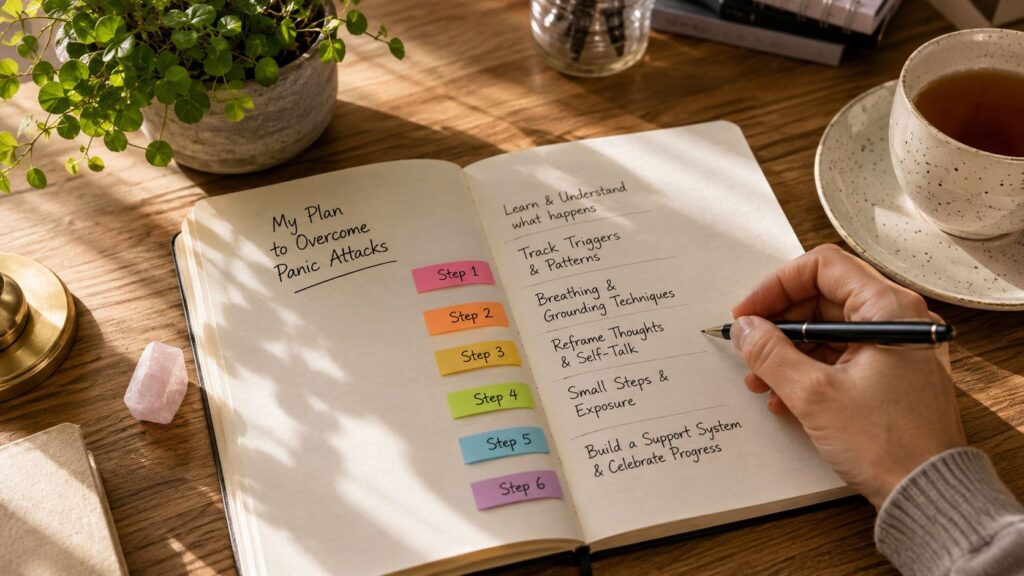
82% of working Americans have experienced Sunday scaries, and nearly one in four Gen Z respondents experience them every week. Sunday scaries are anticipatory anxiety about the coming workweek, often felt as Sunday evening dread, racing thoughts, physical tension, and difficulty sleeping.
You may know the pattern well. Sunday starts pleasantly, then a message from work appears, a calendar reminder surfaces, or you remember an unfinished task. If you're living in Italy while working with teams abroad, the transition can feel sharper. A late message from another time zone, an early Monday meeting, distance from family, and the effort of working across languages can turn ordinary planning into a heavy mental load.
Therapsy is a multilingual psychotherapy service in Italy that connects expats with therapists who speak their native language.
What Sunday Scaries Really Are and Why They Show Up
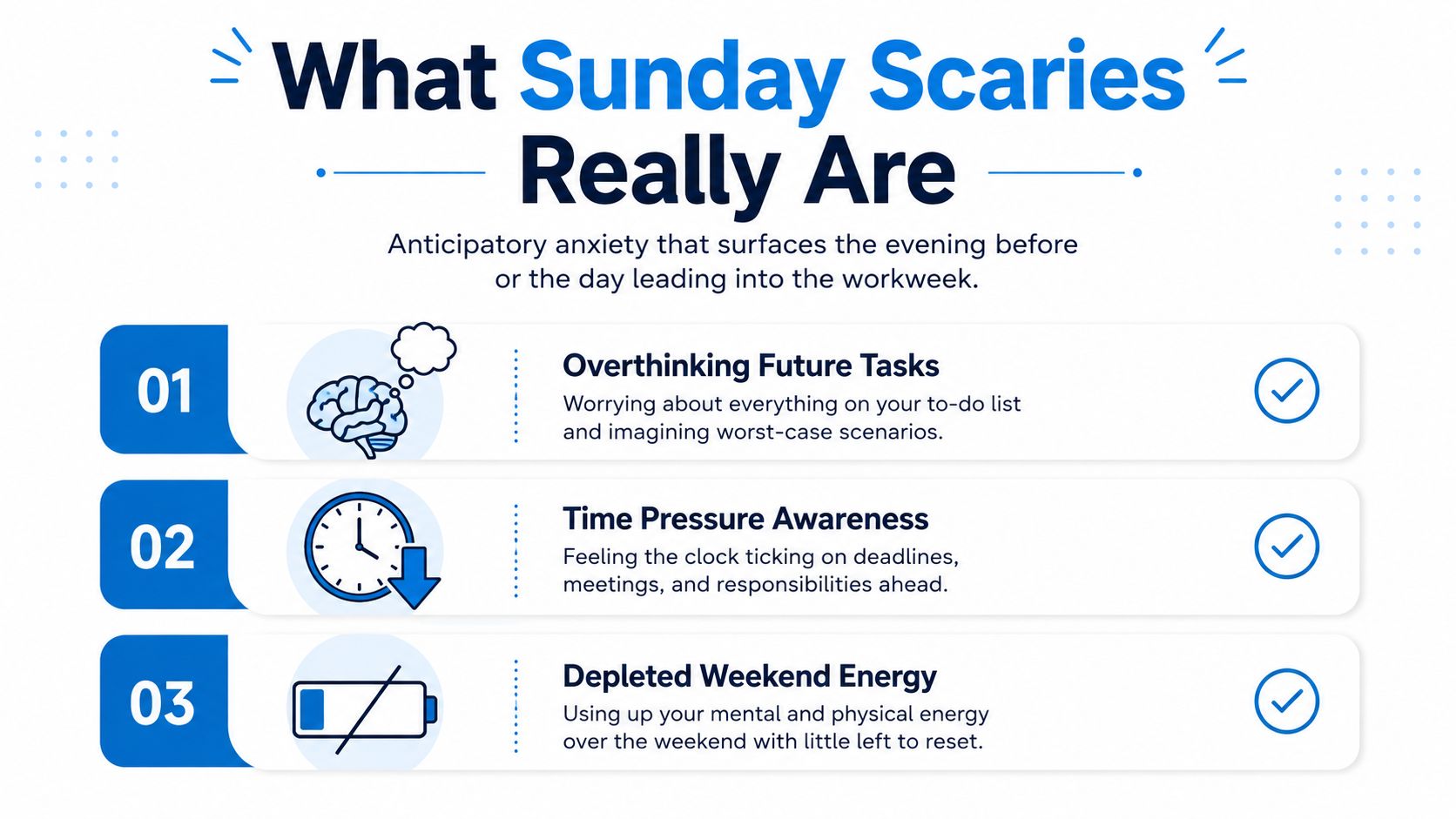
Sunday scaries are anticipatory anxiety that surfaces on Sunday, often as the workweek approaches. The mind begins preparing for Monday before Monday arrives, focusing on responsibilities, performance, meetings, deadlines, or the end of personal time.
The pattern can affect several parts of your day at once. You might notice:
- Emotional dread: Your mood drops while the day itself remains quiet.
- Mental overactivity: Thoughts move between unfinished work, upcoming conversations, and possible mistakes.
- Physical tension: Your chest feels tight, your muscles stay tense, or you feel restless.
- Sleep disruption: You expect to sleep, but your mind rehearses Monday instead.
- Avoidance: Food, alcohol, television, or endless scrolling temporarily dull the discomfort.
Sleep is often the clearest signal. The American Academy of Sleep Medicine's survey report found that 26% of Americans said they always, almost always, or often had more difficulty falling asleep on Sunday nights than on other nights. The figure was 32% among Gen Z and 34% among millennials. A separate survey of U.S. adults found that 79.5% had trouble falling asleep on Sundays compared with other days. This places Sunday scaries within a sleep-and-stress pattern, rather than treating them as a passing mood.
Why Sunday evening activates the worry system
Your brain responds to expected demands before they happen. Weekend recovery shifts toward mental preparation, while unfinished tasks remain like open browser tabs, each one requesting attention when you are trying to rest.
Sunday may also contain fewer fixed activities than a weekday. That open space can give rumination room to grow, particularly when you are alone or far from familiar support. Expat life in Italy can add another layer:
- Time-zone overlap may bring work messages into Sunday evening.
- Cross-border teams can make Monday expectations less clear.
- Distance from family removes familiar reassurance.
- Language barriers may make it harder to describe worry or request help.
- Cultural adjustment adds effort to ordinary workplace interactions.
For an expat, Sunday anxiety can work like a meeting scheduled across several time zones. The appointment is still ahead, but your body starts preparing before the other person is even online.
Core idea: Sunday scaries are often the mind's attempt to prepare for uncertainty. Planning helps when it makes the future more specific, not when it demands perfect control.
The Adobe survey reported that 82% of working Americans had experienced Sunday scaries, rising to 87% among people in business and finance. It identified burnout, high workloads, and upcoming deadlines as leading triggers, and estimated that affected respondents lost an average of 72 hours of weekend work per year. Adobe's Sunday scaries research supports treating this pattern as a genuine strain on rest, not merely a joke or a productivity problem.
If Sunday anxiety feels intense or affects your functioning, review the signs described in anxiety symptoms in adults. Occasional dread can be understandable. A cycle that repeatedly steals sleep, especially without language-matched support nearby, deserves closer attention.
Sunday Scaries Versus Anxiety and Burnout
Not every difficult Sunday means you have an anxiety disorder or burnout. The most useful distinction is the pattern across time.
Sunday scaries are usually anticipatory, linked to the coming workweek, and limited to a predictable period. They may ease after you make a plan, talk with someone, or begin Monday and discover that the imagined threat was larger than the actual one.
Generalized anxiety is broader. Worry may continue across several days and involve health, money, relationships, safety, or many other areas. Burnout develops through prolonged workplace stress and may include exhaustion, cynicism, emotional distance, and reduced effectiveness that doesn't disappear after a weekend.
| Pattern | Trigger | Duration | Core Symptoms | Recovery | Escalate When |
|---|---|---|---|---|---|
| Sunday scaries | Upcoming work or study obligations | Usually concentrated around Sunday and Monday | Dread, racing thoughts, restlessness, sleep difficulty | Planning, rest, connection, and a calmer transition may help | It becomes frequent, intense, or disrupts sleep |
| Anxiety | May involve several life areas or no single clear trigger | Persists beyond Sunday | Ongoing worry, tension, physical symptoms, difficulty controlling thoughts | Requires broader coping and may benefit from professional support | Worry interferes with daily life or responsibilities |
| Burnout | Prolonged workload, low control, or chronic workplace stress | Builds over time | Exhaustion, cynicism, detachment, reduced performance | A weekend alone may not restore energy | Exhaustion and disengagement continue across settings |
A useful self-check is simple. Occasional Sunday dread is common. Weekly dread that hijacks your evening and sleep may signal an anxiety pattern. Dread combined with chronic exhaustion and cynicism may point toward burnout.
For expats, the categories can overlap. A hybrid job may place meetings at inconvenient hours, while a language barrier can hide how overwhelmed you feel. Isolation can also make a manageable concern feel like a total threat because there's no familiar person nearby to help you put it in perspective.
The work burnout signs and recovery guide can help you examine whether your Sunday experience reflects a temporary transition or a wider workplace problem. You don't need to diagnose yourself. You need enough clarity to choose a proportionate response.
A Sunday Reset Plan to Lower Anticipatory Anxiety
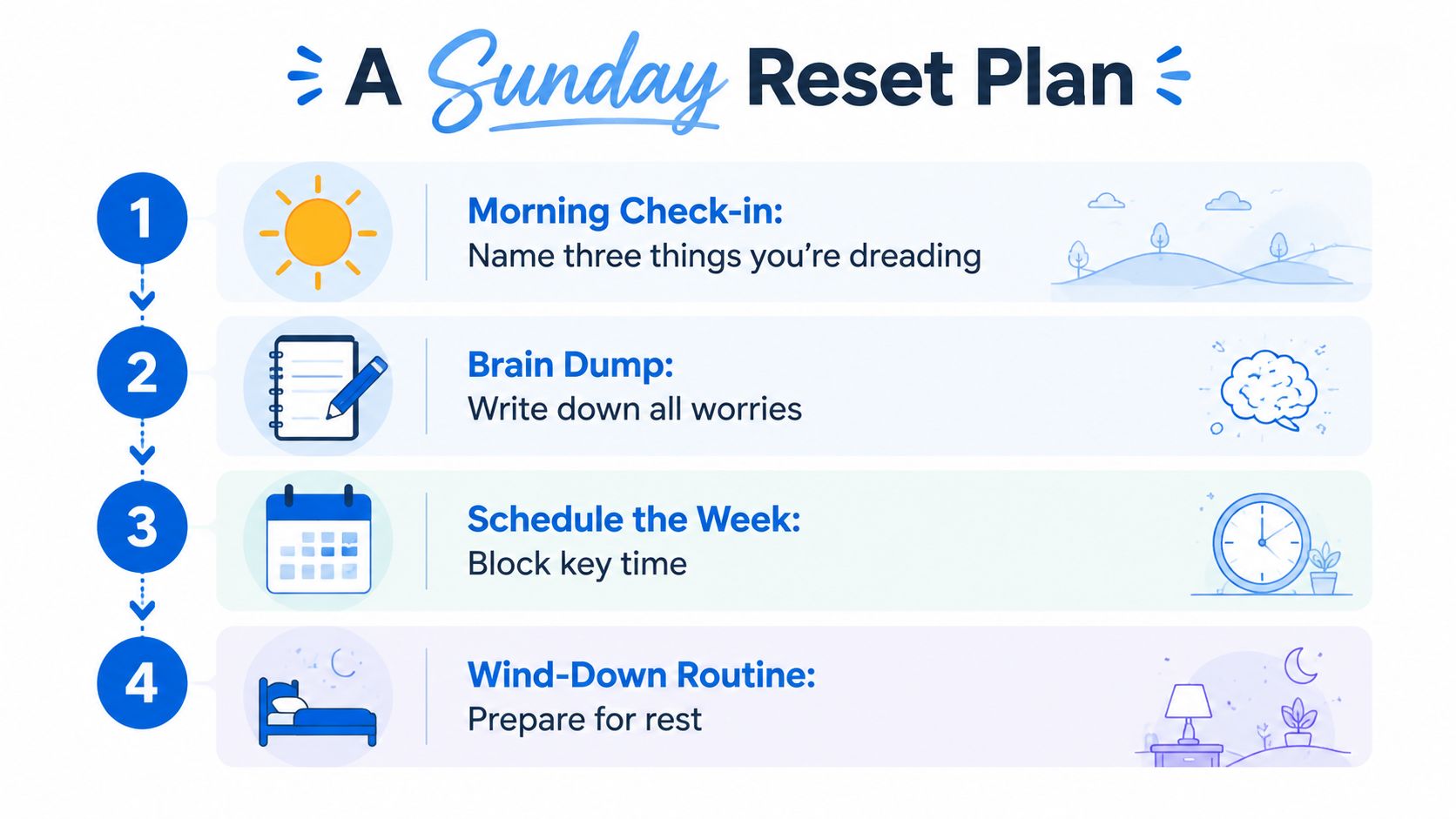
A Sunday reset works best when it reduces ambiguity without turning your day into another work assignment. The aim is to move worries from your head onto paper, decide what you can influence, and create a clear stopping point.
Start with a morning check-in
Write down the three things you're dreading most about the coming week. For each one, mark whether it's controllable, partly controllable, or outside your control.
This distinction matters. You may control the first email you send, the information you request, or the time you reserve for a task. You can't fully control another person's reaction, a delayed decision, or an unexpected change.
Use a short planning sprint
Set aside a focused planning period. List your main Monday priorities, then write the first concrete action for each. For example:
- Project uncertainty: Open the brief and list the missing information.
- Difficult meeting: Draft the two points you need to communicate.
- Crowded schedule: Protect an uninterrupted work period.
Block the first part of Monday for these actions if possible. A short opening email or meeting agenda can also close an open loop before it continues spinning in your mind.
Add movement and connection
Walk, cycle, or stretch outdoors during the middle of the day. Natural light and gentle movement can create a physical transition between weekend recovery and workweek preparation.
Then make one intentional connection. Call a friend, join a community activity, or arrange a video coffee. For expats, connection may be especially important when family and long-term friends live in another country.
Practical rule: Finish planning before your anxiety becomes the evening's main activity. After that point, protect the boundary instead of repeatedly checking for new problems.
Close the day deliberately
In the evening, try a warm shower, softer lighting, fewer screens, and a short journal entry containing one win and one worry. Write one next action for the worry, then stop planning.
For people working internationally, a brief Sunday check-in with teammates may reduce Monday surprises, but it should have a firm endpoint. Language-matched support through Therapsy can also make it easier to describe the concern fully instead of translating emotional details while already tired.
Evening Rituals and Sleep Hygiene That Actually Work
Sunday-night anxiety and sleep difficulty often reinforce each other. The American Academy of Sleep Medicine data links Sunday sleep problems with younger age groups, while Sleep Foundation's coverage reports that stress and anxiety are major reasons people struggle to sleep on Sundays.
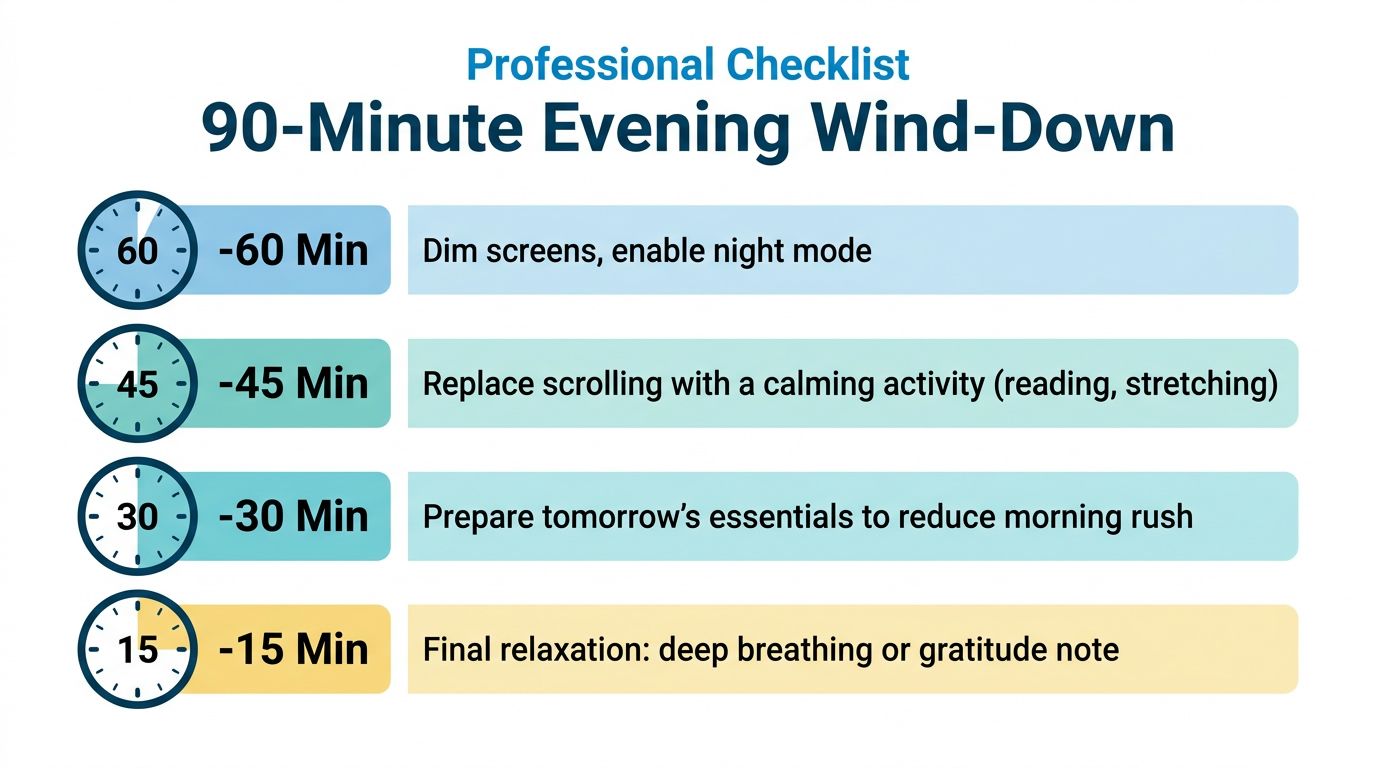
Try a 90-minute wind-down rather than waiting until you're already in bed and overwhelmed.
Begin by closing work
Choose a clear inbox closure time. Review urgent items, write down anything that can wait, and place the next action on Monday's list. Then close the work application and move your phone away from the bed if late messages tend to restart the cycle.
For expats, this boundary can be difficult when overseas colleagues work on a different schedule. A visible note such as “Review Monday morning” gives your brain a place to store the task.
Replace stimulation with repetition
Dim screens and use night mode well before bed. Replace scrolling with a low-demand activity such as quiet reading, gentle stretching, music, or a warm shower.
Prepare tomorrow's essentials before the final relaxation period. Put out clothes, gather documents, and write the first task you'll do after opening your computer. This reduces morning decisions without requiring more evening work.
Avoid using alcohol as a sleep solution. It may make you feel drowsy at first while still disrupting sleep later. Caffeine can also intensify physical arousal, particularly when you already feel tense.
Use a brief breathing sequence
When thoughts race, breathe in gently for four counts and out for six. Repeat without forcing a deep breath. The longer exhale gives you a steady rhythm, while the counting gives your attention something concrete to follow.
A comfortable, slightly cool bedroom and consistent waking and light exposure can support a stable sleep rhythm. If sleep anxiety keeps returning, sleep anxiety support can help you explore whether the main issue is worry, habits, work boundaries, or a combination.
Tonight's checklist:
- Work closure: Record tomorrow's next actions.
- Screen transition: Dim devices and stop work-related checking.
- Body preparation: Shower, stretch, or use another quiet ritual.
- Mental release: Write one win and one worry.
- Breathing: Use a gentle four-count inhale and six-count exhale.
Workplace and Academic Planning to Calm the Monday Spike
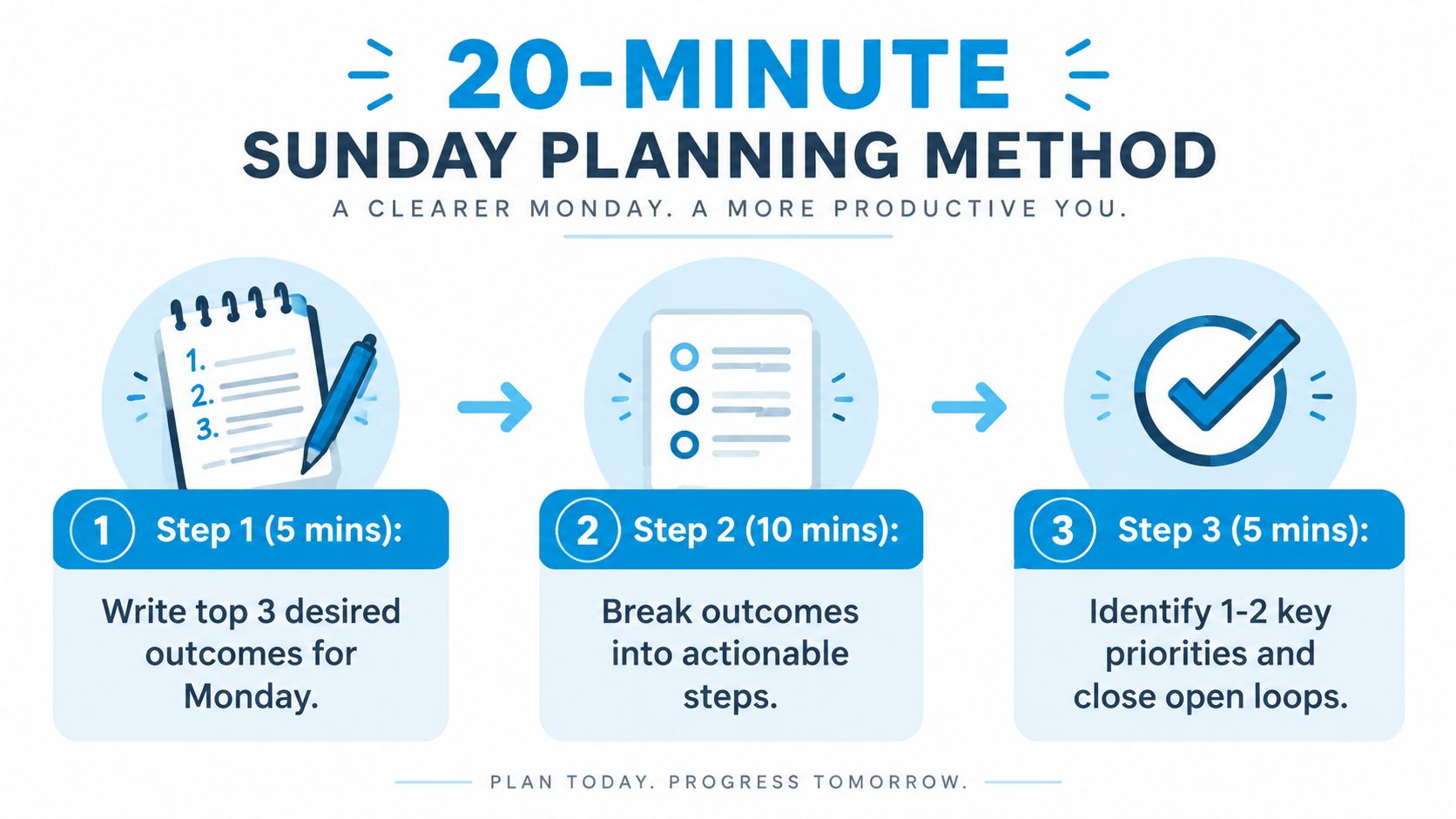
Unfinished work feels larger when it stays vague. A planning method helps by converting “I have too much to do” into a small set of visible actions.
Set a timer for a short planning session. Write the top three outcomes you want from Monday, not every task you might possibly complete. An outcome could be “clarify the project brief,” “submit the draft,” or “prepare for the client conversation.”
Turn outcomes into first actions
For each outcome, identify the smallest useful starting step. If the outcome is to prepare a presentation, the first step might be opening the current file and listing the missing sections. If the outcome is to handle a difficult conversation, the first step might be writing the purpose of the meeting in one sentence.
Then identify unanswered emails that need triage. Don't answer everything on Sunday. Mark what requires a response, what needs more information, and what can wait.
Schedule the hardest task during the part of Monday when you usually have the most energy. Leave room for interruptions, especially if your team works asynchronously across time zones.
Adapt the method to international work
Cross-border work needs explicit communication rules. You might tell a manager that you'll review messages during your local morning, use an asynchronous status update, or reserve a specific time for urgent matters.
A short Sunday check-in may help when it reduces uncertainty, but it shouldn't become an unpaid extension of the workweek. The better question is, “What information would make Monday clearer?” rather than, “How can I work enough on Sunday to eliminate every possible problem?”
Students can use the same structure for coursework, labs, and study groups:
- Outcome: Define what must be ready.
- First action: Choose the next physical step.
- Open loop: Record what still needs clarification.
- Time block: Place the work into the week.
- Boundary: Stop when the planning session ends.
On Monday morning, use a simple first-90-minutes script: review the three outcomes, complete the first action for the most important one, and postpone new planning until you've created some momentum. If work anxiety remains difficult to manage, managing anxiety at work may offer a useful starting point.
When Sunday Scaries Mean It Is Time for Therapy
Sunday scaries can follow a demanding week, yet repeated distress deserves attention. Consider professional support when dread fills much of the weekend, sleep remains disrupted for several weeks, physical symptoms feel intense, or you start avoiding work, study, messages, or ordinary responsibilities.
Other warning signs include anxiety that appears on other days, recurring panic symptoms, hopelessness, or rest that never leaves you restored. The pattern may reflect anticipatory anxiety, sleep disruption, burnout, or several concerns at once. A persistent Sunday-night problem is not a personal failure. It is a signal to examine what happens between anticipation, work demands, and sleep.
Choosing an approach
A therapist may use CBT, or cognitive behavioral therapy, to identify thoughts that intensify Monday dread and test more balanced responses. ACT, acceptance and commitment therapy, can help you allow uncomfortable thoughts while continuing with actions that reflect your values.
If sleep is central, a clinician may discuss CBT-I, a structured approach for insomnia and the habits and beliefs that keep it going. EMDR, Schema Therapy, Systemic-relational therapy, and other approaches may fit when Sunday anxiety connects with earlier experiences, relationship patterns, identity concerns, or intercultural stress.
A first session is not an exam. You usually describe what happens, when symptoms begin, how they affect sleep and daily functioning, and what you have already tried. The therapist can then help clarify the pattern and agree on a practical starting point.
The expat dimension
Therapy in a second language can make emotional work tiring. You may handle professional vocabulary in Italian while wanting to discuss fear, shame, family expectations, or loneliness in another language. That effort can become heavier when work crosses time zones, messages arrive during local evenings, or Monday begins before colleagues elsewhere have finished their day.
Language-matched care can make it easier to describe subtle feelings and cultural pressures. Therapsy connects people living in Italy with selected licensed professionals offering online and in-person sessions across multiple languages and Italian locations. Its matching process, supervised clinical team, and approaches including CBT, EMDR, Schema Therapy, and ethnopsychotherapy can support conversations about mental health alongside expat life.
Use this checklist:
- Frequency: Is this happening most weeks?
- Sleep: Does Sunday anxiety regularly delay or disrupt sleep?
- Functioning: Are you avoiding work, study, or communication?
- Spillover: Does worry affect relationships, appetite, or other days?
- Intensity: Do panic, hopelessness, or hard-to-control distress appear?
- Context: Would speaking in your preferred language make support easier?
Persistent symptoms do not require you to choose a label before seeking help. The guide to knowing when you may need therapy can help you consider the next step, especially if cross-border work, limited local support, and poor sleep keep the Sunday pattern in place.
Your Calmer Sunday Routine and Frequently Asked Questions
A calmer Sunday routine shouldn't become another test you can fail. Start with one concern, separate the action you can take from the outcome you can't control, and write three priorities for Monday.
Eat a regular evening meal, move gently, and avoid relying on alcohol or heavy late meals to settle your nerves. Create a transition between leisure and work through a five-minute brain dump, followed by a shower, music, stretching, or quiet reading.
If worry returns, use grounding:
- Five: Name five things you can see.
- Four: Notice four things you can feel.
- Three: Identify three sounds.
- Two: Notice two smells.
- One: Name one taste.
Then try the breathing pattern described earlier, put your phone away, and keep your waking time as consistent as practical. These tools support change, but they shouldn't be used to dismiss persistent symptoms.
Frequently asked questions about Sunday scaries
Are Sunday scaries normal?
Sunday scaries are common, especially before a demanding week, but persistent suffering deserves attention. Surveys report widespread Sunday work anxiety and sleep difficulty, including 80% of U.S. workers experiencing Sunday evening discomfort in a 2022 LinkedIn study cited by Psychiatric Medical Care. A regular, manageable routine may help, while repeated disruption may call for support from Therapsy or another qualified professional.
Do Sunday scaries always mean anxiety or burnout?
No, Sunday scaries don't always mean anxiety or burnout, although they can signal a broader pattern. If dread continues across the week or comes with chronic exhaustion and cynicism, consider professional assessment rather than relying only on weekend planning.
Can food or alcohol solve Sunday scaries?
Food and alcohol may blunt feelings temporarily, but they can worsen sleep and increase next-day anxiety. A regular meal, water, gentle movement, and a predictable wind-down offer steadier support.
When should someone seek therapy for Sunday scaries?
Seek therapy when symptoms are frequent, intense, difficult to control, interfere with sleep or responsibilities, or include panic, hopelessness, or avoidance. Therapsy offers a free first assessment call and can match people in Italy with a therapist who understands language and expat context.
Can Sunday scaries affect sleep?
Yes, Sunday scaries are closely connected with difficulty falling asleep and next-day fatigue. The American Academy of Sleep Medicine found that 26% of Americans reported frequent difficulty falling asleep on Sundays compared with other nights, with higher figures among Gen Z and millennials in the same survey report.
Can expats in Italy get therapy in their preferred language?
Yes, expats in Italy can seek therapy in a language that feels emotionally natural. Therapsy provides multilingual psychotherapy with online and in-person options, which can help when time zones, cultural adjustment, and limited local support intensify Sunday anxiety.
What can I do tonight if my mind won't stop racing?
Write the next action for each major worry, close work-related checking, and use slow breathing with a longer exhale. If racing thoughts and sleep disruption keep returning, a therapist can help identify the pattern instead of asking you to manage it alone.
Therapsy offers multilingual online and in-person psychotherapy for expats, international students, and young adults living in Italy, including support for anticipatory anxiety, sleep disruption, and burnout. Book your free assessment call with the Clinical Director, with no commitment or payment, and visit THERAPSY to begin a human-matched conversation.