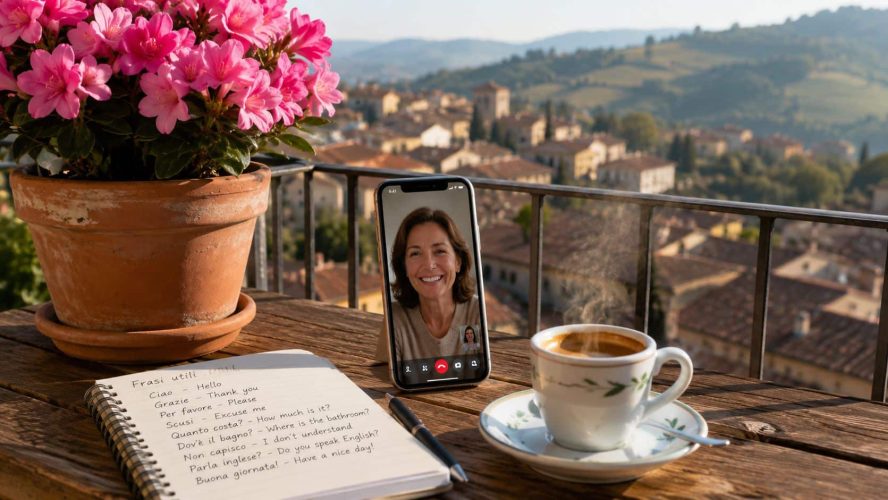
In early May, Italy starts speaking the language of motherhood very loudly. Florists fill their windows. Schools prepare cards and poems. Restaurants fill with family lunches. If you're an expat, Festa della Mamma can feel beautiful and painful at the same time.
You may be glad to witness a warm Italian tradition, while also feeling the sharpness of distance. You may miss your mother. You may dread calling her. You may be grieving, trying to conceive, parenting without support, or wondering why everyone else seems to know how to belong to this day.

For many international residents, that tension is real. Italy is home to 5.56 million foreign residents, and holidays such as Mother's Day can intensify isolation. Nearly half of globally mobile workers report loneliness in their host country, as noted in Therapsy's overview of mental health support for expats in Italy. Family-centred celebrations often bring that loneliness to the surface.
As a psychotherapist, I see this often. A holiday that looks simple from the outside can activate attachment wounds, homesickness, grief, guilt, and identity questions. That's especially true when you're living between cultures and trying to make emotional sense of two homes at once.
Festa della Mamma is not only a cultural event. It can also be an emotional trigger.
This guide is written for expats in Italy who want both things at once. You may want practical clarity about what Italians do on Mother's Day. You may also need help handling what the day stirs up inside you. Both needs are valid.
If you're still settling into Italian life more broadly, a moving to Italy mental health checklist can help you spot the emotional pressure points that often show up around holidays, routines, and family expectations.
Introduction Navigating Festa della Mamma in Italy as an Expat
Why this day can feel more intense abroad
When you live in your home country, holidays sit inside a familiar emotional map. You know the rituals, the tone, and what is expected of you. Abroad, the same date can feel disorienting. You're responding not only to your own memories, but also to another culture's script.
That's why many expats feel caught between participation and withdrawal. Some lean in and enjoy the local atmosphere. Others shut down because every flower display feels like a reminder of someone they miss, someone they've lost, or a role they wish they had.
A psychologically informed way to understand this comes from attachment theory. Attachment theory helps explain why maternal relationships often carry deep emotional charge. A day built around mothers doesn't just evoke sentiment. It can also reactivate old longings, unmet needs, and relational pain.
What helps most at the start
The first helpful step is simple. Name your experience accurately. Don't force yourself into a cheerful story if that isn't the truth of your day.
Try asking yourself:
- What am I feeling today? Sadness, anger, numbness, tenderness, envy, relief, or several emotions at once.
- What is this day bringing up? Distance, grief, obligation, conflict, identity, or loneliness.
- What do I need from myself? Rest, contact, boundaries, ritual, distraction, or support.
That kind of emotional clarity often reduces shame. The problem usually isn't the feeling itself. The problem is the pressure to feel something else.
Understanding Italian Traditions for Mother's Day
When Italians celebrate Festa della Mamma
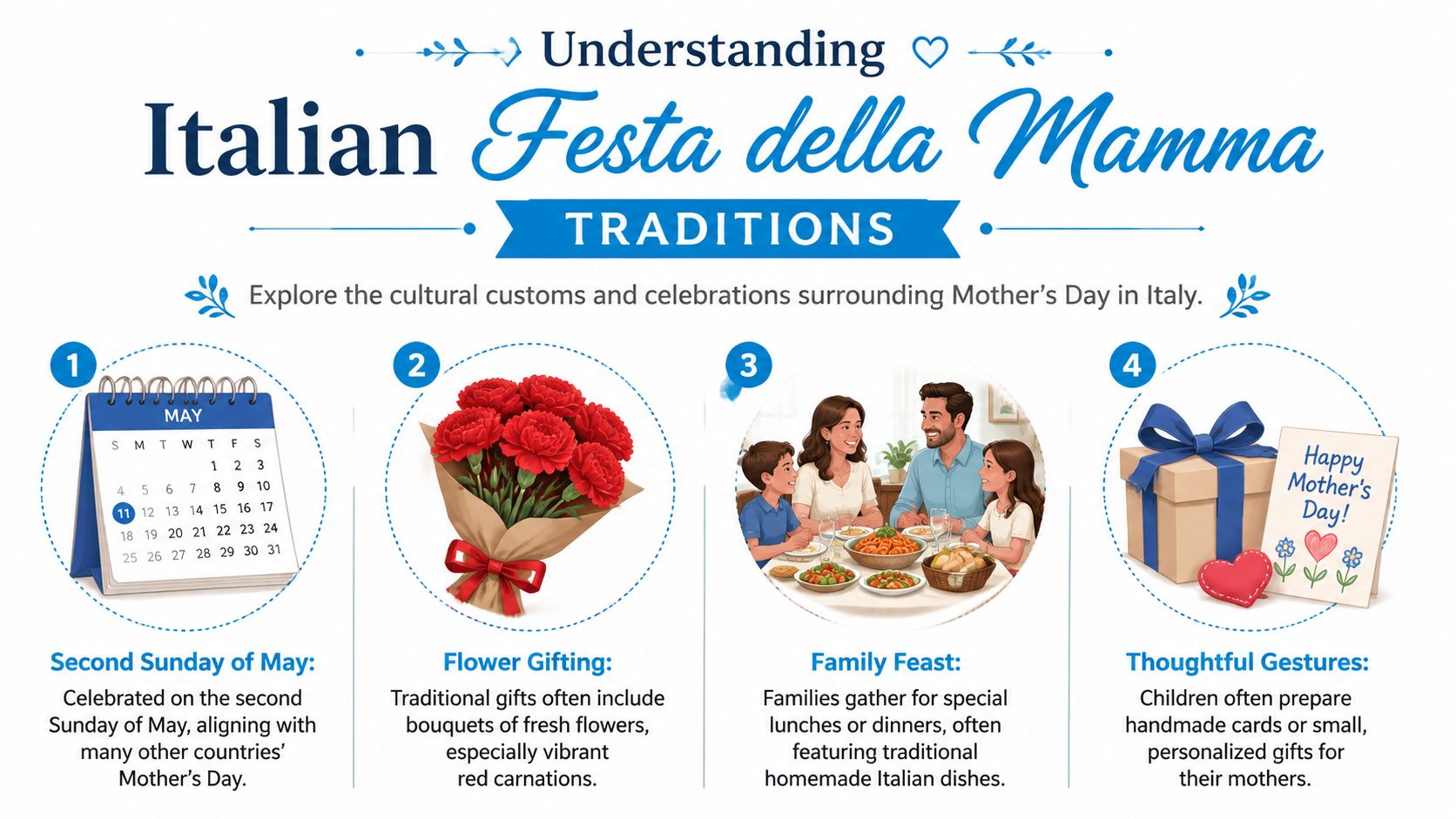
In Italy, Festa della Mamma is celebrated on the second Sunday of May, and that date is variable from year to year rather than fixed to one civil date, as noted in the Italian overview of Festa della Mamma. For practical purposes, that matters. Schools, shops, family plans, and events all organise around the movable Sunday.
Italian historical references also note an important shift in the modern calendar.
What you'll usually see around you
Most expats first notice Festa della Mamma through ordinary public life. The day is rarely abstract in Italy. It shows up in visible, domestic ways.
Common patterns include:
- Family meals: Lunch is often the emotional centre of the day.
- Flowers and small gifts: Bouquets, plants, and thoughtful gestures are common.
- School-made cards: Children often prepare handmade notes or crafts.
- Warm language: Shops, social media, and cafés often use affectionate messaging.
If you come from a country that celebrates on another date, or with a different tone, this can be unexpectedly confusing. Multilingual families often have to decide which country's calendar to follow, whether to mark both, and how to explain the difference to children. That's one reason many expats find cultural differences in Italy for expats especially relevant around family holidays.
Italian holidays often feel communal rather than private. Even if you don't celebrate, you may still feel surrounded by the celebration.
A brief historical note that helps
The modern Italian celebration also sits inside a longer international story. That history helps explain why the current Italian date aligns with the Sunday pattern many expats already recognise.
Practical Ways to Celebrate and Connect from Afar
Distance hurts more when a holiday tells you that closeness should be easy. It isn't easy. The most effective long-distance celebrations are usually the ones that reduce passivity. A rushed text sent between errands rarely helps with homesickness. A planned ritual often does.
Digital ways to feel genuinely present
If you have a loving or workable relationship with your mother, try building contact around shared activity rather than only conversation.
- Cook together on video: Pick one simple dish and prepare it at the same time. Shared attention reduces the pressure to perform emotion perfectly.
- Create a photo thread: Exchange voice notes about a few old photographs. Memory becomes more grounding when it is spoken aloud.
- Watch something together: A short film, family video, or even a familiar recipe reel can create a feeling of “same time, same space”.
- Record a message in advance: This helps if time zones are awkward or if live calls tend to become tense.
Some families also like structured prompts.
Small physical gestures still matter
Digital contact is useful, but physical objects carry emotional weight. They often become symbols of continuity.
Consider one of these:
- Send a handwritten letter. It slows you down and often says more than a polished message.
- Order something local from Italy. A regional sweet or thoughtful Italian gift can help your mother feel connected to your life abroad.
- Post a card early. Reliability matters more than extravagance.
- Choose one sensory detail to share. The smell of espresso at the bar, church bells, market flowers, the colour of the street at sunset. Concrete details make your life feel real to the person far away.
Simple Italian phrases for a card or message
If you're writing from Italy or sharing the local tradition with children or a partner, these phrases are a good place to start:
| Italian Phrase | English Translation | When to Use It |
|---|---|---|
| Buona Festa della Mamma! | Happy Mother's Day! | A general greeting in a card or message |
| Auguri, mamma! | Best wishes, Mum! | Short, warm message |
| Ti voglio bene, mamma. | I love you, Mum. | Affectionate note to your mother |
| Grazie per tutto. | Thank you for everything. | Simple message when you want to keep it understated |
What tends not to work is overcompensating. A huge gesture made from guilt can leave you feeling emptier afterwards. A modest act with real intention is usually more regulating than a dramatic act done under pressure.
The Unspoken Side Navigating Difficult Emotions

Most public coverage treats Mother's Day as uncomplicated. Psychologically, it rarely is. The emotional complexity of Mother's Day is common but underserved.
Coping with grief when your mother is gone
Grief often becomes sharper on symbolic dates. Even if you function well on ordinary days, a family-centred holiday can reactivate loss very suddenly.
This happens because grief isn't only about absence. It is also about broken expectation. Your mind remembers that this is a day when contact should happen, so the absence becomes newly visible.
Helpful responses include:
- Create a ritual of remembrance: Light a candle, cook her recipe, visit a meaningful place, or play music connected to her.
- Use language that fits reality: “I miss her today” is often kinder to yourself than “I should be over this.”
- Keep the day emotionally lighter if needed: Grief work does not require a full day of pain.
Grief often asks for witness, not performance.
Navigating a strained or complex relationship
Some people don't miss their mothers. They dread them. Others love their mothers and still feel injured by them. That complexity is common.
Attachment wounds often sit exactly here. You may feel guilt for pulling back, anger at old patterns, or hope that this year's call will somehow be different. In Schema Therapy, these recurring emotional patterns are often understood as long-standing relational templates. Certain dates activate them strongly.
A useful question is not “What should a good daughter or son do?” It is “What level of contact is emotionally safe for me today?”
That may mean:
- a short call instead of a long one
- a text instead of a video chat
- delayed contact rather than immediate response
- no contact, if contact is harmful
For expats carrying family pain while trying to build a life abroad, reflections on motherhood isolation as an expat can feel especially relevant, because distance doesn't erase relational patterns. Sometimes it simply makes them quieter until a holiday brings them back.
The pain of infertility or childlessness
If you want to be a parent and aren't, Mother's Day can feel like an assault of symbols. Every shop window, brunch menu, and family photograph may sharpen what is missing.
The hardest part is often not sadness itself. It is the social expectation that everyone should receive the day as sweet. That disconnect can create isolation and self-silencing.
If this is your experience, it helps to lower the emotional demand of the day:
- avoid environments that intensify comparison
- decide in advance which messages or posts you won't engage with
- make space for a grief-aware activity, not a cheerful substitute
- tell one trusted person what the day is like for you
Managing loneliness and homesickness
Homesickness on Mother's Day is not childish. It is a normal attachment response. A maternal holiday often stirs the wish to be known effortlessly, fed, remembered, and emotionally held. Those are fundamental human desires.
Expats are especially vulnerable to this kind of loneliness because the social fabric around them may still be thin. You may have colleagues, classmates, or a partner, but not yet the kind of network that can hold emotionally loaded days.
When loneliness rises, many people make the mistake of scrolling more, isolating more, and judging themselves more. Those three together usually make the day harder, not easier.
A Psychologist's Advice for Building Emotional Resilience
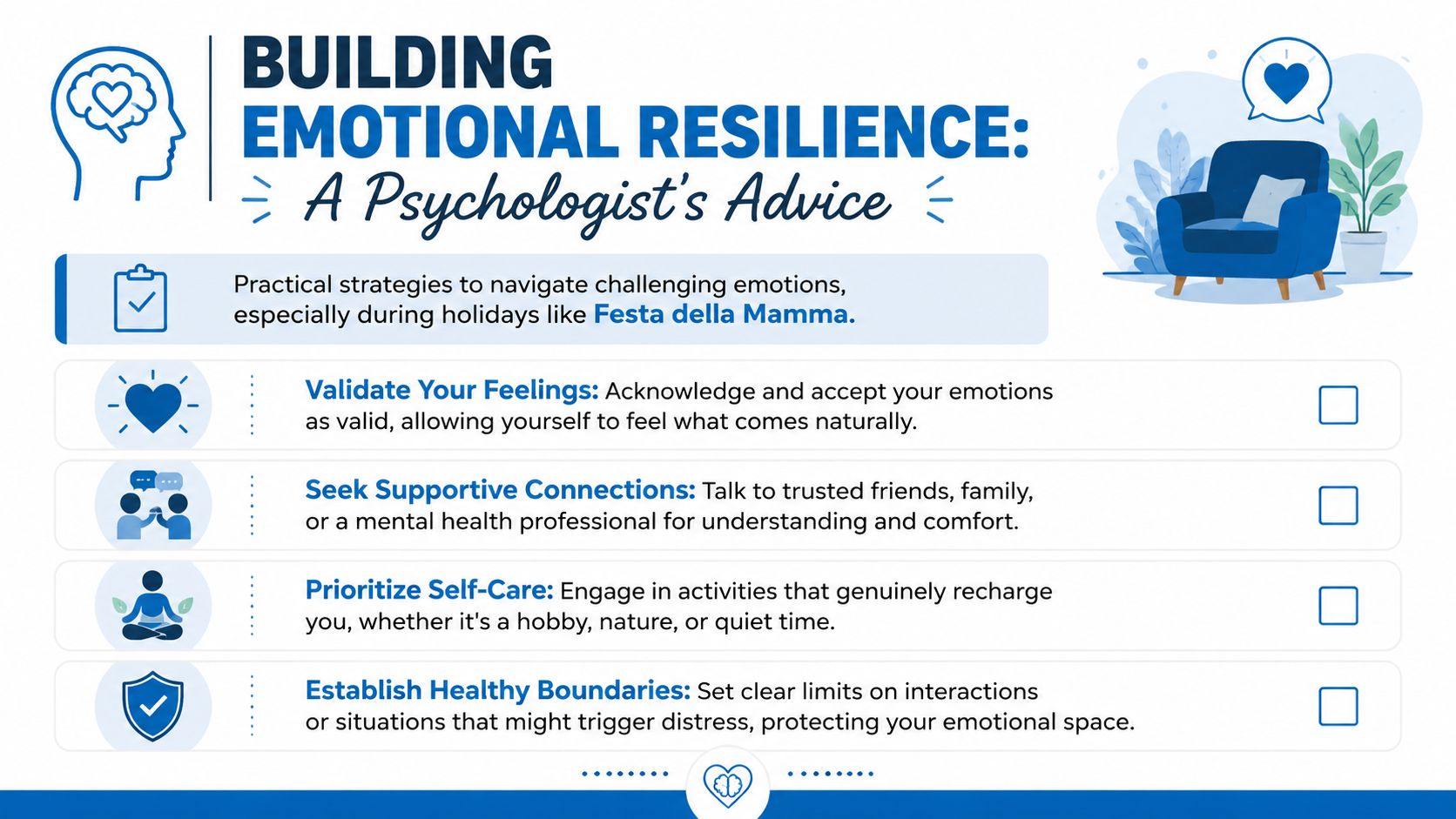
Emotional resilience on Festa della Mamma doesn't mean forcing yourself into gratitude or joy. It means staying connected to yourself without becoming overwhelmed by the day. That's a more realistic goal, and in clinical work it tends to help more.
Reframe the thought that is hurting you most
From a CBT perspective, one painful thought often drives the whole day. It may sound like:
- “Everyone else has a normal family.”
- “I should be more grateful.”
- “If I don't celebrate properly, I'm a bad child.”
- “I shouldn't still feel this way.”
CBT does not ask you to replace pain with positivity. It asks you to test whether a thought is accurate, balanced, and useful.
A more grounded alternative might be:
- “Many people have mixed feelings about this day.”
- “Gratitude and hurt can coexist.”
- “Boundaries are not cruelty.”
- “This reaction makes sense in light of my history.”
Plan your day before your mood plans it for you
On difficult dates, structure helps. Unstructured time leaves too much space for rumination.
Try a simple plan with three anchors:
- One necessary task such as shopping, laundry, or a walk to the market.
- One regulating activity such as cooking, journalling, prayer, stretching, or a quiet museum visit.
- One point of human contact with a friend, sibling, neighbour, or trusted person.
If anxiety is also part of the day for you, curated anxiety learning resources can offer plain-language support alongside personal coping strategies.
Practical rule: Don't leave emotionally loaded holidays to chance. Gentle planning is a form of self-protection.
Use self-compassion instead of self-correction
Many expats respond to sadness by criticising themselves. They tell themselves to be stronger, more mature, more adaptable. That usually adds a second layer of suffering.
Self-compassion sounds different. It says, “This is a hard day.” It does not argue with your pain. It accompanies it.
This can look like:
- Speaking to yourself more softly
- Cancelling a non-essential obligation
- Reducing exposure to triggering social content
- Eating regularly and resting properly
Regulate your body, not only your thoughts
Some holiday distress lives in the nervous system before it becomes language. You may notice tightness in the chest, tears close to the surface, irritability, or emotional numbness.
That's where body-based regulation helps. Slow breathing, bilateral stimulation, a paced walk, grounding through touch, and sensory routines can all support emotional steadiness. If this is an area you want to understand more thoroughly, nervous system regulation therapy offers a useful framework for connecting body reactions with emotional safety.
How Professional Support Can Help You Heal
Some holiday pain passes once the date is over. Some doesn't. If Festa della Mamma reliably leaves you distressed, flat, reactive, or emotionally shut down, that usually points to something worth caring for more intentionally.
Therapy can help because it gives the day context. Instead of treating Mother's Day as an isolated trigger, a therapist helps you understand the relational history underneath it. That may include grief, attachment injury, infertility-related pain, cross-cultural identity strain, or the loneliness that often comes with migration.
Different approaches can help in different ways:
- CBT helps identify harsh or distorted thoughts that intensify guilt, panic, or shame.
- Schema Therapy helps make sense of old relational patterns that are reactivated by family holidays.
- EMDR can help when a date triggers unresolved loss or painful memories that still feel emotionally raw.
- Intercultural psychology helps expats understand what belongs to personal history and what belongs to cultural displacement.
A good therapeutic space also helps with practical decisions. Should you call? Set a boundary? Create a ritual? Mute certain people online? Visit home next year or protect your peace? These are not small questions when family history is complicated.
For many expats, cultural fit matters as much as clinical skill. Working with someone who understands migration, multilingual identity, and the emotional weight of building life in Italy can make the process feel much safer. If you're considering support, guidance on finding the right therapist for expats in Italy can help you choose with more confidence.
FAQ
When is Festa della Mamma celebrated in Italy
Festa della Mamma in Italy is celebrated on the second Sunday of May. The date is variable, so it changes each year rather than staying fixed to one calendar day. That matters for expats because your home country may use the same date, a different date, or a different tradition altogether.
Why does Mother's Day feel harder when I live abroad
Mother's Day often feels harder abroad because distance amplifies attachment needs and loneliness. Holidays highlight who is physically absent, who feels emotionally unavailable, and where your support system is still fragile. Even people who cope well most of the year can feel more vulnerable on symbolic family dates.
Is it normal to feel sad or irritated on Festa della Mamma
Yes, it is completely normal to have mixed emotions on Festa della Mamma. Many people feel grief, guilt, numbness, anger, envy, or homesickness alongside love. A complicated emotional response doesn't mean you're ungrateful. It usually means the day touches something important.
What should I do if I have a difficult relationship with my mother
Choose the level of contact that feels emotionally safe, not the level that looks most socially acceptable. For some people, that means a warm call. For others, it means a short message, delayed contact, or no contact at all. Boundaries are often healthier than forcing closeness that leaves you dysregulated.
How can I celebrate my mother from Italy if we are far apart
The best long-distance celebrations are usually simple, planned, and personal. A video call around a shared activity, a handwritten letter, or a thoughtful gift from Italy often feels more meaningful than a rushed gesture. Focus on connection, not perfection.
When should I consider speaking to a therapist about this day
Consider therapy if Mother's Day repeatedly triggers intense distress, conflict, shutdown, or lingering sadness. A therapist can help you understand whether the day is activating grief, attachment wounds, infertility pain, or migration-related loneliness. Support can make future holidays feel more manageable and less isolating.
If Festa della Mamma is bringing up more than you can comfortably hold alone, support is available. Book your first free assessment call with THERAPSY, with no commitment, just a conversation with our Clinical Director who will listen carefully and match you with the right therapist for you.