You can need culturally responsive therapy even when you speak the local language fluently. For an expat, international student, or bilingual professional in Italy, the right therapist considers language, identity, family expectations, migration stress, religion, and cultural meanings when understanding distress and choosing treatment. The aim isn't to find someone polite about difference. It's to feel accurately understood while working with a therapist who can adapt the relationship and clinical approach to the client's life.
Therapsy is a multilingual psychotherapy service in Italy that connects expats with therapists who speak their native language.
What Culturally Responsive Therapy Actually Means
Culturally responsive therapy is a clinical approach in which the therapist actively considers a client's culture, language, identity, and lived experience when assessing concerns and shaping treatment. It changes how the therapist asks questions, interprets symptoms, chooses interventions, and builds the therapeutic relationship.
For someone living abroad, this distinction matters immediately. A Brazilian professional in Milan might speak Italian comfortably at work but lose important emotional detail when describing childhood, shame, or family conflict. An Indian postgraduate student in Bologna might appear calm and capable while experiencing panic that becomes invisible because academic performance looks stable.
A culturally responsive therapist doesn't assume that the most fluent language is always the best language for every subject. Emotional memories, family roles, religious beliefs, and experiences of discrimination may be easier to express in another language. Language access can therefore affect the information available for assessment, not merely the convenience of the conversation.
Is culturally responsive therapy just therapy in another language?
No. Therapy in a familiar language improves access, while cultural responsiveness also adapts interpretation, communication, and intervention to the client's context.
A therapist might speak English fluently yet still misunderstand how a client relates to authority, privacy, emotional restraint, gender roles, or family responsibility. Conversely, a therapist doesn't need to share every aspect of a client's identity to work responsively. The essential posture involves curiosity, cultural humility, relevant knowledge, and a willingness to check assumptions.
A useful definition describes culturally responsive care through awareness, attitudes, knowledge, and culturally appropriate clinical skills. The therapist considers both the client's cultural story and the therapist's own position, because assumptions can enter the room from either side. This is also consistent with the principles of trauma-informed care, where safety and collaboration depend on understanding how a person's environment shapes their experience.
Who can benefit from this approach?
Culturally responsive therapy isn't limited to immigrants or refugees. It can help international students, mobile professionals, bilingual expats, third-culture adults, people in intercultural relationships, and Italians living abroad who want to work in their own language.
A client may be struggling with anxiety, burnout, grief, or relationship conflict, but the meaning of that struggle can be connected to relocation, professional devaluation, isolation, or pressure to represent an entire family abroad. Cultural context helps the therapist distinguish the immediate symptom from the wider experience that gives it meaning.
The Three Core Components Therapists Need
Effective culturally responsive care combines self-awareness, cultural knowledge, and practical clinical skills, because awareness alone doesn't change what happens in sessions.
Consider a French engineer living in Turin after an unsuccessful promotion. She reports low mood and reduced motivation. A therapist who jumps straight to a standard CBT formulation might focus on negative thoughts about competence, but a culturally responsive therapist first explores what the promotion represented, how professional status is understood in her family, and whether the setback has disrupted her identity.
What does cultural awareness look like in therapy?
Cultural awareness means noticing personal assumptions and recognising that the therapist's interpretation isn't automatically neutral. The engineer's low mood could involve sadness, shame, grief, anger, or a loss of belonging within a professional world that once confirmed her value.
Awareness also includes asking rather than guessing. A therapist might ask whether ambition feels personally chosen or connected to family expectations, whether workplace hierarchy feels familiar, and how the client's move to Italy has changed her professional relationships.
Why does cultural knowledge matter?
Knowledge gives context to what awareness has noticed. It may include knowledge of migration, religion, family structures, social class, national history, communication norms, discrimination, and the client's explanatory model of distress.
For the French engineer, knowledge of professional pride and workplace culture can help the therapist understand why a demotion feels like more than a career inconvenience. It doesn't mean applying stereotypes. It means having enough background to ask better questions and enough humility to let the client correct the therapist.
How do clinical skills make adaptation visible?
Skills turn understanding into behaviour. The therapist may adjust pacing, explain concepts in less idiomatic language, use metaphors the client recognises, include culturally meaningful values in goal setting, or check whether a CBT thought record feels useful rather than alienating.
The Multicultural and Social Justice Counseling Competencies describe this action-oriented process through AKSA, attitudes and beliefs, knowledge, skills, and action, across counselor self-awareness, client worldview, relationship, and interventions.
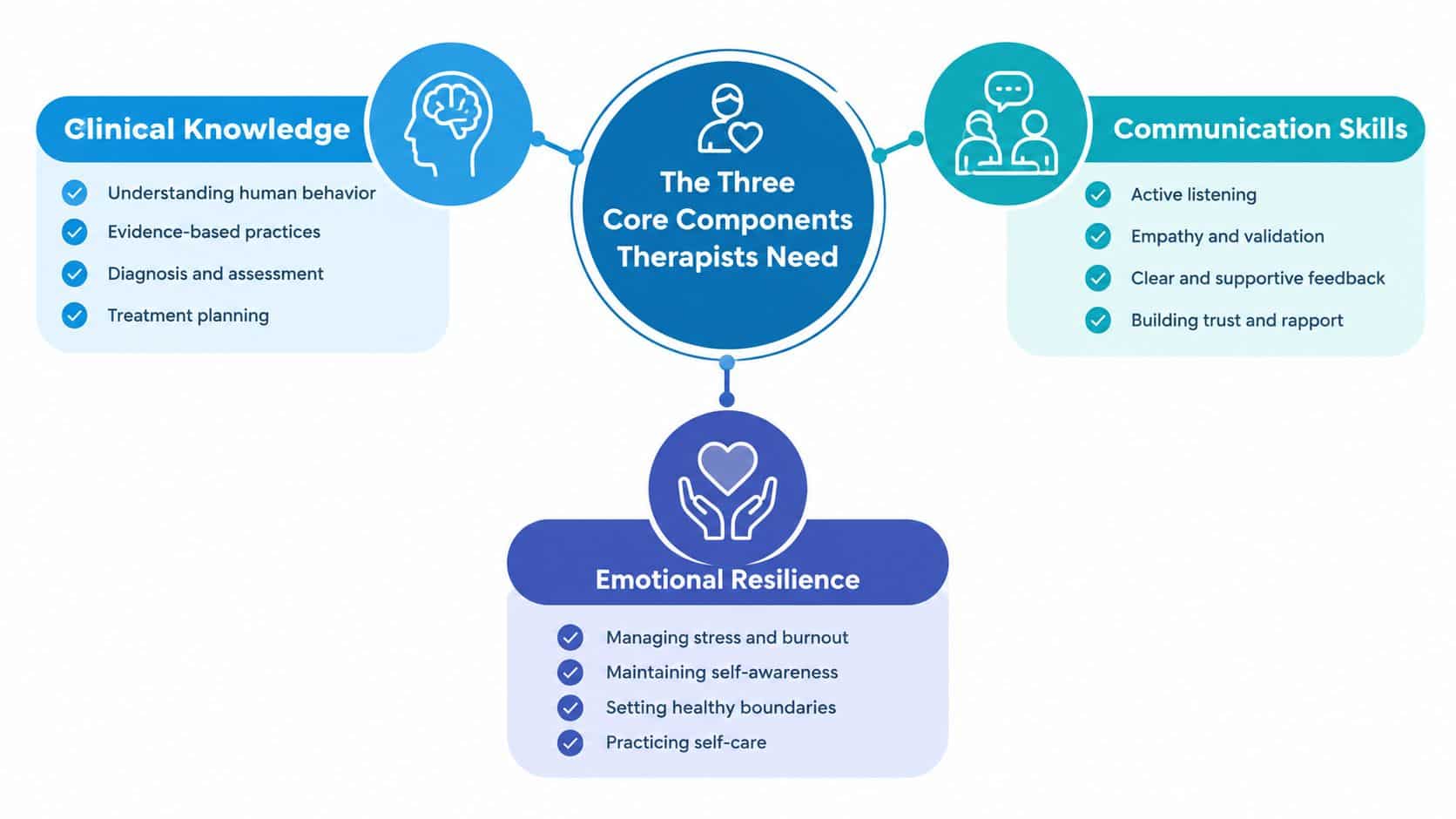
These components develop over time. A client can ask a potential therapist how cultural background is included in assessment, how misunderstandings are repaired, and whether the therapist has experience with internationally mobile clients. Therapsy uses human matching by the Clinical Director rather than an algorithm, with language, clinical needs, and intercultural context considered together. Readers can explore therapist matching in Italy before arranging an introductory conversation.
How Culture Shapes What Counts as Distress
Culture changes the meaning of symptoms by influencing emotional expression, beliefs, family roles, bodily sensations, and the client's understanding of what recovery should involve.
Pamela Hays' ADDRESSING framework gives therapists a structured way to examine Age, Developmental disabilities, Religion, Ethnic and racial identity, Socioeconomic status, Sexual orientation, Indigenous heritage, National origin, and Gender. The APA explanation of ADDRESSING in CBT highlights how culture can shape a client's environment, emotional expression, thoughts, physical sensations, and behaviour, while also requiring attention to experiences of oppression.
Can the same symptom mean different things?
Yes. Sleeplessness may reflect anxiety, grief, work pressure, physical illness, migration stress, or conflict between personal goals and family expectations. Silence may indicate shame, respect, careful processing, fear of authority, disagreement, or a preference for reflecting before speaking.
A young Italian client and a newly arrived Korean nurse might both report poor sleep, but the relevant questions may differ. The nurse's distress could be connected to family obligations, gendered expectations, workplace hierarchy, isolation, or the strain of adapting to a new healthcare system. The therapist shouldn't decide the meaning in advance.
The same principle applies to emotional restraint. In one family, visible distress may invite care. In another, keeping composure may communicate dignity or protect relatives. A culturally responsive formulation tests these possibilities instead of treating one communication style as the universal measure of emotional health.
How does a therapist use cultural information without stereotyping?
The therapist treats cultural frameworks as questions, not conclusions. The client remains the authority on personal meaning, while the therapist uses structured curiosity to identify influences that might otherwise be missed.
A useful assessment may ask:
- Language and expression: Which language feels easiest for emotions, memories, or conflict?
- Migration story: What changed in family contact, status, work, safety, or belonging?
- Values and beliefs: What ideas about responsibility, independence, religion, or success shape the concern?
- Social position: How do race, gender, class, disability, sexuality, or national origin affect daily life?
- Treatment expectations: What does the client believe therapy should do, and what would feel intrusive?
These questions can support CBT case formulation, attachment-focused work, Schema Therapy, EMDR preparation, or systemic therapy without turning culture into a separate add-on. A broader biopsychosocial model for detox also illustrates the value of considering biological, psychological, and social context together, although therapy assessment must remain specific to the client's concerns.

For bilingual clients, second-language exhaustion can be clinically relevant. Continually translating at work, in relationships, and in public services may increase cognitive and emotional strain, even when the person appears highly competent.
Why It Matters Especially for Expats and Multicultural Clients
Expats often carry layered identities that standard therapy can overlook, including professional identity, nationality, family role, language, legal status, religion, and the version of self that existed before relocation.
A Brazilian engineer in Milan may have held a senior role abroad but now work below her previous level because professional credentials aren't recognised in the same way. In standard therapy, frustration may be described as depression or low self-esteem. In culturally responsive therapy, the therapist explores professional displacement, grief, status loss, and the challenge of rebuilding identity in a new country.
The clinical shift isn't about excusing every painful thought. It's about identifying the actual situation that the thoughts are responding to, then choosing whether CBT restructuring, behavioural activation, values work, or deeper identity-focused therapy fits the client's goals.
What happens when family expectations cross borders?
A Japanese partner living near Florence may feel pressure to return home for his father's retirement. If he stays quiet during couples therapy, a therapist might label the silence as resistance or avoidance. A culturally responsive therapist asks whether silence is a respectful way to process conflict, a sign of divided loyalty, or a response to the language balance between partners.
That question can change the treatment plan. Attachment theory may help the couple explore security and obligation, while systemic-relational therapy can examine family boundaries and intergenerational expectations. The therapist may also help both partners create a communication process that doesn't force one person into the other's cultural style.
Is language fatigue a real therapy concern?
Language fatigue can be a meaningful clinical signal when constant translation affects attention, intimacy, confidence, or emotional access. A German academic in Rome might describe feeling exhausted every evening, then dismiss it as a personality flaw rather than recognising the effort involved in functioning across languages.
The therapist can explore when the fatigue appears, which settings require the most translation, and whether the client feels more emotionally present in a different language. Work may include stress regulation, boundaries, self-compassion, and practical communication strategies, without reducing the experience to a generic adjustment problem.
For parents and partners navigating different family traditions, guidance on bridging cultural gaps in parenting can offer useful non-clinical context. Therapsy also supports clients whose experiences fit the broader category of third-culture adult therapy, where belonging may not map neatly onto one country.
Culturally Responsive Therapy Versus Standard Therapy
Standard therapy isn't automatically poor care, but culturally responsive therapy makes cultural context an explicit part of assessment, relationship-building, and intervention.
| Dimension | Standard Therapy | Culturally Responsive Therapy |
|---|---|---|
| Therapist's stance | Culture may be discussed when the client raises it | The therapist invites cultural context without making assumptions |
| Language of sessions | Uses the language selected for general communication | Checks which language works best for different emotions and topics |
| Meaning of symptoms | Starts with common clinical interpretations | Tests how culture, migration, identity, and social context shape meaning |
| Metaphors and interventions | Uses broadly familiar clinical examples | Adapts metaphors, pacing, rituals, and exercises to the client |
| Family and community | Focuses mainly on individual goals | Explores family, community, faith, and collective responsibilities when relevant |
| Therapeutic fit | Client may need to explain cultural context repeatedly | Therapist actively learns and checks understanding |
Is therapy in the client's native language enough?
Sometimes, especially when the therapist understands the client's broader context and remains open to correction. A French freelancer in Bologna may work effectively with an English-speaking therapist who understands francophone professional culture, even if the therapist doesn't share the client's nationality.
Language access becomes less sufficient when the client repeatedly has to explain basic cultural meanings, feels that family obligations are treated as irrational, or notices that therapy's examples and goals don't fit daily life. A third-culture adult in Rome may need a therapist who can recognise the unspoken references behind belonging, relocation, and family identity.
The practical test is the client's experience. If the therapist asks thoughtful questions, adapts when corrected, and helps the client feel understood without requiring constant cultural translation, shared nationality may not be necessary. If the client leaves sessions feeling analysed through a default lens, deeper cultural adaptation may be needed.
How to Find Culturally Responsive Care in Italy
Finding culturally responsive care starts with defining what kind of cultural and language support the client needs, then testing that fit directly with a therapist.
Italy's mental health system includes public services, private practices, and online care. Expat clients often need to search beyond a clinician's stated specialty and assess whether the therapist can work with migration, bilingual communication, identity shifts, family expectations, and cross-cultural relationships.
What should an expat decide before searching?
The first step is to name the need clearly. A client may want therapy in a native language, a therapist familiar with a particular cultural background, support for relocation, or a clinician who won't treat cultural difference as a problem.
A short preparation list can include:
- Language preference: Identify the language for ordinary conversation and the language preferred for difficult memories or emotions.
- Cultural context: Note the family, religious, professional, or migration experiences that may shape the concern.
- Clinical focus: Write down the main difficulty, such as panic, grief, burnout, relationship conflict, or identity loss.
- Practical format: Decide whether online sessions, in-person care, or both would feel sustainable.
Which questions should be asked on the first call?
A first conversation should help the client evaluate collaboration, not perform perfectly. Useful questions include:
- How does the therapist include cultural background in assessment?
- What experience does the therapist have with expats or multilingual clients?
- Can culturally specific beliefs, family roles, or religious practices be discussed openly?
- How does the therapist handle a misunderstanding about language or culture?
- Which approaches might fit the client's concern, such as CBT, EMDR, Schema Therapy, attachment-based, or systemic-relational work?
Practical rule: A culturally responsive therapist won't need to know everything about a client's culture, but should be willing to ask, learn, and adjust.
What are warning signs of poor cultural fit?
Dismissive comments about an accent, broad claims about an entire culture, pressure to abandon meaningful values, or refusal to adapt communication are reasonable concerns. Another warning sign is a therapist who becomes defensive when the client explains that an interpretation doesn't fit.
The client can also notice the body's response after a call. Relief isn't required, but the conversation should make room for complexity. Therapsy connects clients with 50+ therapists, offers therapy in 14 languages, and provides the choice between online and in-person sessions across 24 Italian cities. Its matching process is handled by the Clinical Director rather than an algorithm.
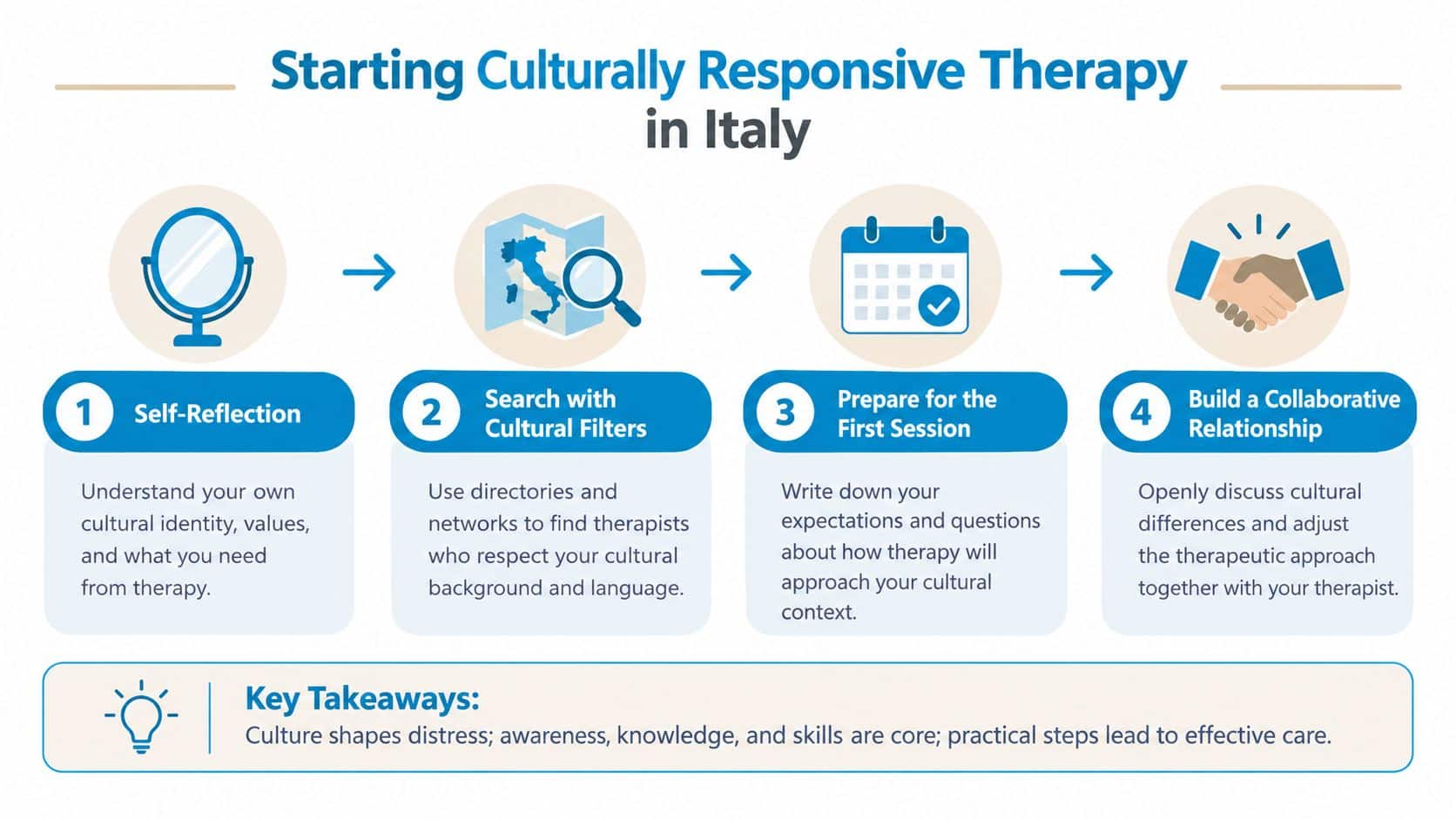
Clients can also explore therapy in their native language and compare whether online or in-person sessions make more sense for their location, schedule, privacy, and comfort.
Starting Culturally Responsive Therapy in Italy
Starting culturally responsive therapy means choosing care where culture is treated as clinically relevant, language is part of the treatment environment, and the therapist adapts with the client rather than expecting the client to adapt alone.
The evidence supports taking this fit seriously. A 2016 meta-analysis of 78 studies found an overall effect size of g = 0.67 for culturally adapted interventions compared with comparison conditions, and adapted treatments were 4.68 times more likely to achieve remission in studies that reported remission. The same review found adapted versions outperformed unadapted versions of the same treatment, with g = 0.52, suggesting that adaptation can involve meaningful changes to language, metaphors, and delivery style rather than access alone. Read the meta-analysis record.
Client experience matters too. A 2018 meta-analysis found that client-rated therapist multicultural competence correlated with better treatment outcomes at r = 0.38, while therapists' self-ratings were unrelated at r = 0.06. Review the findings on client-rated competence. The practical meaning is simple: good intentions matter less than whether the client feels understood.
What happens after a client contacts Therapsy?
The first conversation can cover the preferred language, current concerns, migration or intercultural context, practical needs, and the type of therapist who may fit. Therapsy offers a free first assessment call with the therapist chosen for that person, rather than asking a client to select from an anonymous algorithmic result.
The service has supported 1,500+ clients since 2023, and its therapists work online and in person. Available languages include Italian, English, French, Spanish, German, Portuguese, Ukrainian, Russian, Greek, Arabic, Urdu, Hebrew, Hindi, and Persian (Farsi).
What should the first sessions include?
Early sessions may explore identity, the migration story, family expectations, language preferences, relationships, social belonging, and therapeutic goals. This isn't a cultural test. It gives the therapist information for building a formulation that reflects the person's actual life.
The therapist may then draw from CBT, EMDR, Schema Therapy, attachment theory, systemic-relational therapy, or another suitable approach. Cultural responsiveness doesn't prescribe one method. It changes how the method is explained, adapted, and connected to the client's values and experience.
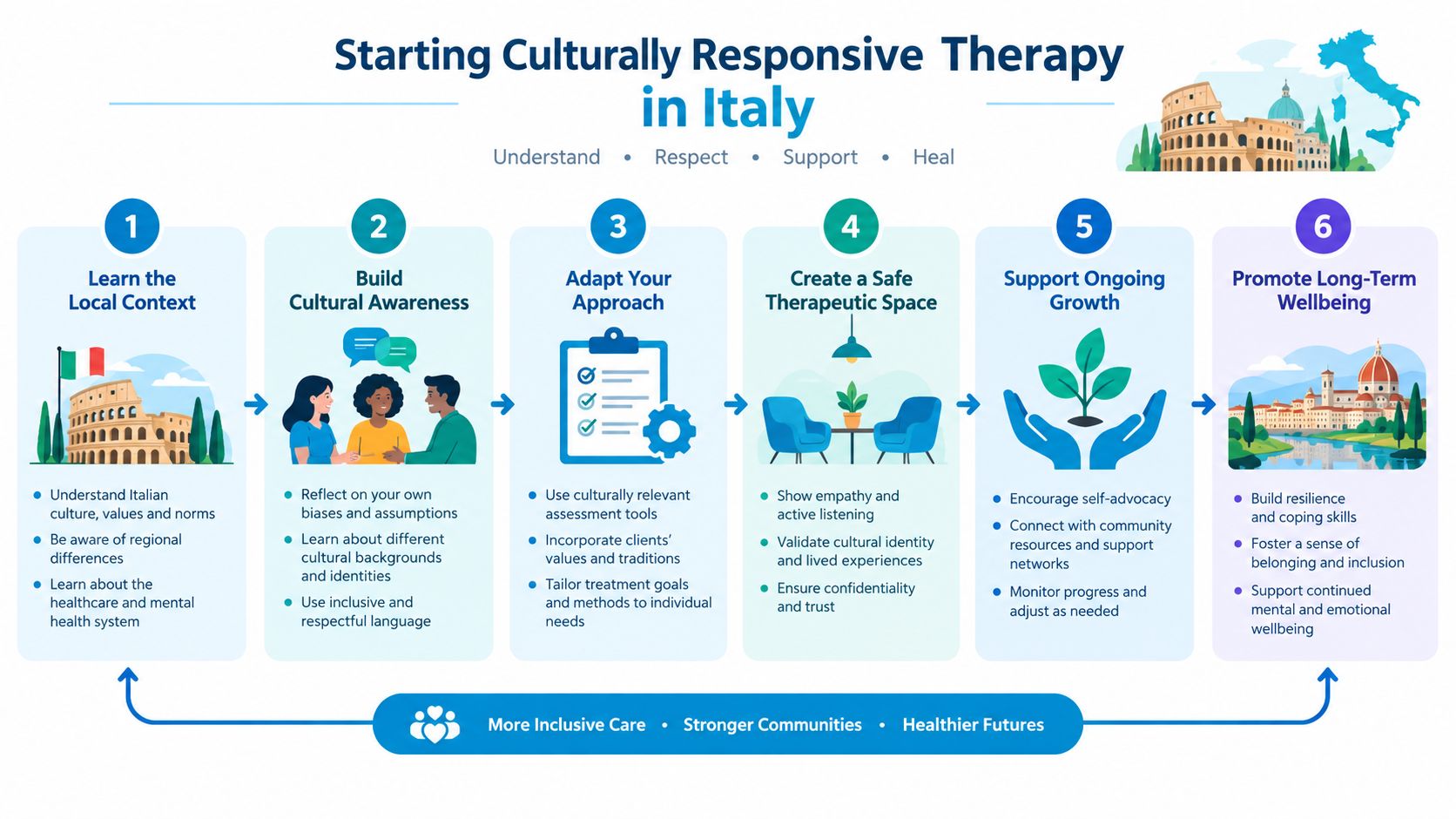
The right fit often becomes clearer through the early sessions. The client can say when a metaphor feels unfamiliar, when a family interpretation is inaccurate, or when another language would help. A responsive therapist welcomes that feedback as part of the work.
Culturally Responsive Therapy FAQ
Is culturally responsive therapy only for people from minority backgrounds?
No. It can support anyone whose language, cultural references, family expectations, migration history, religion, identity, or social position differs from the therapist's default assumptions. Expats, international students, mobile professionals, third-culture adults, and Italians abroad may all benefit.
Does a therapist need to share the client's nationality?
No. Shared nationality can feel reassuring, but cultural responsiveness also depends on curiosity, knowledge, skills, and visible adaptation. A therapist from a different background may be a strong fit if the client feels respected and doesn't have to repeatedly defend or translate core parts of life.
Can therapy be culturally responsive if sessions happen in English?
Yes. English can work well when the therapist understands the client's context and checks whether English remains comfortable for emotional material. Clients can also discuss which language feels preferable for specific topics.
What if the therapist makes a cultural mistake?
The client can describe what felt inaccurate or uncomfortable and observe the therapist's response. A responsible therapist should listen, avoid defensiveness, acknowledge the impact, and adjust the work rather than asking the client to reassure them.
Which therapy approaches can be adapted culturally?
CBT, EMDR, Schema Therapy, attachment-focused therapy, systemic-relational therapy, and other approaches can be adapted. The adaptation may involve language, metaphors, pacing, family context, treatment goals, or how emotional experiences are understood.
How much does therapy in Italy cost?
At Therapsy, individual therapy starts from EUR 70, couple therapy from EUR 100, psychodiagnostic assessment from EUR 255 for three sessions, and psychiatric consultation from EUR 110. The first assessment call is free, and the final price depends on the therapist's experience and specialisation.
Can a client choose online or in-person therapy?
Yes. Therapsy offers both formats across 24 Italian cities, allowing clients to consider privacy, travel, routine, and personal comfort when choosing how sessions take place.
How can someone begin without committing to long-term therapy?
A client can start with the free first assessment call, explain the language and cultural context, and ask questions about fit. There's no obligation to continue after that conversation.
Culturally responsive care should feel collaborative from the first contact, with Therapsy offering human matching by the Clinical Director, therapy in the client's own language across 14 languages, and a choice between online and in-person sessions. The first call is free and is with the therapist chosen for that person, with no obligation to continue. Visit THERAPSY to discuss the support that may fit the client's language, culture, and life in Italy.
Who works across cultures at Therapsy
Dr. Chiara Gabelli, a clinical psychologist in Novara and Legnano has worked extensively in multicultural settings, starting from volunteer work with migrants. That is direct experience of sitting with people whose difficulties were bound up with displacement and with a language that was not their own.
You tell Therapsy what you are looking for, a member of our clinical team reads your request, and they introduce you. The first call is free.