Complex PTSD is a trauma response that develops after prolonged or repeated harm, especially in childhood or close relationships. It includes the core symptoms of PTSD, such as re-experiencing, avoidance, and hypervigilance, plus persistent difficulties with emotional regulation, self-concept, and relationships.
Why can one person leave a frightening event with intrusive memories, while another also feels permanently unsafe in their own identity and relationships? The difference often lies not only in what happened, but in how long the danger lasted, whether escape was possible, and whether the person depended on the source of harm. For an expat or multilingual adult in Italy, understanding these distinctions can also help explain why finding care in a familiar language and cultural frame matters.
Therapsy is a multilingual psychotherapy service in Italy that connects expats with therapists who speak their native language.
What Complex PTSD Means and Who This Guide Is For
Complex PTSD, or CPTSD, is recognized in ICD-11 as PTSD combined with lasting disturbances in self-organization. The World Health Organization included CPTSD as a distinct diagnosis in the ICD-11, placing it alongside PTSD rather than treating it as a more severe version. The diagnosis includes the core PTSD symptoms and three additional areas: affect dysregulation, negative self-concept, and disturbances in relationships.
The distinction is especially relevant for adults whose trauma was prolonged, repeated, interpersonal, or rooted in childhood. A person may understand that a past experience was harmful yet still struggle with emotional floods, shame, difficulty trusting others, or a sense that danger is always close. Those patterns can affect work, study, intimacy, friendships, and the experience of building a life in another country.
The condition is globally relevant. A 2025 systematic review and meta-analysis estimated global pooled CPTSD prevalence at 6.2%, with a 95% confidence interval of 3.7% to 10.3%, based on validated ICD-11 studies reviewed through January 31, 2025 (peer-reviewed findings indexed by PubMed). The same review found substantially higher prevalence in trauma-exposed groups, including clinical samples and survivors of domestic violence or sexual abuse. These figures describe populations, not individual readers, and they can't establish whether a particular person has CPTSD.
What does this guide explain?
The following sections clarify:
- The diagnostic picture: how the three additional disturbances differ from the core PTSD symptoms.
- The trauma pattern: why prolonged harm and constrained escape matter.
- The diagnostic process: how ICD-11 and DSM-5 can lead to different labels.
- Treatment choices: what phase-based work, CBT, EMDR, Schema Therapy, and complementary approaches aim to change.
- Recovery: what gradual improvement can look like without promising a fixed timetable.
A trauma-informed approach, explained further in what trauma-informed care means, avoids forcing a person to disclose more than feels safe. It also recognizes that an English-speaking expat may describe distress differently from an Italian client, and that cultural ideas about family, loyalty, privacy, and emotional expression can shape both symptoms and help-seeking.
The Three Extra Difficulties That Define Complex PTSD
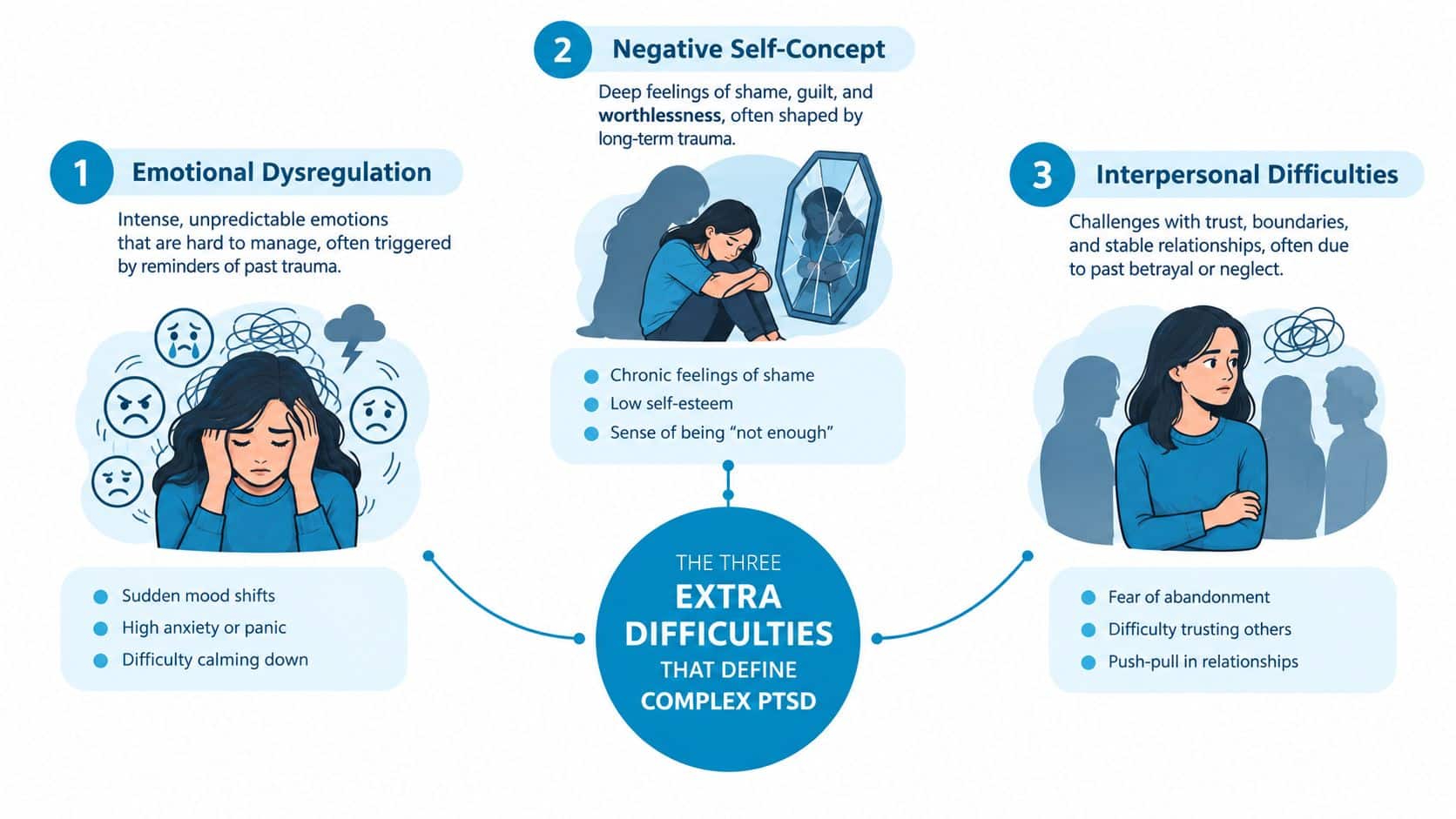
CPTSD adds emotional dysregulation, negative self-concept, and relationship disturbances to the familiar PTSD pattern. These difficulties are called disturbances in self-organization, or DSO, in the ICD-11 framework.
PTSD and CPTSD share three central symptom areas: re-experiencing, avoidance, and a persistent sense of threat or hypervigilance. Re-experiencing can include intrusive memories, nightmares, or emotional reactions that feel as though the past is happening again. Avoidance may involve steering away from places, conversations, sensations, or relationships associated with danger. Hypervigilance keeps attention scanning for threat, even when the present environment is relatively safe.
CPTSD includes those symptoms, but the effects also become woven into the person's emotional life and sense of self.
How does emotional dysregulation appear?
A person may become overwhelmed by anger, fear, grief, or shame, or may feel emotionally numb and disconnected. The problem isn't having strong feelings. It's having difficulty returning to a manageable emotional state after activation, especially when the nervous system interprets ordinary conflict as a possible repetition of earlier danger.
Why can self-concept become negative?
Repeated harm can teach a person to interpret another person's behavior as evidence about their own worth. Shame, worthlessness, helplessness, or the feeling of being permanently damaged may persist even when the adult mind knows the responsibility belonged elsewhere. In a multilingual or intercultural setting, these beliefs can become harder to examine if the person lacks words for nuanced emotional experiences in the language used for care.
Why do relationships become difficult?
Trust and closeness can feel unsafe when earlier relationships involved betrayal, control, neglect, or unpredictable responses. Some people avoid intimacy, while others become highly vigilant to signs of rejection or accommodate others so intensely that their own needs disappear. Therapy focused on nervous-system regulation can help a clinician understand these responses as protective adaptations rather than moral failures.
A useful image is a smoke detector retuned by years of false alarms. It may sound when toast burns, not because it's defective, but because its threshold has adapted to danger. The person may react intensely to a delayed message or a raised voice because the body is trying to prevent a familiar threat, even when the present situation is different.
Practical rule: A protective response can make sense in context and still create suffering in the present.
How Complex PTSD Differs From PTSD
PTSD and CPTSD share the same core trauma symptoms, but CPTSD also affects emotional regulation, identity, and relationships. The difference is not a ranking of suffering. It's a clinical distinction that can guide assessment and treatment planning.
PTSD can follow a single traumatic event, such as a serious accident, assault, disaster, or other life-threatening experience. CPTSD is more strongly associated with prolonged or repeated interpersonal trauma, including childhood abuse or neglect, domestic violence, sexual abuse, trafficking, captivity, or war exposure. The distinction isn't absolute, and a single event can have wide effects, just as prolonged trauma doesn't automatically lead to CPTSD.
| Feature | PTSD | Complex PTSD |
|---|---|---|
| Trauma pattern | May follow a single event or a shorter traumatic exposure | More strongly linked with prolonged or repeated trauma, often interpersonal |
| Core symptoms | Re-experiencing, avoidance, and persistent threat or hypervigilance | The same PTSD symptoms |
| Additional difficulties | May include changes in mood, thinking, and arousal | Persistent affect dysregulation, negative self-concept, and relationship disturbances |
| Functional impact | Can disrupt sleep, work, study, health, and relationships | Often extends deeply into identity, emotional regulation, trust, and closeness |
| Diagnostic framework | Recognized in both ICD-11 and DSM-5 | A distinct category in ICD-11, but not a separate DSM-5 diagnosis |
The ICD-11 formally recognizes CPTSD, while DSM-5 does not provide the same separate CPTSD category. In DSM-5 practice, a clinician may describe related features through PTSD and other applicable formulations, depending on the presentation and assessment. A person receiving care in Italy may therefore encounter different terminology from clinicians trained primarily in different diagnostic systems.
Readers who are also sorting out panic, generalized worry, or other threat responses may find a neutral overview of comparing PTSD and anxiety useful, provided it isn't treated as a substitute for clinical assessment. Anxiety and trauma responses can overlap, but the history, triggers, symptom pattern, and functional impact still need careful consideration.
The practical point is simple: PTSD and CPTSD are related, not interchangeable labels. Neither diagnosis tells the whole story of a person, and neither determines how much they have suffered.
What Causes Complex PTSD and Why Duration Matters
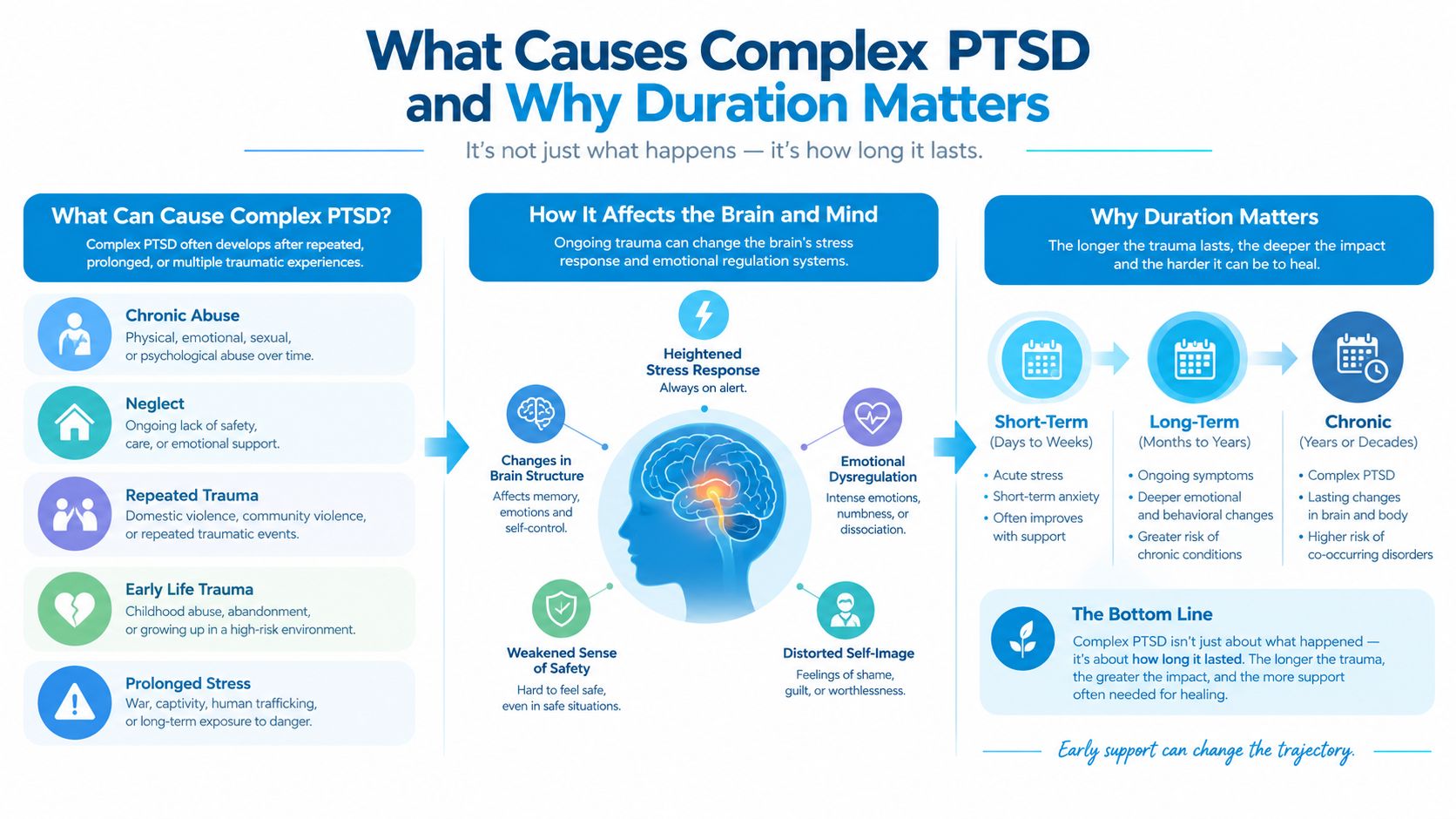
CPTSD most often develops after repeated harm when escape is difficult, unsafe, or impossible to perceive. The relevant pattern can involve childhood abuse, emotional neglect, inconsistent caregiving, domestic violence, sexual abuse, trafficking, captivity, torture, slavery, genocide campaigns, or war exposure.
A child who lives with a hostile caregiver can't move out, confront the adult as an equal, or rely on independent resources. The same person may depend on that caregiver for food, housing, protection, and belonging. The nervous system therefore adapts around ongoing threat rather than returning fully to safety between isolated incidents.
Which experiences can create prolonged trauma?
The source of harm may be an intimate partner, caregiver, institution, or other person with power. Chronic bullying and coercive environments can also create repeated experiences of entrapment, particularly when the person has no reliable support or practical route out.
The central factor isn't a single event's apparent severity. It's the combination of duration, repetition, relational context, developmental timing, and constrained escape. Two people can experience similar events and develop different responses because support, meaning, safety, and recovery conditions differ.
Why does the body stay prepared for danger?
During repeated threat, the brain and body prioritize rapid protection. Attention becomes tuned to warning signs, emotional responses may become harder to modulate, and memories may be experienced as fragments of sensation, image, or feeling rather than as a completed narrative with a clear beginning and end.
That adaptation can continue after the person has moved to a safer home, a new relationship, or another country. A young adult in Italy may know intellectually that a controlling family member is far away, yet still feel intense guilt when setting a boundary. Inner-child work in therapy can be one way a clinician explores how earlier unmet needs and protective patterns continue to influence present choices, without suggesting that a metaphor is itself a diagnosis.
Many survivors don't call their history trauma until adulthood. They may have normalized instability, believed that other families were similar, or focused on surviving school and work. Recognition often arrives later, when a relationship, migration, parenthood, or major transition activates old patterns.
How Complex PTSD Is Diagnosed in Practice
A clinician diagnoses CPTSD through an assessment, not through one questionnaire or a person's trauma history alone. The process usually examines the timeline of harmful experiences, current symptoms, functioning, safety, relationships, and possible overlapping conditions.
A structured interview may ask about re-experiencing, avoidance, threat responses, emotion regulation, self-beliefs, and relationships. It may also explore attachment figures, periods of dependence, dissociation, depression, anxiety, substance use, and the effects of symptoms on work, study, sleep, and intimacy.
Clinicians may use tools such as the International Trauma Questionnaire, which was developed around ICD-11 PTSD and CPTSD criteria. Other measures can include the PTSD Checklist, the Life Events Checklist, and the Adverse Childhood Experiences questionnaire. These tools organize information, but they don't replace clinical judgment or a conversation about context.
| Feature | ICD-11 CPTSD | DSM-5 PTSD |
|---|---|---|
| Core PTSD symptoms | Required | Required |
| Separate CPTSD category | Yes | No |
| Self-organization disturbances | Affect dysregulation, negative self-concept, and relationship disturbances are required for CPTSD | Not grouped as a separate CPTSD diagnostic category |
| Clinical label | PTSD or CPTSD may be used according to the presentation | PTSD or another applicable trauma-related formulation may be used |
| Assessment focus | PTSD symptoms plus persistent DSO difficulties | PTSD criteria, specifiers, and differential diagnosis |
The framework matters because the same person may receive different wording depending on whether the clinician primarily uses ICD-11 or DSM-5. That difference doesn't mean one clinician believes the symptoms are real and another doesn't. It reflects how diagnostic systems organize overlapping clinical information.
A careful assessment also considers depression, anxiety, dissociation, and borderline personality features. These can overlap with CPTSD, coexist with it, or require a different treatment emphasis. Psychodiagnostic assessment in modern therapy can help clarify the pattern when symptoms don't fit neatly into one category.
Which Therapies Help With Complex PTSD
Effective CPTSD treatment usually combines safety, emotional regulation, trauma processing, and reconnection rather than relying on one technique. Recent evidence syntheses indicate that trauma-focused CBT and EMDR remain effective and broadly comparable, while phase-based approaches may offer some advantage for CPTSD, although evidence for every phase remains incomplete (recent evidence synthesis in the BMJ).
What is phase-based trauma therapy?
Phase-based treatment organizes care into stabilization, trauma processing, and reintegration or reconnection. Stabilization may address sleep, grounding, emotional regulation, dissociation, boundaries, and present-day safety. Processing then works with traumatic memories when the person has enough support and capacity to approach them without becoming overwhelmed. Reconnection focuses on identity, relationships, values, work, intimacy, and a fuller life beyond survival.
The phases aren't rigid stairs that every person must climb in the same order. Some clients move back and forth between them, and some need only limited stabilization before processing. Research has not established that an extensive stabilization phase is always required, and the reintegration phase remains comparatively under-researched.
How can trauma-focused CBT help?
Trauma-focused CBT combines cognitive restructuring, gradual exposure, psychoeducation, and coping skills. The clinician helps the client identify beliefs such as “the danger is still happening” or “the trauma proves something bad about me,” then tests those beliefs carefully against present evidence.
This approach may suit someone whose symptoms are sufficiently contained to engage with memories and interpretations directly. The duration varies with trauma complexity, current safety, goals, and whether treatment addresses one event or a broader pattern.
What does EMDR therapy involve?
EMDR is a structured treatment that uses bilateral stimulation while the client attends to selected traumatic memories, beliefs, emotions, and body sensations. It doesn't require a detailed verbal retelling of every event, which can matter for clients who struggle to describe trauma in their second language or who find extended narration destabilizing.
EMDR follows an eight-phase protocol, including history-taking, preparation, processing, installation of more adaptive beliefs, and closure. A trained clinician decides when processing is appropriate and adapts the pace. EMDR therapy in practice can be considered alongside other approaches rather than as a universal answer.
Where does Schema Therapy fit?
Schema Therapy focuses on enduring patterns formed through unmet needs and repeated relational experiences. It may work with modes such as the vulnerable child, the punitive parent, and healthier adult responses. This can be especially relevant when CPTSD includes chronic shame, self-criticism, fear of abandonment, or repeated relationship choices that recreate old emotional dynamics.
The following comparison is a guide, not a treatment prescription:
| Therapy | What it targets | Typical length | Best suited for |
|---|---|---|---|
| Phase-based trauma therapy | Regulation, trauma processing, identity, and reconnection | Flexible and often extended for complex presentations | People needing a coordinated treatment sequence |
| Trauma-focused CBT | Threat beliefs, avoidance, coping, and trauma memories | Flexible, based on symptoms and goals | Clients able to engage with structured cognitive and exposure work |
| EMDR | Distressing memories, body responses, and trauma-linked beliefs | Flexible, with preparation and processing paced clinically | Clients who prefer less detailed verbal retelling |
| Schema Therapy | Deep patterns, shame, modes, and relational expectations | Often longer-term when schemas are longstanding | Clients with chronic self-criticism and relationship difficulties |
| DBT skills | Distress tolerance, mindfulness, emotion regulation, and interpersonal effectiveness | Skills can be integrated throughout care | Clients needing practical tools for intense emotional states |
| Somatic approaches | Body awareness, activation, grounding, and physical signals of threat | Flexible and usually complementary | Clients whose distress is strongly experienced in the body |
DBT skills, body-based work, and internal family systems can complement trauma-focused treatment, especially when they help a person notice activation and choose a safer response. They shouldn't be presented as guaranteed stand-alone cures. Medication may ease specific symptoms, but it doesn't resolve the underlying CPTSD pattern on its own, and medication decisions belong with a qualified medical professional.
At Therapsy, the Clinical Director matches clients with a therapist personally rather than through an algorithm, taking account of language, clinical needs, and whether online or in-person sessions feel more workable. The network includes 50+ therapists and offers care in 14 languages, including Italian, English, French, Spanish, German, Portuguese, Ukrainian, Russian, Greek, Arabic, Urdu, Hebrew, Hindi, and Persian (Farsi).
Recovery, Prognosis, and When to Get Help
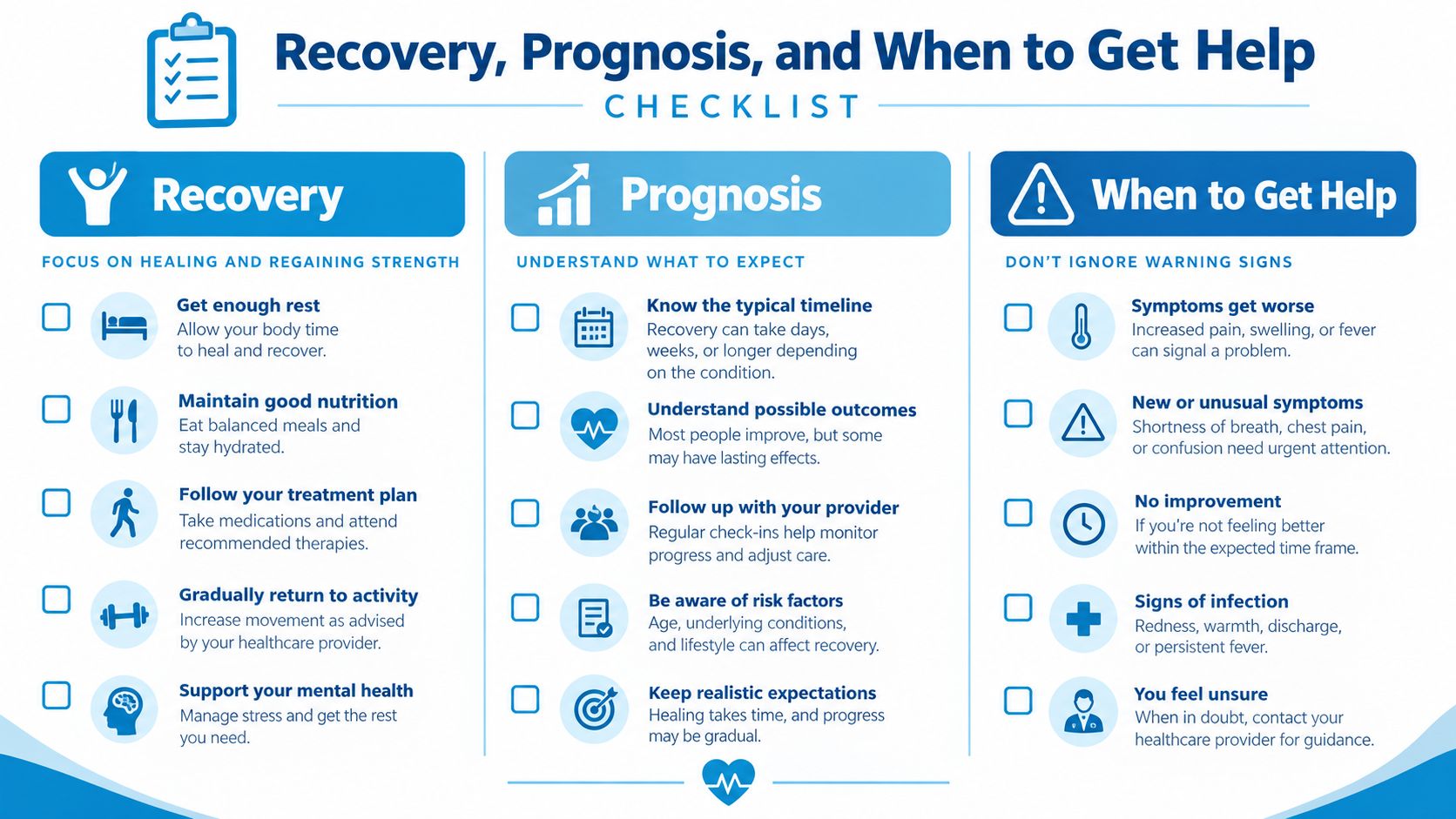
Recovery from CPTSD means building a steadier life, not achieving a permanent absence of difficult memories or emotions. Progress may involve fewer emotional floods, a wider window of tolerance, more accurate self-perception, safer boundaries, and greater capacity for work, friendship, and intimacy.
A person may first notice small changes rather than a dramatic transformation. A delayed message may still create anxiety, but the person may recover sooner, ask for clarification instead of assuming rejection, and avoid abandoning personal needs to keep a relationship calm. An expat may still miss family or feel culturally dislocated, while becoming better able to distinguish ordinary loneliness from an old expectation of abandonment.
What can slow recovery?
Ongoing danger needs attention before deep processing can be safe. Other barriers may include untreated substance use, severe dissociation, limited social support, financial constraints, immigration stress, language barriers, or difficulty attending consistently.
A multilingual clinician can reduce one practical obstacle: the person doesn't need to translate every emotional nuance into a second language. Cultural context also matters because family loyalty, authority, gender roles, religion, and ideas about privacy can affect how a client understands both trauma and recovery.
When is professional help worth considering?
Ordinary stress reactions may settle as safety returns, but persistent symptoms deserve assessment when they interfere with work, education, relationships, identity, sleep, or daily functioning. A person doesn't need to decide whether the label is PTSD, CPTSD, depression, anxiety, or something else before contacting a clinician.
- Persistent re-experiencing: Memories, nightmares, sensations, or reactions continue to intrude.
- Strong avoidance: Places, conversations, emotions, or relationships are repeatedly avoided.
- Emotional flooding or shutdown: The person can't reliably return to a manageable state.
- Shame-based identity: The trauma feels like proof of permanent defectiveness.
- Relational fear: Trust, closeness, boundaries, or conflict feel consistently unsafe.
Therapsy offers online and in-person sessions across 24 Italian cities, with a human matching process led by the Clinical Director. Its first contact is free, the first call is with the therapist chosen for that person, and there's no obligation to continue. In an immediate crisis or situation of danger, local emergency services or an appropriate crisis resource should be contacted.
What does support look like for an expat?
Therapsy has served 1,500+ clients since 2023, and its Trustpilot rating is 4.8/5, “Excellent”. These details don't predict an individual outcome, but they describe the service context for people seeking multilingual care while living in Italy or moving between countries.
Therapsy can connect a person seeking help for complex trauma with a therapist matched by the Clinical Director, in the person's own language and through online or in-person sessions. The first call is free, it's with the therapist chosen for that person, and there's no obligation to continue. Visit Therapsy to explore a calm first step.