Quick answer: The psicologo di base is Italy’s new free community psychologist, introduced by the National Mental Health Plan 2025-2030 and funded by the 2026 Budget Law. Every health district must host at least two of them. You can see a psicologo di base without a medical referral, at no cost, for mild to moderate difficulties. The catch for expats: sessions are delivered in Italian.
Therapsy is a multilingual psychotherapy service in Italy that connects expats with therapists who speak their native language.
You moved to Italy, you are struggling, and someone told you there is now a free psychologist at your local health centre. They were right. The psicologo di base is real, it is publicly funded, and 2026 is the first year it is being rolled out with structural money behind it: 255 million euros across 2026-2028 (Legge di Bilancio 2026, L. 199/2025). For the 5.56 million foreign residents in Italy (ISTAT, 1 January 2026), this is the first time a free psychological service has been placed inside walking distance of home.
And yet almost no one has explained it in English. This guide does. We will cover what the psicologo di base is, who can use it, how to book one, what it treats, and – just as importantly – where it stops. Therapsy has spent three years helping expats navigate exactly this gap between what Italy offers on paper and what is usable when you do not speak the language.
What is the psicologo di base in Italy?
The psicologo di base is a free, publicly funded psychologist working inside community health centres (Case di Comunità), offering non-medicalized support for mild to moderate mental health difficulties without a medical referral.
The role was formally introduced by Italy’s National Mental Health Plan 2025-2030, approved by the State-Regions Conference in July 2025 (WHO European Observatory, 2025). It sits at the first level of a new four-tier care model, designed as the entry point before you ever reach a psychiatrist or a Centro di Salute Mentale.
Think of it as the psychological equivalent of the medico di base, the family doctor every resident in Italy is assigned. The name is deliberate: the psicologo di base is meant to be local, ordinary, and unintimidating. You are not “a psychiatric case” for walking in. You are a resident using a service.
Under the 2026 rollout, every health district (distretto sanitario) must have at least two primary care psychologists, coordinated with the Department of Mental Health, child neuropsychiatry services, the Case di Comunità, and municipal social services. Twelve Italian regions have already passed their own legislation on the role, with Tuscany the first to do so.
Why did Italy introduce the psicologo di base?
Italy introduced the psicologo di base because demand for psychological care has far outgrown the public system’s capacity, and because most people in distress never reach specialist services at all.
The numbers explain the urgency. Roughly one in six people in Italy and Europe live with a mental disorder, and anxiety and depression fall hardest on the working-age population, producing years lived with disability almost ten times higher than those caused by cancer (Ministry of Health, 2024). Mental health conditions cost Italy an estimated 3.3% of GDP, over 20 billion euros in lost productivity and labour participation (Ambrosetti, 2025).
Against that, Italy spent just 3.3% of its total healthcare budget on mental health in 2022, well below the European average of 5%. The gap between need and investment is the reason the psicologo di base exists: it is an attempt to catch distress early, cheaply, and close to home, before it becomes a psychiatric emergency.
The Plan itself is a genuine shift. It rests on a bio-psycho-social model, adopts the One Health framework, and treats the person as an active participant rather than a patient to be managed. Italy’s mental health system has run on the bones of the Basaglia reform (Law 180 of 1978) for nearly fifty years. The psicologo di base is the most concrete thing to be added to it in a generation.
Can expats access the psicologo di base?
Yes. If you are legally resident in Italy and registered with the national health service, you can access the psicologo di base on the same terms as an Italian citizen. Citizenship is not a requirement. Residency is.
In practice, you need three things: a codice fiscale, registration with your local ASL (Azienda Sanitaria Locale), and a tessera sanitaria. EU, EEA and Swiss citizens access the system through European coordination agreements. Non-EU residents need a valid permesso di soggiorno. Once you are inside the SSN, the psicologo di base is one of the services you are entitled to.
This matters more than it sounds. Many expats assume Italian public healthcare is closed to them, and quietly go without care for years. It is not closed. The barrier is rarely legal entitlement – it is paperwork, information, and language. If you have not yet registered with the SSN, our guide to mental health services in Italy for expats walks through the registration steps in English.
One honest caveat: rollout is regional. The psicologo di base is a national framework, but Italian regions implement it at their own pace. Lombardy, Lazio, Tuscany and Campania are among the fastest movers. In some districts the service is fully staffed; in others it exists mainly on paper. Call your ASL before you plan around it.
How do you book a psicologo di base, step by step?
You book a psicologo di base directly through your local health district or Casa di Comunità, in most regions without a referral from your family doctor.
- Confirm you are registered with the SSN. You need a codice fiscale and an active tessera sanitaria tied to your local ASL.
- Find your Casa di Comunità. Search your ASL’s website for “Casa di Comunità” plus your municipality. Your medico di base can also tell you which district you belong to.
- Ask specifically for the “psicologo di base” or “psicologo delle cure primarie”. Front-desk staff may not recognise an English description of the service. Use the Italian term.
- Book the first appointment. Depending on the region, this is done at the desk, by phone through the CUP booking system, or via your medico di base.
- Attend the assessment. The first session is usually an evaluation to understand what you need and whether the service is the right level of care for you.
- Follow the pathway offered. Typically a short cycle of sessions. If your difficulties are more severe, you will be referred upward, to a Centro di Salute Mentale or a specialist.
Bring your tessera sanitaria and a document. And bring patience: this is a service being built while it runs.
What does the psicologo di base actually treat?
The psicologo di base treats mild to moderate difficulties: stress, low mood, adjustment problems, sleep disruption, relationship strain, and the early stages of anxiety or depression.
It is explicitly designed as a non-medicalized service. No diagnosis is forced on you, no medication is prescribed, and no psychiatric file is opened. The intent is to offer support at the point where support is still simple – and to relieve pressure on the specialist services that should be treating severe illness.
What the psicologo di base is not designed to handle: complex trauma and PTSD, severe or recurrent depression, obsessive-compulsive disorder, eating disorders, psychosis, or long-term psychotherapy. For those, the Plan routes you to specialist care, and introduces a “case manager” to coordinate treatment for people with severe and complex conditions.
So if you are dealing with a panic disorder that has been building for three years, or the grief of losing a parent in another country, a short cycle with a psicologo di base is unlikely to be enough. That is not a failure of the service. It is the service working as designed.
What are the limits of the psicologo di base for expats?
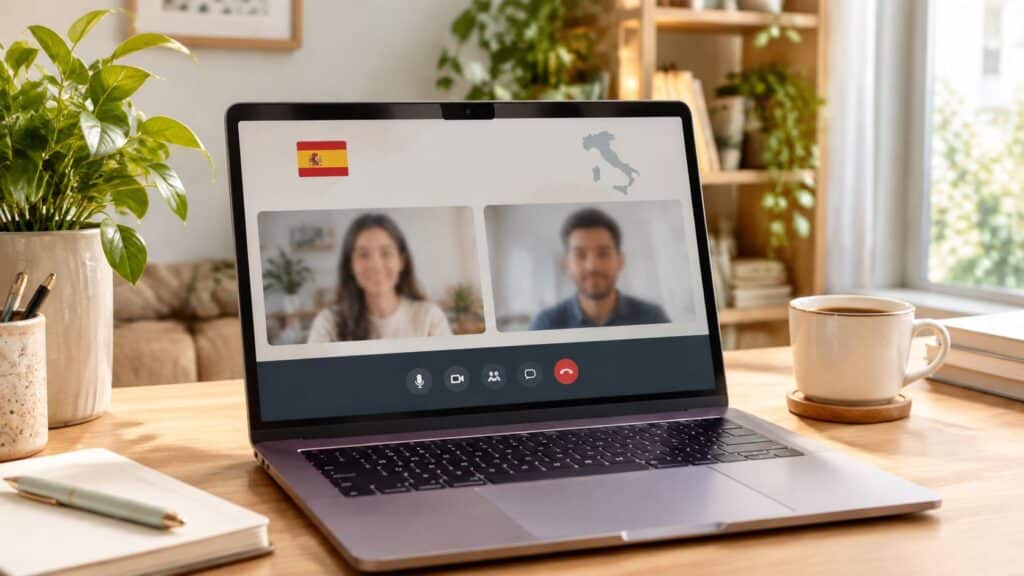
The single biggest limit is language. The psicologo di base works in Italian, and no provision in the National Plan requires the service to be delivered in any other language.
This is where a well-designed public policy quietly stops working for 5.4 million people. You can be fully entitled to the service, live two streets from the Casa di Comunità, book the appointment – and still be unable to use it, because the thing you came to do is talk.
Research is unambiguous on this. Emotional processing is significantly deeper in a person’s first language, and bilingual clients report accessing memories, describing symptoms, and expressing distress with far greater precision in their mother tongue (Dewaele & Costa, 2013. Ordering a coffee in Italian and describing a panic attack in Italian are not the same cognitive act. The first is vocabulary. The second is your inner life.
There are three further constraints worth naming plainly:
- Waiting times. The service is new, understaffed relative to demand, and being stood up region by region. Free does not mean immediate.
- Scope. Mild to moderate only, and usually a short cycle of sessions rather than an ongoing therapeutic relationship.
- Cultural context. A psicologo di base trained entirely within an Italian frame may not read the specific texture of migration, intercultural conflict, or identity loss abroad.
None of this makes it a bad service. It makes it a service built for a population you are not quite part of.
Psicologo di base or private multilingual therapy: how do you choose?
Choose the psicologo di base if you speak fluent Italian and need short-term support for a mild difficulty. Choose private multilingual therapy if you need to work in your own language, need specialised care, or cannot wait.
Honest guidance matters more here than a sales pitch, so here is the comparison as we would give it to a friend.
- Cost. The public service is free. Private therapy in Italy typically runs 60 to 120 euros per session; at Therapsy, individual sessions start from 70 euros, and you can check the full breakdown in our guide to how much therapy costs in Italy.
- Language. It works in Italian only. Therapsy works in 14 languages, including English, French, Spanish, German, Portuguese, Greek, Russian, Arabic and Hebrew.
- Speed. Public waiting times are measured in weeks or months. Therapsy’s first assessment call is usually within hours, and the first session within days.
- Depth. It offers a short supportive cycle. Private therapy supports long-term work: CBT, EMDR, Schema Therapy, couples and trauma work.
- Bureaucracy. The public route requires SSN registration, ASL enrolment and a tessera sanitaria. Therapsy requires a form and a phone call.
These are not mutually exclusive. Plenty of expats start with the free public route and move to multilingual private care when they hit the language ceiling. Some do the reverse. And if cost is the binding constraint, the Bonus Psicologo 2026 is a separate state subsidy of up to 1,500 euros that foreign residents can also apply for.
What does a clinician say about the psicologo di base?
The clinical view is that the psicologo di base is a genuine advance for Italy and an incomplete answer for international residents.
“I want to be clear that I welcome this reform,” says Dr. Francesca Adriana Boccalari, Clinical Director at Therapsy and a licensed psychologist with the Order of Psychologists of Lombardy. “For the first time, a person in Italy can ask for psychological help without a diagnosis, without a referral, and without paying. That is a real change, and it will help a lot of people.”
“But in fifteen years of clinical work with international clients, I have watched what happens when someone tries to do therapy in a language they merely function in. They narrate. They summarise. They stay one safe step away from what actually hurts. The psicologo di base cannot solve that, because the service was never designed to. That is precisely the space we built Therapsy to occupy – not in competition with the public system, but where the public system runs out of language.”
What do expats say about therapy in their own language?
Expats consistently describe language, not price or convenience, as the thing that made therapy finally work. Here is what Therapsy clients have written publicly on Trustpilot.
“Finding the right therapist for my daughter was a big challenge because she has a psychological barrier when communicating in Italian. This doctor has been a true blessing. She conducted the entire therapy smoothly in English, making her feel instantly understood and at ease.” – coco zhao, May 2026, via Trustpilot
“Being able to receive therapy entirely online in my preferred language, English, has been invaluable. Dr. Eleni Karliampa has supported me for almost a year and has helped me tremendously. She asks thoughtful questions, helps me recognize patterns, and encourages me to see things from new perspectives.” – Andrea Alibasic, June 2026, via Trustpilot
“What made a huge difference for me was seeing a professional who understood my culture and language. With Dr. Karliampa, I feel genuinely seen on a deeper level, not just as a patient, but as a person.” – Polina Voutyra, March 2026, via Trustpilot
Note the first one carefully. A “psychological barrier when communicating in Italian” is exactly the wall the psicologo di base cannot get past, however good the psychologist behind it is.
How do you get started if the psicologo di base is not enough?
If the psicologo di base cannot serve you in your language, the fastest route to care is a multilingual private service that matches you to a therapist deliberately rather than alphabetically.
- Name what you actually need. Short-term support, or sustained work on something old and heavy? Individual, or as a couple?
- Decide your language. Not the language you can manage – the language you cry in.
- Check your funding. International insurance (Therapsy is a recognised Cigna provider), an employer EAP, or the Bonus Psicologo.
- Book a free first call. Fill in the form at therapsy.it. Dr. Boccalari personally reviews each request and calls you back, usually within hours.
- Get matched. You are paired with a therapist by language, clinical specialisation and cultural fit – by a human, not an algorithm.
- Start, online or in person. Therapsy has locations in 20+ Italian cities; see the full list of Therapsy locations.
If you would rather begin by understanding the whole landscape first, our guide to starting therapy in Italy and our overview of expat therapy in Italy both cover the public and private routes side by side.
Frequently asked questions about the psicologo di base
Is the psicologo di base free?
Yes. The psicologo di base is free at the point of use for anyone registered with Italy’s national health service, with no ticket and no medical referral required in most regions. It is funded through the 2026 Budget Law, which allocated 255 million euros across 2026-2028.
Can foreigners use the psicologo di base?
Yes. Any legal resident registered with the SSN can use the service, regardless of citizenship. You need a codice fiscale, ASL registration and a tessera sanitaria. The practical barrier is language, not eligibility.
Does the psicologo di base speak English?
Generally no. The psicologo di base delivers sessions in Italian, and nothing in the National Mental Health Plan requires multilingual provision. Expats who need therapy in another language usually turn to private services such as Therapsy, which works in 14 languages.
What is the difference between a psicologo di base and a psychotherapist?
A psicologo di base offers short, non-medicalized support for mild to moderate difficulties inside a community health centre. A psychotherapist is trained to treat clinical conditions over time, using structured methods such as CBT, EMDR or Schema Therapy.
How many sessions does the psicologo di base offer?
Typically a short cycle of sessions, not open-ended therapy. The exact number varies by region and district, since implementation is devolved to regional health authorities. For ongoing psychotherapy, you will be referred onward or will need private care.
Is the psicologo di base available in every Italian city?
Not yet. The Plan requires at least two primary care psychologists per health district, and twelve regions have passed their own legislation, but rollout is uneven. Check with your local ASL before relying on it.
Is the psicologo di base the same as the Bonus Psicologo?
No. The psicologo di base is a free public service inside community health centres. The Bonus Psicologo is a separate INPS subsidy of up to 1,500 euros toward private psychotherapy, which expats resident in Italy can also apply for.
Can I see a psicologo di base and a private therapist at the same time?
Yes, though it is worth telling both. Many expats use it for practical, short-term support and a multilingual private therapist for deeper work in their own language. Therapsy’s clinical team can advise on how to sequence the two.
About the author
Dr. Francesca Adriana Boccalari is Clinical Director and co-founder of Therapsy, and a licensed psychologist and psychotherapist registered with the Order of Psychologists of Lombardy (n. 16241).
She graduated with honours in Clinical Psychology and specialises in Cognitive Behavioural Therapy, EMDR (certified), and Schema Therapy, with training completed in Milan, New York and Singapore. She has over ten years of clinical experience working with expats, international students and intercultural couples, and collaborates with IED (Istituto Europeo di Design) and Istituto Marangoni as a psychotherapist consultant.
At Therapsy she personally conducts the first assessment call with every new client and provides ongoing clinical supervision to the entire team, across 14 languages, 20+ Italian cities and 50+ locations.
Last updated: July 2026. Trustpilot: 4.8/5 – Excellent.
Ready to talk to someone who speaks your language?
The psicologo di base is a real step forward for Italy, and if you speak Italian you should use it. If you do not, you should not have to wait until your Italian is good enough to describe your own pain.
Therapsy connects you with a licensed therapist who speaks your mother tongue and understands what it means to build a life in a country that is not yet home.
14 languages – 20+ Italian cities – 50+ locations – Online and in-person – Free first call – 4.8/5 Excellent on Trustpilot
Book your free first call at therapsy.it
Therapsy – Multilingual Psychotherapy in Italy. Your language. Your therapist. Your pace.
Sources
- Towards a new model of mental health care in Italy: The National Mental Health Plan 2025-2030 – WHO European Observatory on Health Systems and Policies, 2025
- Italy launches its National Mental Health Plan 2025-2030 – WHO European Observatory, 2025
- Rapporto Salute Mentale – Sistema Informativo per la Salute Mentale – Ministero della Salute, 2024
- Legge 199/2025 – Legge di Bilancio 2026-2028
- Accessing mental health services in Italy – Expatica, 2025
Related questions
- How do I register with the SSN as a foreigner in Italy?
- What is a Casa di Comunità and what services does it offer?
- How long are the waiting lists at a Centro di Salute Mentale?
- Can I get therapy in English through the Italian public health system?
- Does international health insurance cover psychotherapy in Italy?
- What is the difference between a psicologo and a psicoterapeuta in Italy?
- How do I find an English-speaking therapist in Milan or Rome?
- Is online therapy as effective as in-person therapy?
Editorial standards
This article was written by Dr. Francesca Adriana Boccalari, Clinical Director at Therapsy and licensed psychologist (Order of Psychologists of Lombardy n. 16241), and reviewed in July 2026. Policy details were verified against primary sources including the WHO European Observatory on Health Systems and Policies, the Italian Ministry of Health, and the 2026 Budget Law. The information provided is for educational purposes and does not substitute a professional consultation. In a mental health emergency in Italy, call 112.