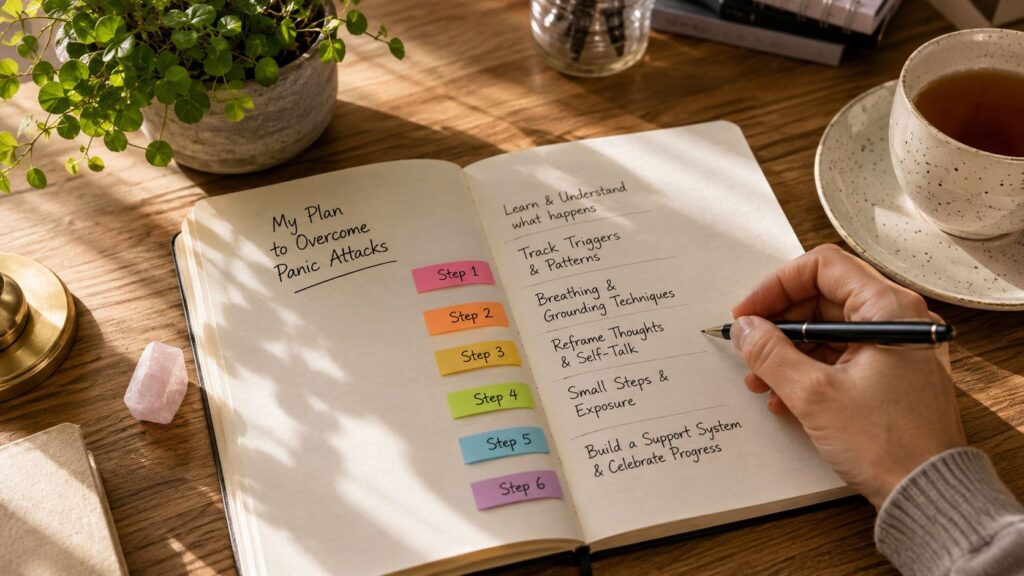
You wake at 6 a.m., your chest tightens, and your mind begins listing everything that could go wrong before your feet touch the floor. Morning anxiety is anxiety that repeatedly reaches its highest intensity during the first hours after waking. It can reflect the normal cortisol awakening response, poor or fragmented sleep, circadian disruption, physical sensations, anticipatory worry, or several of these at once. For expats in Italy, language fatigue, isolation, travel, and irregular schedules can add another layer.
Therapsy is a multilingual psychotherapy service in Italy that connects expats with therapists who speak their native language.
What Morning Anxiety Feels Like
The alarm rings, but your body reacts as if something urgent has already happened. You may wake with dread, a tight chest, shallow breathing, a knotted stomach, or a racing heart. Your thoughts can move straight to unfinished work, immigration paperwork, an awkward conversation, or the fear that you will not manage the day.
The first few minutes may also bring a strong urge to check your phone. Notifications, messages, news, and calendars then turn a vague feeling into a list of demands. For someone living abroad, the first problem may arrive in another language: a train connection, a work meeting, a landlord's message, or an appointment at an unfamiliar office. Irregular schedules, language fatigue, and isolation can make the morning feel heavier before anything has gone wrong.
Morning anxiety is a recurring pattern in which anxiety symptoms peak during the early hours after waking, rather than appearing randomly throughout the day.
Some alertness after waking is expected. Your body is shifting from sleep into activity, so a degree of physical activation helps you become attentive. Repeated dread, panic-like sensations, or anxiety that makes getting out of bed difficult calls for closer attention.
A pattern with several possible causes
The timing of symptoms can occur alongside generalized anxiety, panic symptoms, depression, burnout, adjustment stress, sleep problems, or a period of intense uncertainty. The morning pattern offers clues, but it does not identify one cause on its own.
Ask yourself:
- Timing: Does anxiety begin before you get up, or after you check your phone?
- Body: Do you notice shaking, chest tightness, nausea, or a pounding heart?
- Thoughts: Are you worrying about a specific event, or experiencing vague dread?
- Duration: Does the feeling settle as the morning progresses?
- Impact: Does it affect work, relationships, sleep, or basic routines?
These questions work like a simple map. They help separate a body sensation from the thought attached to it, and they show whether the pattern changes with sleep, schedules, or morning demands.
A symptom list cannot diagnose you. To understand anxiety symptoms in adults, a clinician can assess the full pattern rather than interpreting one difficult morning in isolation.
The Cortisol Awakening Response Explained
At 6 a.m., you may wake with a racing heart and a mind already scanning the day ahead. That reaction can feel like proof that something is wrong, yet part of it may reflect a normal body process called the cortisol awakening response, or CAR.
Cortisol usually rises after waking, often within about 30 to 45 minutes, helping mobilize energy and prepare you for activity. One clinical explanation describes a rise of about 50 to 60% above waking baseline, though individual patterns differ and CAR is not a simple test of psychological health.
Cortisol supports alertness, energy availability, and readiness to respond. Anxiety can develop when those physical signals are read as danger, particularly if your nervous system is already strained by chronic stress, anxiety, or insufficient sleep. The sensation is real, but the interpretation can add a second layer of alarm.
What research can and can't tell us
A 2024 Mendelian randomization study found a positive association between morning plasma cortisol and anxiety. The pooled odds ratio was 1.16 per cortisol z score, with a 95% confidence interval from 1.04 to 1.31 (peer-reviewed study in PMC). The study did not find the same clear association with major depression or neuroticism. This points to a specific relationship with anxiety risk, not a universal explanation for emotional distress.
Earlier longitudinal research found that the cortisol awakening response predicted the first onset of a combined group of anxiety disorders and social anxiety disorder in older adolescents and young adults (prospective study in PMC). Prediction is not destiny. It indicates that stress-system activity may form one part of a broader vulnerability pattern.
Your morning response may feel:
- Intensified, with panic, agitation, or urgent threat.
- Blunted, with exhaustion, fogginess, or difficulty becoming alert.
- Mismatched, when the body clock and daily demands no longer line up.
Expat life in Italy can reshape all three patterns. Irregular work hours, late calls with family abroad, jet lag, language fatigue, isolation, and the effort of constant adaptation can keep the nervous system under load. A morning may therefore feel unfamiliar for two separate reasons: cortisol is producing normal activation, while sleep and circadian timing are out of sync.
If mornings repeatedly feel like a nervous-system alarm, nervous system regulation therapy can help you observe the pattern and respond to bodily sensations without treating each one as evidence of danger.
Sleep, Stimulants, and the Body's Morning Load
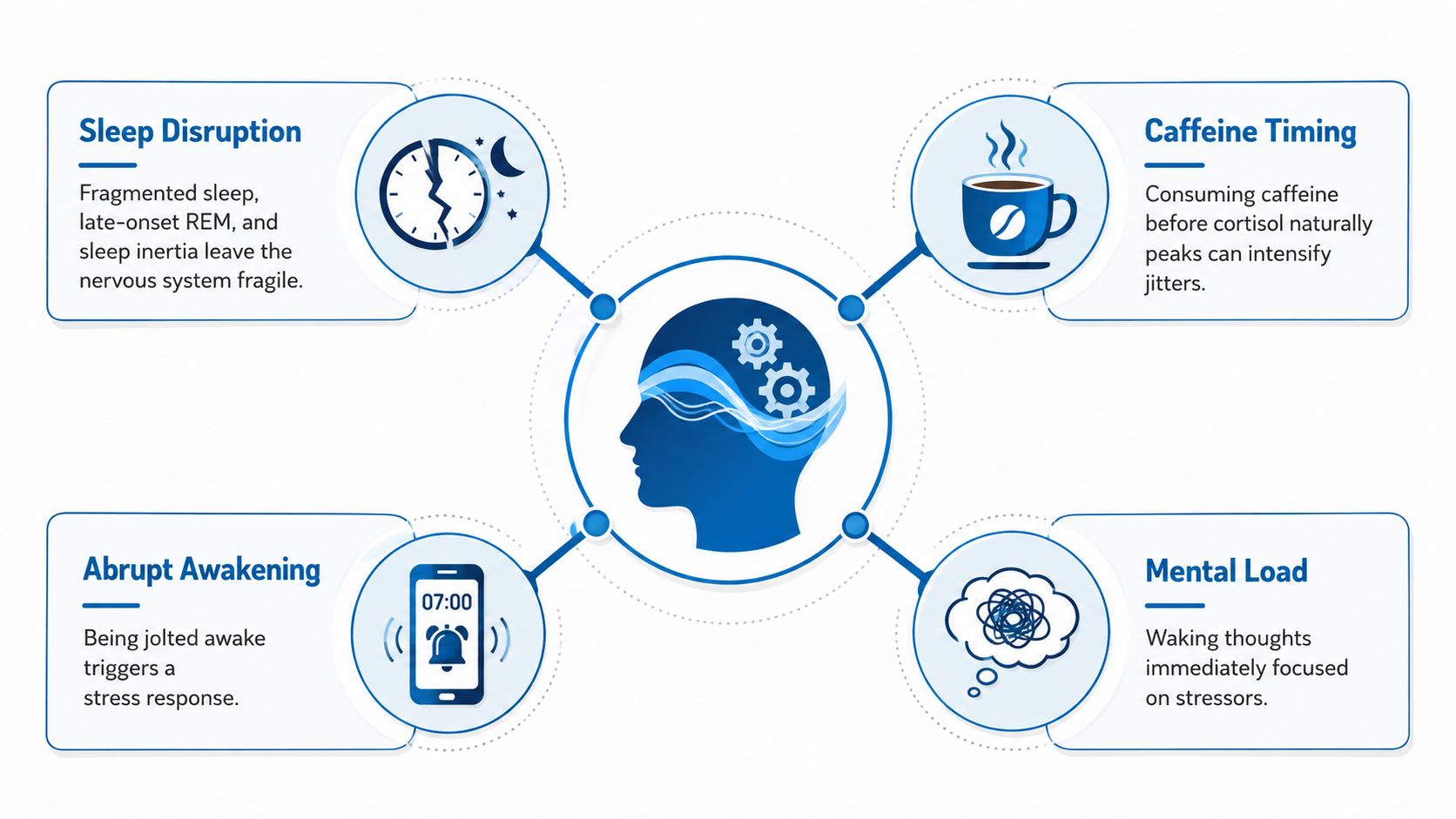
A late dinner, a long language-heavy workday, and a restless night can stack together, leaving you with less emotional reserve by morning. Morning anxiety often emerges from several body-state and thought-pattern factors arriving together, so separating them makes the pattern easier to understand.
Sleep disruption
Sleep loss affects emotional regulation. Human neuroimaging research found that sleep loss weakens medial prefrontal control over limbic threat circuits, making negative emotion harder to regulate (Nature Human Behaviour research). In a controlled sleep-deprivation study, state anxiety rose from a mean of 32.35 to 42.78 after 24 hours without sleep, with p<0.001 and d=1.045, alongside altered morning cortisol patterns (same peer-reviewed source).
Fragmented sleep also matters when you spend plenty of time in bed. Repeated waking, early awakening, jet lag, or an inconsistent schedule can reduce the brain's ability to regulate threat responses when morning begins. This is the sleep-and-circadian side of the story, which differs from the normal cortisol awakening response.
Overnight fasting and physical sensations
Going without food overnight can bring shakiness, weakness, light-headedness, or a racing heart for some people. Those sensations resemble anxiety and can prompt anxious interpretations. If your morning experience feels mainly physical, observe whether hydration and breakfast change it. Food is one possible contributor, not a complete explanation for every episode.
Caffeine timing
Caffeine can intensify jitteriness and make anxious sensations more noticeable. Coffee immediately after waking can feel particularly uncomfortable when it overlaps with the body's natural morning activation. Rather than making a dramatic change, track the timing, amount, and effect to see whether caffeine belongs in your personal pattern.
Rumination during the night
Worry before sleep can continue into waking. As consciousness returns, the mind may resume an unfinished threat calculation.
Expat life in Italy can bring several contributors together: irregular work hours, late calls with family abroad, language fatigue, isolation, and the ongoing effort of adaptation. A late meal after a demanding day, followed by poor sleep, can affect both circadian timing and emotional capacity. If sleep and anxiety reinforce each other, sleep anxiety therapy can address both sides rather than focusing only on morning coping skills.
Common Symptoms You Can Recognize
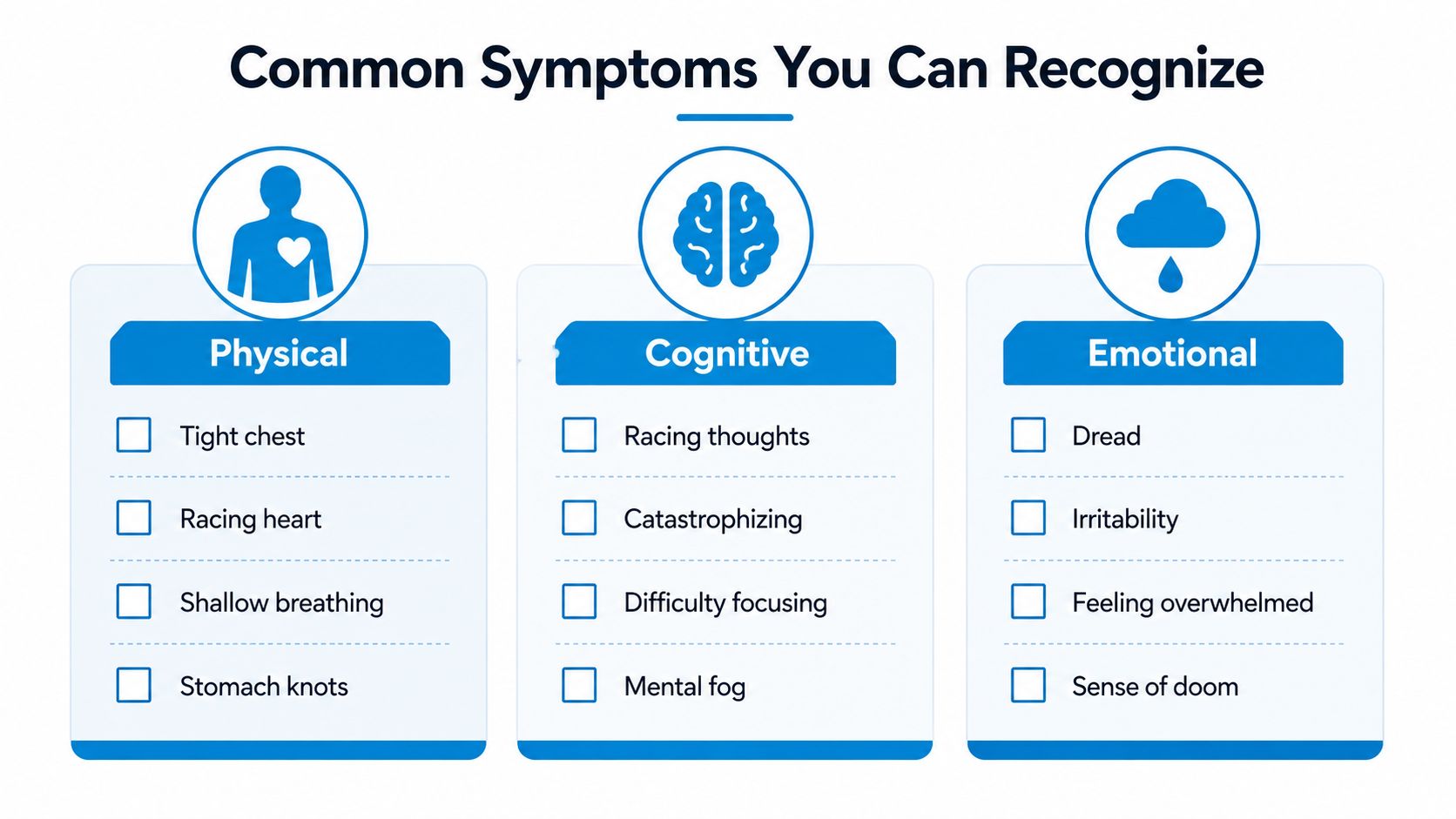
Morning anxiety can affect the body, thoughts, and emotional tone of the day. Recognizing your own combination helps you communicate clearly with a therapist or doctor. It doesn't prove that you have an anxiety disorder.
Physical signs
You might notice:
- Chest and heart sensations: Tightness, a racing heart, or awareness of your heartbeat.
- Breathing changes: Shallow, rapid, or unsatisfying breaths.
- Stomach responses: Knots, nausea, reduced appetite, or digestive discomfort.
- Muscle activation: Jaw tension, tense shoulders, clenched hands, or general restlessness.
- Head sensations: A morning headache, pressure, or fogginess.
Physical symptoms can feel alarming because they arrive before you've formed a clear thought. A therapist can help you distinguish a familiar anxiety pattern from symptoms that require medical evaluation.
Cognitive signs
Morning anxiety may also sound like a fast internal forecast:
- Racing thoughts: Several concerns appear at once.
- Catastrophizing: A manageable problem becomes evidence of disaster.
- Mental replay: Yesterday's mistakes return with unusual intensity.
- Poor concentration: Ordinary decisions feel difficult.
- Mental fog: You can't organize your priorities despite knowing what needs to happen.
Emotional signs
The emotional experience may include dread, irritability, overwhelm, or a sense of impending doom. Some people feel unable to leave bed, while others become highly productive in an attempt to outrun the feeling.
The frequency, severity, and impact of symptoms matter more than any single symptom.
A difficult morning after poor sleep isn't the same as waking in distress most days and changing your life around it. Recognizing that difference is often the first practical step toward getting appropriate support.
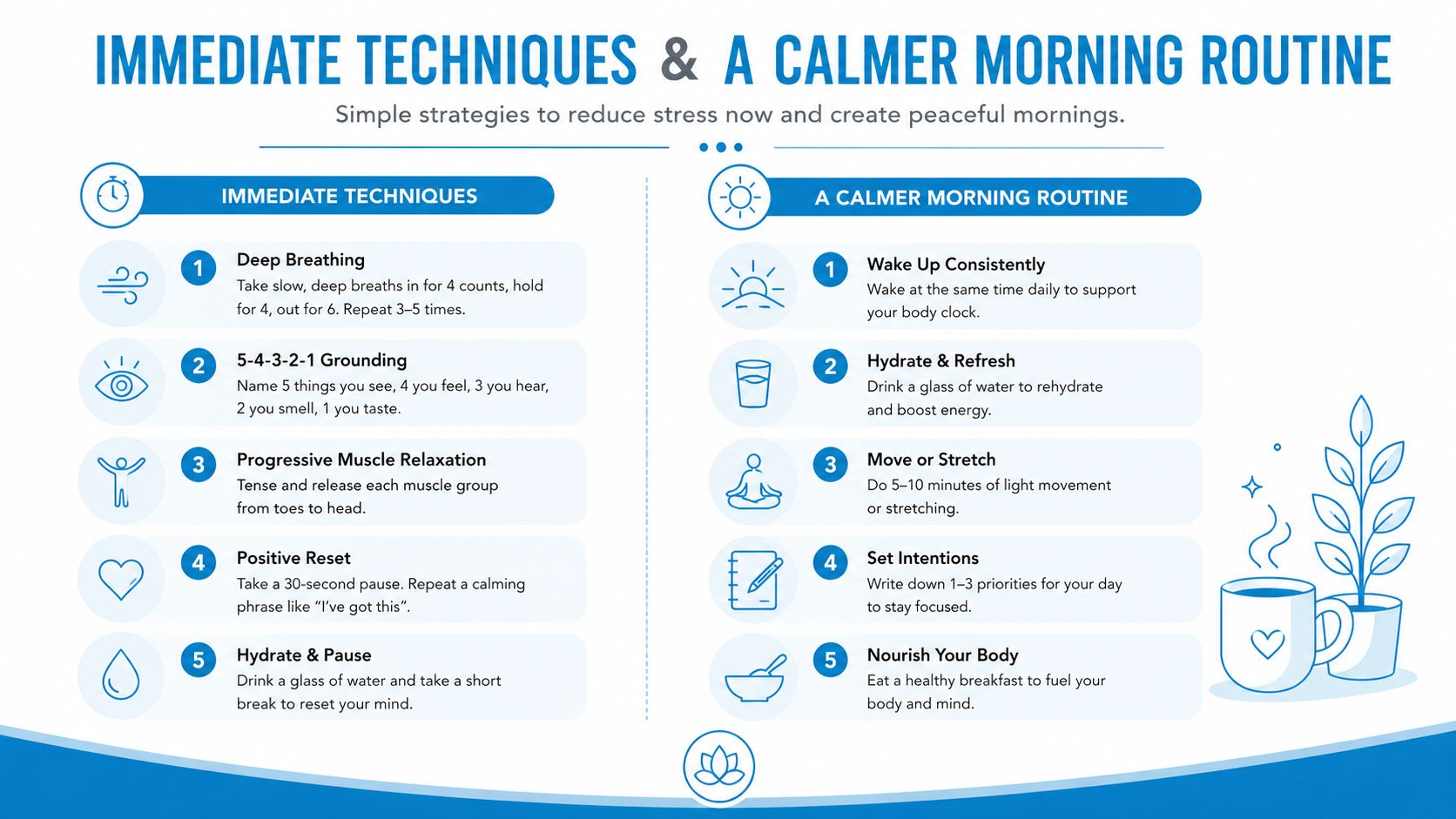
Immediate Techniques and a Calmer Morning Routine
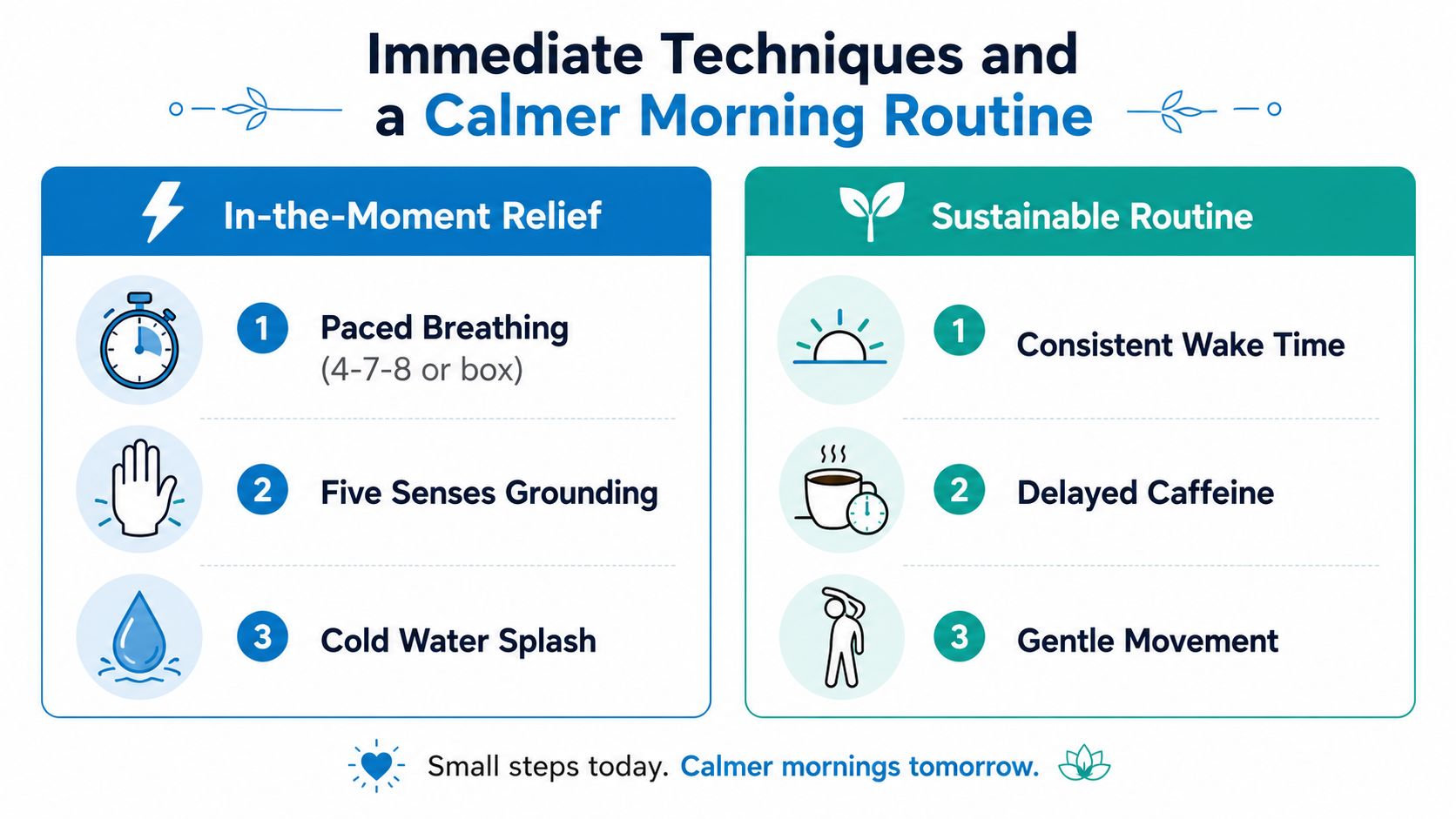
The best morning strategy usually has two layers. Immediate techniques help you get through the first wave. Sustainable habits reduce the conditions that keep amplifying it. Neither approach requires you to eliminate anxiety completely.
What to do in the first few minutes
Start with the body rather than debating every thought.
Use paced breathing. Try box breathing or a 4-7-8 pattern if it feels comfortable. Keep the breathing gentle. If counting makes you more tense, lengthen the exhale without forcing it.
Orient through the five senses. Name what you can see, hear, feel, smell, and taste. This shifts attention from imagined future problems to the immediate environment.
Change temperature carefully. Cool water on your face or wrists can provide a strong sensory cue. Stop if it feels unpleasant or increases distress.
Step into daylight. Go outside or stand near natural light for a brief period. Let your body receive a clear signal that the day has started.
Avoid turning these tools into a test you can fail. They're ways to interrupt escalation, not proof that you're doing recovery correctly.
Build one repeatable anchor
A calmer routine might include:
- A consistent wake time when your schedule allows.
- Water before your first coffee.
- A breakfast that includes a meaningful source of protein.
- A short period without news, messages, or social media.
- Five minutes of mindfulness, journaling, or quiet movement.
- Gentle stretching or a short walk instead of immediate intense exercise.
Choose one change first. A small routine you repeat is usually more useful than an ambitious schedule you abandon after a difficult week.
Therapsy's mindfulness therapy can help if your mind understands these ideas but your body continues to respond as though every morning is an emergency.
Evidence-Based Treatments That Work
Treatment depends on what keeps the morning pattern going. A clinician may focus on anxious predictions, trauma memories, sleep disruption, medication needs, or the interaction between them.
Comparing the main options
| Treatment | What It Targets | Typical Timeframe | Best For |
|---|---|---|---|
| CBT | Anticipatory thoughts, avoidance, catastrophic morning scripts, and reinforcing behaviors | Discussed individually with a clinician | People who notice predictable worry loops and avoidance |
| EMDR | Distressing memories and trauma-related threat responses | Sequenced after assessment and preparation | Morning anxiety connected to specific unresolved experiences |
| Medication | Baseline anxiety symptoms and physiological vulnerability | Decided and monitored by a prescribing clinician | People needing daily support, sometimes alongside therapy |
| Sleep-focused treatment | Insomnia, irregular sleep, fragmented sleep, and possible sleep disorders | Developed around the sleep pattern | People whose anxiety rises after poor or disrupted sleep |
CBT, or cognitive behavioral therapy, helps you identify the interpretation attached to morning sensations. A racing heart might become “I'm unsafe” or “I can't cope today.” CBT uses cognitive restructuring and behavioral experiments to test those predictions and build different responses. You can read more about cognitive behavioral therapy for anxiety.
EMDR may be appropriate when waking anxiety connects with trauma, loss, frightening events, or memories that remain emotionally active. It isn't automatically the first choice for a pattern driven mainly by sleep and daily timing, but it can be valuable when trauma sits underneath the morning reaction.
Medication may include daily options such as SSRIs or SNRIs, while short-acting medicines may be considered for breakthrough symptoms in selected situations. A prescriber needs to review your health, other medicines, side effects, and goals. Sleep-focused care can include CBT for insomnia, improved sleep routines, and assessment for conditions such as sleep apnea when symptoms suggest it.
Schema Therapy can help when mornings activate long-standing themes such as failure, abandonment, defectiveness, or excessive responsibility. Attachment-informed and intercultural approaches can also examine how relocation has changed your support network and sense of safety.
The most useful plan may combine approaches. A clinician can sequence them so you aren't trying to change every part of your life at once.
When to Seek Help and What to Expect in Italy
You don't need to wait until morning anxiety becomes unbearable before asking for support. A professional conversation is appropriate when the pattern is persistent, disruptive, confusing, or accompanied by other symptoms.
Signals that support may be timely
Consider reaching out if:
- Daily functioning is changing: Anxiety interferes with work, study, relationships, or basic care.
- Panic symptoms recur: Episodes include intense fear, overwhelming physical sensations, or avoidance.
- Sleep remains disrupted: Difficulty falling asleep, repeated waking, or early waking continues.
- Mood is also low: You notice hopelessness, loss of interest, or marked emotional heaviness.
- Substances are escalating: You're relying more heavily on alcohol, sedatives, or stimulants to manage mornings.
- Relocation stress is accumulating: You feel isolated, unable to communicate freely, or constantly responsible for navigating unfamiliar systems.
A good week for self-monitoring is different from a pattern that keeps narrowing your life. If you're unsure, write down your wake time, sleep quality, symptoms, caffeine, breakfast, and major stressors. Bring that record to a clinician.
Finding multilingual care in Italy
Therapsy connects people in Italy with carefully selected licensed professionals offering therapy in 14 languages, including Italian, English, French, Spanish, German, Portuguese, Ukrainian, Russian, Greek, Arabic, Urdu, Hebrew, Hindi, and Persian (Farsi). Human matching by the Clinical Director can be useful when you need someone who understands both your preferred language and the cultural context around relocation.
Sessions are available online and in person across 24 Italian cities and 90+ physical locations, including Milan, Rome, Florence, Turin, Bologna, Bergamo, Padova, and Verona. Online care can help when work travel, relocation, or distance makes a fixed location difficult.
A first assessment typically explores:
- Your symptoms and their timing.
- Sleep, physical health, medication, and substance use.
- Recent stressors and previous support.
- Your goals and preferred language.
- Confidentiality and practical scheduling.
- A shared plan for therapy or referral.
Italy's public system and private services have different routes, availability, costs, and referral processes. If you're considering medication, ask about psychiatric care, prescribing rules, follow-up, and how treatment will coordinate with your existing doctor. Therapsy can help clarify whether therapy, psychiatric consultation, or further assessment is the appropriate starting point.
Frequently Asked Questions About Morning Anxiety
Is morning anxiety a real disorder?
Morning anxiety is usually a symptom pattern rather than a separate diagnosis. It can accompany anxiety disorders, sleep disruption, adjustment stress, burnout, or other mental health concerns. Therapsy can help assess the broader pattern instead of labeling you from one symptom.
Why do I wake up anxious every morning?
You may wake anxious because morning cortisol activation combines with poor sleep, physical sensations, anticipatory worry, or circadian disruption. Expat stress, language fatigue, isolation, and irregular schedules can intensify these factors.
How can I tell morning anxiety from a panic attack?
Morning anxiety may build as dread and worry, while a panic attack is an acute surge of intense fear with strong physical symptoms. The experiences can overlap, so recurring chest pain, breathing difficulty, or unfamiliar symptoms deserve medical attention.
Can morning anxiety go away on its own?
Morning anxiety can ease when a temporary stressor, sleep disruption, or schedule problem improves. If it persists, returns most mornings, or affects daily functioning, professional support can make the underlying pattern easier to change.
How long does treatment for morning anxiety take?
Treatment length depends on the cause, severity, goals, and response to care. CBT, trauma-focused therapy, sleep work, medication, or combinations may be adjusted over time with a clinician rather than following one fixed schedule.
Do magnesium or ashwagandha help morning anxiety?
Evidence and safety vary by supplement, dose, health history, and medication use. Discuss magnesium, ashwagandha, or any other supplement with a qualified clinician, and don't use them instead of assessing persistent anxiety.
Can living abroad make morning anxiety worse?
Yes, relocation can add uncertainty, language effort, homesickness, isolation, and unpredictable routines that affect both sleep and stress responses. Therapy in your native language can make it easier to describe experiences that feel difficult to translate.
Is morning anxiety serious?
Morning anxiety isn't automatically dangerous, but persistent or disabling symptoms deserve attention. Seek urgent medical help for severe or unfamiliar physical symptoms, and contact a mental health professional when anxiety repeatedly disrupts your life.
Therapsy offers online and in-person psychotherapy for expats and young adults in Italy, with human matching and support in 14 languages. Book a free assessment call with the Clinical Director, with no commitment or payment, by visiting THERAPSY.