A move to Italy, a breakup, a job loss, or visa uncertainty can trigger a level of distress that feels bigger than the event itself. Adjustment disorder therapy is the usual first-line treatment for that pattern because it focuses on a specific stressor, helps reduce symptoms, and supports a return to daily functioning in a time-limited way rather than turning into open-ended long-term work.
Therapsy is a multilingual psychotherapy service in Italy that connects expats with therapists who speak their native language.
For expats and international students, this often matters less because the label is important and more because the problem is practical. Sleep has changed, concentration has dropped, tears arrive unexpectedly, and ordinary tasks suddenly take too much effort. Therapy for adjustment-related distress is meant to meet that exact moment.
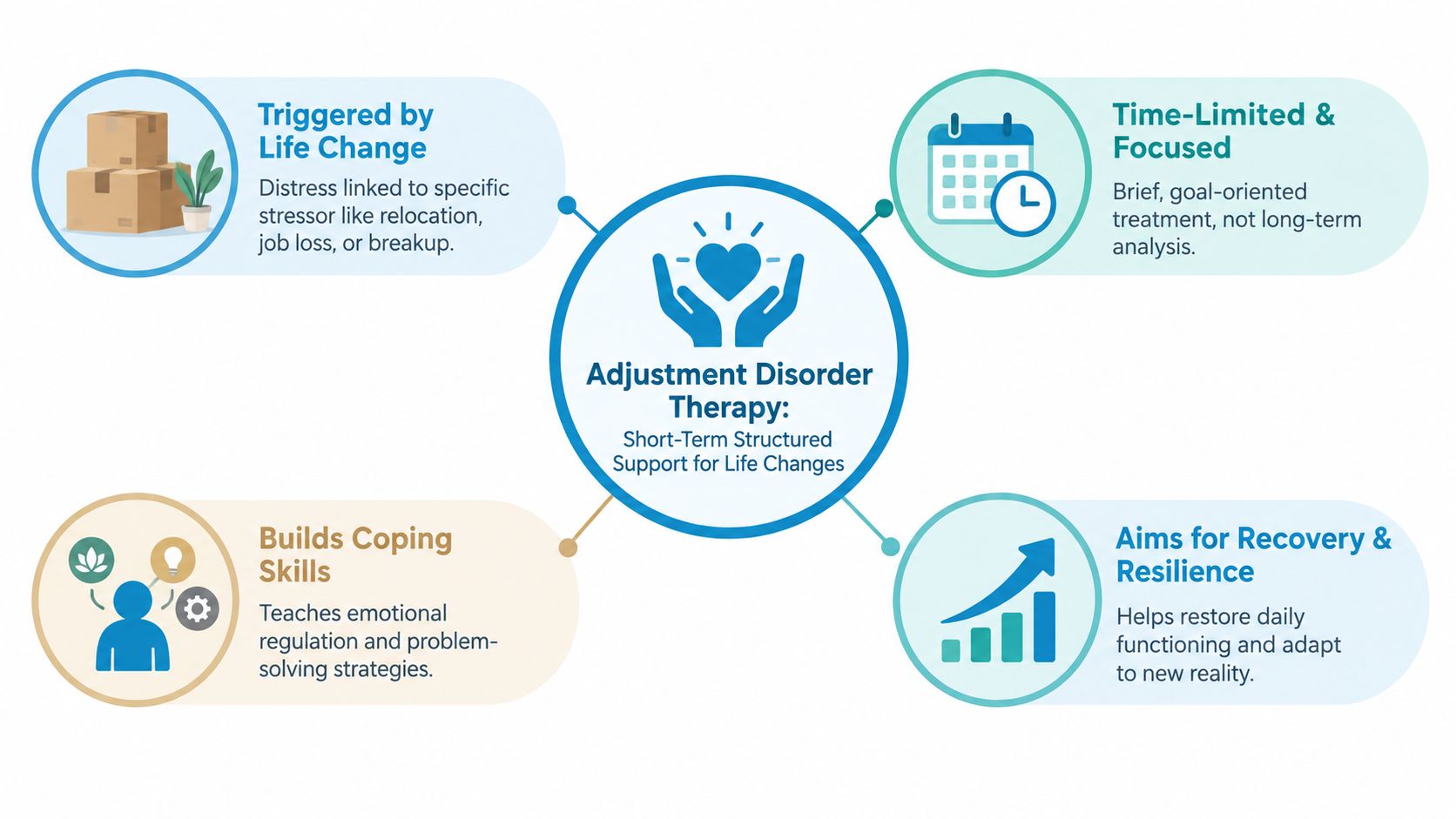
What Adjustment Disorder Therapy Actually Means
What does adjustment disorder therapy actually help with?
It helps people recover from a stress-linked emotional reaction to a clear life change and regain steadier functioning in daily life.
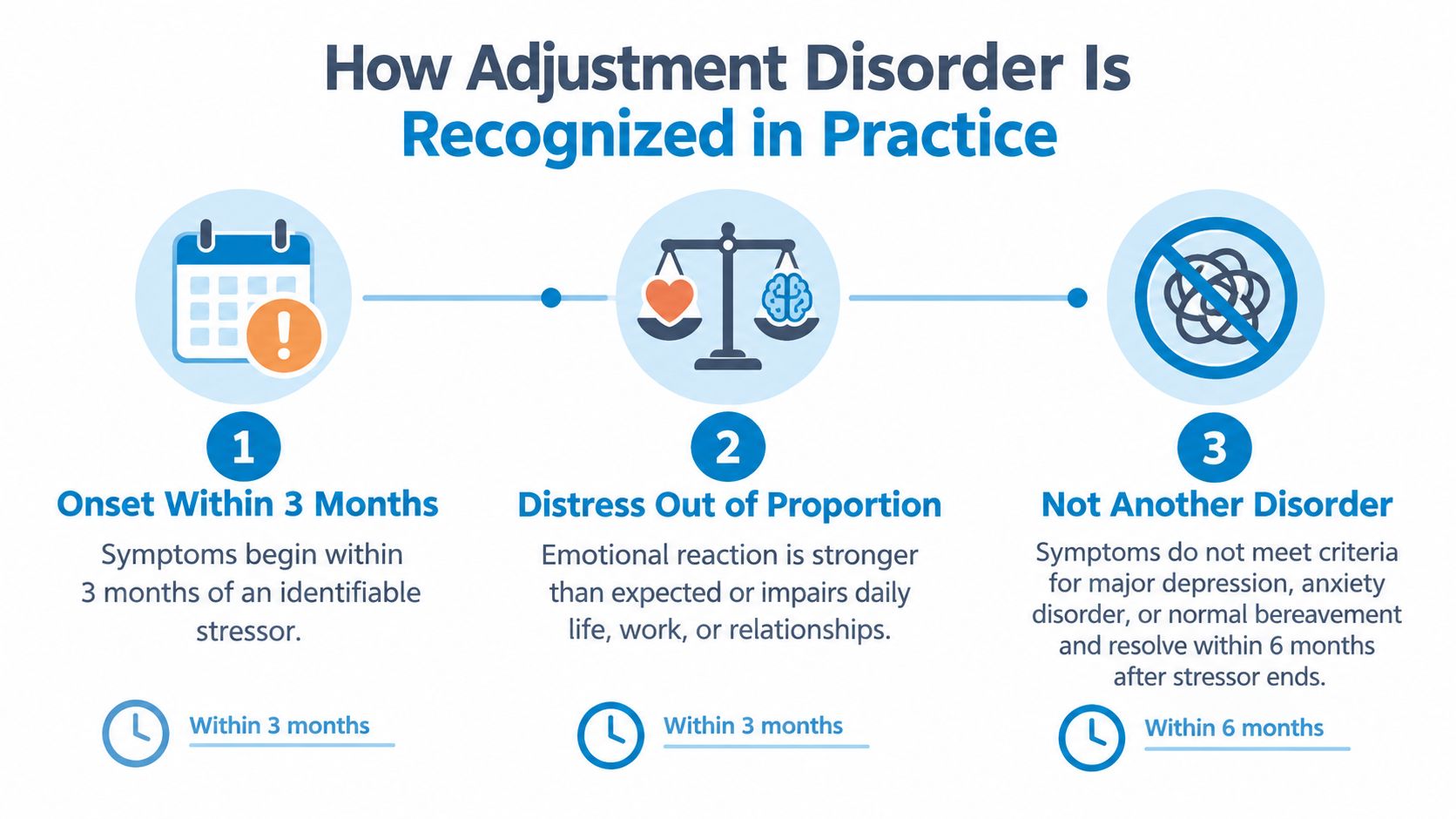
Adjustment disorder is diagnosed when symptoms begin within 3 months of an identifiable stressor and are clinically significant because they cause marked distress or impairment, according to Medscape's clinical overview of adjustment disorder. For an expat, that stressor might be a relocation, a relationship ending after a move, academic pressure in a new country, or a bureaucratic problem that never seems to end.
That timing matters because therapy is built around the idea that the distress is linked to something specific. Instead of asking someone to analyze their whole personality, the therapist usually helps map what changed, how the nervous system and thoughts reacted, and what would help life feel manageable again.
Is adjustment disorder therapy meant to be short-term?
Yes, the usual frame is brief and focused because the condition itself is expected to be time-limited.
In practice, adjustment disorder therapy often sits between crisis support and long-term therapy. It isn't only about calming someone down for a hard week, and it isn't usually designed as years of exploratory work. The therapist keeps returning to one central question: what is maintaining distress right now, and what would help this person adapt?
A typical course often includes:
- A clear stressor map – identifying what changed and when symptoms started.
- Emotion regulation work – reducing spirals of anxiety, hopelessness, irritability, or shutdown.
- Practical coping – restoring sleep, routine, concentration, and social contact.
- Direct work on the stressor – for example, handling job-search paralysis, conflict after relocation, or housing stress.
Practical rule: If the distress is tied to a life transition, therapy usually works best when it addresses both the feelings and the real-world problem.
For people living abroad, language fit can change the whole experience. Someone may function well in Italian or English at work but still need therapy in a first language when talking about grief, shame, fear, or identity. Therapsy's clinical team works from that intercultural reality, and readers who want more day-to-day stress tools can also explore ways to cope with stress during big transitions.
How Adjustment Disorder Is Recognized in Practice
How do clinicians tell the difference between adjustment disorder and normal stress?
They look for a clear stressor, a clear time link, and a level of distress or impairment that goes beyond ordinary strain.
A difficult move, homesickness, or heartbreak doesn't automatically mean adjustment disorder. The clinical question is whether the reaction is intense enough to disrupt work, study, relationships, or basic self-care. Mayo Clinic's summary also notes that the diagnosis depends on stress causing problems in work, school, or relationships and not being better explained by another mental health condition or normal grief, as described in Mayo Clinic's diagnostic overview.
For expats, confusion often starts here. Someone may think, “Of course this is hard, anyone would struggle,” and that may be partly true. The clinical issue isn't whether the move was stressful. It's whether the response has become impairing.
What signs do therapists usually look for?
Therapists usually look for tearfulness, anxiety, sleep disruption, avoidance, poor concentration, and a drop in normal functioning after a clear stressor.
The pattern matters more than any single symptom. One person may cry every evening after a breakup abroad and stop attending classes. Another may become restless, irritable, and unable to focus after losing a job and residence security at the same time.
Three practical markers usually guide assessment:
- Symptoms began after something identifiable happened. That could be a relocation, job loss, illness, family conflict, or a visa setback.
- The reaction is causing real impairment. Work performance drops, studies stall, social withdrawal grows, or sleep and appetite become unstable.
- The presentation doesn't fit another condition better. A careful clinician considers depression, anxiety disorders, trauma-related disorders, grief, and cultural context before settling on adjustment disorder.
Distress after a move is common. Distress that starts reshaping daily life is where assessment becomes important.
How common is adjustment disorder in real clinical settings?
It's common in practice, especially in services that see people under acute stress, medical strain, or major transitions.
A major review found that population estimates are often around 1% to 2%, while rates in U.S. outpatient mental health visits have been estimated at 5% to 20%. In hospital consultation-liaison psychiatry, rates can reach 30% or even 50% in some settings, according to this peer-reviewed review on adjustment disorder prevalence and diagnosis.
That pattern helps explain why expats encounter it so often. Relocation, uncertainty, separation from support systems, and repeated administrative stress create exactly the kinds of identifiable life events around which adjustment disorder tends to appear.
Comparing the Main Therapy Approaches
Which kind of therapy fits which kind of life stressor?
Different therapies target different parts of the stress response, so the best fit depends on whether the main problem is thinking, coping, avoidance, or overload.
Not all adjustment disorder therapy looks the same. Some people need a structured model that tackles spiraling thoughts. Others need a steadier supportive frame first because they feel too flooded to do detailed exercises. For expats, the fit often depends on the stressor itself.
A 2026 systematic review and meta-analysis pooled 16 randomized controlled trials with 3,027 participants and found that both internet-based and in-person CBT may reduce adjustment-disorder symptoms, as reported in this PubMed-indexed review of CBT for adjustment disorder. Other modalities are used in practice too, but CBT currently has the clearest evidence signal.
What are the main options?
CBT, supportive therapy, problem-solving therapy, and brief psychodynamic work each help in a different way.
| Comparison of Main Therapy Approaches for Adjustment Disorder | Core Focus | Best-Fit Stressor | Typical Sessions |
|---|---|---|---|
| CBT | Links thoughts, feelings, and behaviors. Targets avoidance and catastrophic thinking. | Relocation anxiety, breakup rumination, fear about job loss, study stress | Brief, structured work over weekly sessions |
| Supportive therapy | Stabilizes distress through validation, reflection, and practical support | Acute overwhelm, homesickness, grief-like reactions, first time in therapy | Brief to medium-term, depending on stability |
| Problem-solving therapy | Breaks one large stressor into manageable decisions and actions | Visa issues, housing problems, job search pressure, bureaucracy | Short and focused |
| Brief psychodynamic-informed therapy | Explores how the current stressor activates older patterns in relationships or self-worth | Repeated breakups, identity shocks after moving, familiar collapse under change | Often brief, but slightly less manualized |
CBT often fits best when the person can say, “My mind won't stop going to the worst-case scenario.” Supportive therapy often helps when the person says, “Everything feels too much, and they just need somewhere steady to think.”
Problem-solving therapy can be especially useful when the stressor is external and concrete. If a student is facing housing chaos, exam stress, and visa paperwork, emotional relief may depend partly on building a plan rather than only processing feelings.
A broader evidence review notes that treatment evidence overall remains low to very low quality, while psychotherapy should focus on restoring functioning, reducing avoidant coping, and addressing the stressor directly, according to this review of treatment evidence for adjustment disorder. EMDR appears in the literature too, but with much weaker support than CBT-style approaches for adjustment disorder itself, and readers comparing approaches may find it helpful to understand what EMDR therapy is and when it is usually used.
What a Course of CBT-Based Therapy Looks Like
What happens in CBT for adjustment disorder week by week?
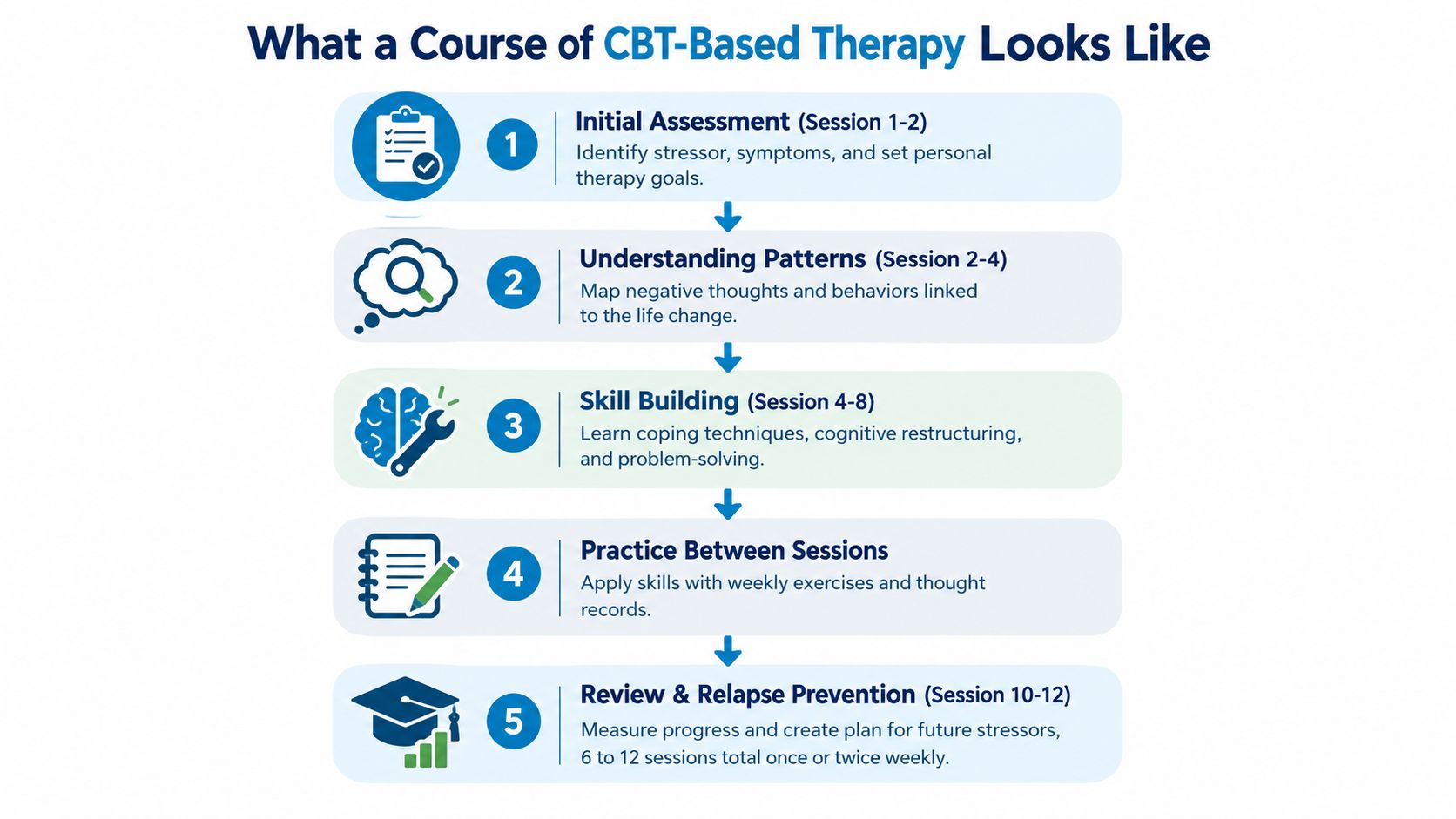
A CBT-based course usually starts with mapping the stress reaction, then builds coping skills, and ends with a plan for staying steady.
CBT is often the most structured form of adjustment disorder therapy. Sessions commonly happen once a week, sometimes twice a week when distress is more acute, and each session usually follows a clear shape. That predictability often helps people who already feel that life has become chaotic.
What do the early, middle, and final stages usually involve?
The early phase builds understanding, the middle phase changes patterns, and the final phase protects progress when the next stress spike hits.
Early sessions usually focus on assessment and formulation. The therapist and client identify the trigger, the main symptoms, what has changed in daily life, and what keeps the cycle going. For example, a relocation may trigger loneliness, which leads to withdrawal, which then deepens loneliness and self-doubt.
The middle phase is more active. Common CBT tools include:
- Thought tracking – noticing automatic beliefs such as “This move ruined everything” or “If this job ends, life is over.”
- Behavioral activation – rebuilding routine through small actions when motivation has collapsed.
- Behavioral experiments – testing predictions instead of assuming the worst.
- Problem-solving – turning vague dread into specific tasks.
When CBT helps, it usually isn't because someone “thinks positive.” It helps because the person learns to catch a stress reaction before it becomes the whole day.
Final sessions often focus on relapse prevention. The therapist and client look at warning signs, which tools worked, and how to respond if the stressor flares again. For someone abroad, that may include a plan for family conflict back home, housing uncertainty, or a new period of career instability.
What if homework feels hard or impossible?
Homework is part of the therapy, but difficulty doing it is useful information, not failure.
Between-session tasks are common in CBT because change happens faster when skills are practiced in real life. That may include keeping a brief thought record, planning a walk after class instead of staying in bed, or sending one avoided email related to work or bureaucracy.
If the person doesn't do the exercise, the therapist usually explores why. Sometimes the task was too ambitious. Sometimes shame, exhaustion, or language overload got in the way. People considering this style can get a clearer feel for the method through CBT for anxiety and how structured exercises work in practice.
How Long Improvement Usually Takes
How quickly does adjustment disorder therapy start helping?
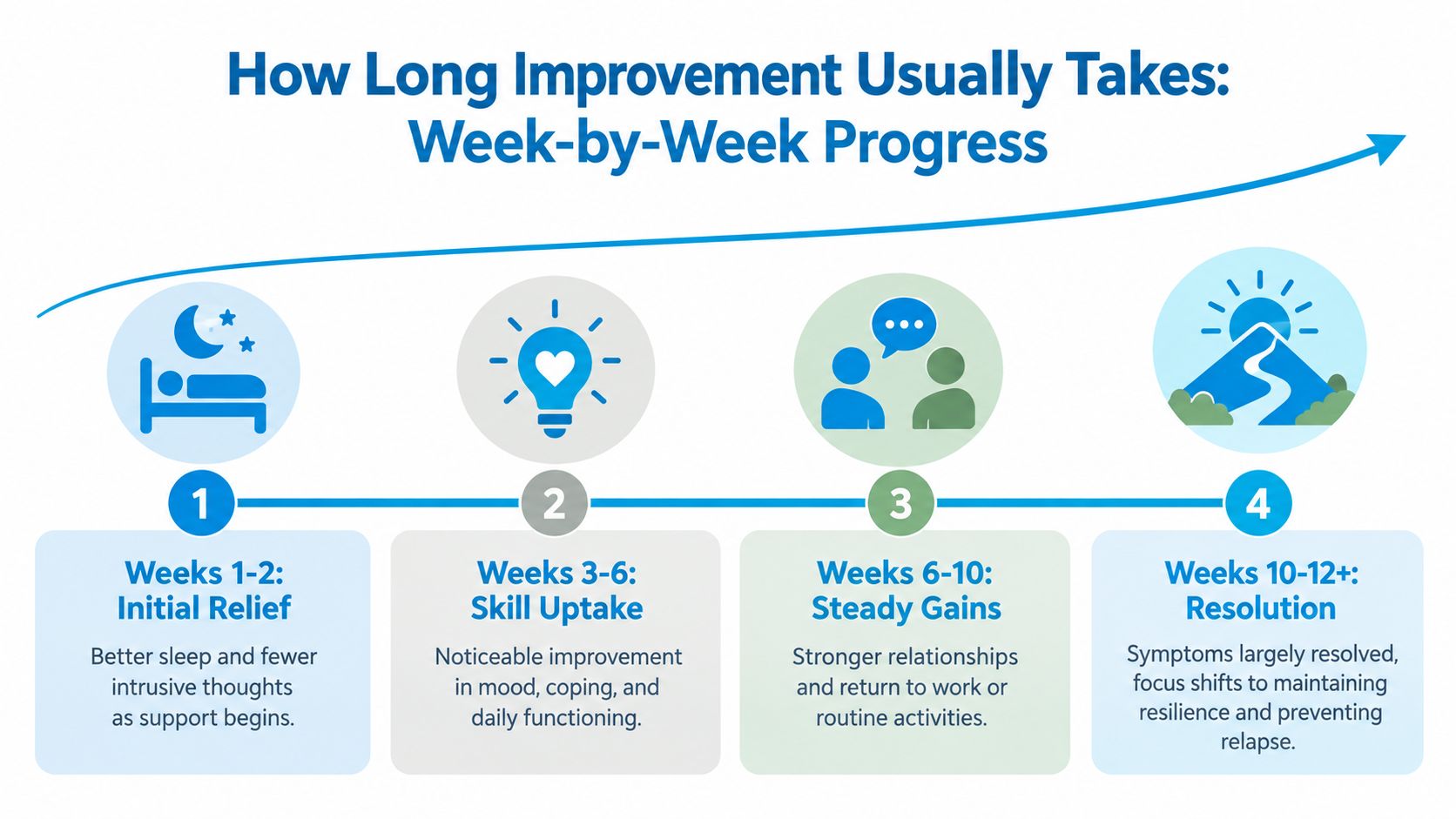
Many people notice early relief within the first few weeks, then steadier functional improvement over the following sessions.
Adjustment disorder is usually treated as a brief condition, so people often want a realistic timeline. In practice, the first signs of change are often small but meaningful. Sleep may settle a little, crying spells may become less frequent, or someone may stop checking immigration emails every hour.
What does a realistic week-by-week pattern look like?
Early sessions often bring relief, middle sessions bring stronger coping, and later sessions consolidate daily functioning and confidence.
A common pattern looks like this:
- Weeks 1 to 2 – the person feels understood, has more structure, and may sleep or eat a bit more regularly.
- Weeks 3 to 6 – avoidance starts to reduce, routine improves, and work or study tasks feel more manageable.
- Weeks 6 to 12 – the person usually handles the same stressor with less reactivity and more flexibility.
Some people improve faster, especially when the stressor has passed and the main problem is the body and mind staying stuck in alarm. Others take longer when the stressor is ongoing, such as unresolved visa problems, a divorce process, or being separated from family for months.
A difficult week during therapy doesn't mean therapy isn't working. Adjustment problems often improve unevenly because the stressor itself may still be unfolding.
For many readers, the most useful benchmark isn't “Do they feel perfect yet?” but “Are they functioning more like themselves again?” Therapsy's clinicians often use that practical lens when matching expats with a therapist, and readers can also compare expectations in this guide on how long therapy usually takes.
When a Psychiatric Consultation May Be Considered
Is medication usually part of adjustment disorder treatment?
Usually not at first, because therapy is the standard starting point and medication is generally reserved for specific situations.
Psychotherapy is widely described as first-line treatment for adjustment disorders, with the strongest empirical support reported for CBT, problem-solving approaches, relaxation techniques, and psychodynamic therapies, according to this review of psychological treatments for adjustment disorder. Medication can still have a role, but it isn't the default answer for uncomplicated cases.
That distinction matters for expats who worry that asking for help automatically means taking medication. It doesn't. In many cases, the most useful intervention is targeted therapy that reduces avoidance, improves coping, and addresses the stressor directly.
When might a psychiatric consultation make sense?
A psychiatric consultation may be considered when symptoms are severe, prolonged, or complicated by other mental health factors.
A consultation can be useful when sleep disruption is extreme, when depressive or anxiety symptoms become more intense, when the picture no longer looks brief and stress-linked, or when there is an existing psychiatric history that needs careful review.
| When to Consider a Psychiatric Consultation | Why It Matters | Typical Clinical Response |
|---|---|---|
| Severe insomnia | Exhaustion can worsen concentration, mood, and coping | Psychiatric review alongside therapy |
| Escalating anxiety or depressive symptoms | The presentation may be becoming more complex than a straightforward adjustment reaction | Broader assessment and coordinated care |
| Symptoms persist beyond the expected time course | The original formulation may need to be reconsidered | Reassessment of diagnosis and treatment plan |
| Prior psychiatric history | Past episodes may shape risk, symptom pattern, and treatment choice | Closer monitoring and integrated planning |
| Safety concerns or severe functional decline | Immediate stabilization becomes more important than brief coping work alone | Urgent clinical evaluation |
A broader evidence summary notes that medications are generally not indicated except for specific accompanying symptoms or severe presentations, as described in the Merck Manual overview of adjustment disorders. When medication is considered, it is usually an adjunct to therapy, not a replacement for it.
Readers who are weighing both therapy and medical input often need a service that can coordinate both in one place. Therapsy offers therapy and psychiatric consultations for adults, including expats who need care in their own language and who may prefer online or in-person sessions depending on where they live in Italy.
Referral Pathways and Where to Start in Italy
Where can someone in Italy actually start looking for help?
The most practical starting points are public services, university counselling, private therapists, employer support, or multilingual online care.
Italy has several entry points, but they don't all fit expat life equally well. Public routes can be valuable, especially through a Consultorio Familiare or a Centro di Salute Mentale, but waiting times and language availability may limit how quickly a non-Italian speaker can begin.
Private therapy is often the lower-friction route for someone who needs support soon and wants a clinician who understands intercultural stress. That can matter when the issue isn't only anxiety or sadness, but also migration strain, identity confusion, or feeling emotionally trapped between two countries.
Which route fits which situation?
The right pathway depends on urgency, language needs, budget, and whether the stressor is linked to work, study, or relocation.
A simple way to sort the options:
- Public mental health services – useful when budget is the main concern and Italian-language access is workable.
- University counselling services – often a good first stop for international students who feel overwhelmed but aren't sure they need ongoing therapy.
- Employee Assistance Programmes – worth checking for people employed by multinational organisations or large international companies.
- Private therapy online or in person – often the clearest option when someone needs language matching, flexibility, and continuity.
Since 2023, remote therapy has become a more realistic option for people living outside Milan, Rome, Florence, or other large cities. Someone in a smaller town can still work with a therapist based elsewhere in Italy, which is especially useful when the key need is language concordance rather than local proximity.
For many expats, the hardest part isn't deciding whether they need help. It's figuring out where help actually starts in a system they don't yet know.
What does Therapsy offer for expats in this situation?
Therapsy offers multilingual matching, online and in-person options, and a first conversation that helps clarify the most suitable next step.
Therapsy connects clients with 50+ therapists and has supported 1,500+ clients across 13,000+ sessions since 2023. The service works in 14 languages – Italian, English (British), English (American), French, Spanish, German, Portuguese, Ukrainian, Russian, Greek, Arabic, Urdu, Hebrew, and Hindi – with 21 Italian cities and 80 physical locations, plus online sessions.
The matching is done by the Clinical Director rather than an algorithm, which matters when the issue involves culture, migration, language, and the meaning of a life transition. Less than 1 applicant in 100 is accepted into the network, the first contact happens within 12 hours, and readers can explore practical support for expat mental health through mental health support for expats in Italy, how therapist matching works, or therapy services in Italy.
Putting It All Together and Taking the First Step
What should someone remember most about adjustment disorder therapy?
It is usually brief, it works best when matched to the actual stressor, and language and cultural fit often shape how safe therapy feels.
Adjustment disorder therapy is not vague stress advice. It is a focused form of care built around a specific life change and the ways that change has disrupted emotion, behavior, and functioning. That is why it often fits expats so well. Their distress is often tied to identifiable events such as relocation, separation, bureaucracy, career interruption, or cross-cultural relationship strain.
The most helpful treatment is not always the most intensive one. Someone dealing with visa panic and housing instability may benefit more from structured CBT or problem-solving work than from broad insight-oriented exploration at the start. Someone in acute grief-like overwhelm after a breakup abroad may need supportive therapy first so that more structured work becomes possible later.
What does a sensible first step look like?
A sensible first step is a low-pressure assessment that clarifies the stressor, the language preference, and the level of support needed.
That first conversation can answer practical questions that people often carry alone for too long. Is this likely to respond to brief therapy? Would CBT fit better than supportive therapy? Does the person also need psychiatric input? Would online sessions make consistency easier during travel, study pressure, or irregular work hours?
For readers who want a straightforward overview of options, Therapsy offers a free assessment call with the therapist chosen for that person, with no obligation to continue. Individual therapy starts from EUR 70, couple therapy from EUR 100, psychodiagnostic assessment from EUR 255 for 3 sessions, and psychiatric consultation from EUR 110, with online and in-person sessions available across Italy. Therapsy also reports a Trustpilot 4.8/5 rating marked “Excellent.”
FAQ
Is adjustment disorder therapy only for severe cases?
No, it is often used for moderate but very disruptive stress reactions that are clearly linked to a life event. A person doesn't need to be in extreme crisis for therapy to help. If sleep, concentration, mood, relationships, or work have shifted significantly after a move, breakup, or loss, brief therapy may still be appropriate.
Can someone have adjustment disorder after moving to Italy?
Yes, a relocation can be the identifiable stressor if symptoms begin after the move and become impairing. The diagnosis depends on timing and functional impact, not on the fact that the move was difficult. Cultural transition, isolation, and bureaucracy can all intensify the adjustment burden.
Is CBT always the best option?
Not always, but it currently has the strongest evidence signal among structured psychological treatments. Supportive therapy, problem-solving therapy, and psychodynamic-informed work can also be useful, especially when matched to the stressor and the person's coping style.
Does therapy have to be in someone's first language?
Not always, but many expats process emotional material more easily in the language that feels most natural under stress. Someone may manage daily life in Italian or English and still need a different language in therapy when discussing shame, grief, family conflict, or identity.
What if the stressor is still happening?
Therapy can still help even when the stressor has not ended. In that case, the work often focuses less on “moving on” and more on reducing alarm, restoring routine, improving decisions, and preventing avoidance from making the situation worse.
When should someone seek more urgent help?
Urgent help is appropriate when safety becomes a concern or daily functioning drops sharply. If someone is having thoughts of self-harm, cannot care for themselves, or is deteriorating quickly, they need immediate clinical support rather than waiting for a routine therapy appointment.
Therapsy supports expats, international students, and Italians abroad with human matching by the Clinical Director, therapy in 14 languages, and a choice between online and in-person sessions across Italy. Anyone dealing with relocation stress, breakup distress, job loss, or visa-related strain can visit THERAPSY to arrange a free first call with the therapist chosen for that person, with no obligation to continue.