You're sitting with your phone in your hand, rereading the same message, wondering if you should send one more check-in or leave them alone. They've cancelled again, said they're “just tired,” and somehow the silence feels heavier than an argument. If you're trying to figure out how to help someone with depression, the most useful place to start is simple, depression is a common and treatable condition, and good support usually means reducing isolation, protecting daily routines, and helping the person reach professional care rather than trying to carry it all yourself. The World Health Organization estimates that about 5.7% of adults worldwide live with depression, roughly 332 million people, and notes it's about 1.5 times more common among women than men. It also reports that more than 10% of pregnant women and women who have just given birth experience depression (WHO depression fact sheet).
Understanding What Depression Really Looks Like
Depression often looks quieter than people expect. A person can still answer texts, show up to work, and say “I'm fine,” while feeling flat, numb, or emotionally exhausted underneath.
In plain language, depression is more than a bad mood. It's a mental health condition that can affect sleep, appetite, thinking speed, motivation, interest, and social contact, and it often shows up as withdrawal, low energy, and losing interest in things that used to matter. The internal experience can be hard to see from the outside, which is why friends and partners miss it at first.
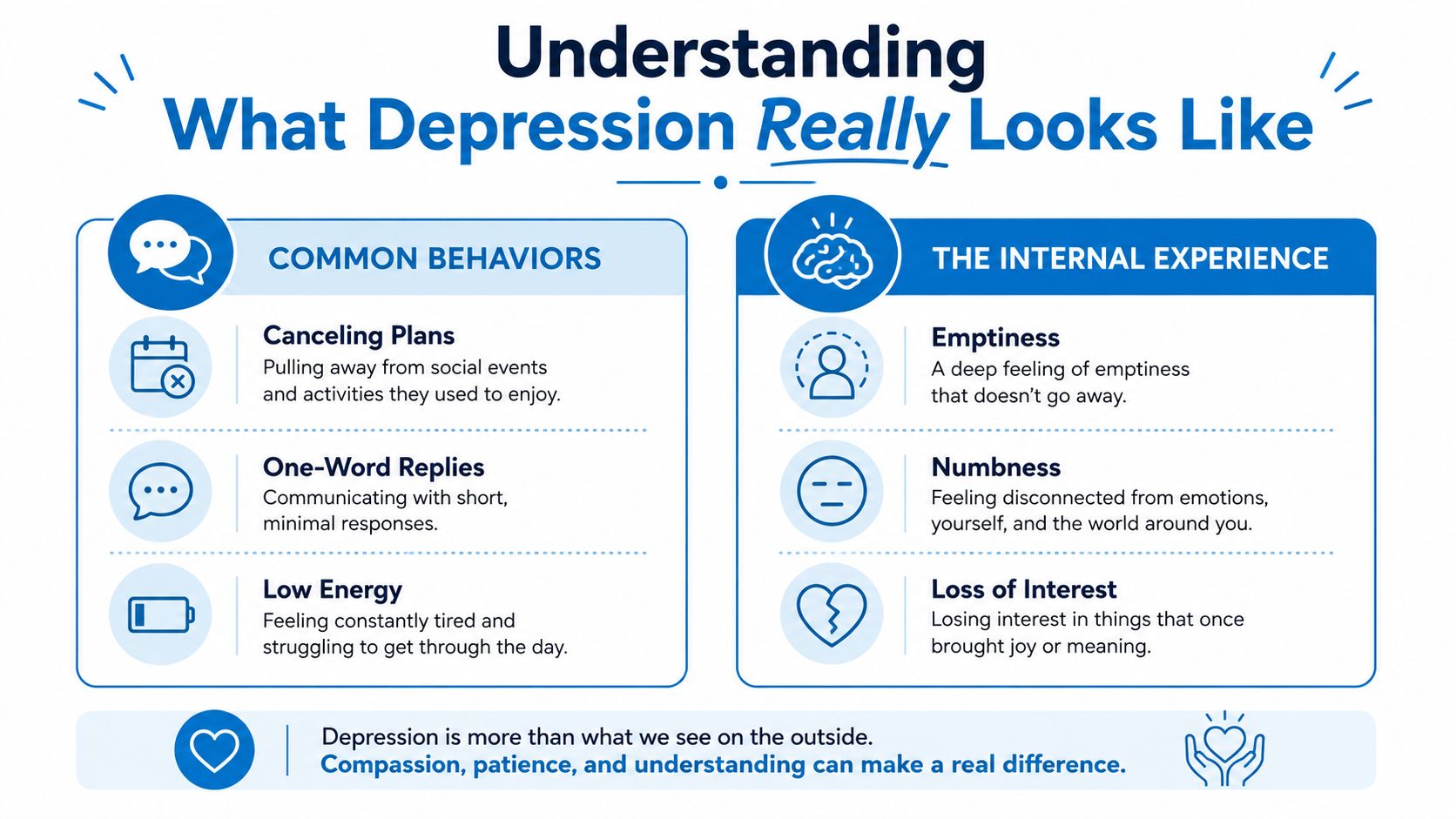
What you may notice first
A person with depression may cancel plans, reply with one-word messages, or stop doing hobbies they once loved. They may also seem slower, more forgetful, or more easily irritated than usual.
Practical rule: if the change is different from their normal self and it keeps going, take it seriously.
That matters even more in expat life, where many people keep functioning on the outside while feeling disconnected on the inside. When someone is adjusting to a new country, language, or social system, they may hide distress because they don't want to burden anyone or look like they're not coping.
Why “they seem fine” can be misleading
People often assume depression must look obvious. In real life, it can hide behind politeness, productivity, and a tidy calendar.
An expat or international student may be especially good at performing “I'm managing,” because they're already used to adapting. That makes a quiet check-in more useful than waiting for a visible collapse. If you want a plain-language overview of symptoms, the Therapsy guide on major depression symptoms is a good companion read.
Spotting the Signs When Someone Insists They Are Fine
Mixed signals are the hard part. Someone smiles during dinner, then disappears for three days. They say work is stressful, but their hobbies, sleep, and social habits have all shifted.
A single sign doesn't prove depression. A pattern does. If you notice several changes together, especially if they've been going on for a while, it's worth a real conversation instead of waiting for the person to “bring it up when they're ready.”
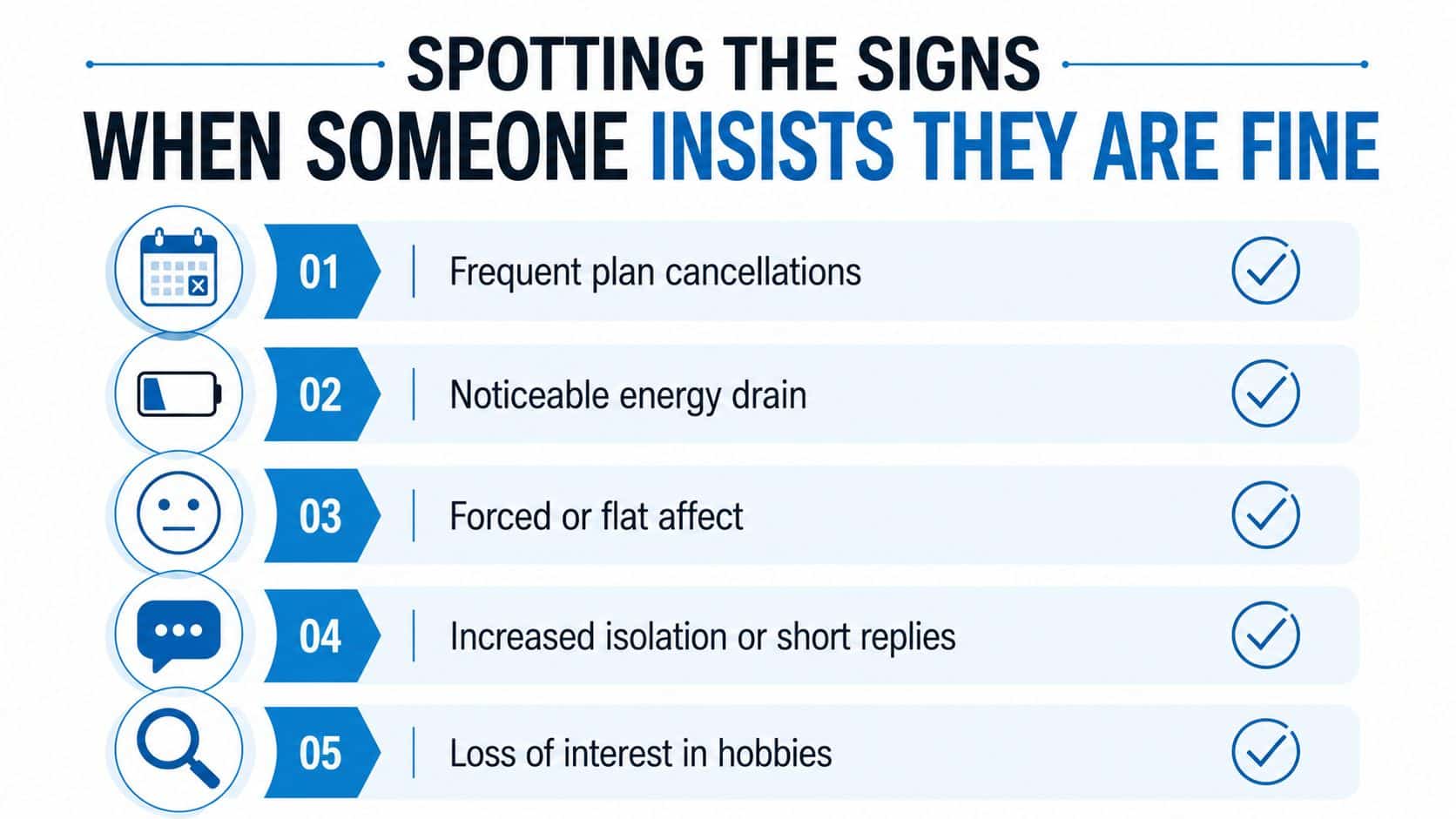
The signs that deserve a closer look
- Frequent cancellations: They keep backing out of plans without replacing them with anything else.
- Energy drain: They look depleted, even after sleep or downtime.
- Forced tone: Their warmth feels flat, brief, or rehearsed.
- Short replies and isolation: Messages shrink, calls go unanswered, and contact becomes harder.
- Dropped interests: Hobbies, sports, or routines disappear.
The UK NHS advises people to allow extra time for responses, stay patient, and avoid pressure when someone is struggling emotionally (NHS guidance on helping someone with depression). That's useful because depression often slows conversation as well as action. The person may need more time to reply, decide, or even name what feels wrong.
What not to do with mixed signals
Don't wait for them to “look depressed enough.” That mindset keeps people silent too long. Don't argue with their explanations either, because “I'm just busy” may be their safest way of saying “I'm not okay.”
If they insist they're fine, stay calm and keep the door open. You don't need to win a debate. You just need to notice the pattern and make a careful, non-threatening invitation to talk.
Starting the First Conversation Without Pushing Too Hard
The first conversation works best when it feels small. Pick a calm moment, a private place, and a tone that says concern without alarm.
Start with what you've noticed, not a diagnosis. Try: “I've noticed you seem heavier lately, and I wanted to check in.” Then ask one open question and stop talking long enough for them to answer. Silence is uncomfortable, but it's often what makes the conversation feel safe instead of staged.
If you want a communication-focused resource for the relationship side of this, the Therapsy guide on how to improve communication skills fits well here.
A useful script
- Open gently: “I've noticed you've been quieter than usual, and I care about you.”
- Ask once: “Do you want to talk about what's been going on?”
- Stay with their answer: If they say “not really,” reply with, “That's okay. I'm here if it changes.”
What you say matters, but what you don't say matters just as much. Skip lines like “Just think positive”, “Others have it worse”, or “You should be over this by now.” Those remarks usually make shame worse, and shame makes depression harder to talk about.
Short version: lead with care, not urgency.
A realistic exchange might sound like this.
“Hey, you've seemed off lately.”
“I'm fine, just busy.”
“Okay. I won't push, I just wanted you to know I'm here if you want to talk.”
That's often enough for the first step. The goal isn't to solve anything in one sitting. It's to leave the person with a clear sense that you're safe, steady, and not shocked by what they're carrying.
Practical Day-to-Day Support That Actually Helps
Once the conversation has opened, support becomes ordinary. That's good news, because ordinary is sustainable.
One partner I'd encourage to think in terms of small anchors. A morning text that says “Have you eaten yet?” can be more useful than a long speech. A roommate who suggests cooking together twice a week may help more than a dramatic offer to “do anything.” The point is to make daily life slightly easier, not to turn yourself into their full-time emotional manager.

What tends to help most
The NIMH recommends 30 minutes a day of walking as a practical mood-supporting activity, along with regular meals and sleep (NIMH depression guidance). That's not a magic fix. It is, however, a concrete and realistic starting point when someone's energy is low.
- Shared movement: Invite them on a short walk, not a fitness challenge.
- Routine support: Suggest breakfast, dinner, or a bedtime reset together.
- Appointment help: Offer to remind them about therapy or help them get there.
- Social anchors: Keep one recurring plan, even if it has to be brief and low-key.
The most evidence-aligned approach is to pair support with behavioral activation, which means gently rebuilding structure through action, not waiting for motivation to appear first. If the person can't manage a full outing, lower the bar. A ten-minute walk, a coffee near home, or a short phone call is still contact.
When they keep declining
If they say no again and again, don't disappear. Just reduce the pressure. Send a text that doesn't require a reply, or offer a simpler option like a quick food drop-off.
This is also where a structured therapeutic approach can help. Therapsy's CBT for depression page is relevant because CBT often focuses on the link between thoughts, actions, and routines, which is exactly where daily support can make the first difference.
Protecting Your Own Energy and Setting Healthy Boundaries
Supporting someone with depression can slowly drain the person giving support. The danger isn't only exhaustion, it's resentment, dread, and the quiet loss of your own life while you orbit theirs.
If you notice yourself checking your phone with a sinking feeling, avoiding their messages, or feeling responsible for their mood, take that seriously. Those are common signs of compassion fatigue. They don't mean you don't care. They mean your system is asking for limits.
A boundary can sound like this. “I can talk in the evenings, but I can't be available all day.” Or, “I want to stay in touch, and I also need you to lean on your therapist for the heavier stuff.” That's not rejection. It's sustainable care.
Signs it's time to step back a little
- You feel resentful more often than compassionate.
- You dread contact instead of feeling connected.
- Your routines slip because you're always reacting to theirs.
- You start carrying secrets that you can't talk about anywhere else.
Boundaries work best when they're specific. Maybe you text daily, but only call once or twice a week. Maybe you'll help with one appointment, not every appointment. Maybe you stay emotionally present, but you stop trying to monitor every mood change.
If you're an expat yourself, this matters even more. Many people in Italy are already balancing work, language, and limited local support. You can be kind without becoming the entire support system.
Recognizing a Crisis and Taking Immediate Action
Sometimes depression shifts from painful to urgent. That doesn't always look dramatic. It can sound like “I want to disappear”, “Everyone would be better off without me”, or “I'm tired of being here.” Those statements deserve direct attention, even if they're said softly.
There's a difference between passive thoughts and active crisis. Passive thoughts express escape or disappearance. Active warning signs include a specific plan, collecting means, giving away possessions, saying goodbye, or a sudden calm after a long stretch of distress. If you're seeing those signs, stop trying to be subtle.
Ask directly. “Are you thinking about hurting yourself?” Direct asking does not plant the idea. It creates clarity, and clarity helps people stay safe. If the answer suggests immediate danger, stay with them or stay on the phone, and don't leave them alone.
If safety feels immediate, this is not the moment for debate, persuasion, or privacy.
What to do right away
- Stay present: Keep the person with you, or keep the line open.
- Reduce access to immediate means: Move away obvious risks if you can do so safely.
- Call for urgent help: Contact emergency services in Italy if danger is immediate.
- Use crisis support lines: Telefono Amico and Samaritans Onlus are relevant Italian crisis resources.
- Follow through after the immediate moment: Help set up same-week professional care.
The NHS-style approach of patient, direct conversation still applies here, but the pace changes. You're no longer just supporting mood. You're protecting life. If the person becomes calm after a long period of agitation, don't assume the crisis has passed. Sometimes that calm means they've made a decision and feel relieved.
Moving From Informal Support to Professional Help
Friends and partners can be a bridge, but they're not meant to be the entire road. Depression often needs professional care, especially when symptoms interfere with work, study, sleep, relationships, or daily functioning.
The easiest way to suggest therapy is to make it concrete and low-pressure. Try: “I started looking into support for myself before, and it helped. If you want, I can send you a link.” Or, “You don't have to figure this out alone, I can help you take the first step.” That tone works better than persuading, because it preserves dignity.
If you're trying to assess whether a psychologist is the right next move, Therapsy's Do I need a psychologist page is a useful starting point. It can help normalize the question without turning it into a test.
Multilingual therapy matters in expat life because being understood in your own language lowers friction. A first assessment call should feel like a conversation, not an exam. At Therapsy, that first contact is free, and the matching is done by a human rather than a form, which is especially helpful when someone is already overwhelmed or unsure what kind of help they need.
When you recommend professional help, keep the sentence short and kind. “You deserve support that's not just mine.” That's usually enough.
If you're supporting someone in Italy and you're starting to feel out of your depth, Therapsy can help you turn concern into a real next step. The team offers multilingual psychotherapy, online or in person, with a free first assessment call and human matching so the person gets connected with a therapist who fits their language and situation. Visit THERAPSY to book that first conversation and get the right support in place.
Frequently asked questions about helping someone with depression
How do I help someone with depression who doesn’t want help?
Stay present without pushing. Keep inviting them to ordinary things, name what you notice without diagnosing, and make it easy to accept help later. Pressure usually increases withdrawal; consistent, low-demand contact does not. If there is any risk to their safety, that overrides their preference for privacy.
What should I not say to someone who is depressed?
Avoid “just think positive”, “others have it worse” and “have you tried exercising”. They imply the person is choosing to feel this way. Better: “I’m here”, “that sounds exhausting”, “what would help right now?” – short, specific, without a fix attached.
How do I know if it is depression or just a bad period?
Duration and function are the markers: low mood most of the day for more than two weeks, plus changes in sleep, appetite, concentration or interest in things they used to enjoy. When daily functioning slips, it deserves professional assessment rather than time.
What do I do if they talk about suicide?
Take it seriously and ask directly – asking does not plant the idea, it opens a door. Do not leave them alone if the risk feels immediate, remove access to means where possible, and contact emergency services (112 in Italy) or their doctor. This is not a conversation to handle alone.
How do I support someone from a distance?
Consistency beats intensity: short regular messages, a standing video call, remembering the details they told you. For expats supporting family abroad, or being supported from abroad, predictability matters more than length – it signals that you are still there.
How do I take care of myself while supporting them?
Set limits you can sustain and keep your own routines, friendships and sleep. Support that leads to your own burnout helps no one. Many people find a few sessions for themselves useful – not because they are ill, but because carrying someone else’s depression is genuinely heavy.
Can I convince someone to start therapy?
You cannot decide for them, but you can lower the barrier: offer to help find a therapist who speaks their language, sit with them while they book, or share that a first call is free and non-binding. At Therapsy the first assessment call costs nothing, which makes the first step smaller.
Not sure whether what you are feeling is depression?
Our free online depression test takes two minutes. It is based on the PHQ-9, the screening questionnaire used by clinicians worldwide, and it is anonymous – no email required to see your result.
If the result suggests you could use support, the next step is a free first call with a licensed therapist who speaks your language, online or in person across Italy.