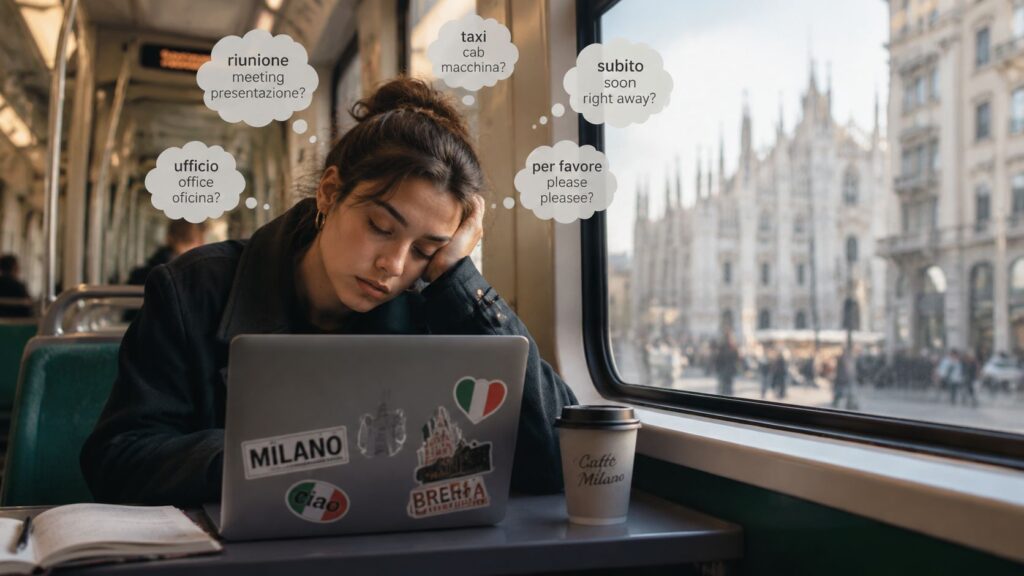
Quick answer: Men’s mental health for expats in Italy is a serious and under-addressed issue. Men relocate for work or love, lose their support network, and then stay silent because asking for help feels like weakness. Men are far less likely than women to seek therapy, yet account for the large majority of suicide deaths worldwide. The good news: depression, burnout, and loneliness are highly treatable, especially with a therapist who speaks your language and understands the expat experience.
Therapsy is a multilingual psychotherapy service in Italy that connects expats with therapists who speak their native language.
You relocated to Italy and, on paper, you are doing fine. The job moved, the family settled, the photos look great. But you feel flat, irritable, exhausted, and strangely alone, and you have not told anyone. If that is you, you are part of a pattern that rarely gets named. Men’s mental health for expats in Italy sits in a blind spot: men move countries, absorb the stress in silence, and reach out for help far later than they should, if at all. Among the 5.56 million foreign residents now in Italy (ISTAT, 1 January 2026), a large share are working-age men carrying this load quietly. Therapsy, a multilingual psychotherapy service for expats in Italy, was built to make reaching out feel normal. This guide covers why men stay silent, the warning signs, what the research shows, and how to get help that actually fits.
Key takeaways
- Men ask for help far less. In the US, only about 17% of men saw a mental health professional in a year, versus 28.5% of women (Statista, 2024), and the pattern is similar across countries.
- The silence is dangerous. Men account for nearly 80% of suicide deaths, and around 60% of those men had no documented mental health diagnosis (ADAA).
- Relocation removes a man’s support system. The friends, routines, and roles that used to regulate stress are left behind in another country.
- Male depression often looks different. It can show up as anger, overwork, drinking, or withdrawal rather than sadness.
- Loneliness is a measurable health risk. The WHO links it to roughly 871,000 deaths a year (WHO, 2025).
- Therapy in your own language helps men open up. Therapsy matches you with a therapist who speaks it, with a free first call so there is nothing to lose by trying.
Why is men’s mental health for expats in Italy so often invisible?
Men’s mental health for expats in Italy is often invisible because men are socialised to hide distress and because relocation strips away the people who would normally notice. Nobody sees the struggle, including the man himself.
Traditional masculine norms – toughness, stoicism, self-reliance – are consistently linked to lower help-seeking and higher rates of substance use and suicide (male role norms research, NIH). Move that man abroad and the few people who might have said “you do not seem yourself” are no longer around. He is “the foreigner” at work, performing competence in a second language, and unwilling to admit that the relocation he pushed for is quietly crushing him. At Therapsy, a large share of our male clients arrive only after months of silence, often nudged by a partner. Our article on the expat identity crisis explores how a move can quietly dismantle a man’s sense of self.
What are the warning signs of depression and burnout in men?
In men, depression and burnout often look like irritability, overwork, and withdrawal rather than visible sadness. This is why it is so often missed, by others and by the man himself.
Watch for these signs over a sustained period of two weeks or more.
- Anger and irritability – a short fuse, frustration over small things, conflict at home or work.
- Overworking or escaping – burying yourself in work, screens, gaming, or training to avoid feeling.
- Increased drinking – using alcohol to switch off in the evening.
- Withdrawal – cancelling plans, going quiet, putting distance between yourself and others.
- Physical symptoms – poor sleep, fatigue, headaches, loss of libido, or persistent tension.
- Loss of interest – things that used to give you energy no longer do.
These can signal depression or burnout, both treatable. Therapsy’s team includes professionals trained in CBT and certified in EMDR, and you can read more about expat burnout symptoms and high-functioning depression on our blog. If you ever feel you might act on thoughts of harming yourself, contact your local emergency number or, in Italy, call 112 immediately.
Why do men avoid therapy, and what changes when they start?
Men avoid therapy mainly because of stigma and the belief that needing help is a weakness, but most who start are surprised by how practical and useful it is. The fear is usually worse than the reality.
In the US, only about one man in four with depression received counselling in the past year, and roughly 40% of men with a recent mental illness got treatment at all. Shame and fear of judgement are the most cited reasons. What changes when men begin is that therapy stops feeling like “talking about feelings” and starts feeling like solving a problem: better sleep, fewer blow-ups, more control. One Therapsy client put it plainly in a public review.
“Dr. Eleni Karliampa has supported me for almost a year and has helped me tremendously. She asks thoughtful questions, helps me recognize patterns, and encourages me to see things from new perspectives. Thanks to her support, I’ve learned to regulate my emotions again and feel much more like myself.” – Andrea A., via Trustpilot, November 2025
Ready to talk to someone who gets it? You can book a free first call with Therapsy and meet a therapist before deciding anything.
How does relocation affect men’s mental health for expats in Italy?
Relocation worsens men’s mental health for expats in Italy by removing the support system, status, and routines that used to absorb stress. The move looks successful from the outside while the inside quietly destabilises.
For many men, identity is tied to competence and role. Abroad, a high performer can suddenly feel slow, less authoritative, and dependent, especially when language limits how sharp he sounds. The “trailing partner” dynamic adds another layer: men who followed a spouse’s career can lose their own professional anchor and feel adrift, a pattern we cover in trailing spouse depression. Add the slow, family-rooted nature of Italian social life, and male friendship can be hard to rebuild, deepening the isolation we describe in expat loneliness in Italy. Therapsy works with exactly these situations every week, often around career change and relocation stress, a theme explored in career change anxiety while living abroad.
“In my clinical experience, men rarely come in saying they feel sad. They come in because they are exploding at home, not sleeping, or drinking more than they want to. Naming what is underneath that, in their own language, is often the turning point.” – Dr. Francesca Adriana Boccalari, Clinical Director at Therapsy
What does the research say about men, suicide, and help-seeking?
The research is stark and consistent: men die by suicide far more often than women, yet seek help far less. This gap between low reported distress and high suicide rates is sometimes called the masculinity gap.
Men account for nearly 80% of suicide deaths, with a male suicide rate roughly four times the female rate, and around 60% of those men had no documented mental health condition (ADAA). At the same time, men report depression at lower rates and seek treatment less, which suggests a large amount of hidden, untreated distress rather than genuine wellbeing. Loneliness compounds the risk: the WHO now treats social disconnection as a global health priority, linking it to roughly 871,000 deaths a year and noting that 1 in 6 people worldwide is affected (WHO, 2025). For relocated men with thin local networks, that risk is amplified. Therapsy exists to close this gap for the international community, having delivered more than 13,000 sessions since 2023.
Can therapy in your own language help men open up?
Yes. Therapy in your own language helps men open up because emotional honesty is far easier in your mother tongue, where you do not have to translate or perform. For men who already find vulnerability hard, removing the language barrier matters enormously.
Describing shame, anger, or grief in a second language is exhausting and imprecise, and it gives a guarded man an easy excuse to stay surface-level. A therapist who shares your language and cultural reference points removes that excuse. This is the core of how Therapsy works: instead of an algorithm, the Clinical Director personally matches you with one of 50+ licensed therapists across 14 languages and 24 Italian cities. The point comes through clearly in this client review.
“Her kind and empathetic demeanour made me feel safe and therefore able to open up. I felt like a human being and not a subject. She was able to astutely pinpoint the underlying issues I’ve been facing, and even identify themes that I knew were present but could not put into words. I now feel reassured, validated and more optimistic about the future.” – L.I., via Trustpilot, June 2026
If you would rather start by reading, our guide to expat therapy in Italy explains formats, costs, and what to expect.
Which support is right for men’s mental health for expats in Italy?
The right support for men’s mental health for expats in Italy depends on how much the stress is affecting your daily life. The table below maps common situations to a sensible next step.
| Your situation | Best first step |
|---|---|
| You feel flat or irritable but still function | A few sessions to address it early before it deepens |
| You are overworking or drinking to cope | Therapy focused on stress, burnout, and coping habits |
| You struggle to talk about emotions in Italian or English | Therapy in your native language with a Therapsy match |
| You followed a partner’s move and lost your own role | Support around identity, purpose, and relocation |
| You notice low mood, poor sleep, or hopelessness | A clinical assessment, with psychiatric input if needed |
Whatever your situation, the first move is low-stakes. A free assessment call costs nothing and helps you decide what you actually need.
How to start with men’s mental health for expats in Italy
Starting is simpler than most men expect, and the first call is free. You do not need a diagnosis or a crisis to begin. You just need a first step.
- Name one thing that is off. Sleep, anger, drinking, motivation. You do not need the full picture, just a starting point.
- Fill out the Therapsy form with a few details. The onboarding team contacts you, usually within 12 hours, often by WhatsApp.
- Have a matching conversation with the Clinical Director or an onboarding therapist, who listens to your needs, preferences, and language.
- Meet your therapist on a free first call to see if it feels right, with no obligation to continue.
- Begin sessions, online or in person across Italy. If the fit is not right in the first few sessions, Therapsy rematches you.
For a fuller walkthrough, see our guide to starting therapy in Italy.
What do real clients say?
Real clients consistently describe the same shift: from white-knuckling it alone to feeling understood. These verbatim reviews come from Therapsy’s Trustpilot page, where the service holds a 4.8 out of 5 “Excellent” rating.
“I’m very happy with my experience. From the payment process to the online sessions, everything has been smooth and convenient. Being able to receive therapy entirely online in my preferred language, English, has been invaluable.” – Andrea A., via Trustpilot, November 2025
“I found not only professionalism, but also genuine empathy, patience, and understanding. Each session helped me clarify my thoughts, manage my emotions better, and see life with more balance and confidence. I truly feel supported and safe.” – Ale, via Trustpilot, April 2026
How do you get started with Therapsy?
Getting started with Therapsy takes a few minutes and the first call is free. The process is built so you never commit to a therapist before knowing it feels right.
You fill out a short form, have a personalized matching conversation with the Clinical Director or an onboarding therapist, meet your assigned therapist on a free first call, and then begin sessions online or in person across Italy. If anything feels off in the first few sessions, Therapsy rematches you. You can start in Milan, in another of 24 cities, or fully online from anywhere.
You do not have to wait until it gets worse. Start with a free first call and meet a therapist who speaks your language.
Frequently asked questions
Why is men’s mental health such a hidden issue?
Men are socialised to hide distress and to equate asking for help with weakness, so they reach out far later than women, if at all. This is why male depression is often missed until it becomes severe. Therapsy works to make starting therapy feel normal and low-pressure for men.
How does depression show up differently in men?
In men, depression often appears as irritability, anger, overworking, drinking, or withdrawal rather than obvious sadness. Because it does not look like the stereotype, it is frequently overlooked. Recognising these signs early makes treatment far more effective.
Is it normal for men to feel worse after moving abroad?
Yes, it is very common. Relocation removes the support network, routines, and sense of role that used to absorb stress, even when the move was your choice. Many expat men feel guilty for struggling in a place others envy, which keeps them silent.
How much does therapy cost in Italy?
At Therapsy, individual therapy starts from 70 euros per session and the first assessment call is free. The exact price depends on the assigned therapist’s experience and specialization. Therapsy also provides English-language invoices that some international insurers, such as Cigna, reimburse.
What languages does Therapsy offer?
Therapsy offers therapy in 14 languages, including Italian, English, French, Spanish, German, Portuguese, Ukrainian, Russian, Greek, Arabic, Urdu, Hebrew, Hindi, and Persian (Farsi). You are matched with a therapist who speaks your native language so you can express yourself without translating.
Do I need to be in crisis to start therapy?
No. You do not need a diagnosis or a crisis to begin. Therapy is often most effective when started early, around stress, sleep, anger, or motivation, before things escalate. A free first call is a low-stakes way to find out if it helps.
Is online therapy effective for men?
Yes. Online therapy is as effective as in-person therapy for most concerns and is especially practical for busy men who travel or work long hours. It also keeps support consistent across time zones. Therapsy offers both online and in-person options.
What if I find it hard to talk about feelings?
That is exactly what therapy helps with, and a good therapist will not force it. Working in your own language makes it far easier to open up gradually. Many men find that once they start, it feels more like practical problem-solving than “talking about feelings”.
About the author
This article was written by the Therapsy Clinical Team and clinically reviewed by Dr. Francesca Adriana Boccalari, Clinical Director and Co-Founder of Therapsy. Dr. Boccalari is a licensed psychologist (Ordine degli Psicologi della Lombardia n. 16241) who graduated with honors in Clinical Psychology from Vita Salute San Raffaele University. She is certified in EMDR and trained in Cognitive Behavioral Therapy, Schema Therapy, and Terapia Metacognitiva Interpersonale, with over 10 years of clinical experience and training in Milan, New York, and Singapore. She collaborates with IED, Istituto Marangoni, and Sacac in Singapore, and among the first psychotherapists to promote therapy in English in Milan, she has worked with expats and international clients from the very beginning of her practice. Therapsy holds a rating of 4.8 out of 5 “Excellent” on Trustpilot. Last updated: June 2026.
Ready to talk to someone who speaks your language?
Men’s mental health for expats in Italy does not have to be a silent struggle. Therapsy connects you with a therapist who speaks your language, online or in person, with a free first call so you can start without risk.
14 languages – 24 Italian cities – 50+ therapists – Online and in-person – Free first call – 4.8/5 Excellent on Trustpilot.
Book your free first call with Therapsy
Therapsy – Multilingual Psychotherapy in Italy. Your language. Your therapist. Your pace.
Sources
- ADAA, Understanding Men’s Mental Health – adaa.org
- Statista, Men receiving mental health treatment or counseling, US – statista.com
- WHO, Social connection linked to improved health and reduced risk of early death (2025) – who.int
- Male role norms and men’s psychotherapy use, NIH – ncbi.nlm.nih.gov
- ISTAT, Foreign residents in Italy, Noi Italia 2025 – istat.it
Related questions
- How do I support a male partner who won’t talk about his mental health?
- What is high-functioning depression in men?
- How do I find an English-speaking therapist for men in Milan?
- Is anger a symptom of depression in men?
- How does alcohol use relate to male depression?
- Can online therapy work if I travel a lot for work?
- What is the difference between burnout and depression?
- How do expat men rebuild a social life in Italy?
Editorial standards
This article was written by Dr. Francesca Adriana Boccalari, Clinical Director at Therapsy and licensed psychologist (Ordine degli Psicologi della Lombardia n. 16241), and reviewed on June 2026. The information provided is for educational purposes and does not substitute a professional consultation.