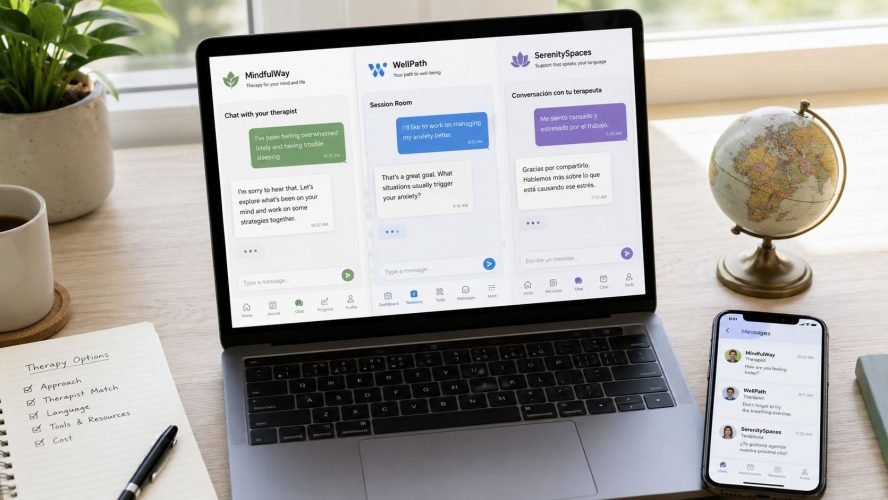
You may have started with a familiar name because it was easy to find, easy to understand, and easy to try. That makes sense. Individuals searching for BetterHelp alternatives aren't looking for therapy in the abstract. They're looking for a therapist who feels safe, relevant, and able to understand their life.
That need becomes sharper when you're living abroad. A young adult in Italy might need support for anxiety, burnout, relationship strain, culture shock, or trauma, but the primary issue is often fit. Therapy for expats in Italy is not just about getting a video call. It's about language, cultural context, clinical method, and whether the therapist understands what relocation does to identity, belonging, and daily stress.
In the United States, over 41.7 million adults received therapy from a licensed professional in 2021, and demand continues to grow annually, reflecting a broad need for accessible mental health care across the country. That growth has helped normalize online therapy. It has also exposed the limits of one-size-fits-all platforms, especially for international clients and non-English speakers in Europe.
Beyond the Algorithm Finding the Right Therapeutic Fit
Searching beyond a big platform usually means you've already learned something important. Convenience isn't the same as compatibility.
A good therapeutic fit includes practical things, like schedule and session format. It also includes less visible things, like whether your therapist can work with attachment patterns, trauma responses, intercultural stress, or the loneliness that shows up after relocation.
What fit actually means in therapy
Therapeutic fit is the match between your needs and the therapist's way of working. That includes:
- Language fit – Can you explain grief, panic, shame, or conflict in the language that feels most natural to you?
- Cultural fit – Does the therapist understand migration stress, bicultural identity, or the strain of living between systems?
- Clinical fit – Do you need CBT for anxious thinking, EMDR for trauma, Schema Therapy for repeating relational patterns, or a more relational approach?
- Format fit – Do you want online only, or would you feel more grounded with the option of in-person sessions too?
The most effective therapy isn't the most famous service. It's the service that matches the right therapist to the right person at the right time.
For many expats, another issue appears quickly. General mental health platforms may work well for short-term support, but they often don't connect with the wider healthcare reality of living abroad.
When readers ask what matters most, the answer is rarely "Which platform is biggest?" It's usually "Who can understand me well enough to help?" That question is at the center of finding a better match, especially if you're living in Italy and trying to sort out stress, depression, relationship strain, or identity confusion away from home. For a deeper look at what that match involves, this guide on finding the right therapist for expats in Italy is a useful next step.
Common Reasons for Seeking BetterHelp Alternatives
Clients typically don't look for another therapy option because online therapy itself failed. They look because a specific model didn't fit how they want care to work.
The limits readers mention most often
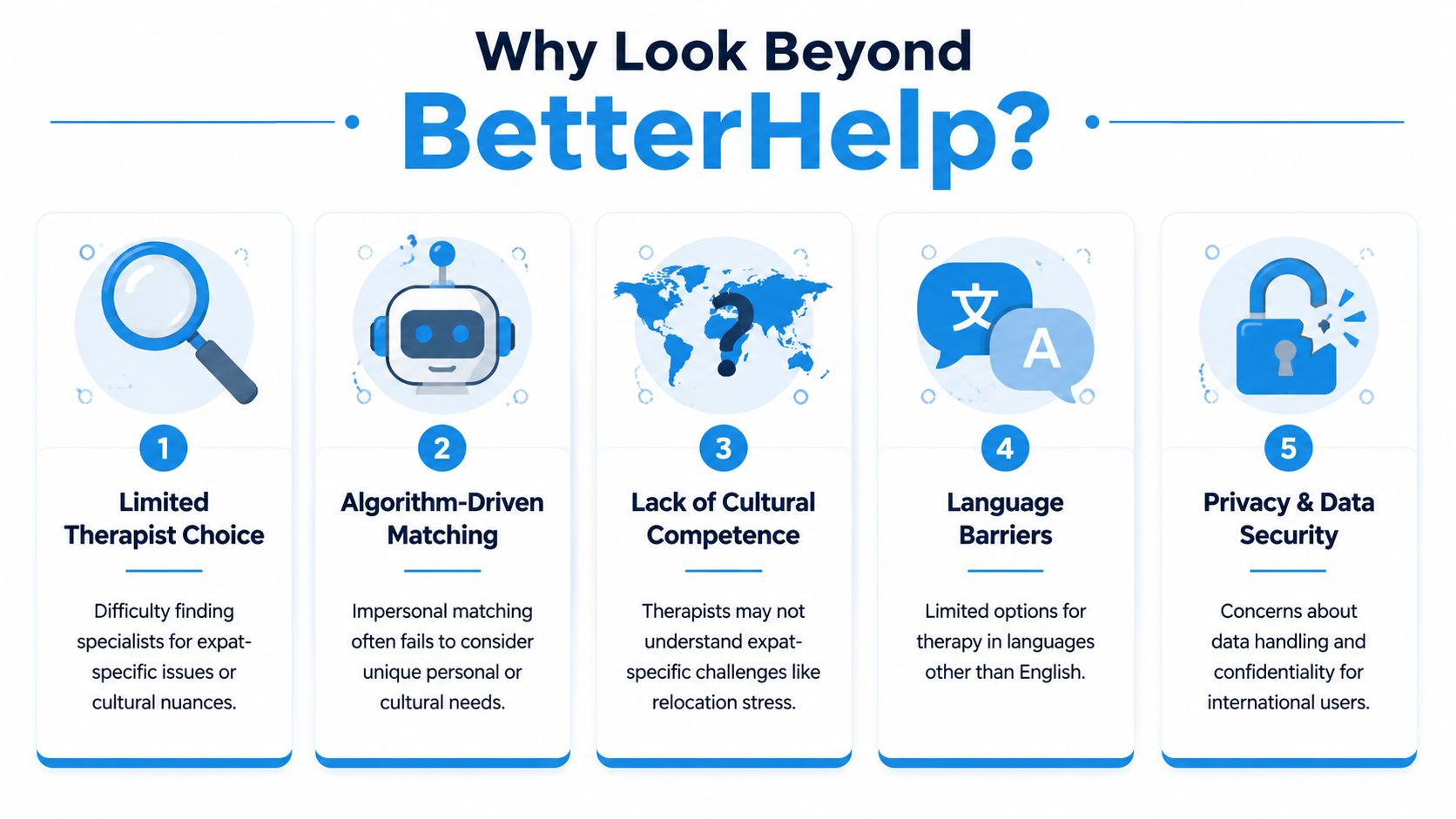
Several concerns come up again and again regarding BetterHelp alternatives:
- Subscription fatigue – Some people don't want ongoing billing if they prefer therapy every other week or in changing phases.
- Matching that feels generic – Automated systems can miss identity, culture, language, and therapeutic style.
- Too much emphasis on convenience – Fast access helps, but it doesn't replace depth, trust, and relational continuity.
- Little room for local realities – Insurance, licensing context, and in-person follow-up often matter more than they seem at the start.
These issues matter more when the person seeking therapy is dealing with intercultural stress. An expat in Milan or Rome may need someone who understands homesickness, perfectionism, visa uncertainty, or a relationship split across languages. A broad intake form doesn't always capture that.
Privacy and clinician experience matter
One reason some readers become more cautious is trust. According to the FTC’s official announcement, the FTC banned BetterHelp from sharing sensitive mental health data for advertising in 2023, resulting in a $7.8 million refund to consumers.
When therapy feels impersonal, people often blame themselves. More often, the delivery model is the problem.
That doesn't mean a large platform can't help anyone. It means users should evaluate the model, not just the brand.
Why expats notice these gaps faster
A person living abroad usually has less margin for mismatch. If you're already stretched by bureaucracy, language fatigue, or professional isolation, you may not want to spend weeks testing therapist after therapist.
Common warning signs include:
- You can't tell how the matching works.
- You aren't sure whether your therapist understands migration stress.
- Your language options feel narrow.
- You need trauma work, couples work, or another specialty that isn't easy to identify.
- You want a human process, not only an app experience.
Readers comparing digital options often ask whether AI-like systems can really replace human attunement in a vulnerable process. For expats, the answer is usually no. This is especially true when the work involves grief, trauma, identity conflict, or loneliness in a new culture. That concern is explored clearly in this piece on AI therapy vs human therapist for expats in Italy.
Comparing Major International Online Therapy Platforms
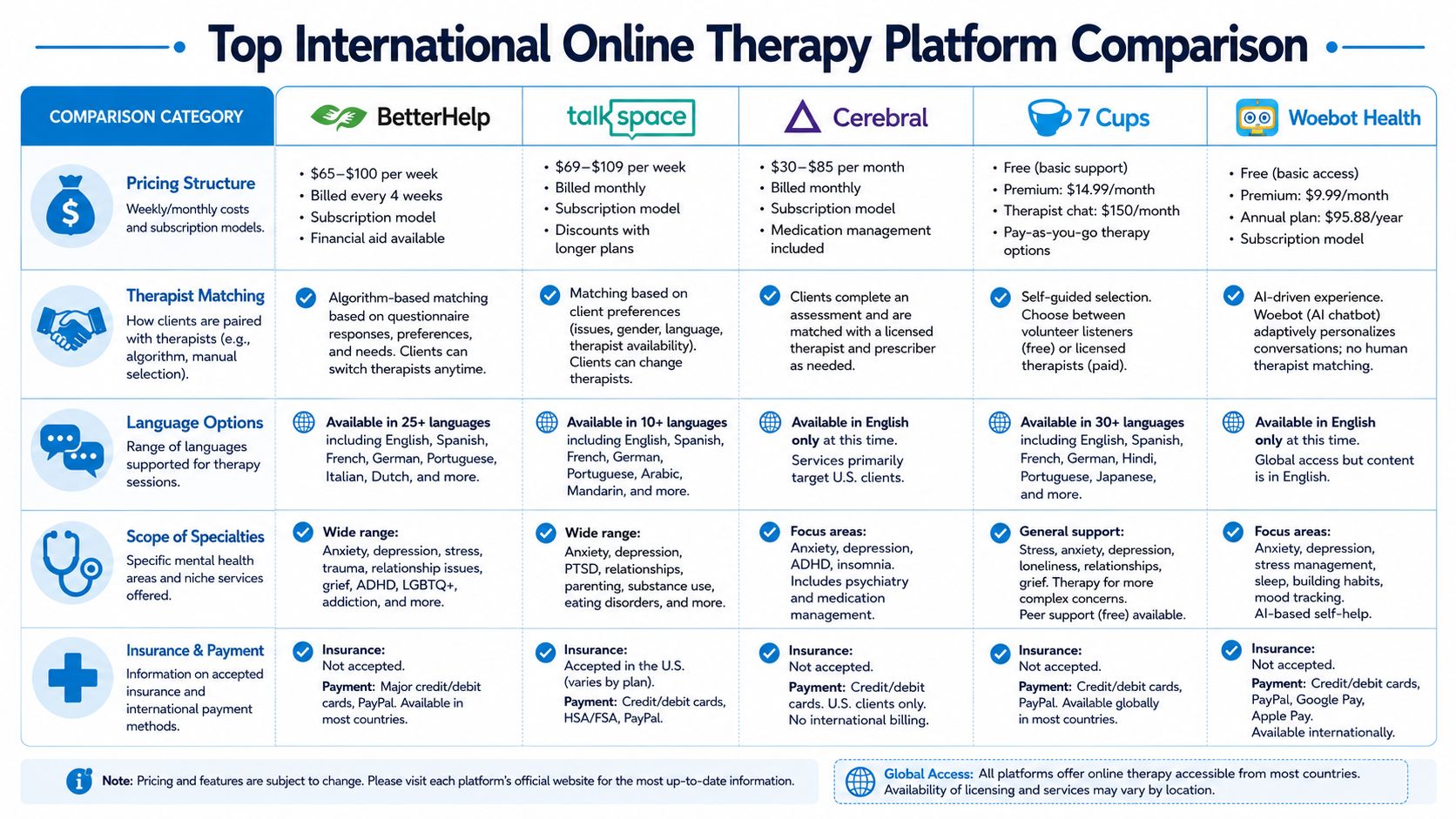
A useful comparison starts with the care model, not the marketing. The right therapy service depends on payment structure, insurance access, matching style, session format, language support, and clinical range.
| Service model | Payment approach | Best for | Main limitations |
|---|---|---|---|
| Subscription-based online therapy | Weekly or monthly bundled pricing | People who want flexible digital access and don't need local integration | Can feel impersonal, may limit control over format and fit |
| Insurance-first therapy network | Per session through verified coverage when available | People who want lower out-of-pocket cost and reimbursement flexibility | May be less useful without eligible insurance |
| Specialist niche platform | Varies by focus and service type | People seeking support for specific identities or relationship needs | Narrower scope by design |
| Multilingual hybrid care | Per session with online and in-person options | Expats, international students, and people needing language or cultural fit | Availability depends on location and therapist language coverage |
Cost and insurance change the equation
Cost isn't just about the listed fee. It's about whether the payment model suits the way you use therapy.
In-person therapy in the US typically costs between $100 and $200 per session, while subscription platforms bundle therapy into weekly billing. Insurance-linked services can lower per-session costs for eligible members.
That comparison points to a practical truth. A service can look affordable at first and still be a poor value if it doesn't fit your schedule, your insurance, or your actual therapeutic needs.
What to compare before you choose
When evaluating BetterHelp alternatives, compare these five factors first:
- Session structure – Are you paying for access, for sessions, or for a hybrid of both?
- Insurance pathway – Can you use insurance, reimbursement, or a lower copay model?
- Therapeutic scope – Is the service built mainly for talk therapy, or can it connect you with broader care needs?
- Language and culture – Can you receive therapy in the language you think and feel in?
- Human support – If the first match is wrong, does a real person help you adjust course?
A cheaper platform isn't automatically cheaper care if the mismatch makes you start over.
Why broad comparisons still miss the expat question
Most international comparisons focus on mainstream English-language options. That's useful up to a point. But for many people in Italy, the main issue isn't just price or app design. It's whether the therapist understands intercultural life.
A student from abroad may need support in English but also want someone who understands Italian university pressure, visa stress, and isolation. A professional may want online therapy in English while living in Rome, with the option for in-person sessions if things become more complex. A cross-cultural couple may need a therapist who can track two family systems, two languages, and two different expectations of conflict and care.
That's why generic platform comparisons often stop too early. If you're specifically looking for online therapy in English in Italy, the question isn't only whether a service is digital. It's whether it's clinically and culturally adapted to life in Italy.
Exploring Niche and Specialized Therapy Services
The online therapy field is getting more specialized, and that's often a good sign for clients. The online therapy field keeps growing and specializing, and the rise of alternatives serving distinct groups suggests a move toward more precise, high-fit care.
Why specialization often works better
A broad platform can help with general access. A specialized service may work better when the problem is more specific.
Examples of needs that usually benefit from a more specific search include:
- Couples in distress – especially cross-cultural couples handling communication breakdown, jealousy, relocation strain, or family pressure
- LGBTQ+ clients – especially when identity safety and affirming language are not optional
- Trauma survivors – especially when treatment method matters, not just therapist availability
- People needing insurance integration – especially when ongoing therapy must be financially sustainable
Specialization matters because the therapeutic task changes with the presenting issue. Trauma work is not the same as stress coaching. Couple therapy is not the same as individual therapy with relationship content.
Match the method to the problem
Considering alternatives, I often encourage them to look beyond platform size and ask a more clinical question: what kind of help does the problem require?
A few examples:
- If you feel trapped in loops of fear, overthinking, and avoidance, CBT can help identify and challenge patterns that keep anxiety going.
- If you're carrying the impact of a specific traumatic event or repeated relational trauma, EMDR can help process distressing memories in a structured way.
- If the issue keeps repeating across work, love, and self-esteem, Schema Therapy may help uncover deeper emotional patterns formed earlier in life.
For readers considering trauma-focused support, this explanation of what EMDR therapy is offers a clear introduction without oversimplifying the process.
The best alternative is often the one designed for your actual problem, not the one with the broadest audience.
The Expat Dilemma Why Global Platforms Can Fall Short
Global visibility doesn't guarantee global relevance. That's the central problem many expats discover after they sign up.

Why the standard model breaks down abroad
Many online therapy services are built around a US-centered user journey. That model assumes English fluency, familiarity with US therapy culture, and less need for host-country integration.
For expats in Europe, those assumptions often fail. Most comparison content is written for a US audience and assumes English-first therapy, while many expats in cities like Milan and Rome struggle to find care in their native language.
That is not a small mismatch. It's a structural problem.
Language is not a bonus feature
When therapy happens in a second language, subtle things can get lost. People often become more intellectual, less emotionally precise, and less able to describe shame, grief, anger, or attachment pain.
This matters even more in expat mental health because the symptoms are often tied to migration itself:
- Culture shock can look like anxiety, irritability, exhaustion, or numbness.
- Identity loss can emerge when your professional or social self no longer works in the same way abroad.
- Relationship stress can intensify when one partner adapts faster than the other.
- Isolation can deepen when every difficult conversation has to happen in a non-native language.
Cross-cultural psychology helps explain this clearly. People regulate emotion through language, social norms, and familiar meanings. When those supports shift, distress often increases.
Italy adds its own access barriers
Italy can be very rewarding to live in, but finding mental health care there isn't always straightforward for foreigners. In 2025, 28% of the Italian population reported suffering from mental health disorders, while only 5% of Italy's psychologists work in the public system, and most practice exclusively in Italian, creating clear barriers for expats, as outlined in this discussion of mental health services in Italy for expats.
Public care isn't automatically the practical answer either. Long waits, language barriers, and bureaucracy can make already vulnerable people delay treatment until the problem worsens.
What expats usually need instead
A more workable model for expats usually includes several things at once:
- Therapy in the person's strongest language
- A therapist who understands intercultural stress
- Choice between online and in-person care
- Human guidance during matching
- Evidence-based methods for anxiety, trauma, burnout, or relationship strain
Expats don't only need access. They need context.
That is why many BetterHelp alternatives still don't solve the actual problem for people in Italy. They replace one platform with another but leave the language, culture, and local-care gap untouched.
Therapsy A Premium Multilingual Solution in Italy
For expats, international students, young adults, and cross-cultural couples in Italy, the strongest solution is usually not a generic global platform. It's a service designed around multilingual, intercultural care from the start.
What makes this model different
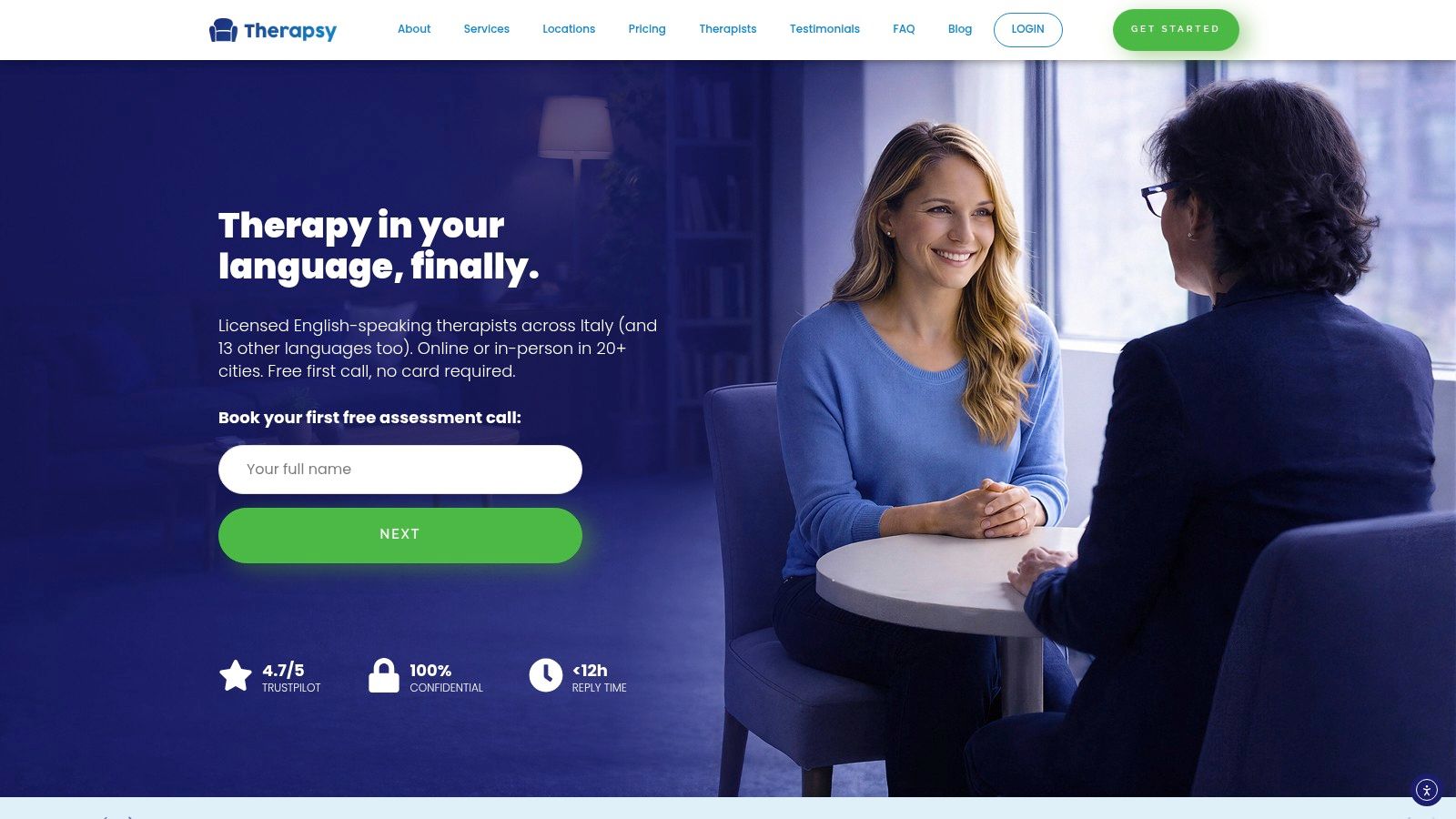
Therapsy is a multilingual psychotherapy service in Italy for expats, international students, young adults, and underserved language communities. It offers therapy in 14 languages: Italian, English, French, Spanish, German, Portuguese, Ukrainian, Russian, Greek, Arabic, Urdu, Hebrew, Hindi, and Persian (Farsi).
That breadth matters because many competitors stop at English. For a multilingual expat community, that still leaves a large part of emotional life untranslated.
The service also doesn't rely on automated matching. Clients are matched by the Clinical Director through a human process, not by chatbots, not by automated questionnaires, and not by a generic algorithm. That is often the difference between "someone available" and "someone appropriate."
Why hybrid care matters in Italy
Italy isn't one city, and therapy needs can change over time. Some people want online support from the start. Others prefer to begin online and later move into in-person sessions when the work becomes deeper or more relational.
Therapsy offers online and in-person sessions across 24 Italian cities and 90+ physical locations, including Milan, Rome, Florence, Turin, Bologna, Bergamo, Padova, and Verona. That gives clients a level of continuity that many online-first platforms can't provide.
For readers specifically looking for multilingual psychotherapy for expats in Italy, this hybrid structure is often what makes support sustainable in real life.
Clinical quality and trust
Therapsy works with carefully selected licensed professionals supervised by the Clinical Director. The team uses evidence-based approaches including CBT, EMDR, Schema Therapy, TMI, systemic-relational therapy, humanistic and bioenergetic psychotherapy, and ethnopsychotherapy.
That range matters because expat distress isn't one thing. Some people need practical help managing panic, avoidance, and overthinking. Others need trauma processing. Others need support for bicultural identity, burnout, or intercultural relationship conflict.
There is also institutional trust behind the service. Therapsy collaborates with Cigna, the World Food Programme, FAO, MUR, InterNations, IED, Istituto Marangoni, and EAP providers. It has 50+ therapists, has served 1,500+ clients since 2023, holds a Trustpilot rating of 4.8/5 described as "Excellent", and offers first contact within 12 hours.
A human next step
The entry point is simple. The first assessment call is free, with no commitment and no payment. That conversation with the Clinical Director helps identify language, availability, therapeutic needs, and the kind of therapist who is most likely to be a good fit.
Pricing is also straightforward:
- Individual therapy – from €70/session
- Couple therapy – from €100/session
- Psychiatric consultation – from €110/session
- Psychodiagnostic assessment – from €255
For people in Italy who need more than a generic digital platform, this is often the missing model: multilingual, human-matched, evidence-based, and available both online and in person.
How to Choose the Right Therapy Service for You
Choosing among BetterHelp alternatives gets easier when you stop asking which service is most popular and start asking which one fits your life.
Use a practical checklist
Ask these questions before you commit:
- What problem am I trying to solve? Anxiety, panic, trauma, burnout, depression, relationship strain, or adjustment stress each call for different skills.
- Do I need a specific method? CBT is often useful for anxious thinking and avoidance. EMDR may be better for trauma. Schema Therapy can help with deep repeating patterns.
- Which language do I need in session? Not the language you can technically use. The language you can feel in.
- Do I want online only or hybrid care? Some people feel fine online. Others want the option of in-person sessions later.
- How important is cultural understanding? If you're an expat, student, or member of a multilingual community, this is often central, not optional.
- What payment model can I sustain? Subscription, per-session, insurance-linked, or mixed models create very different experiences over time.
Look at accessibility, not just availability
A therapist may be available and still not be accessible in the deeper sense. Accessibility includes language, emotional safety, scheduling, payment clarity, and the ability to use the platform without confusion.
Practical rule: If a therapy service makes it hard to understand how matching, cost, language support, or clinical scope work, keep looking.
A simple decision framework
If you're unsure, narrow your choice with this order:
- Start with language and culture.
- Then check clinical method and specialization.
- Then look at format, insurance, and price.
- Then ask how human the intake process feels.
That order helps because a low price won't compensate for poor fit, and a polished app won't compensate for being misunderstood.
FAQ
What are the best BetterHelp alternatives for expats in Italy
The best BetterHelp alternatives for expats in Italy are services that offer multilingual, culturally informed, and ideally hybrid care. A general online platform may help with convenience, but expats usually need stronger language fit, human matching, and therapists who understand intercultural stress. In Italy, that often means choosing a service built for the international community rather than adapting a US-centered model.
Is online therapy effective compared with in-person therapy
Yes, online therapy can be effective for many people. Research on teletherapy consistently shows outcomes comparable to in-person care for many common concerns, and most users report satisfaction with online sessions. The key issue isn't whether online therapy can work. It's whether the therapist, language, and treatment model fit your needs.
Can I use insurance for online therapy in Italy
Often yes, depending on your policy. Many international health plans and employer EAP programs (for example Cigna and similar providers) reimburse psychotherapy sessions, including online ones. Ask your insurer about reimbursement requirements before you start, and request invoices that meet your policy’s criteria – Therapsy provides English-language invoices suitable for international reimbursement.
Why do non-English-speaking expats struggle to find therapy in Europe
They struggle because much of the online therapy market is still built around English-first access. That leaves many expats without care in the language where they can speak most naturally about grief, fear, conflict, or identity. For multilingual communities, a therapist's cultural and linguistic fluency often affects how safe and effective therapy feels.
What should I look for in a therapist if I am dealing with trauma abroad
Look for both trauma training and intercultural sensitivity. If trauma happened before relocation, the stress of living abroad can intensify symptoms. If trauma happened during or after migration, it helps to work with someone trained in methods like EMDR who also understands displacement, instability, and identity strain.
Is human matching better than algorithmic matching for therapy
Human matching is often better when your needs are complex or culturally specific. Algorithms can sort for broad preferences, but they often miss nuance around language, migration history, attachment style, trauma, or relationship patterns. A thoughtful human intake process tends to produce a stronger initial fit.
Book your first free assessment call – no commitment, just a conversation with our Clinical Director who will listen and match you with the right therapist for you. Visit Therapsy.